TOXI_LOGO_BBLACK
ARCHIVE SHOP INFO
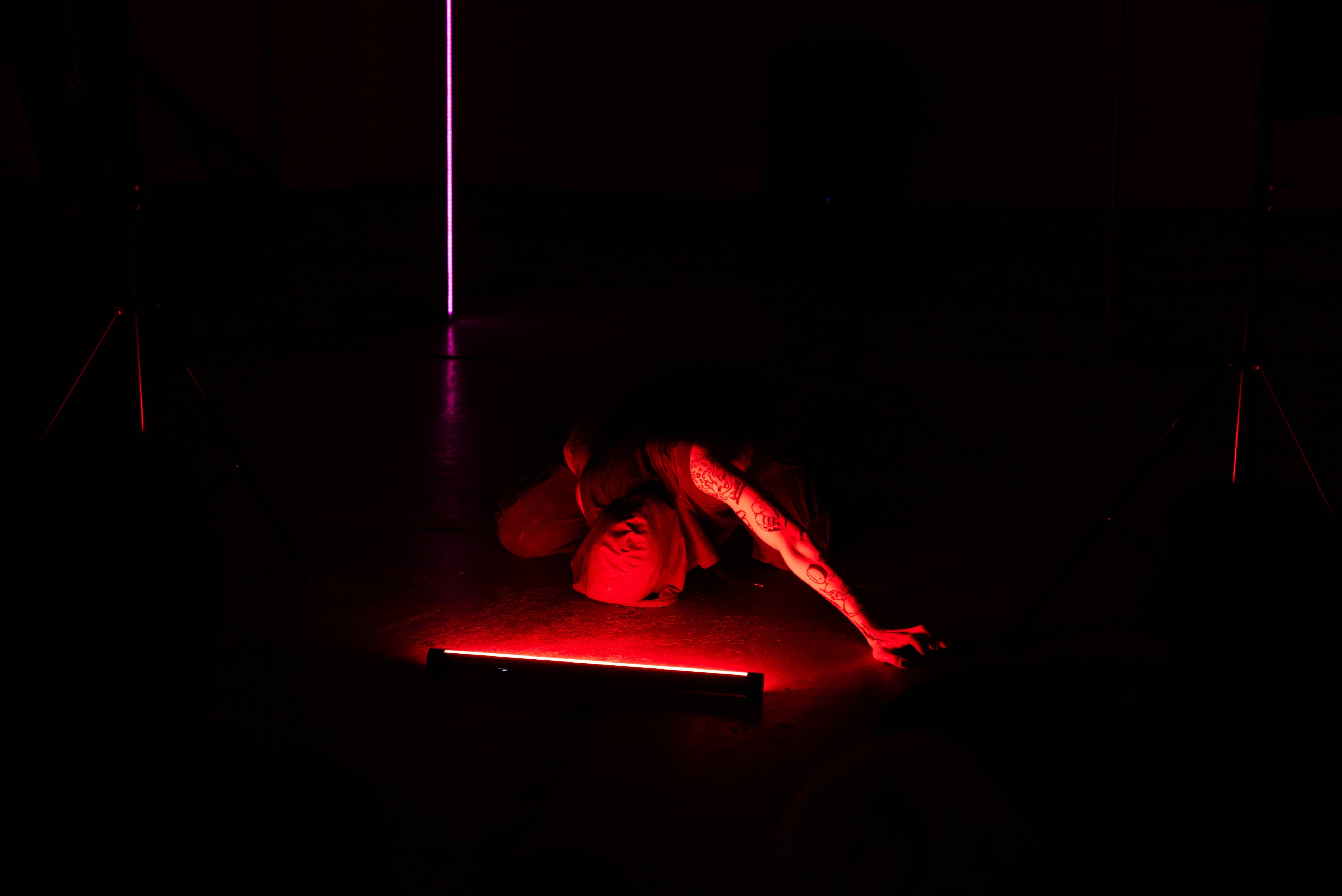
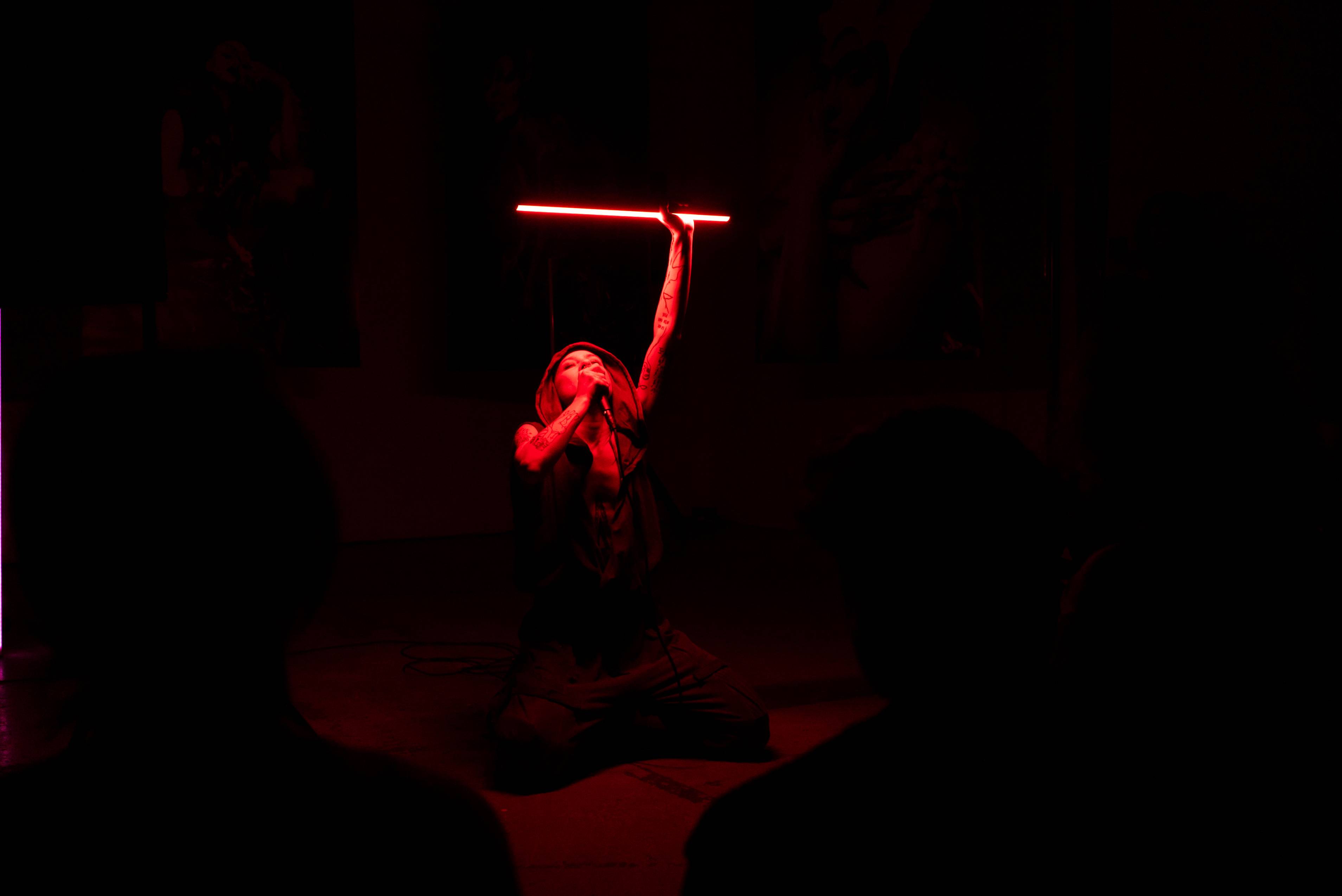
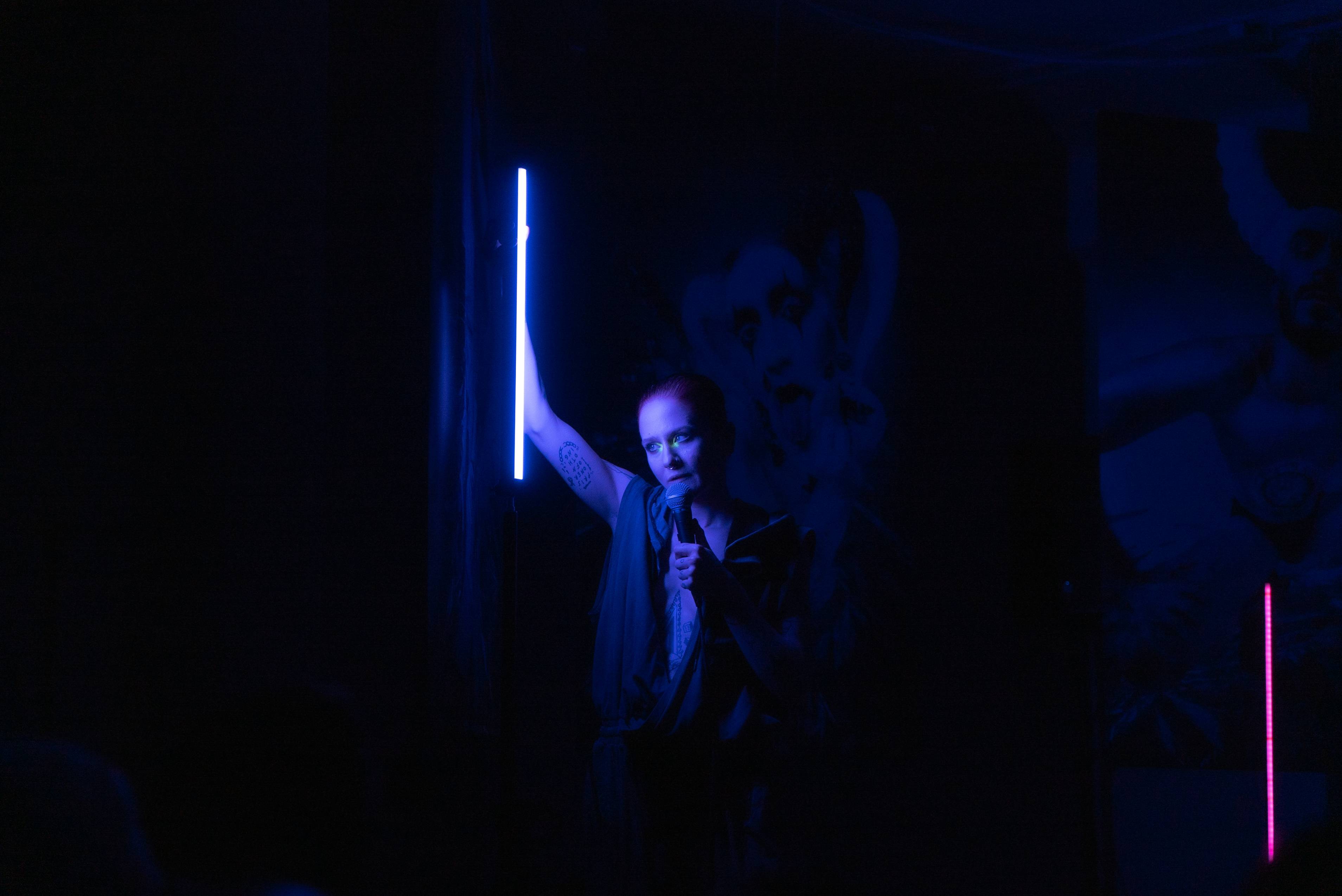
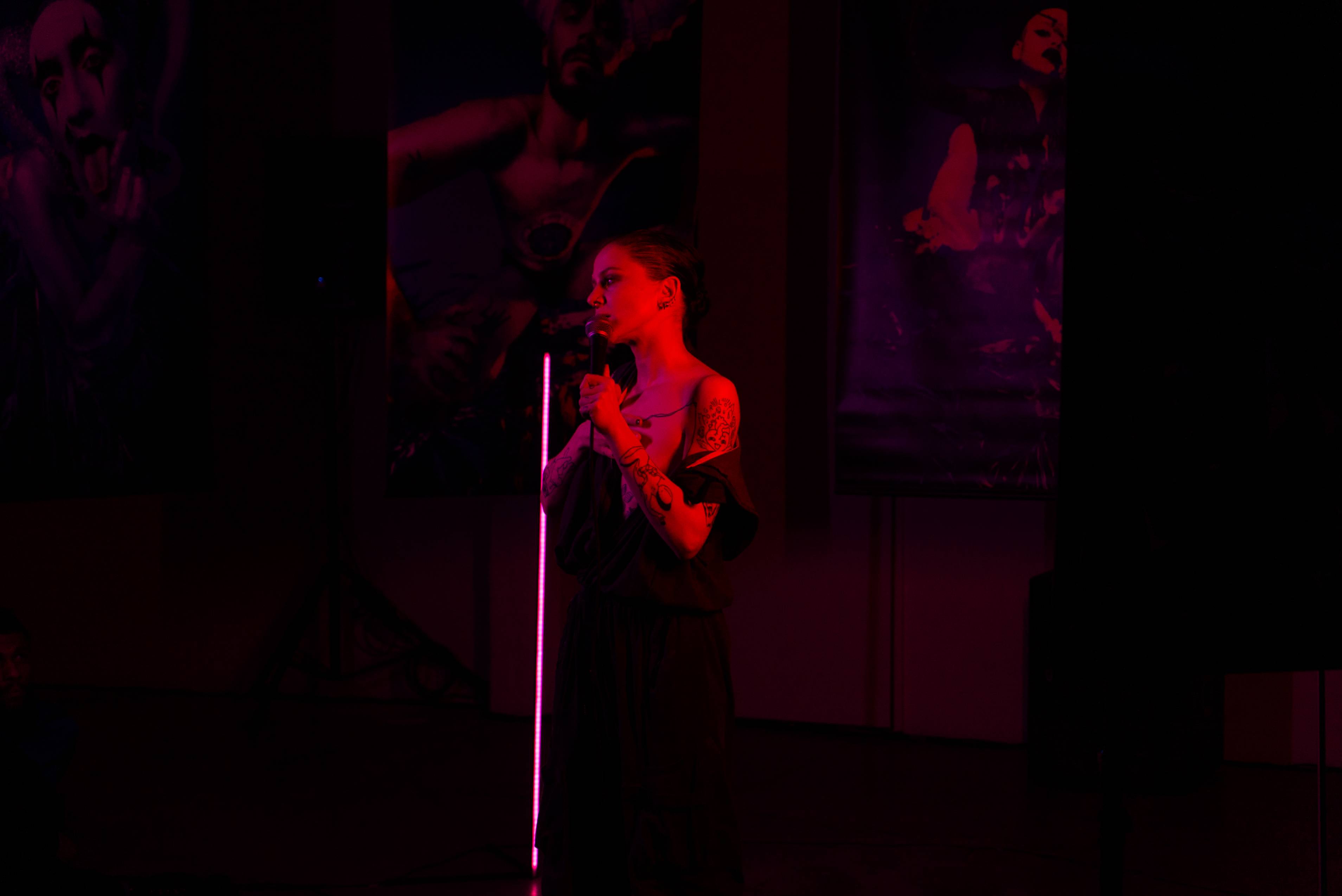
  •  08.02.2024MONSTERS - Valerie Reding

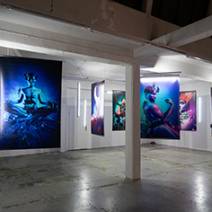
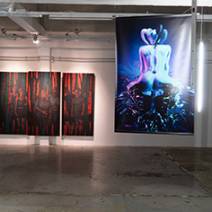
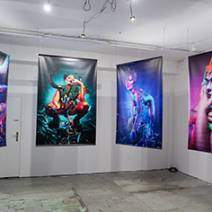
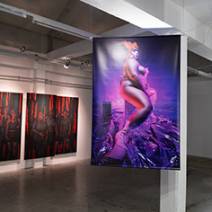
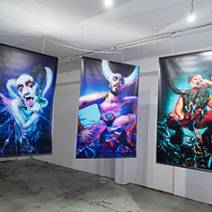
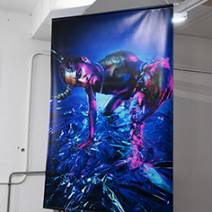
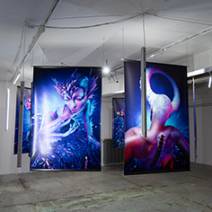
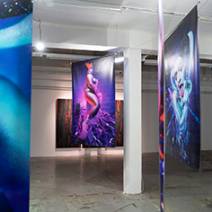
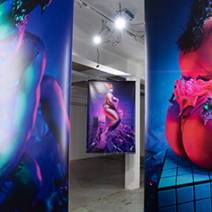
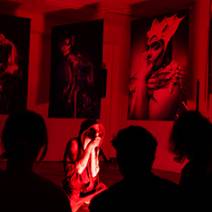
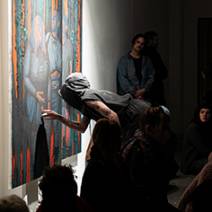
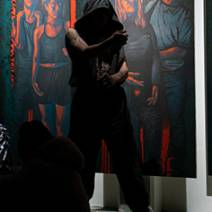
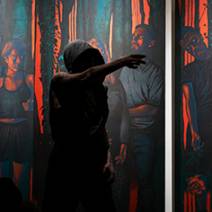
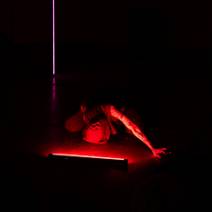
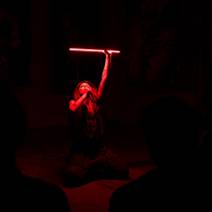
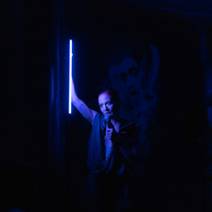
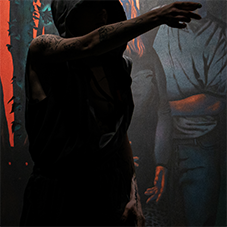
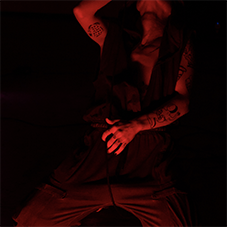
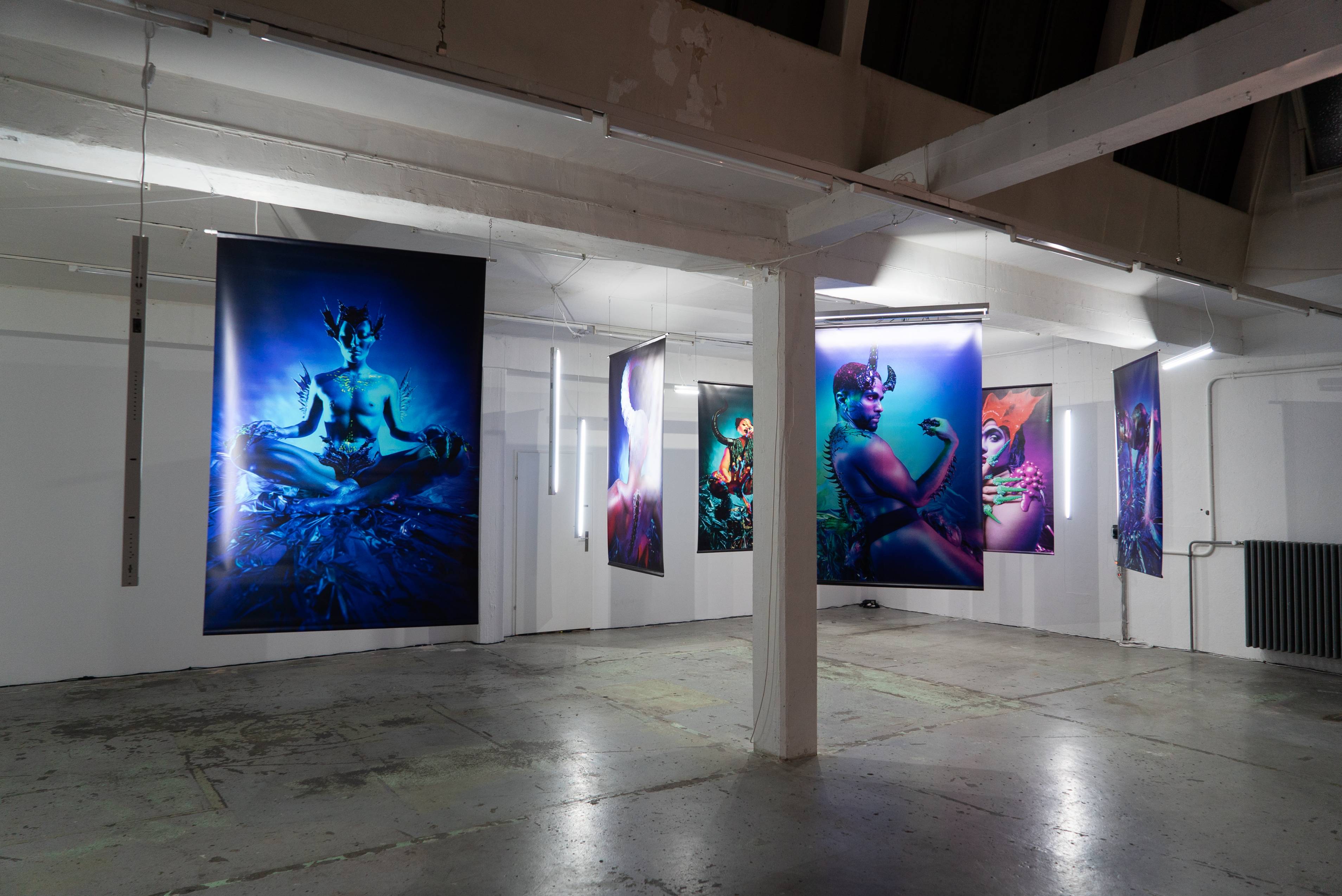
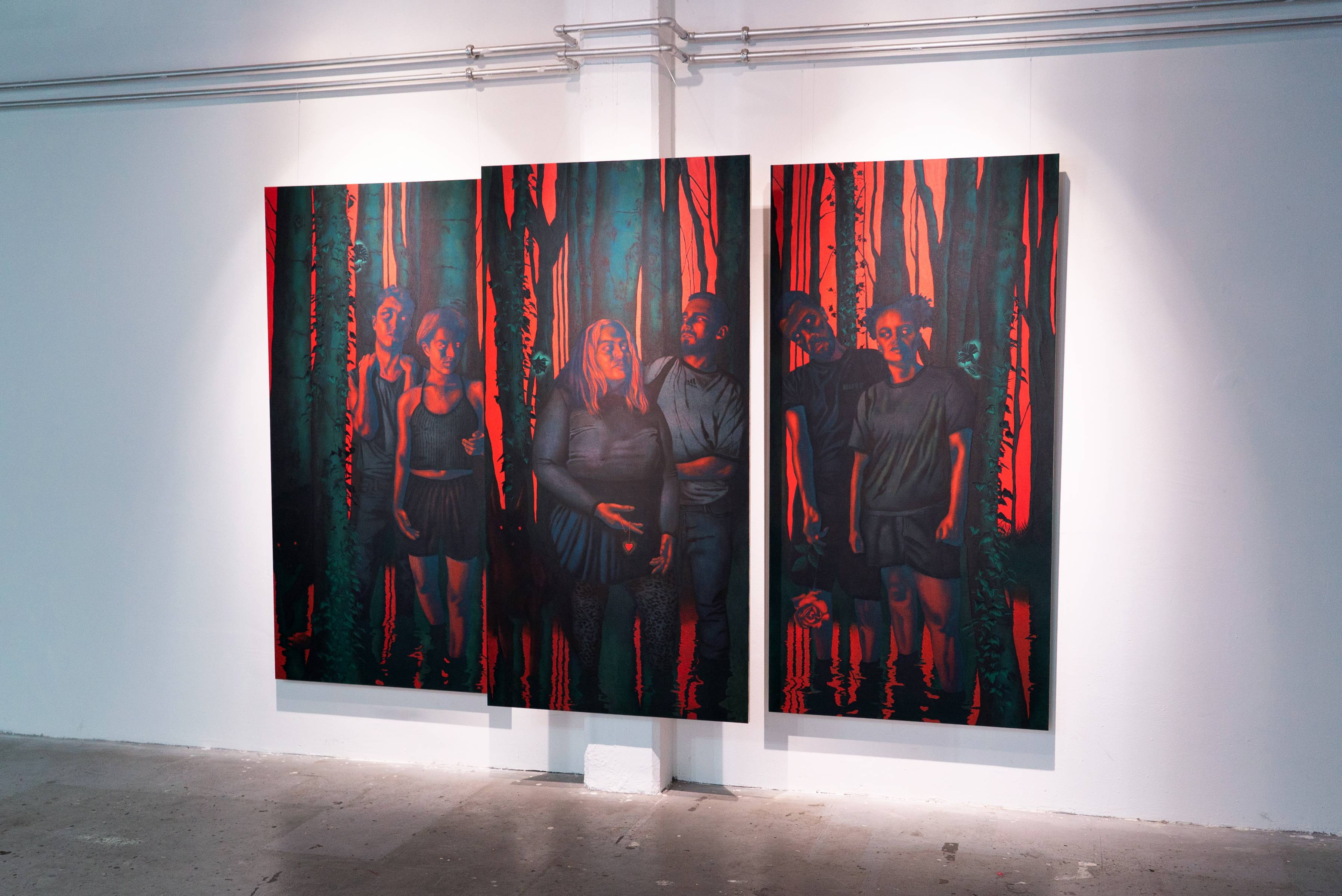
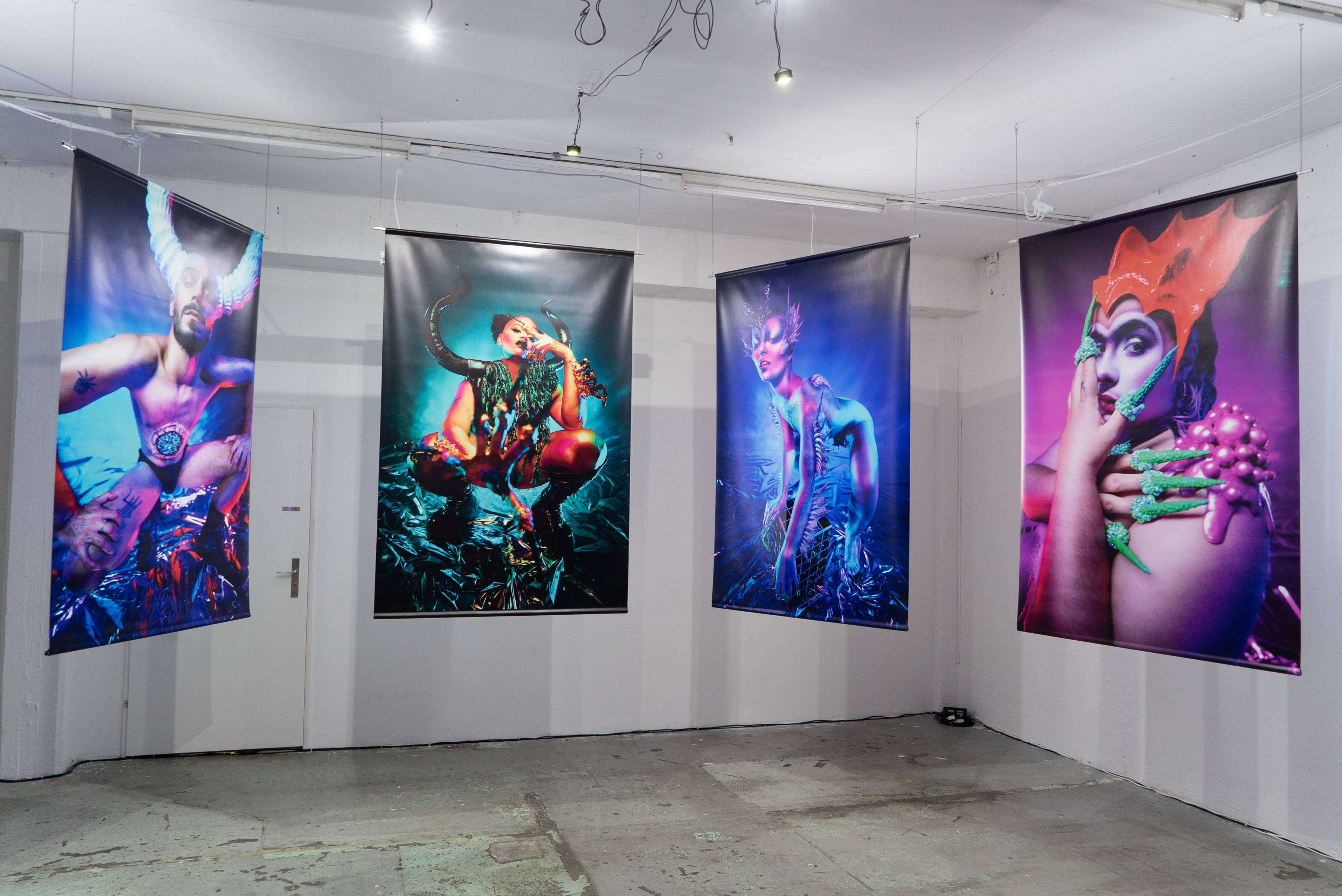
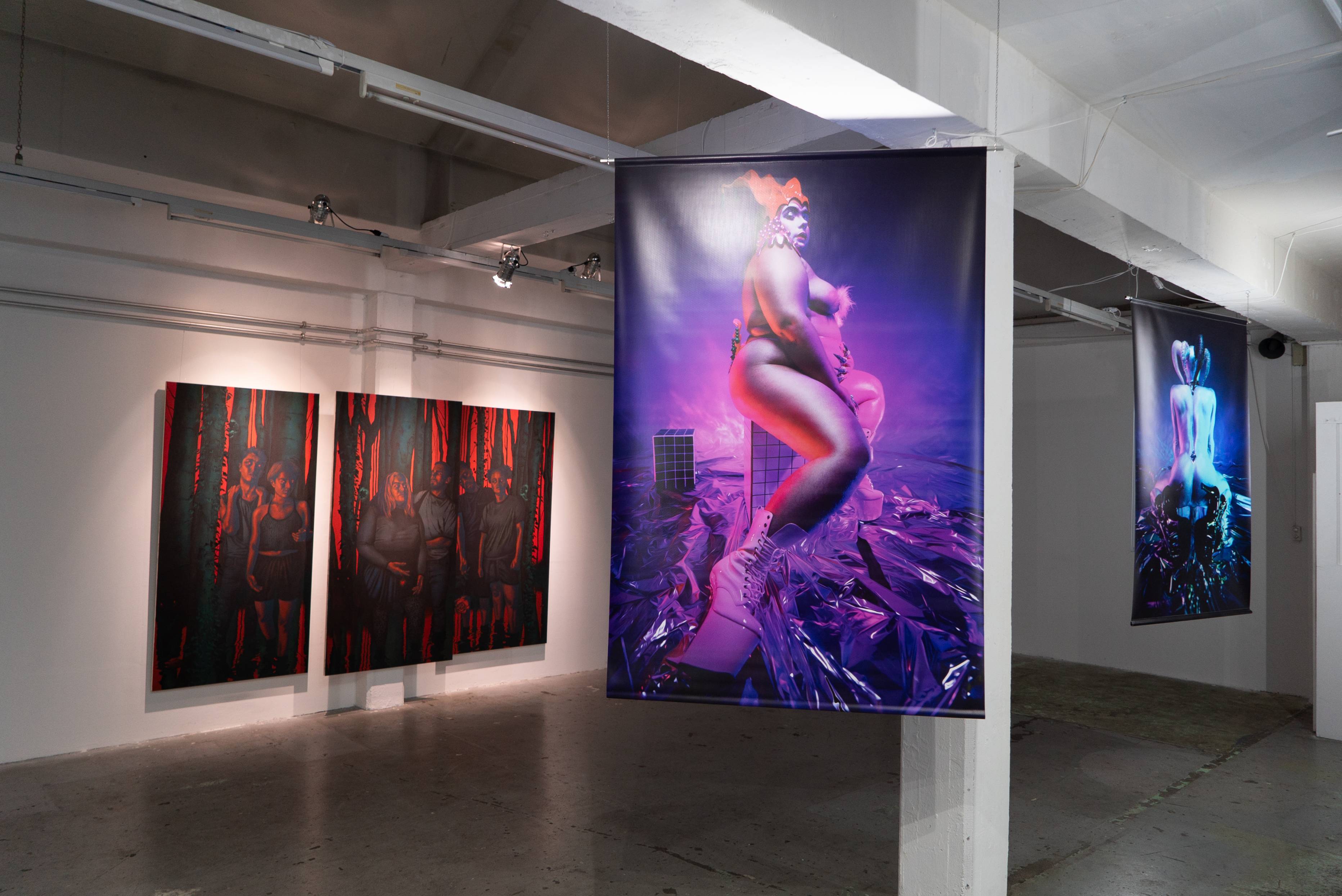
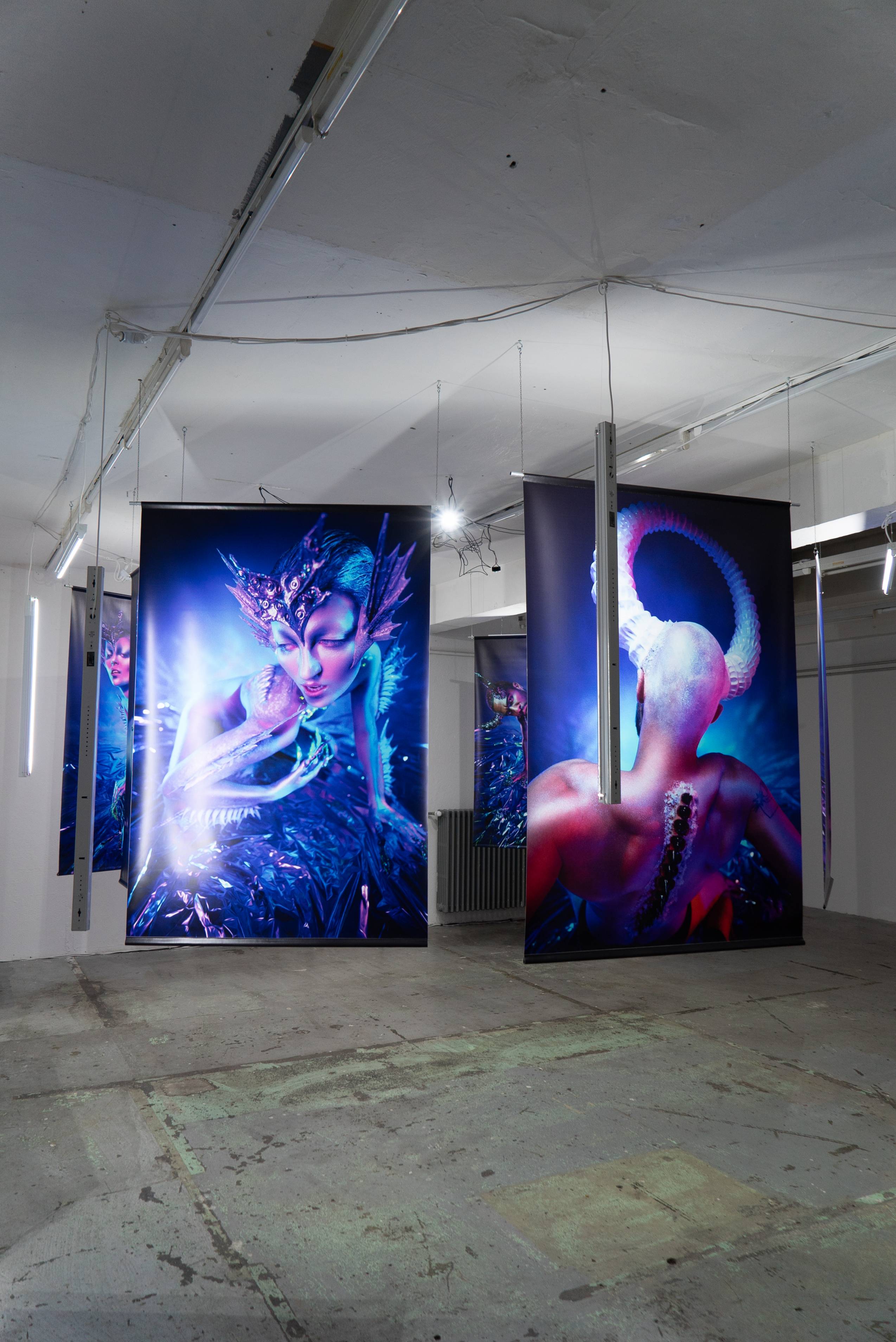
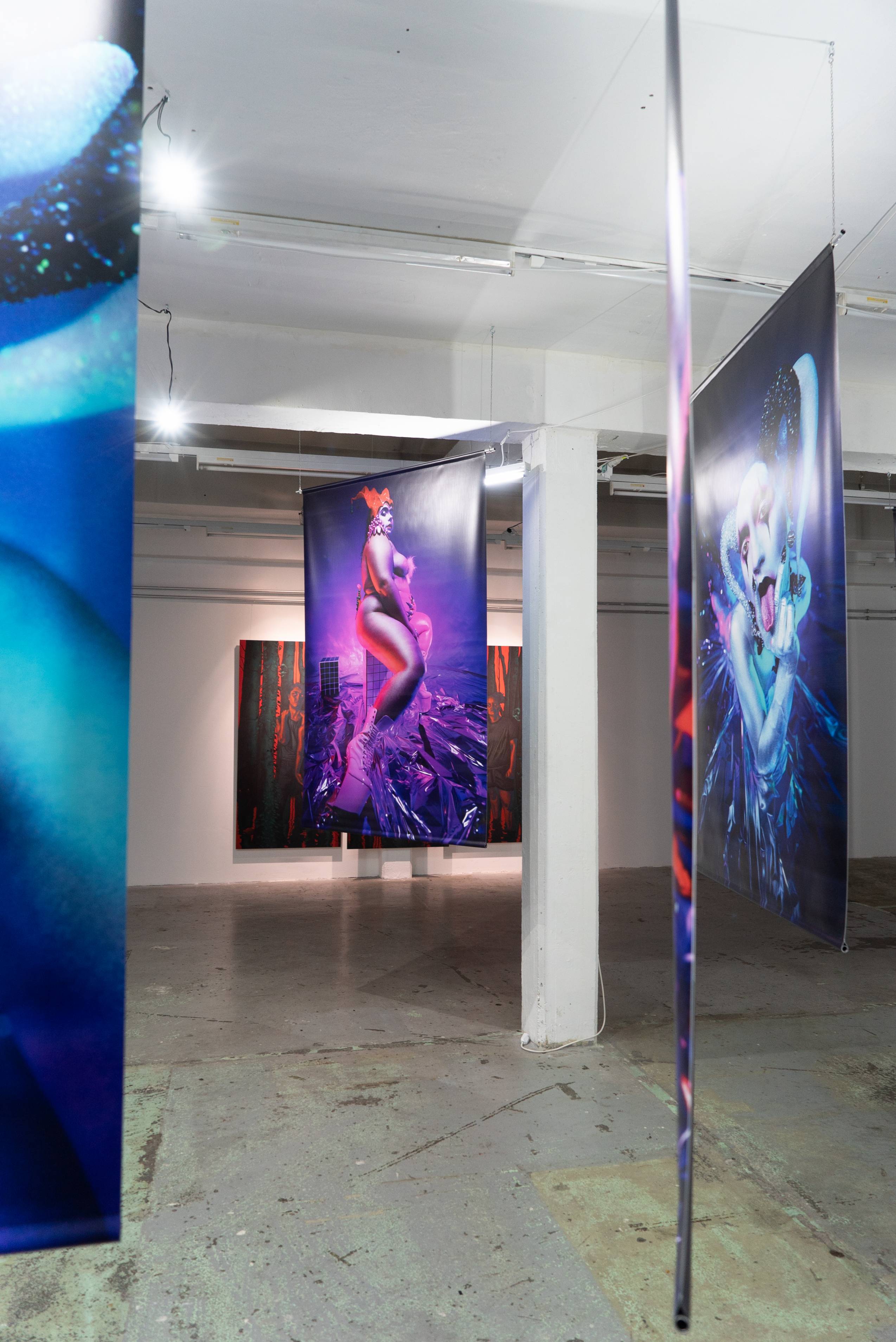
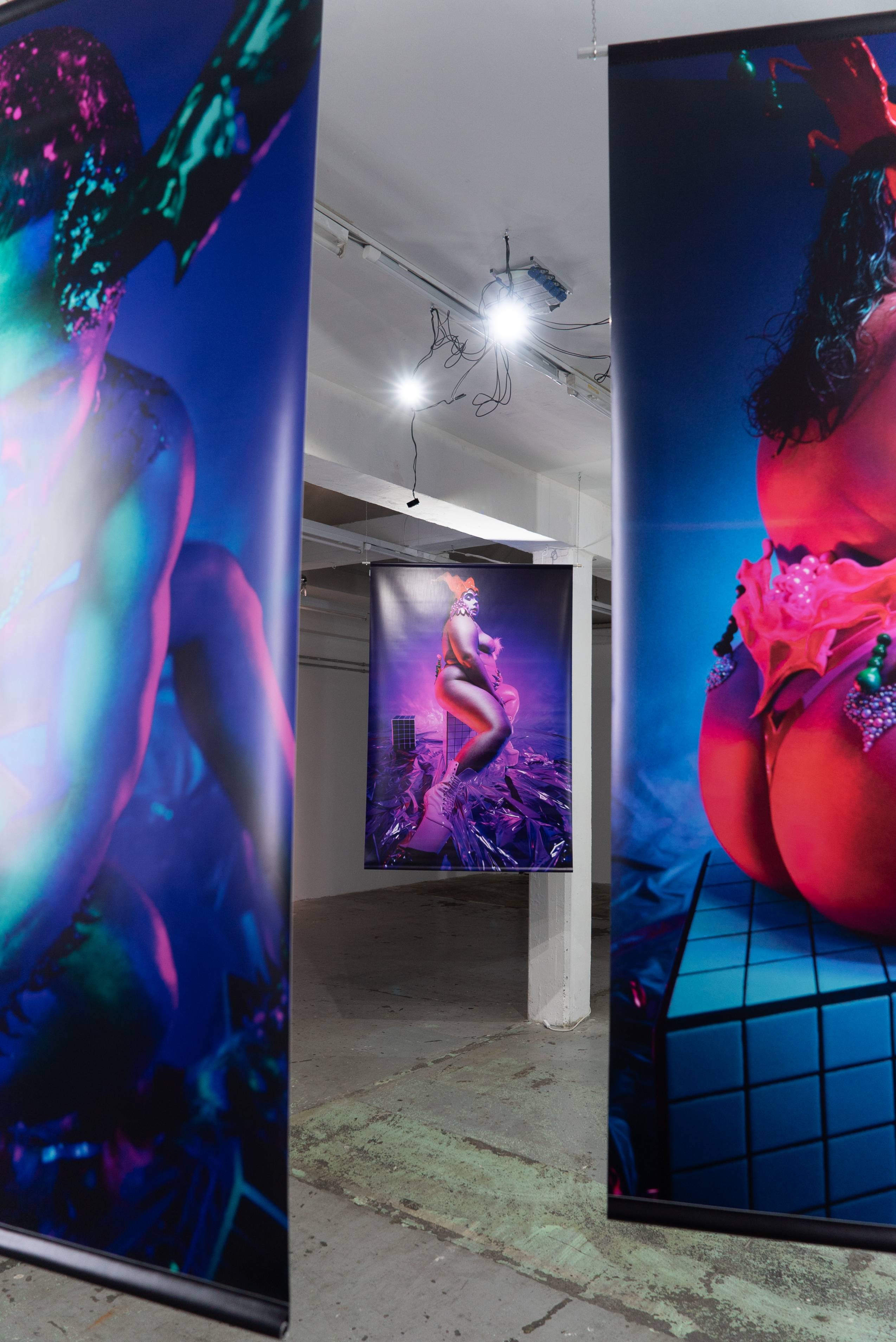
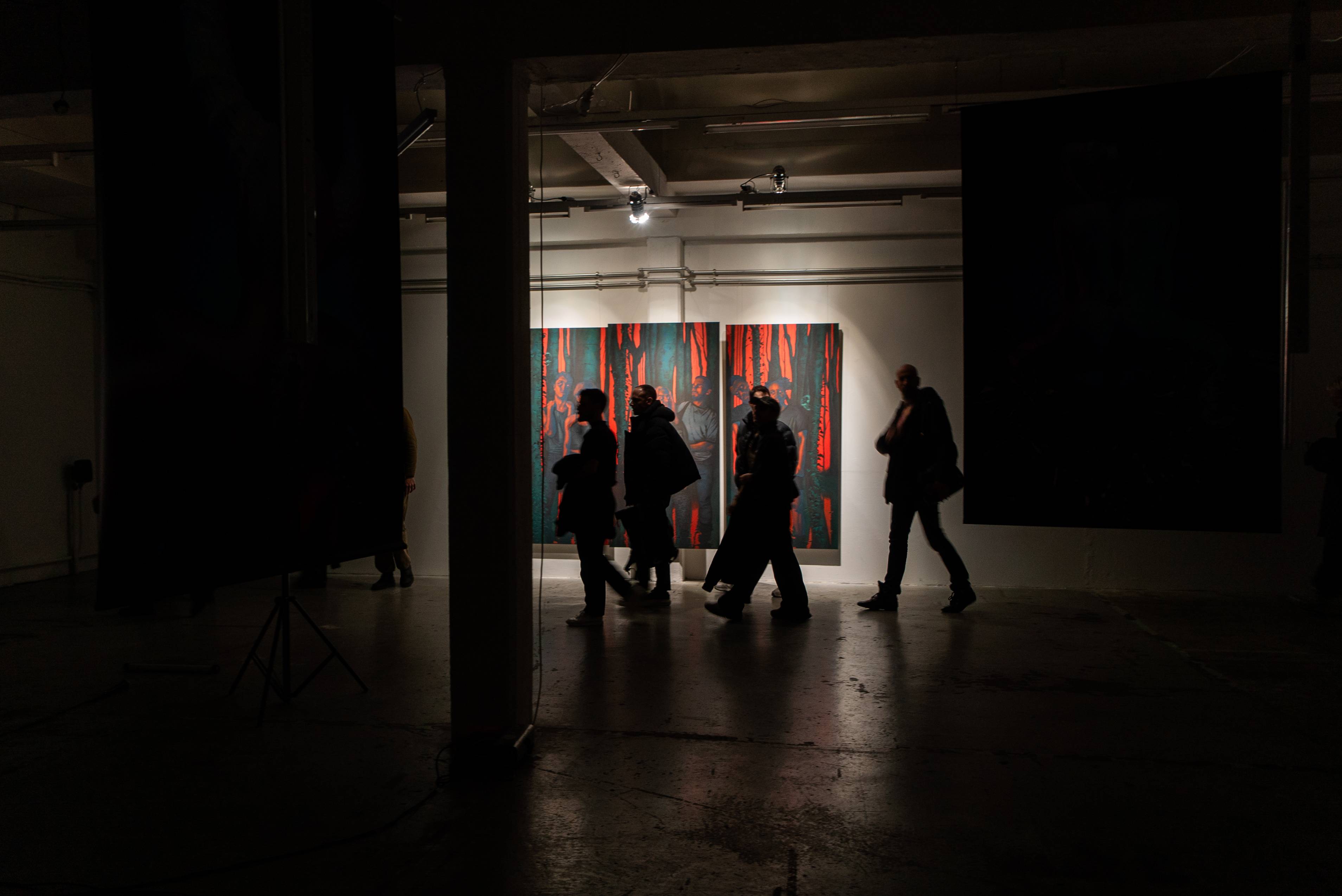
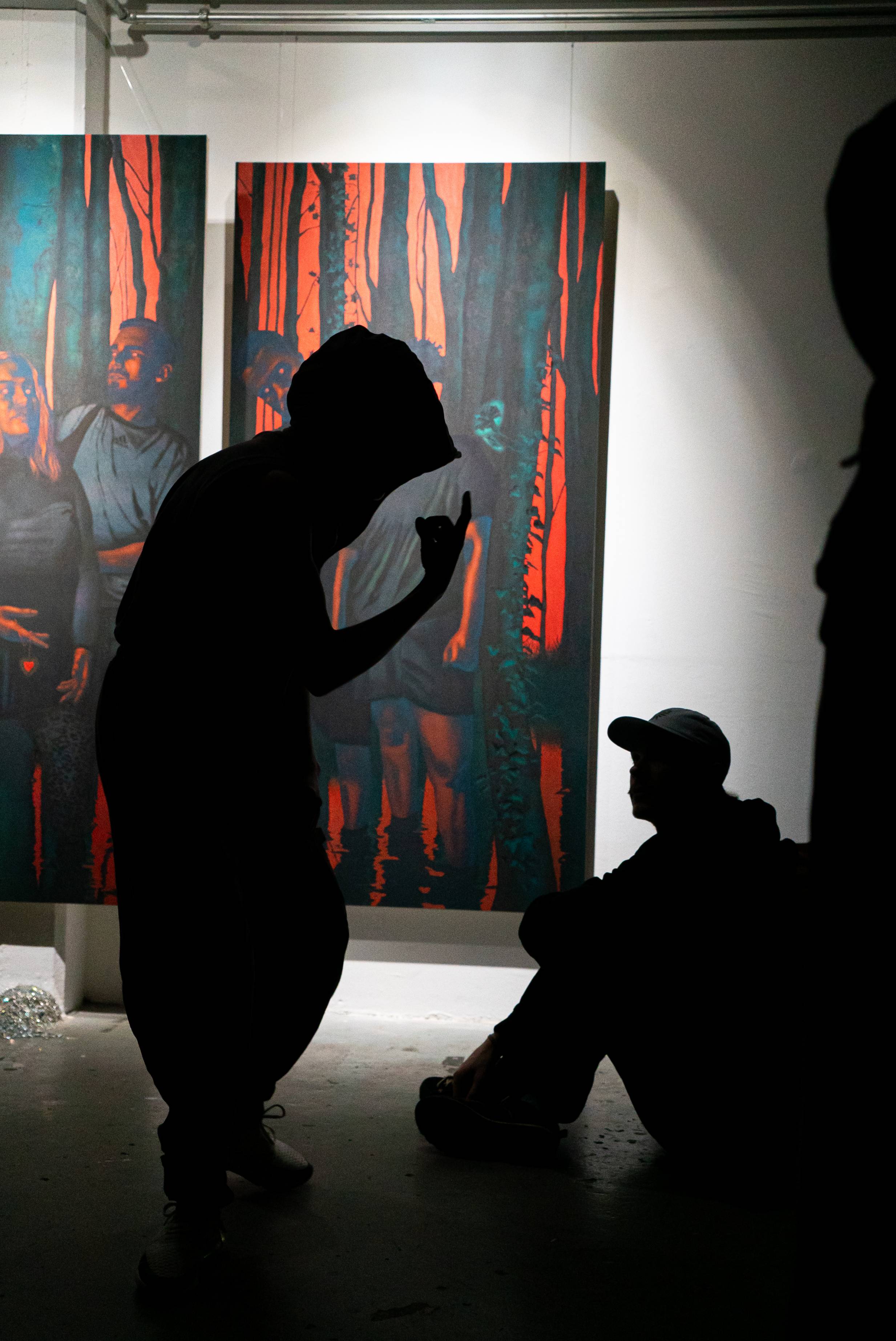
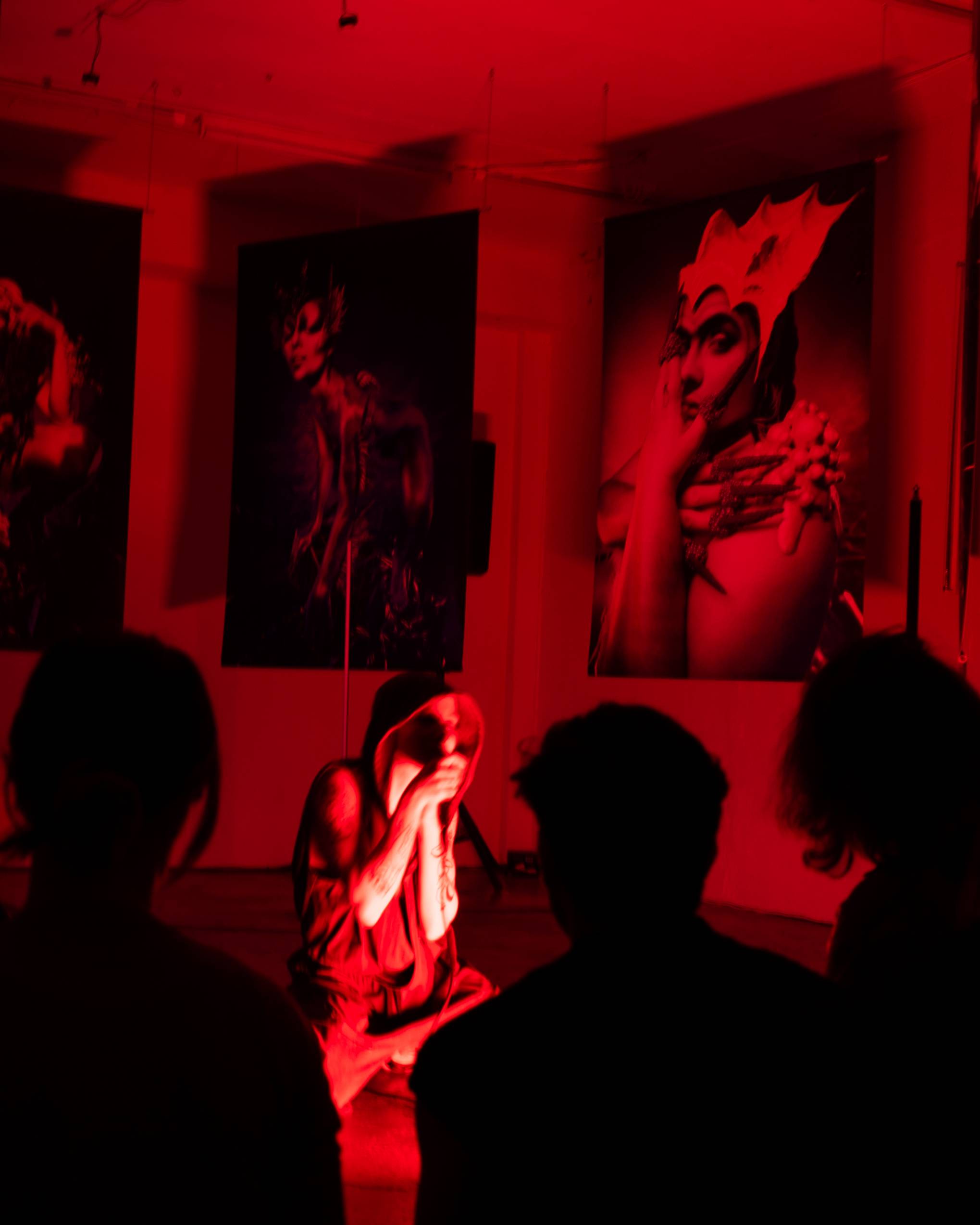
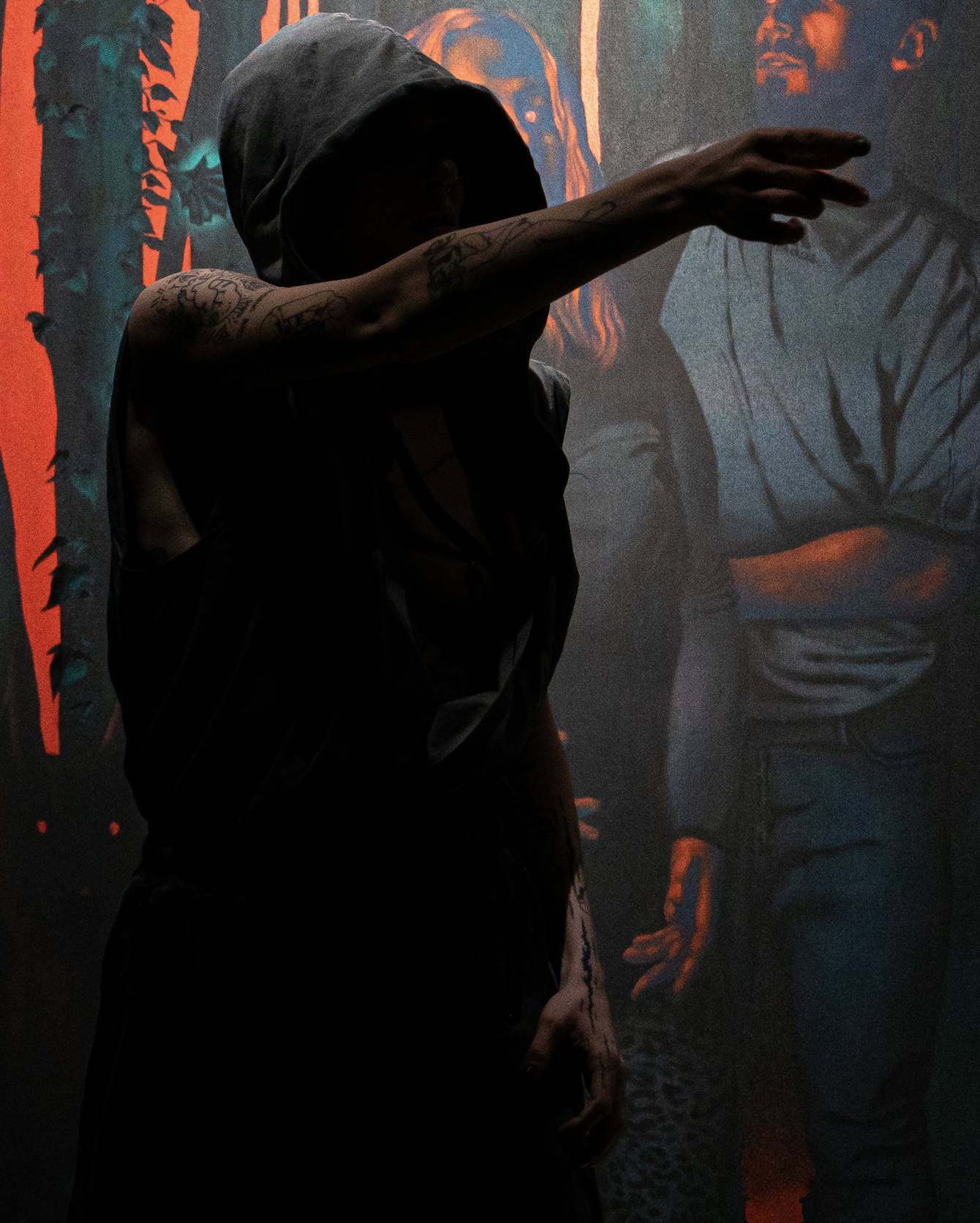
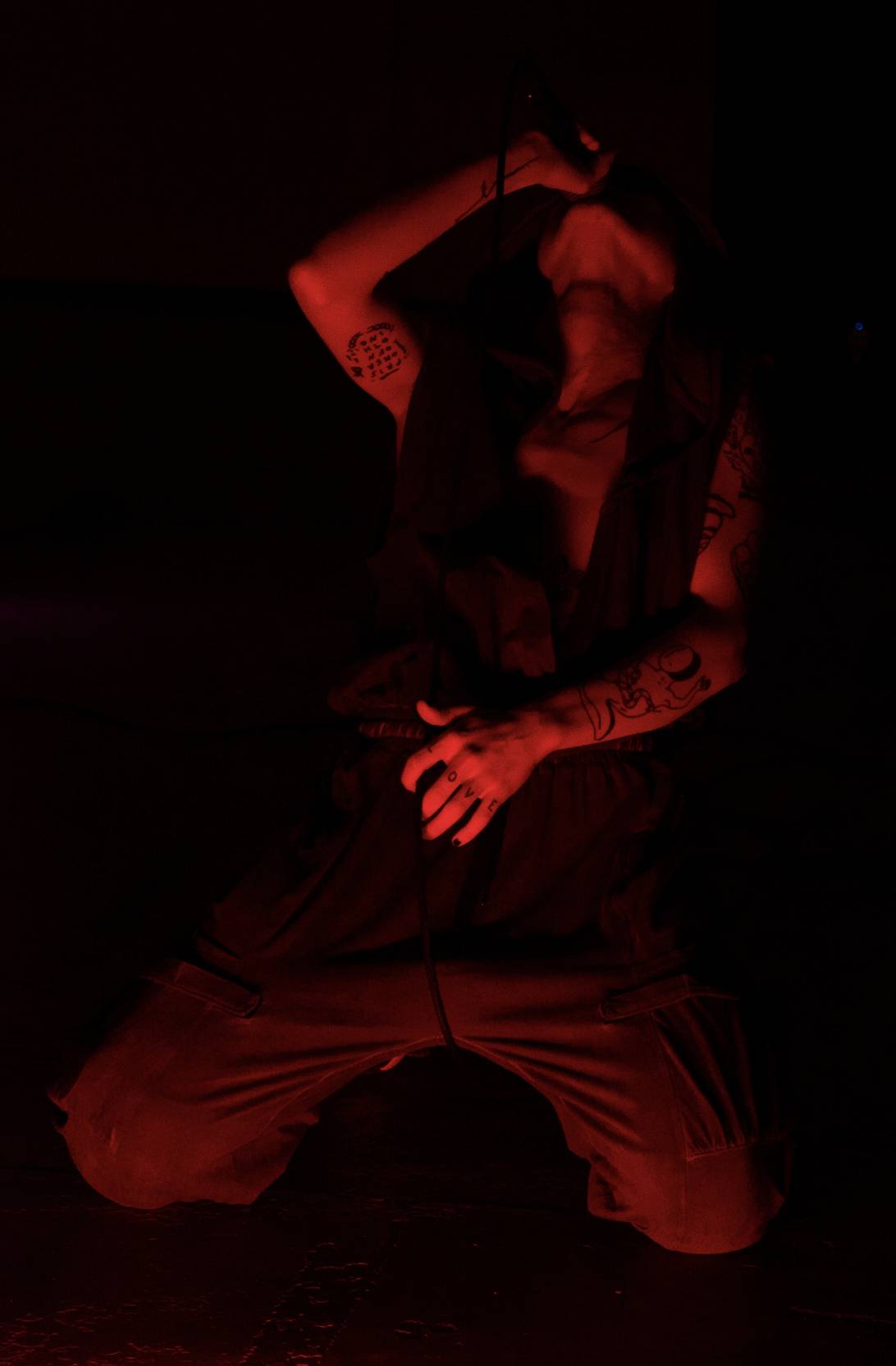
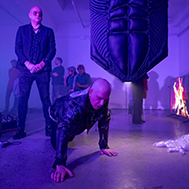
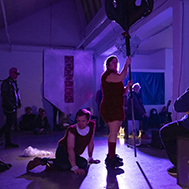
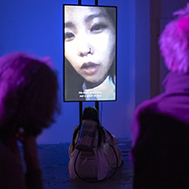
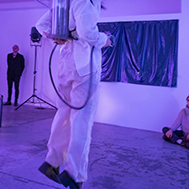
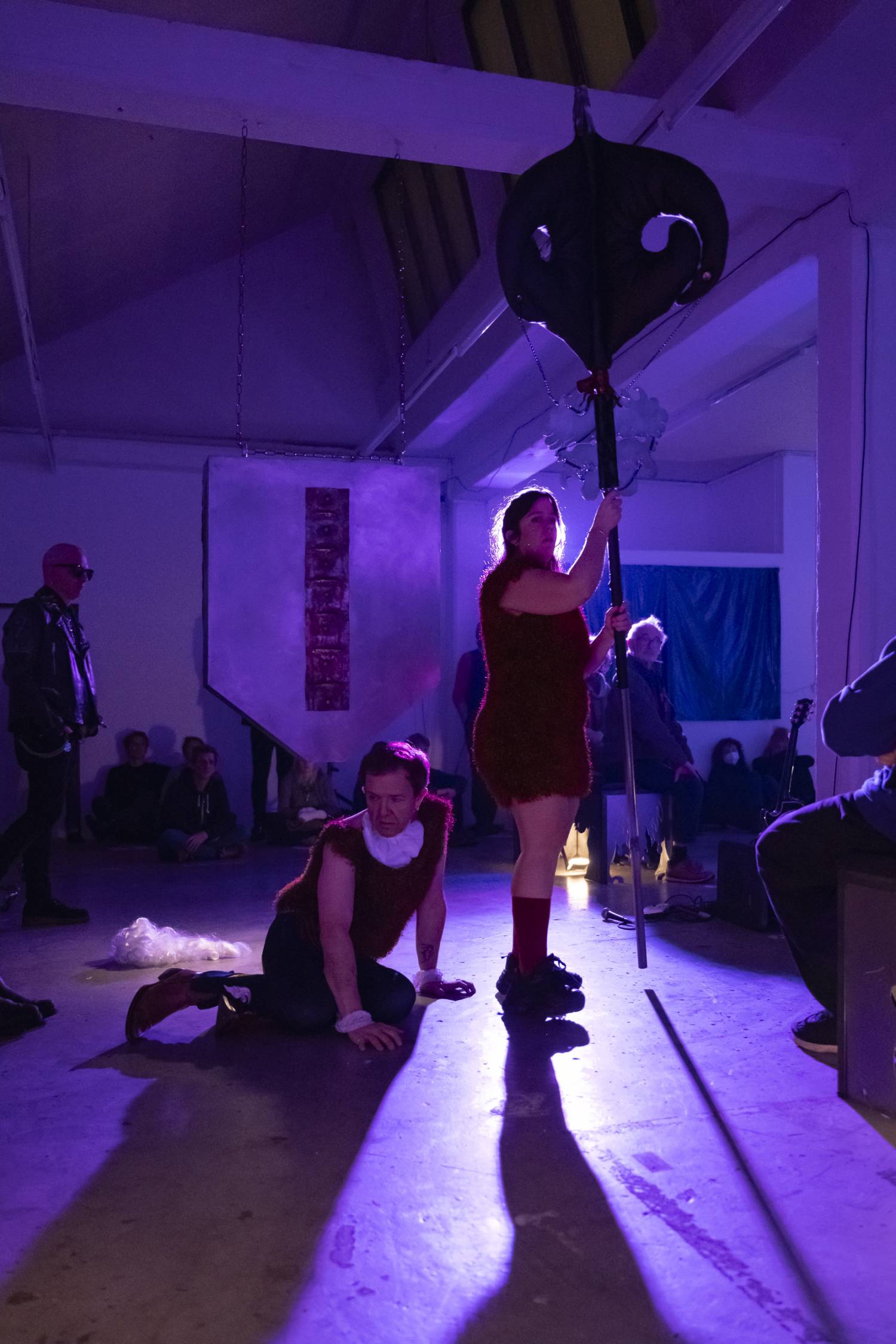
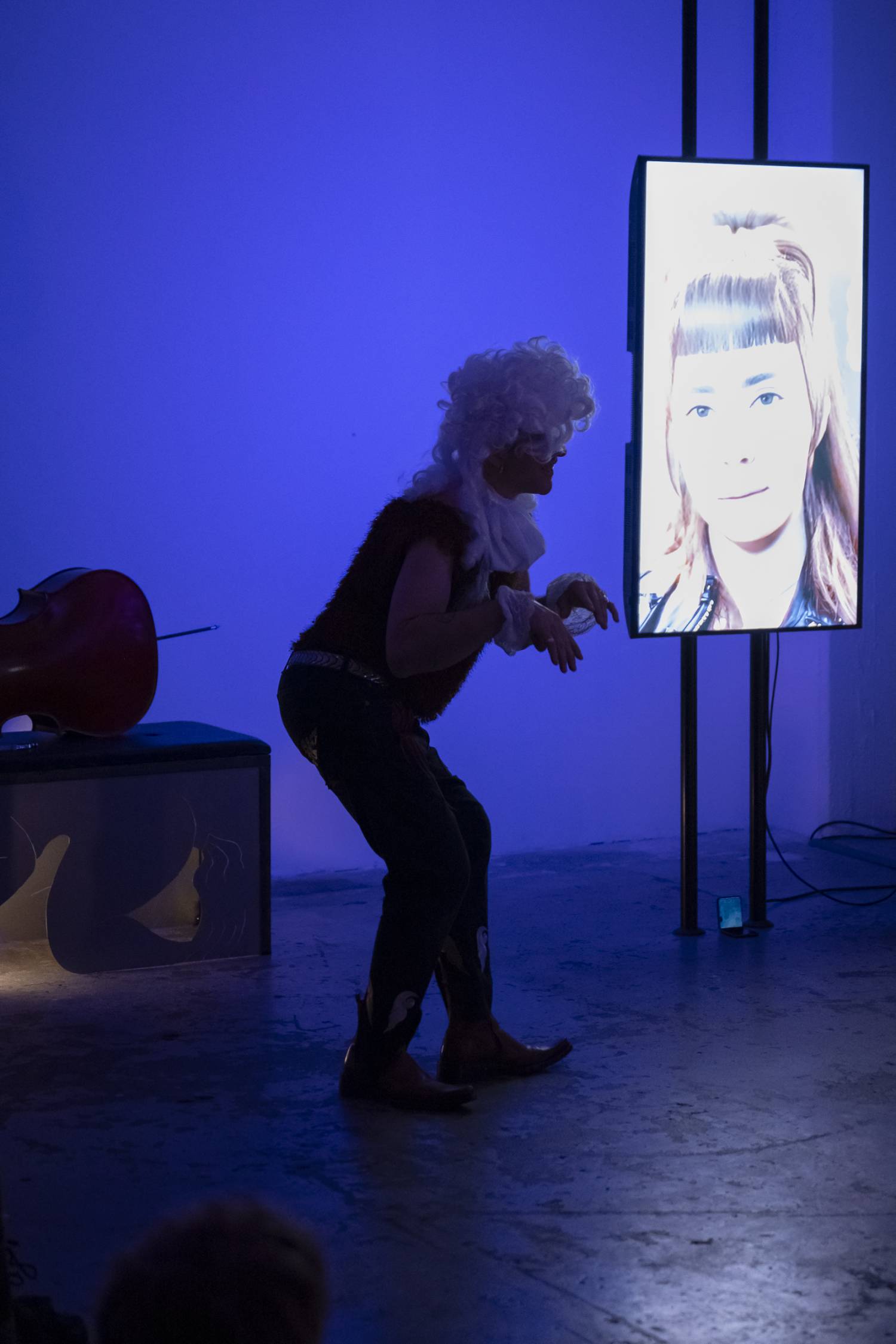
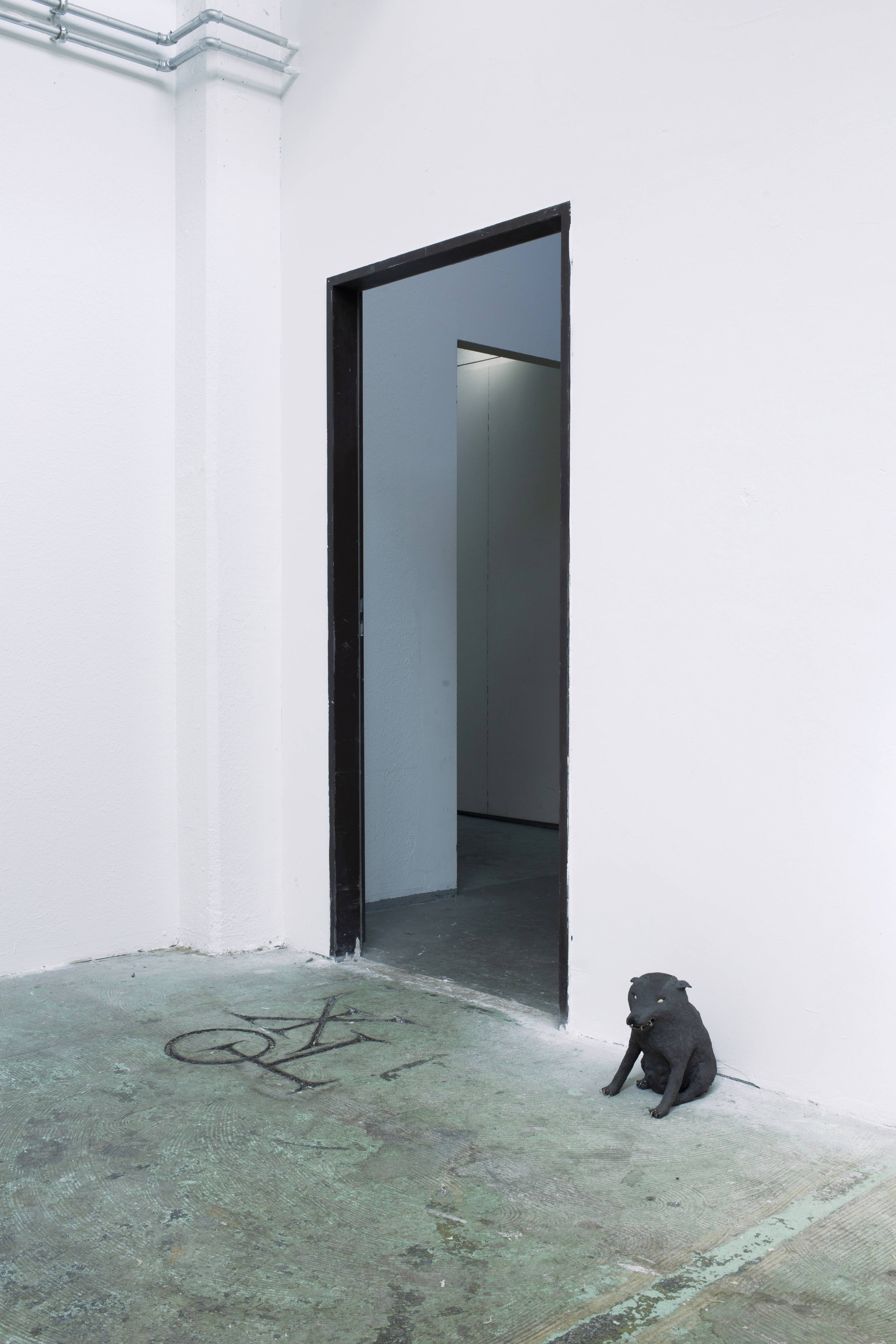
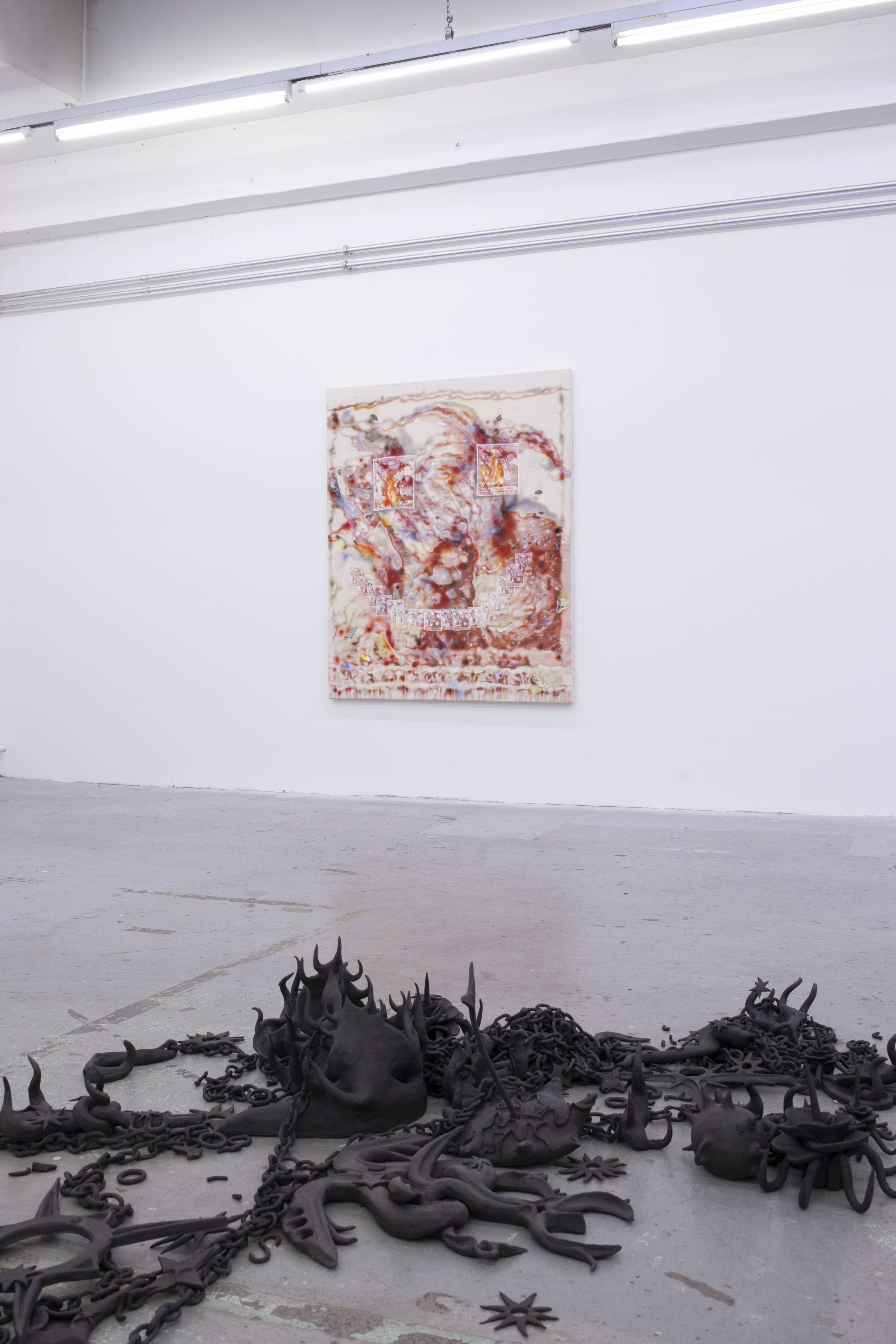
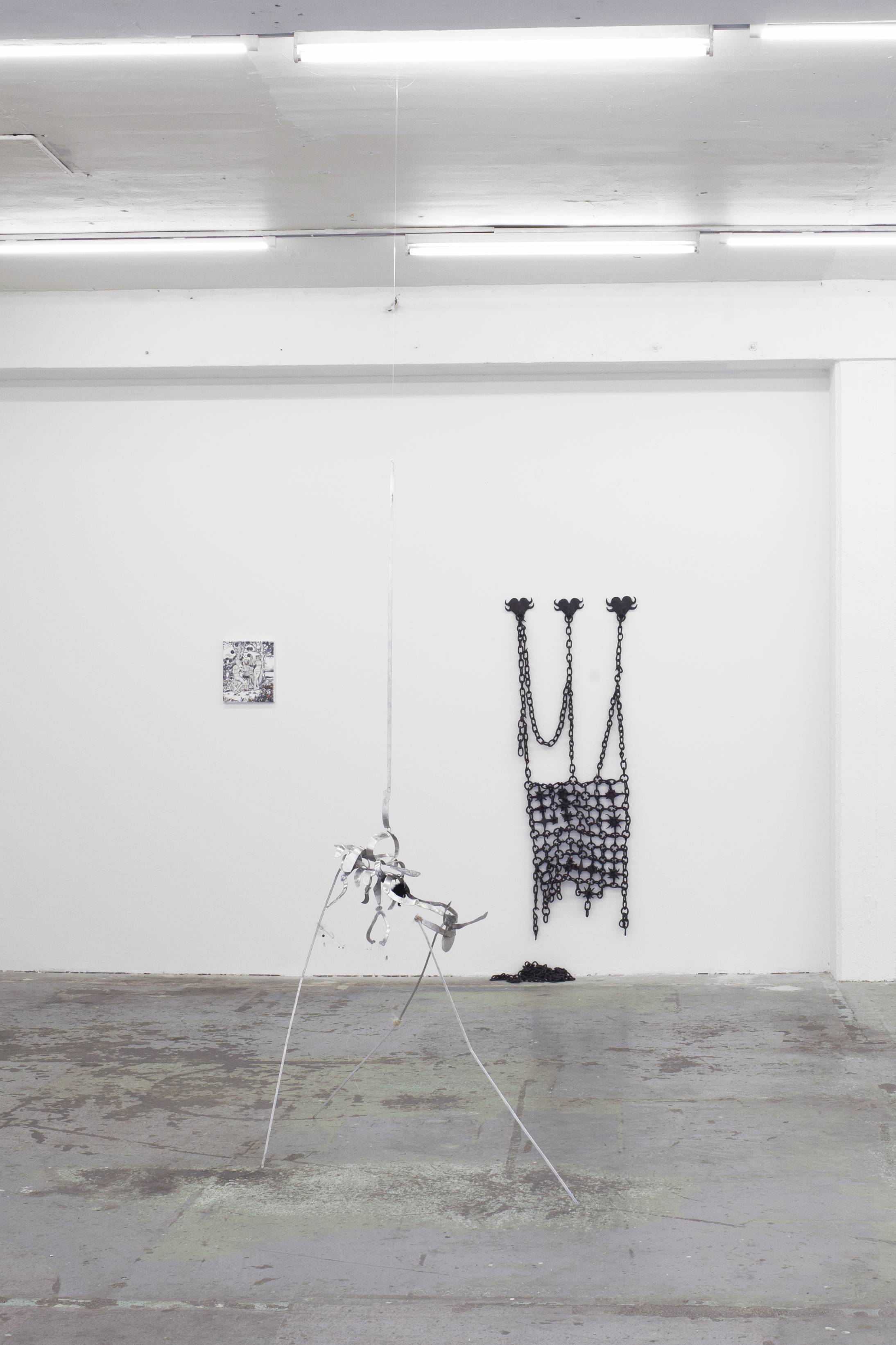
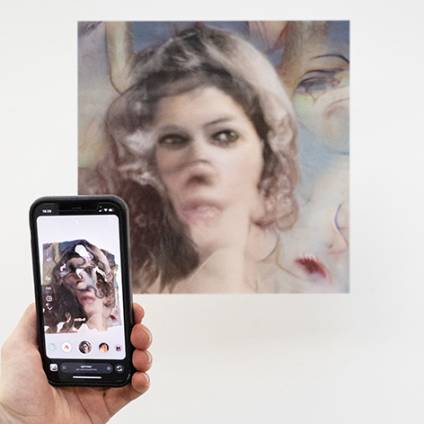
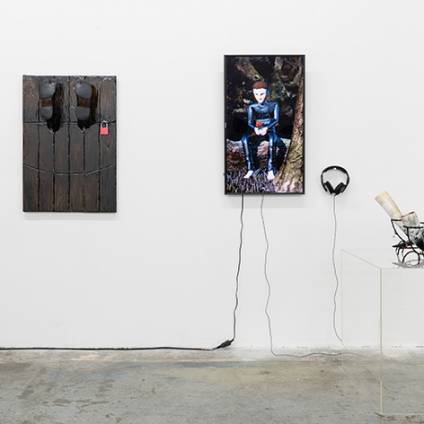
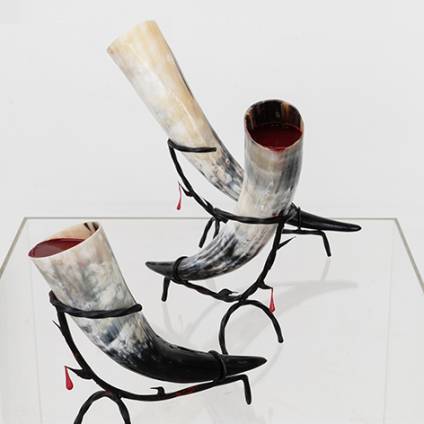
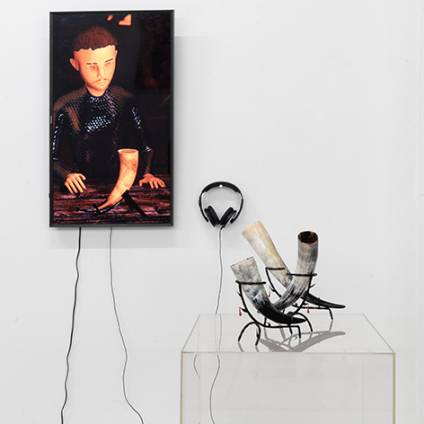
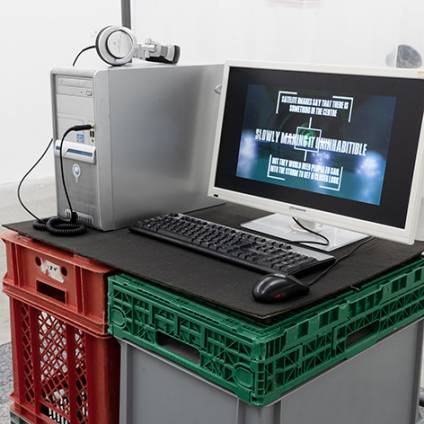
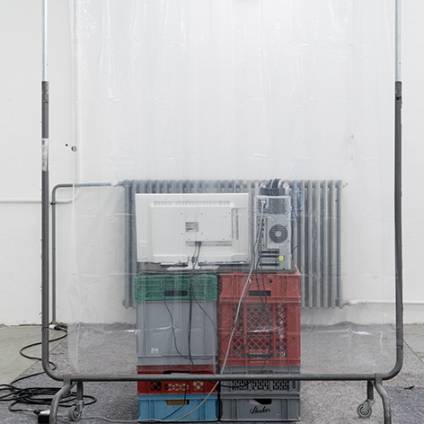
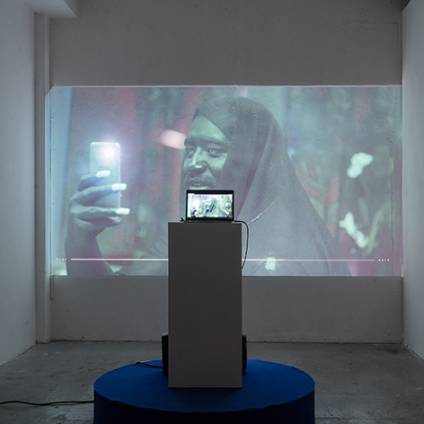
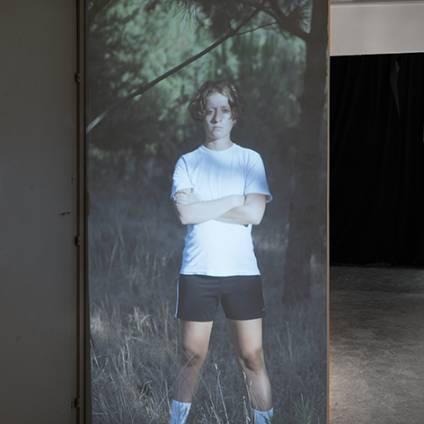
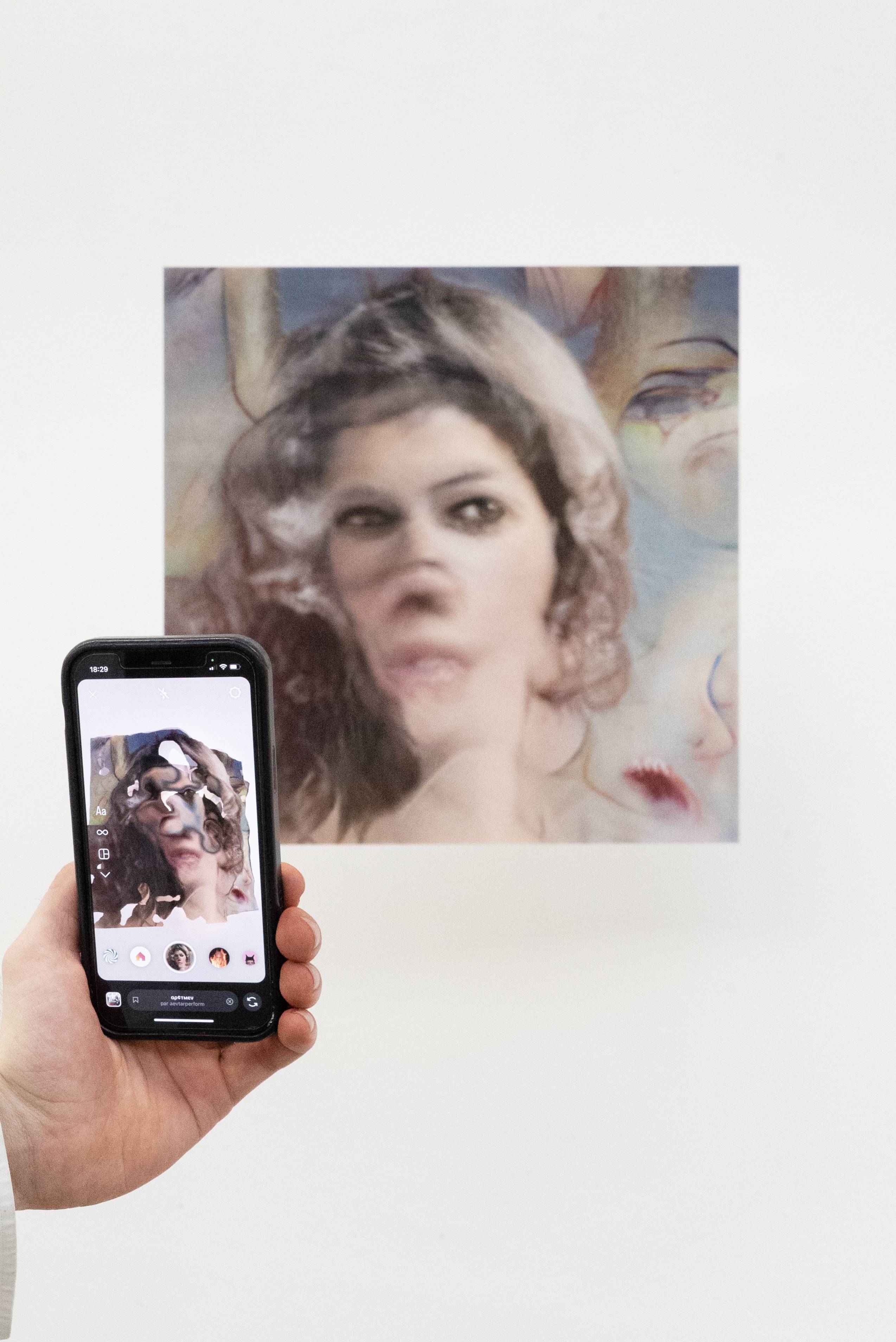
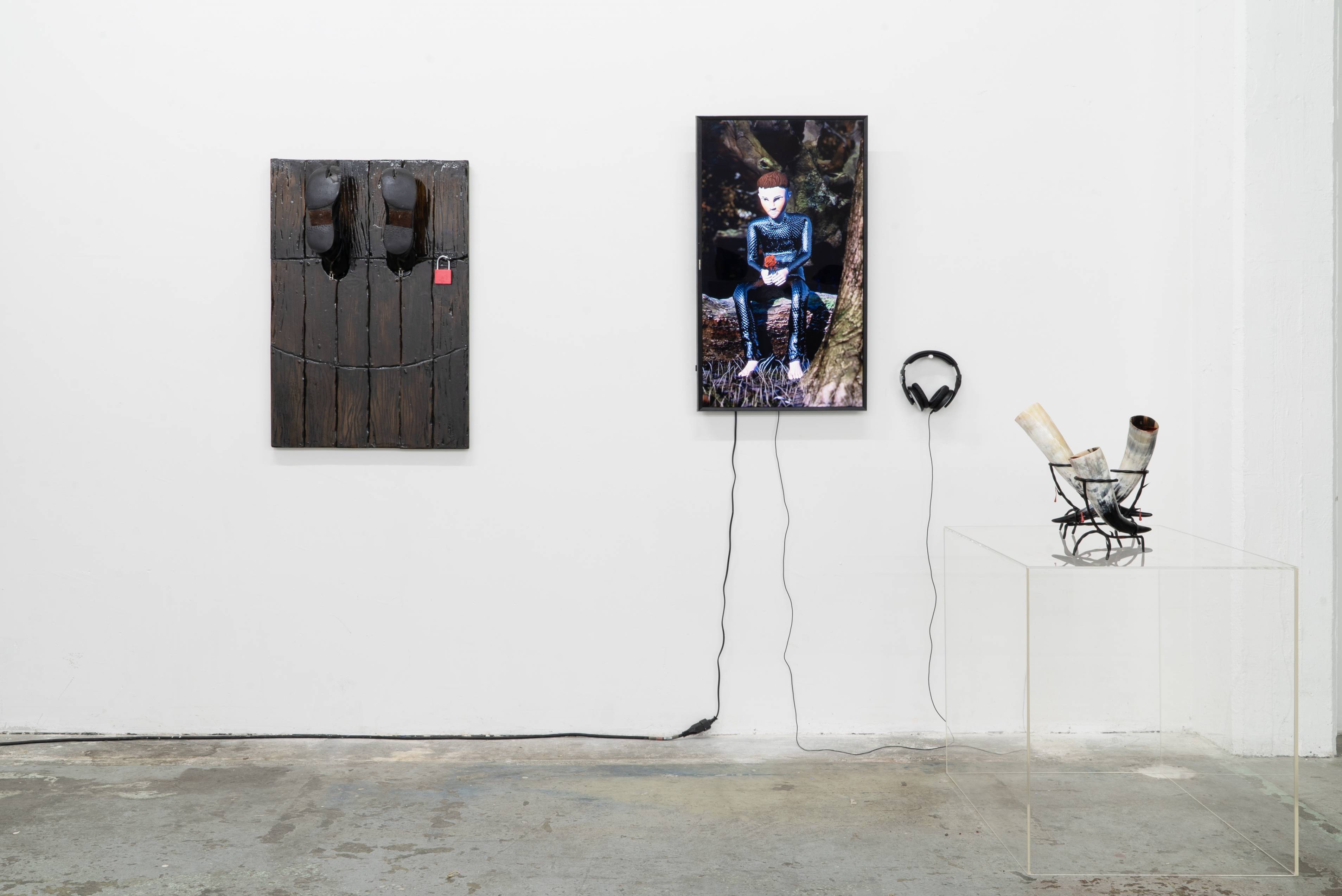
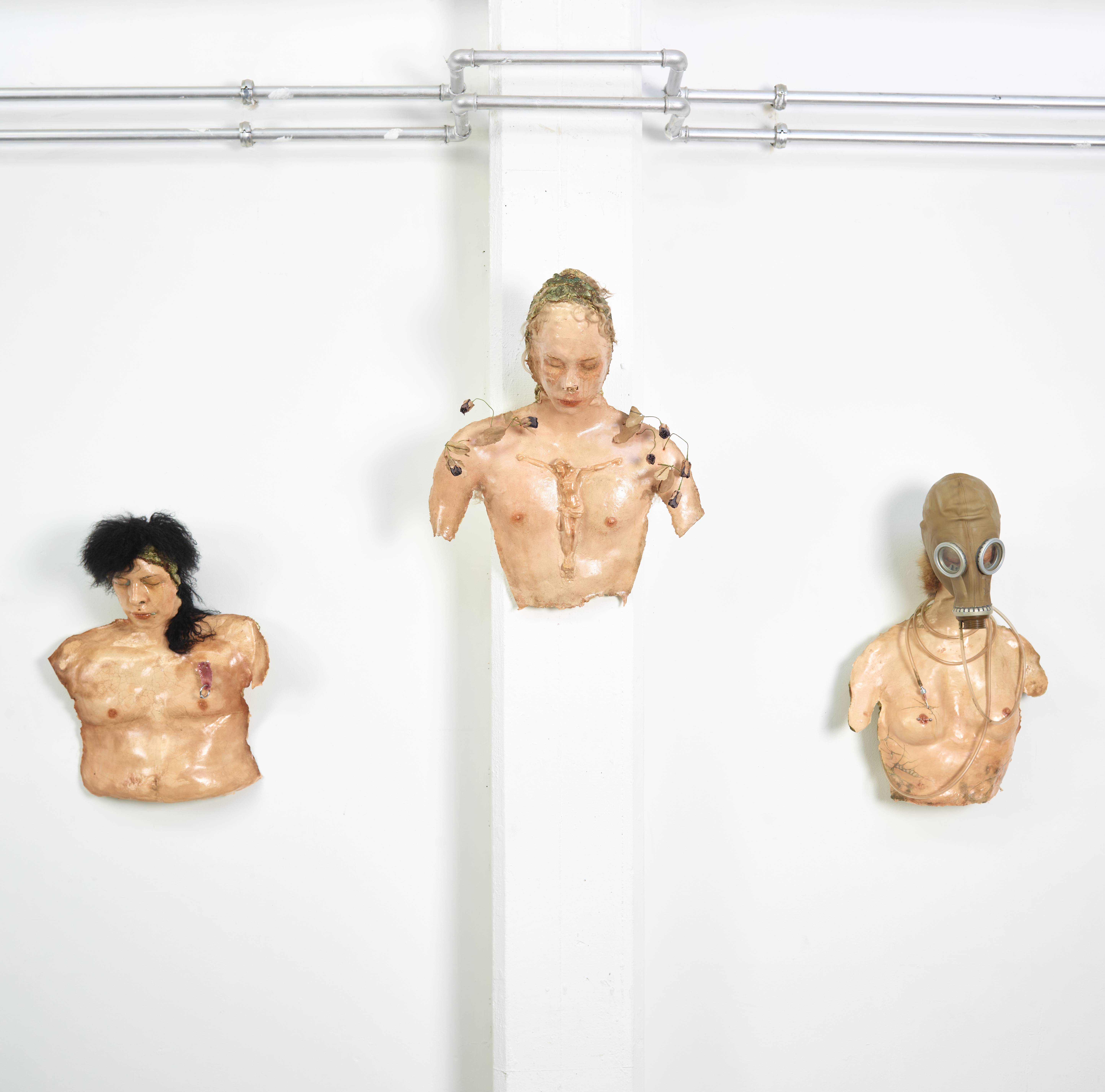
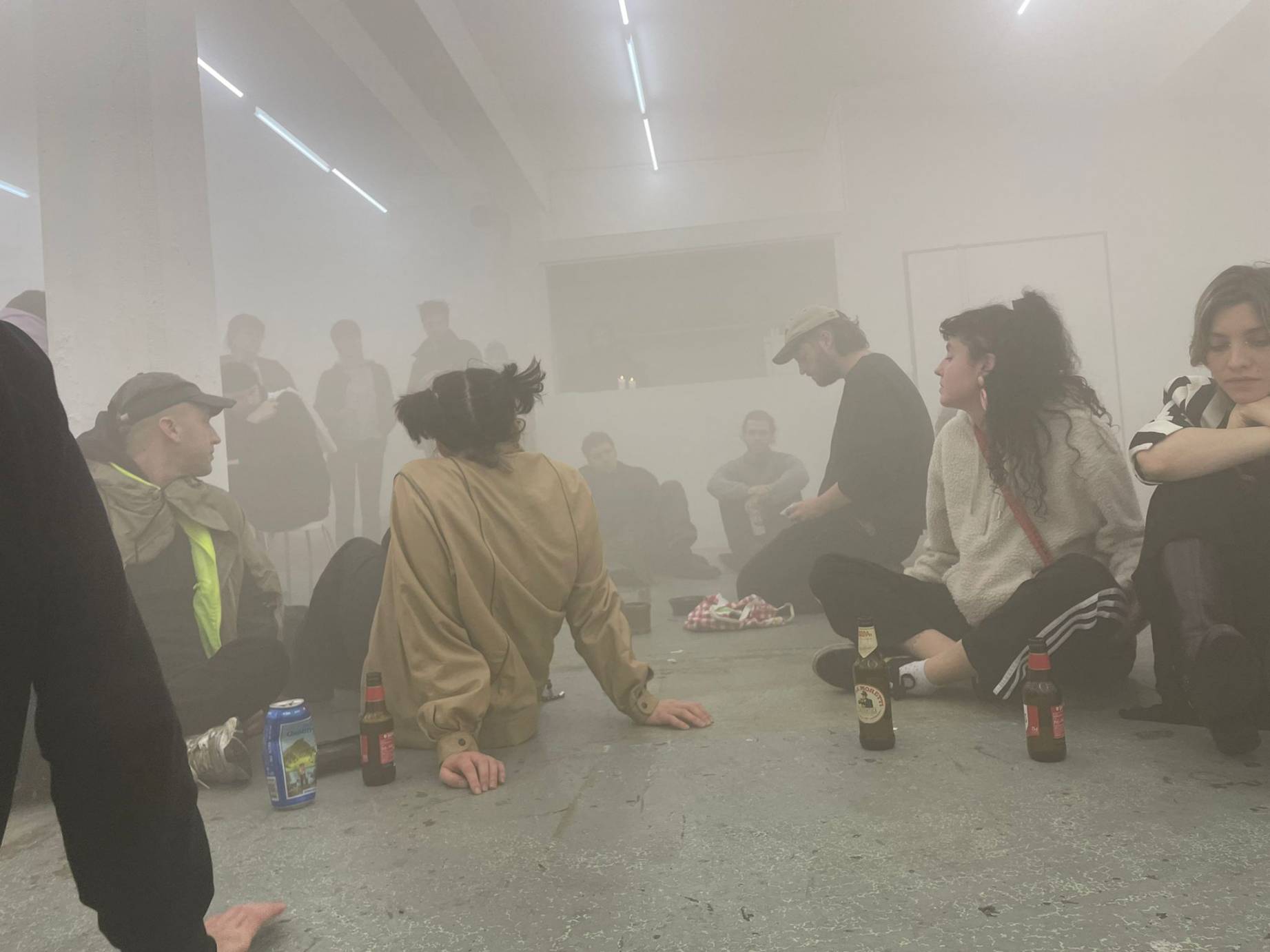
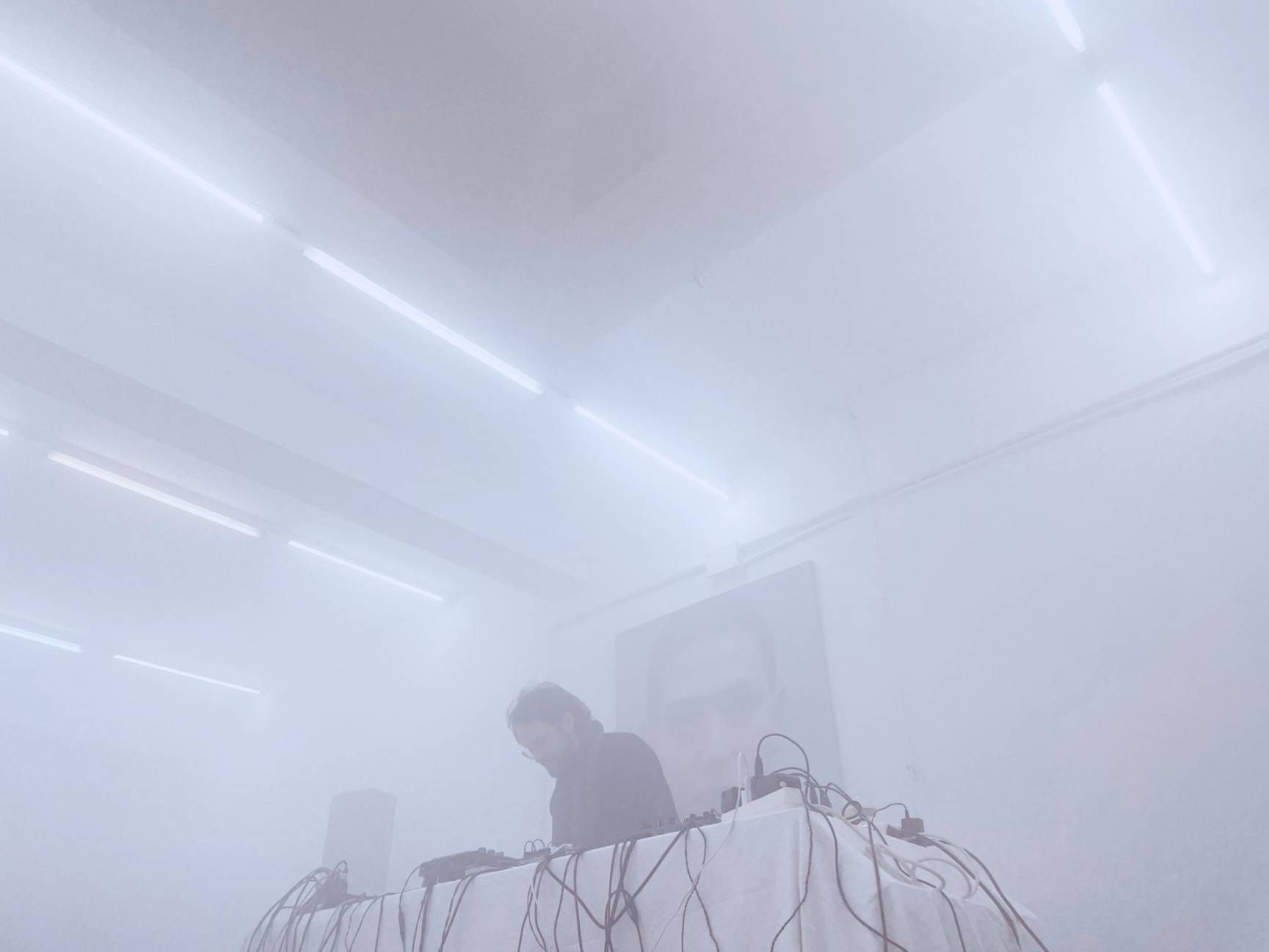
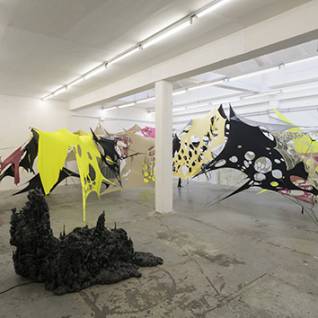
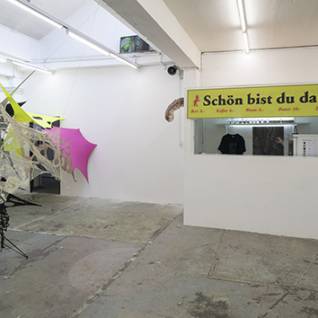
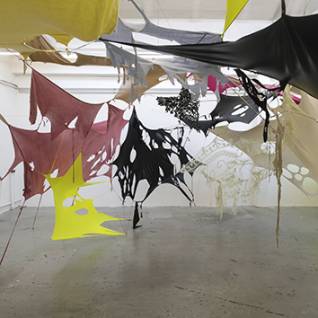
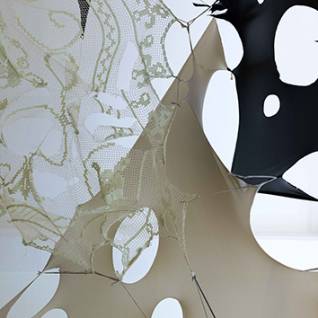
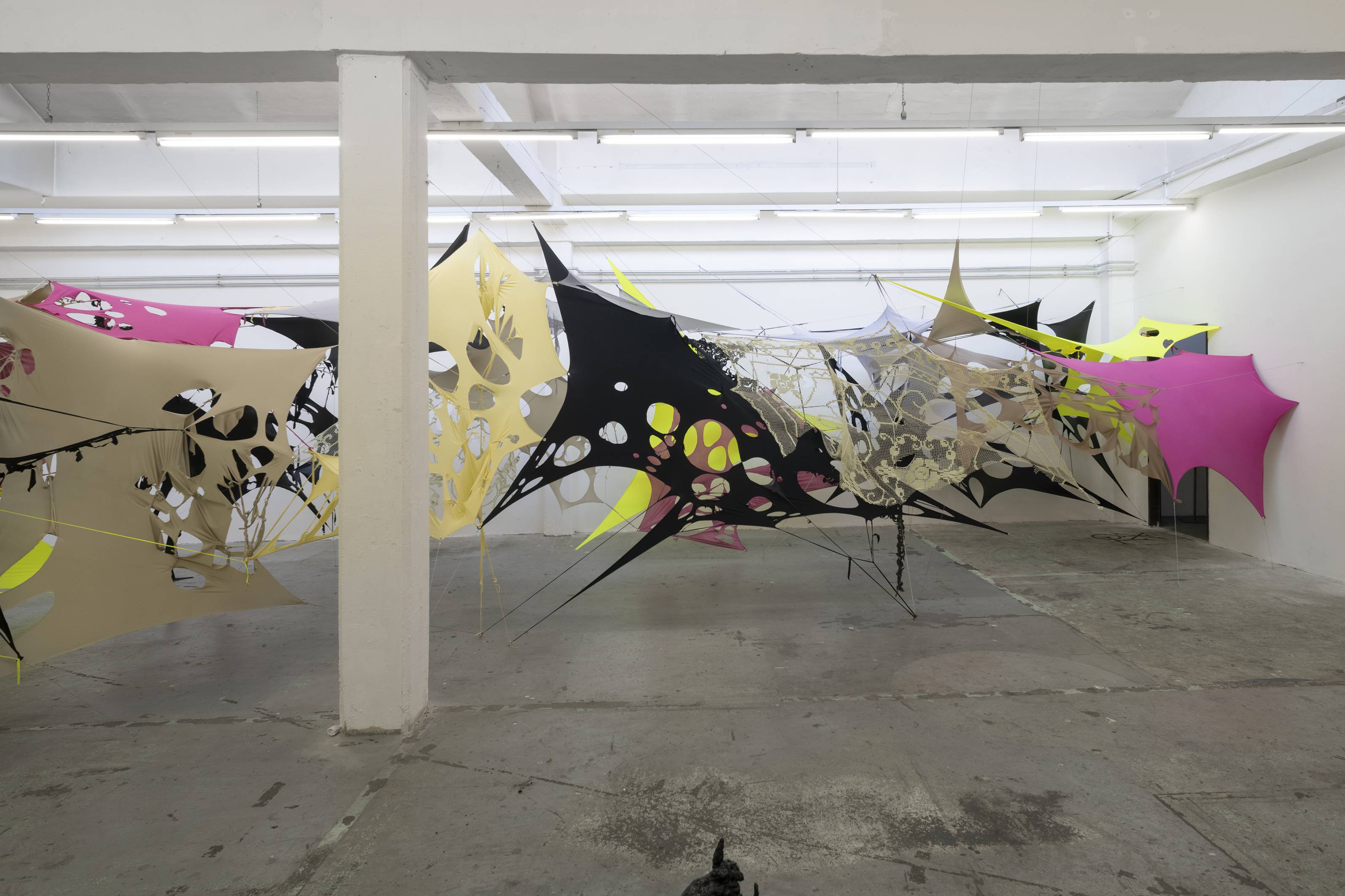
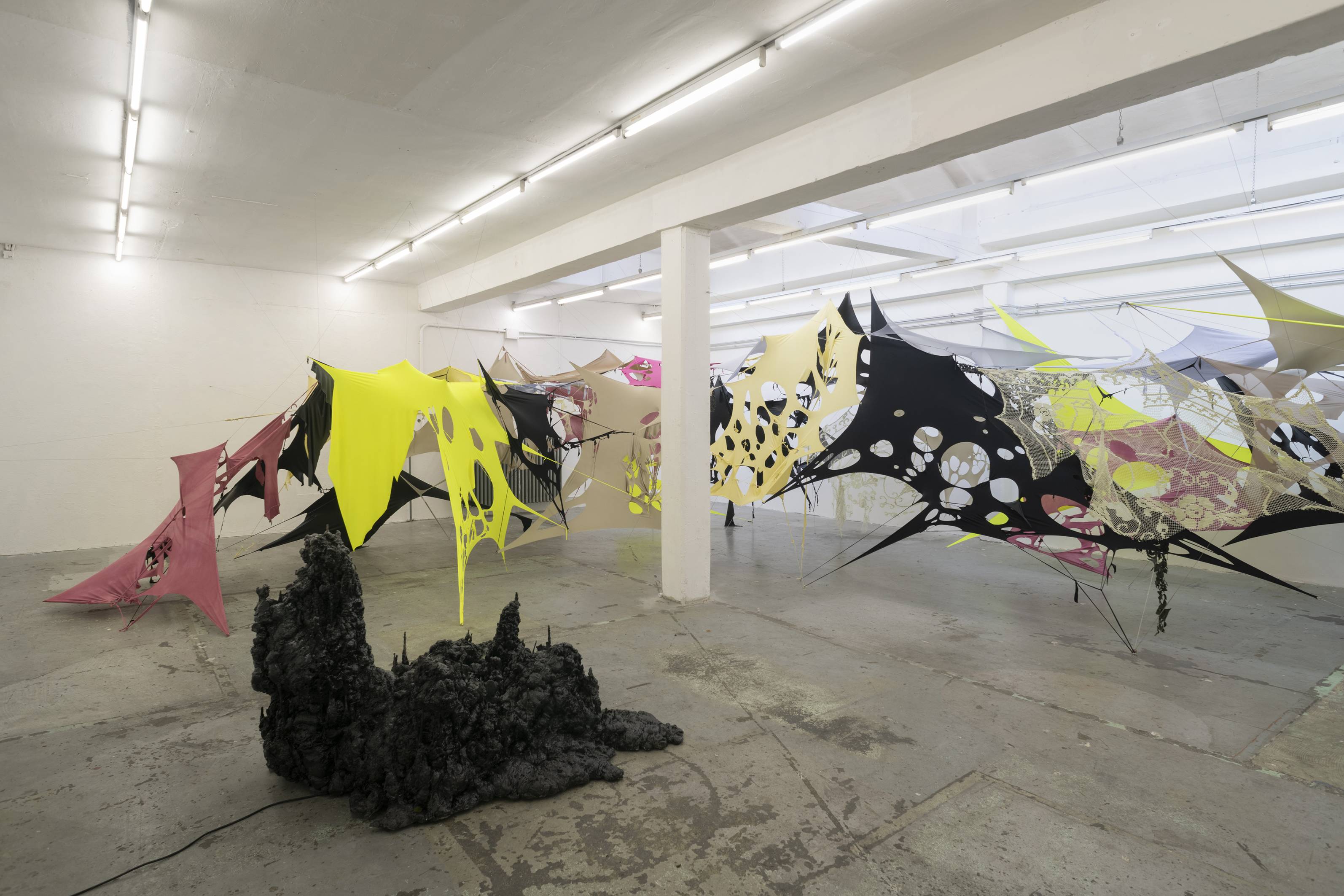
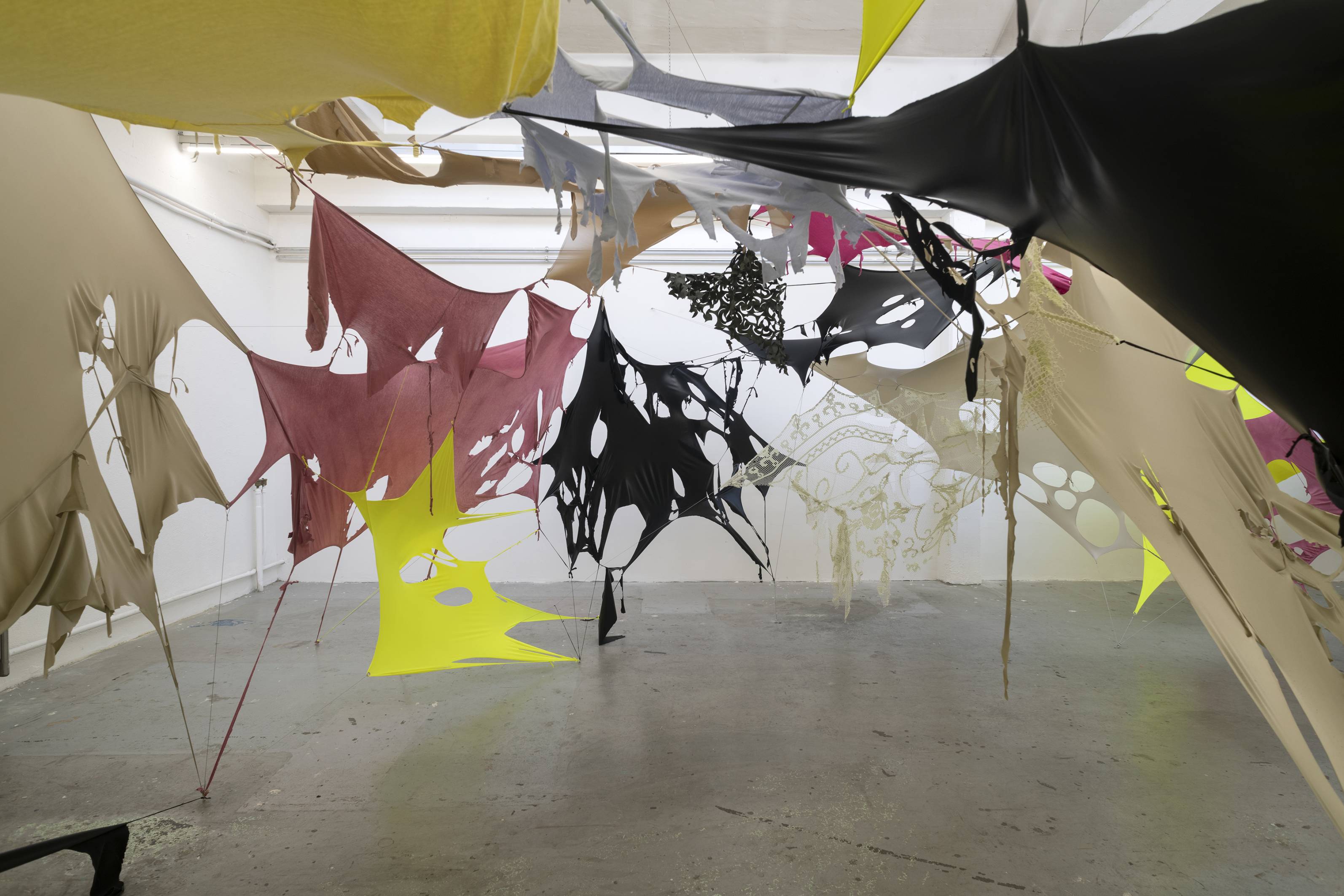
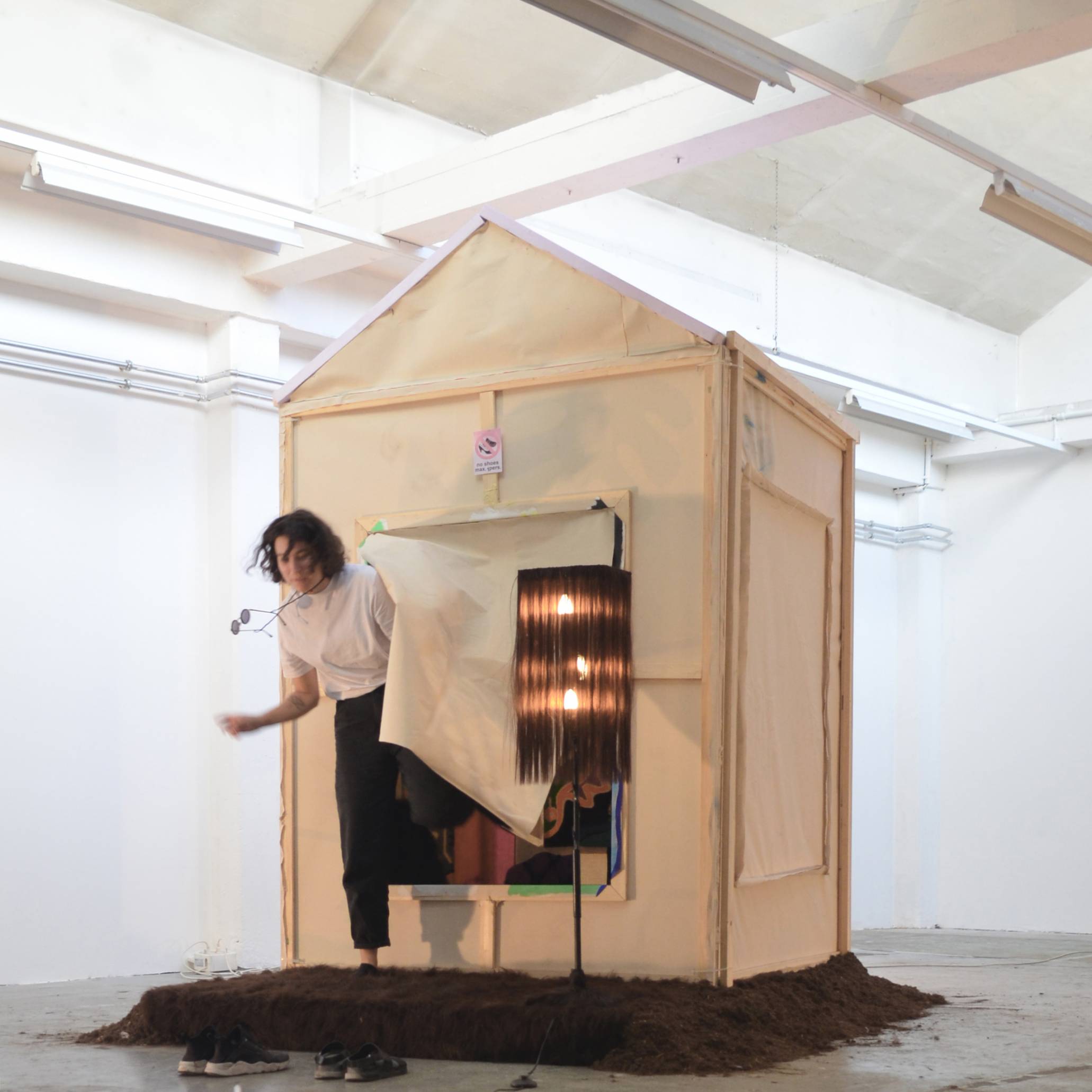
    A dimly lit room filled with vibrant banners, revealing mysterious humanoid creatures, seemingly floating in space, gazing at you - sometimes. A colos- sal painting, inviting you into a dreamlike landscape with strange figures, lurking in the shades of a deep forest, standing close to one another - calm, powerful and proud. An eerie sound is haunting the air - if you listen closely, you can hear their voices. And if you are patient enough, you might catch a body moving through this strange universe - disturbing and freeing.

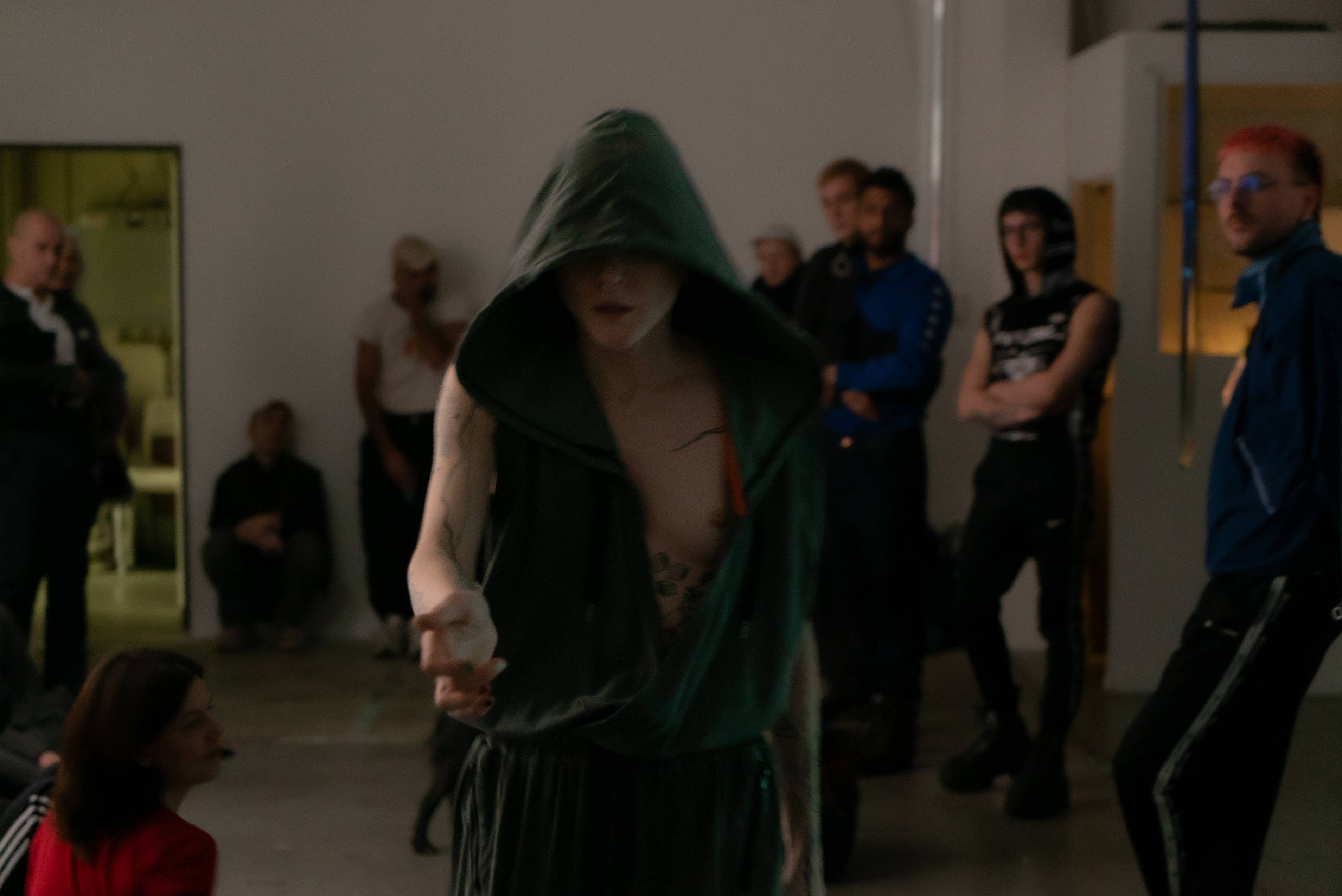
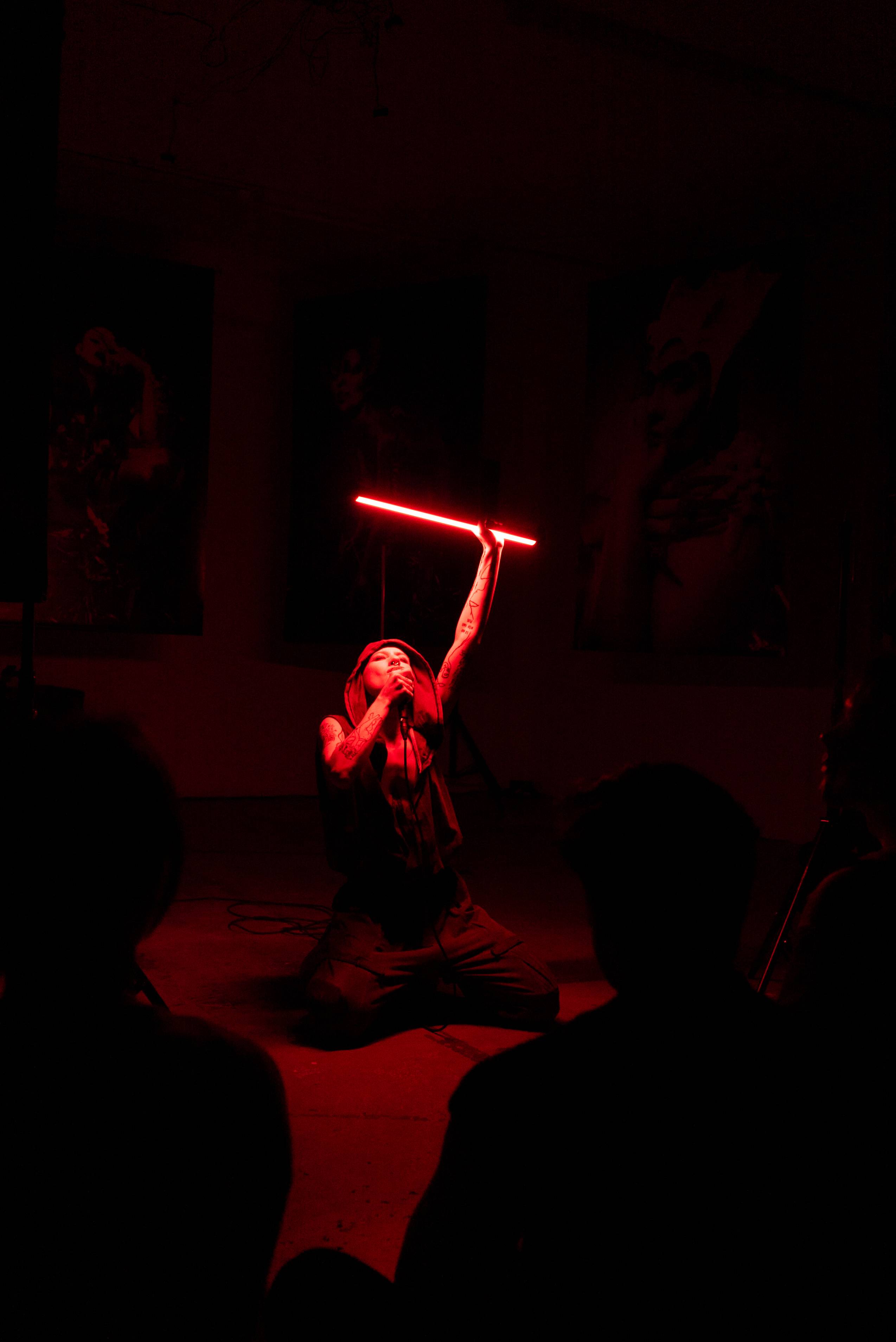
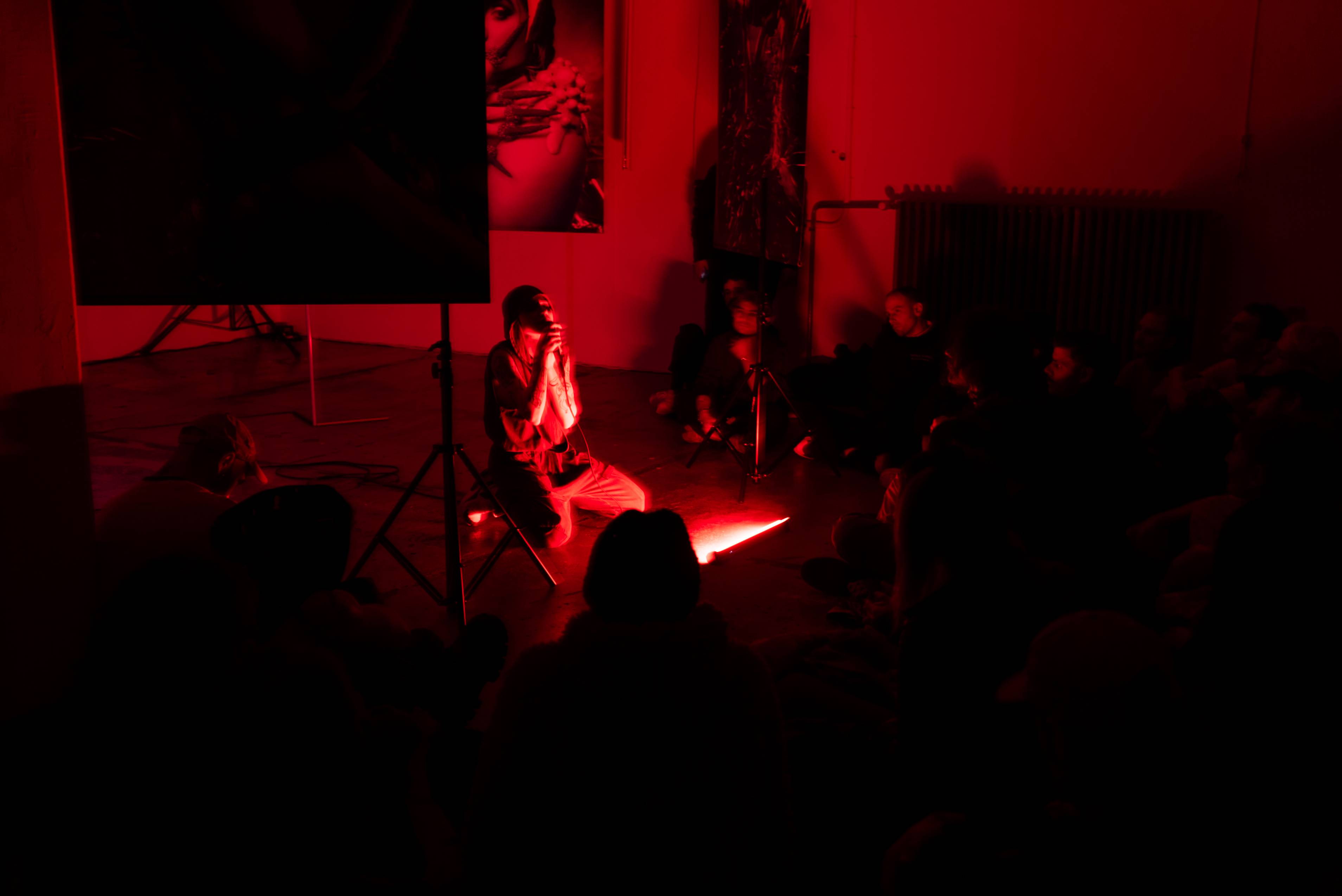
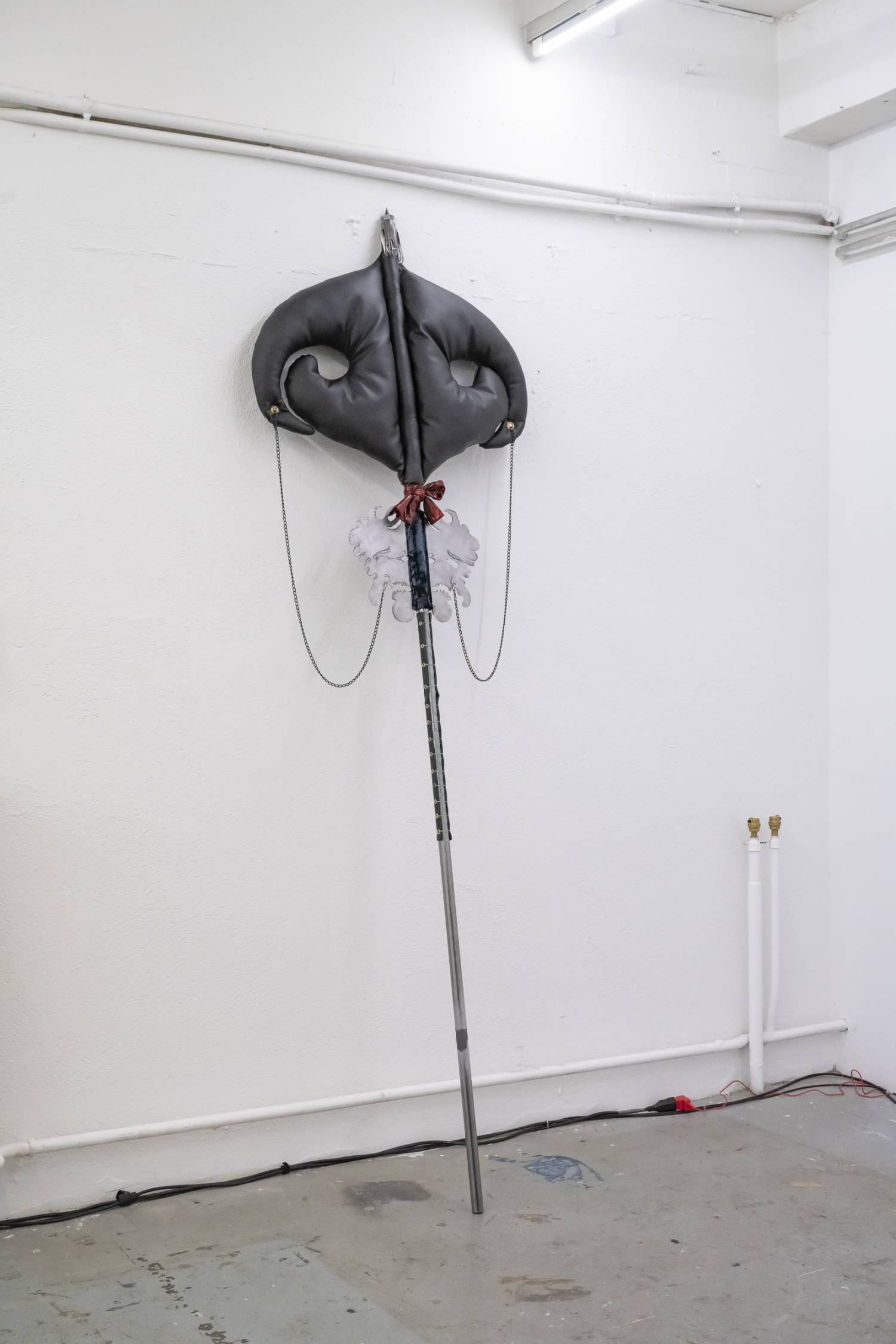
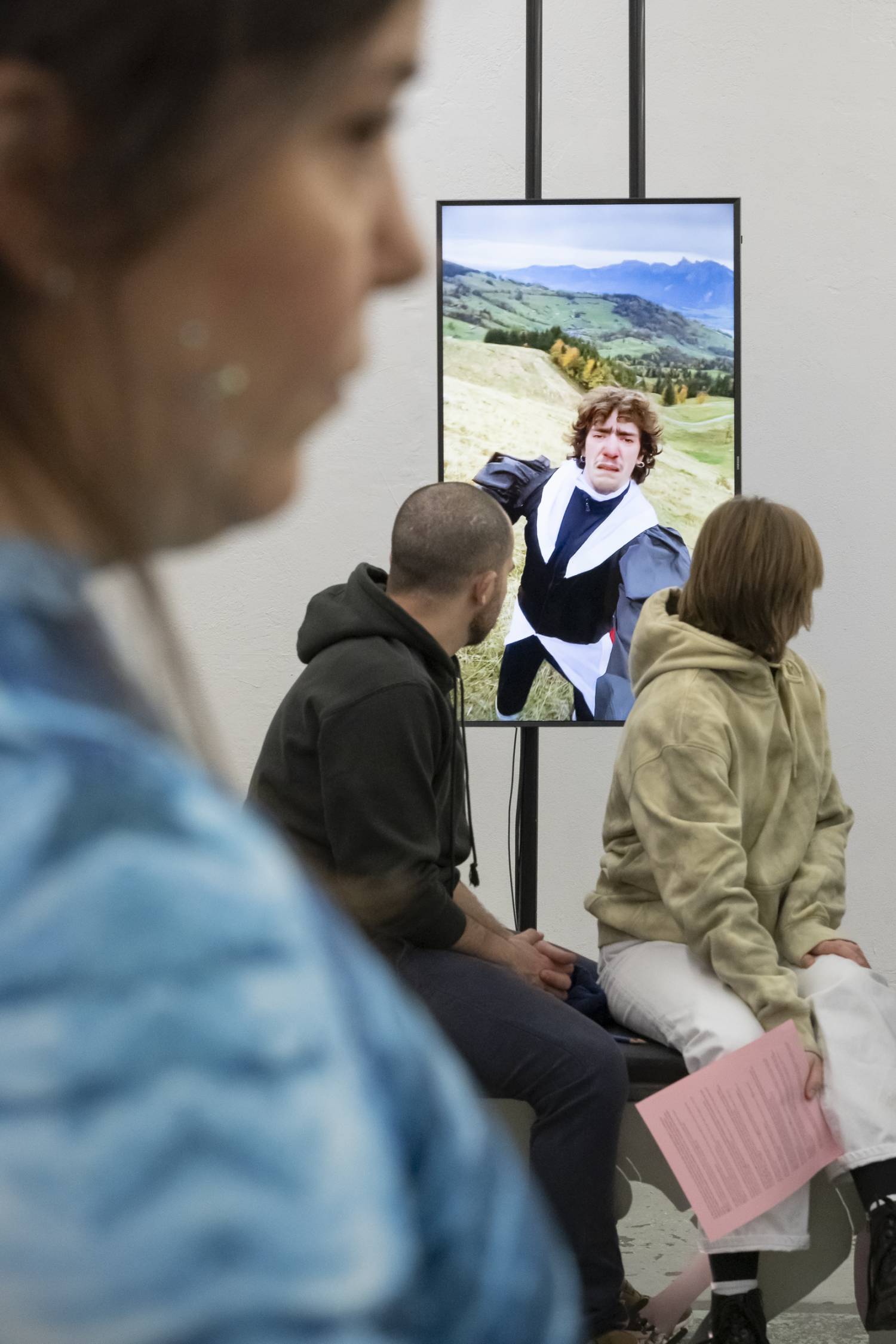
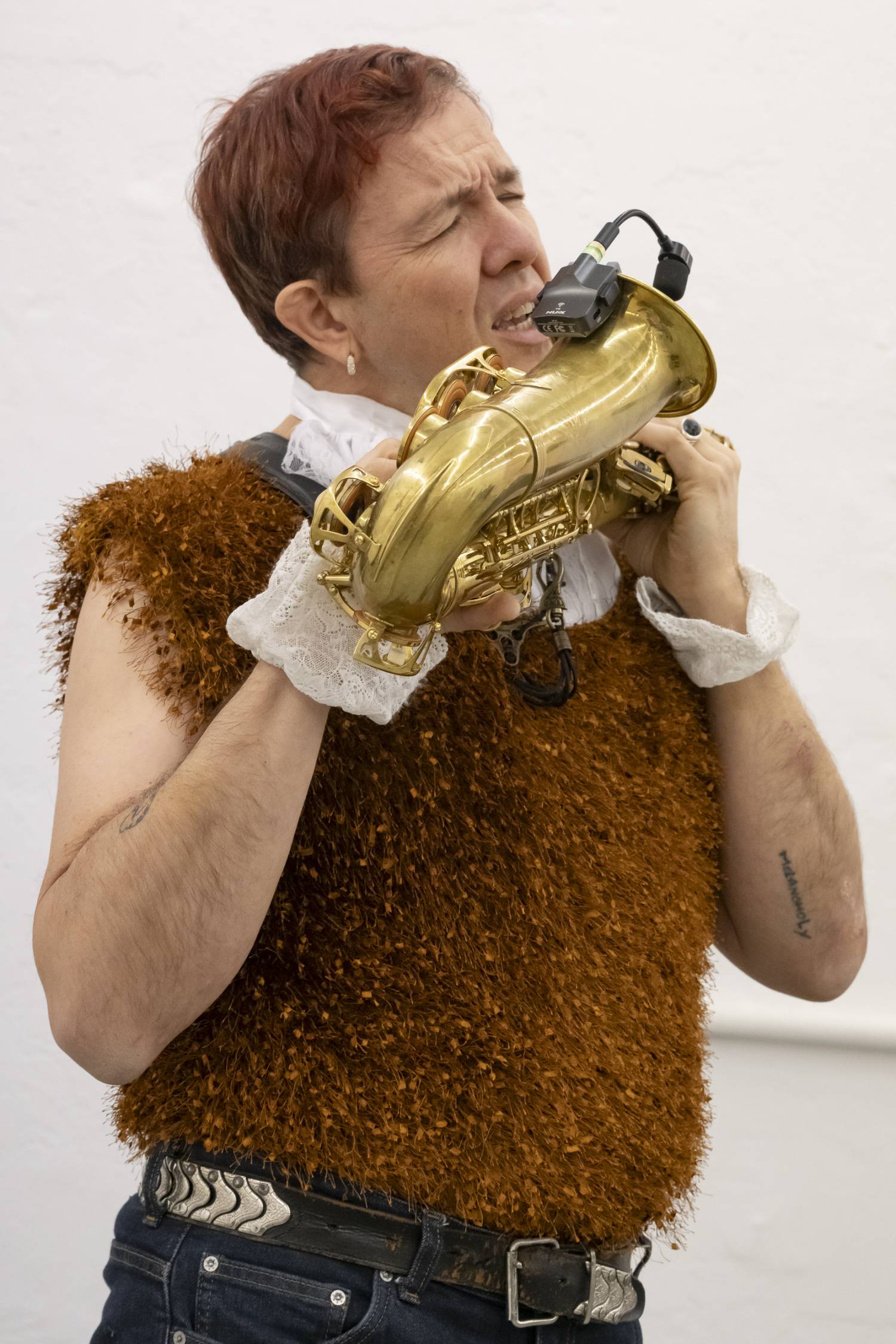
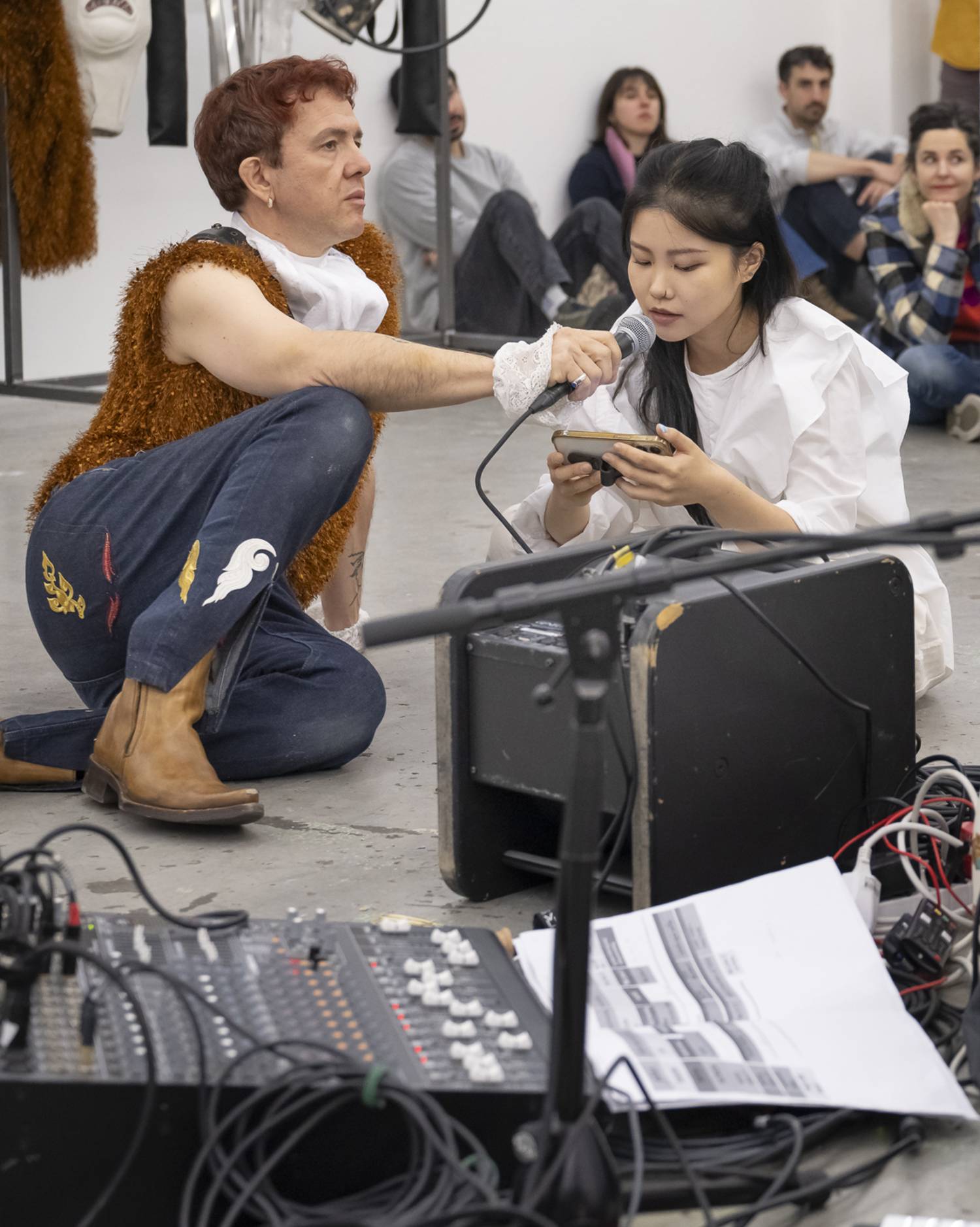
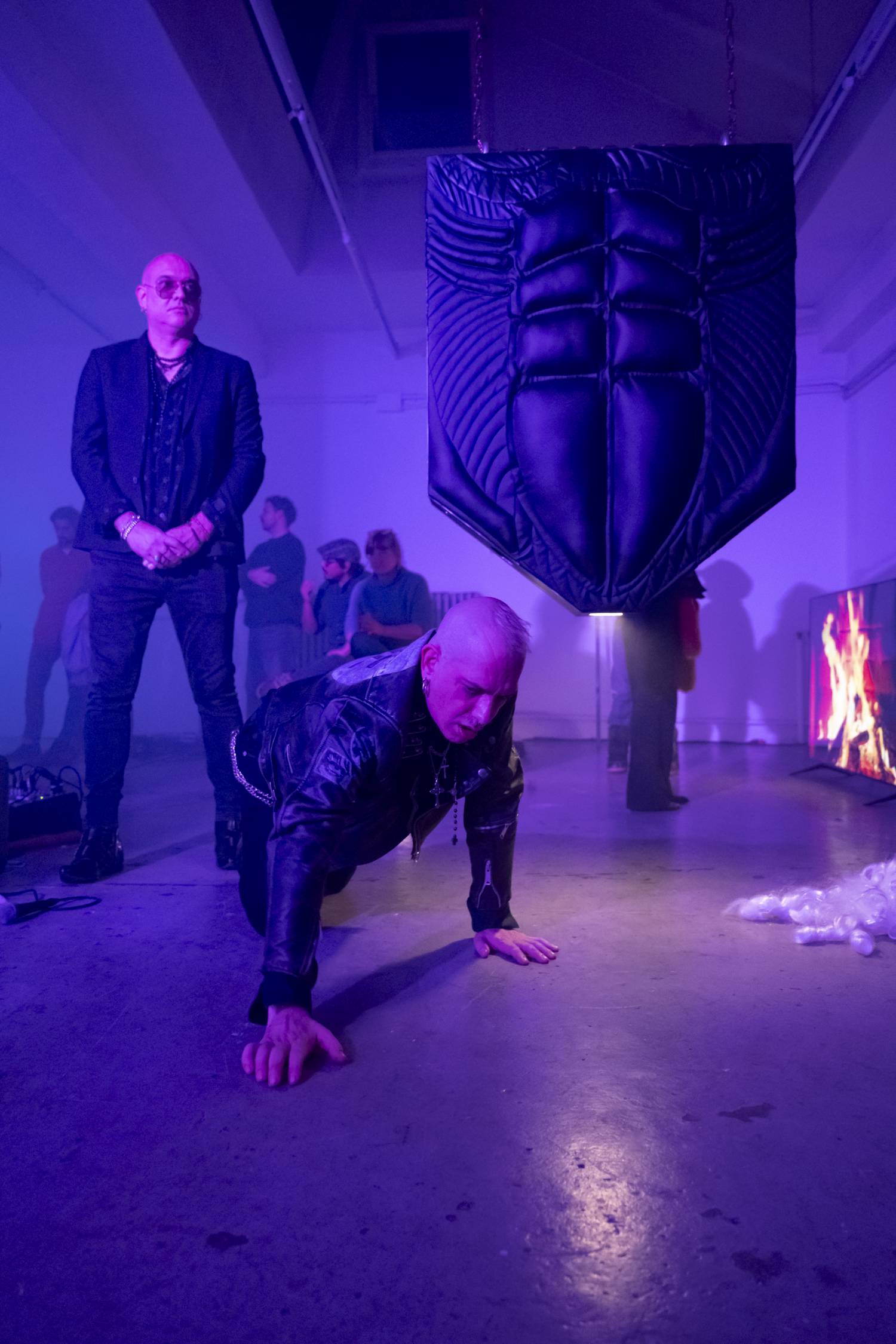
    In collaboration with Lausanne-based painter David Weishaar, composer Tyler Holmes from Los Angeles and Berlin-based sound artist Lou Drago, the transdisciplinary artist and performer Valerie Reding creates with mons- ters an oneiric and compelling multi-sensorial space to share the powerful stories of those that have experienced abuse in interpersonal relationships - stories that are so often silenced in our society. Combining performance, photography, painting, sound and text in an immer- sive multi-media installation, monsters fiercely reclaims the monstrosity that is projected on those who speak up against abuse (of power) and systems of oppression. With an intersectional approach, Valerie Reding’s monsters is not only an empowering celebration of the liberating power of one›s voice, resilience, healing, community, collective care - and love. It is also a profound, sensitive and thought-provoking reflection on the complex interconnections between interpersonal and societal power relations.

    THE HEART IS OURS
    By David Weishaar

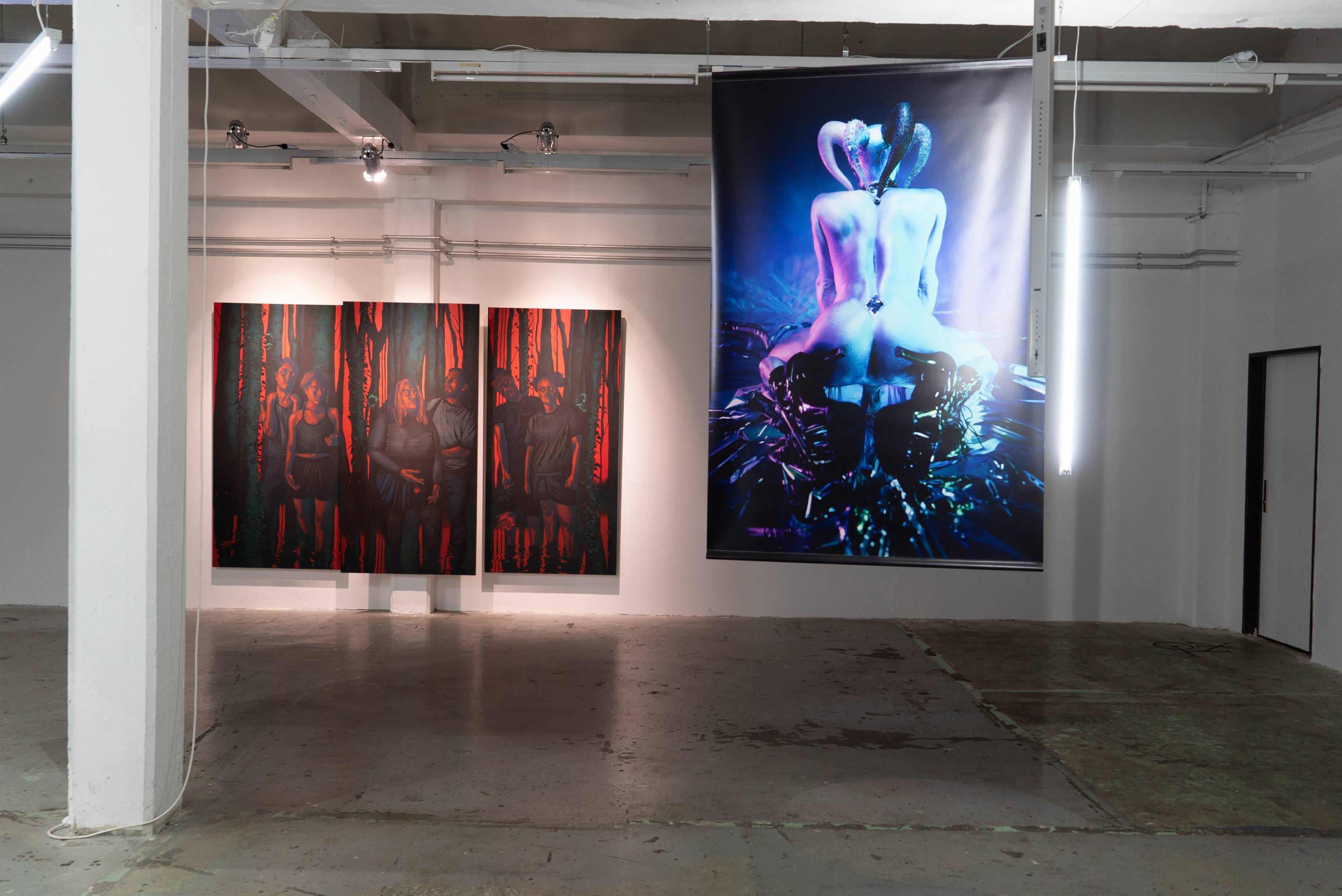
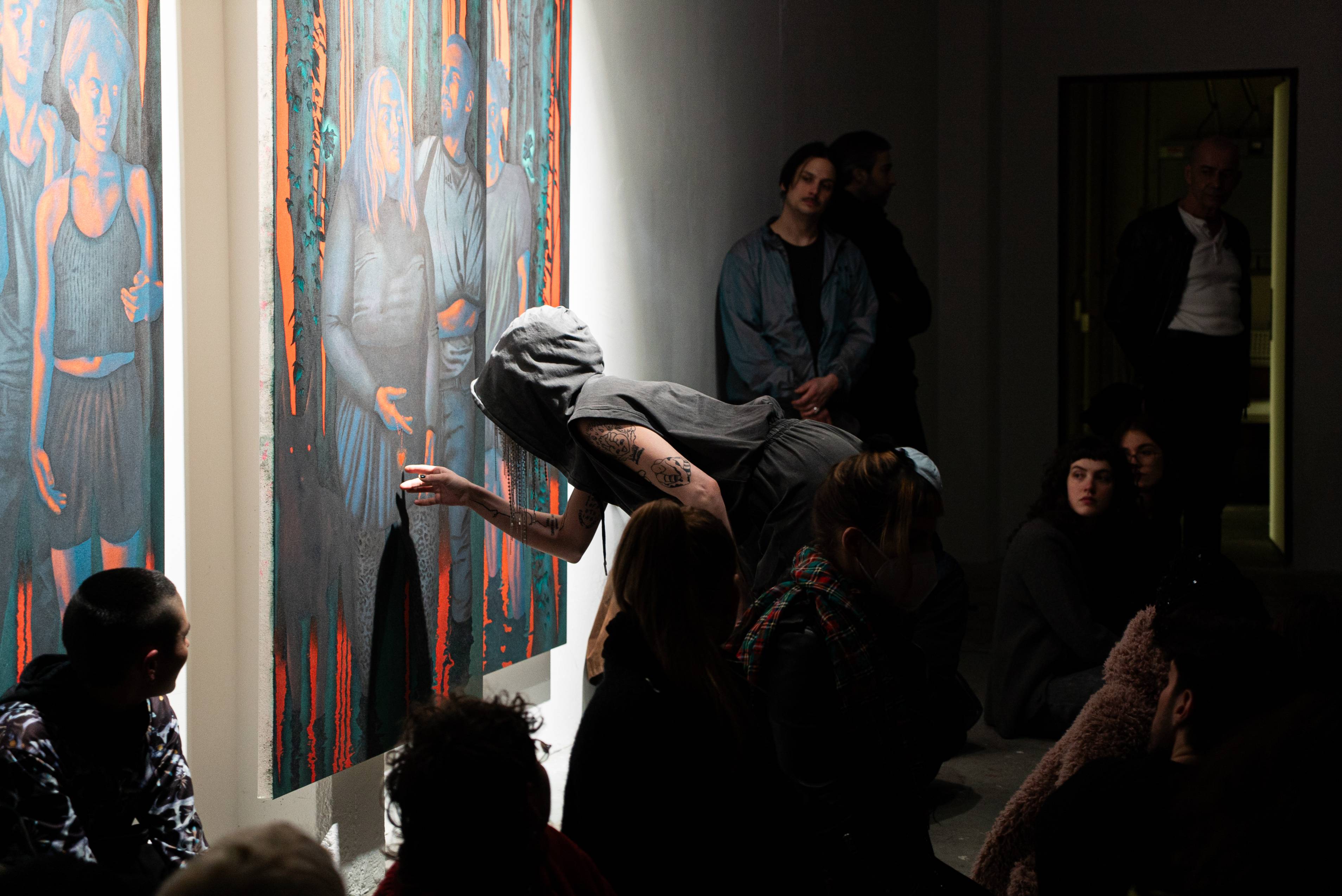
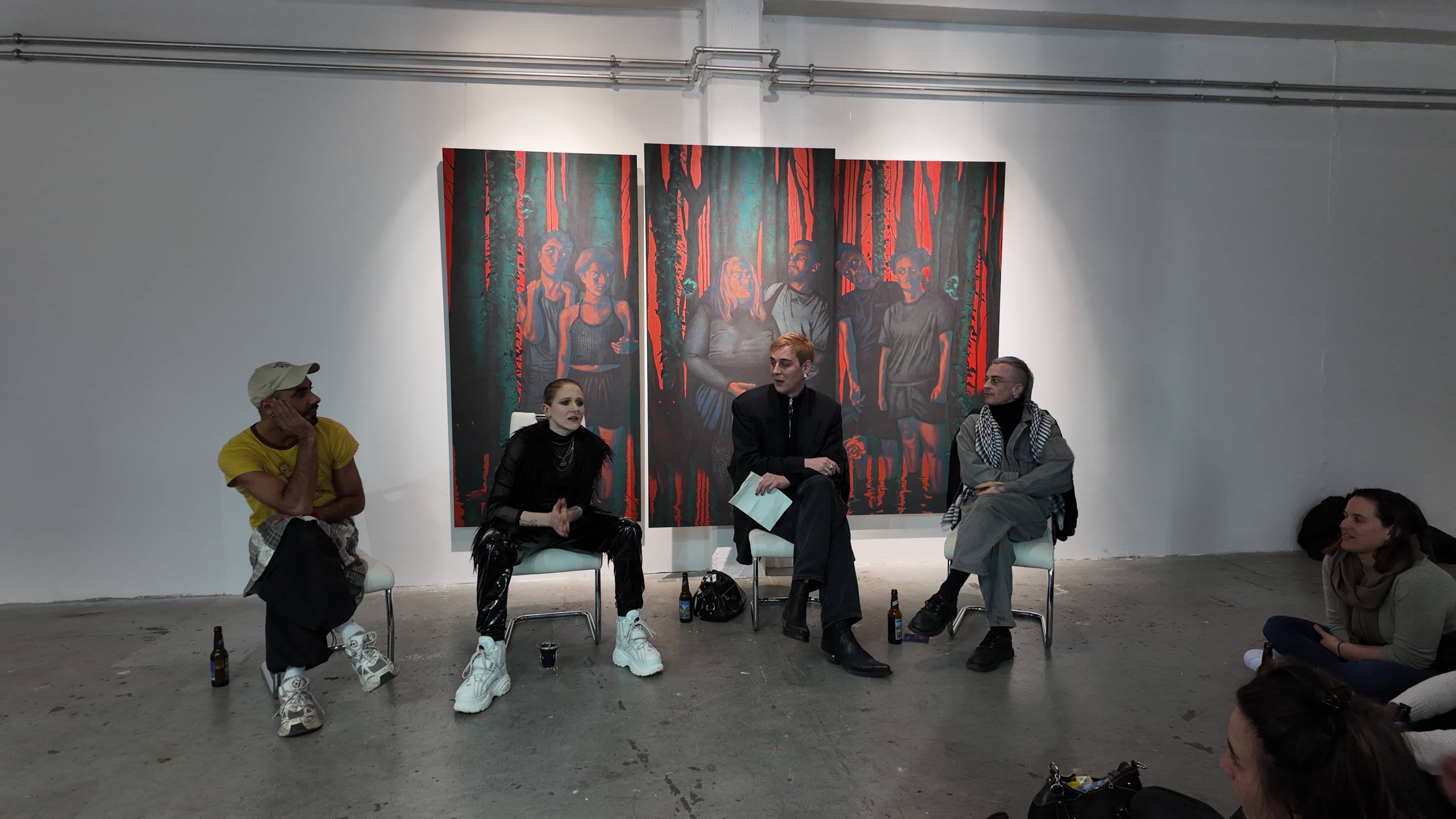
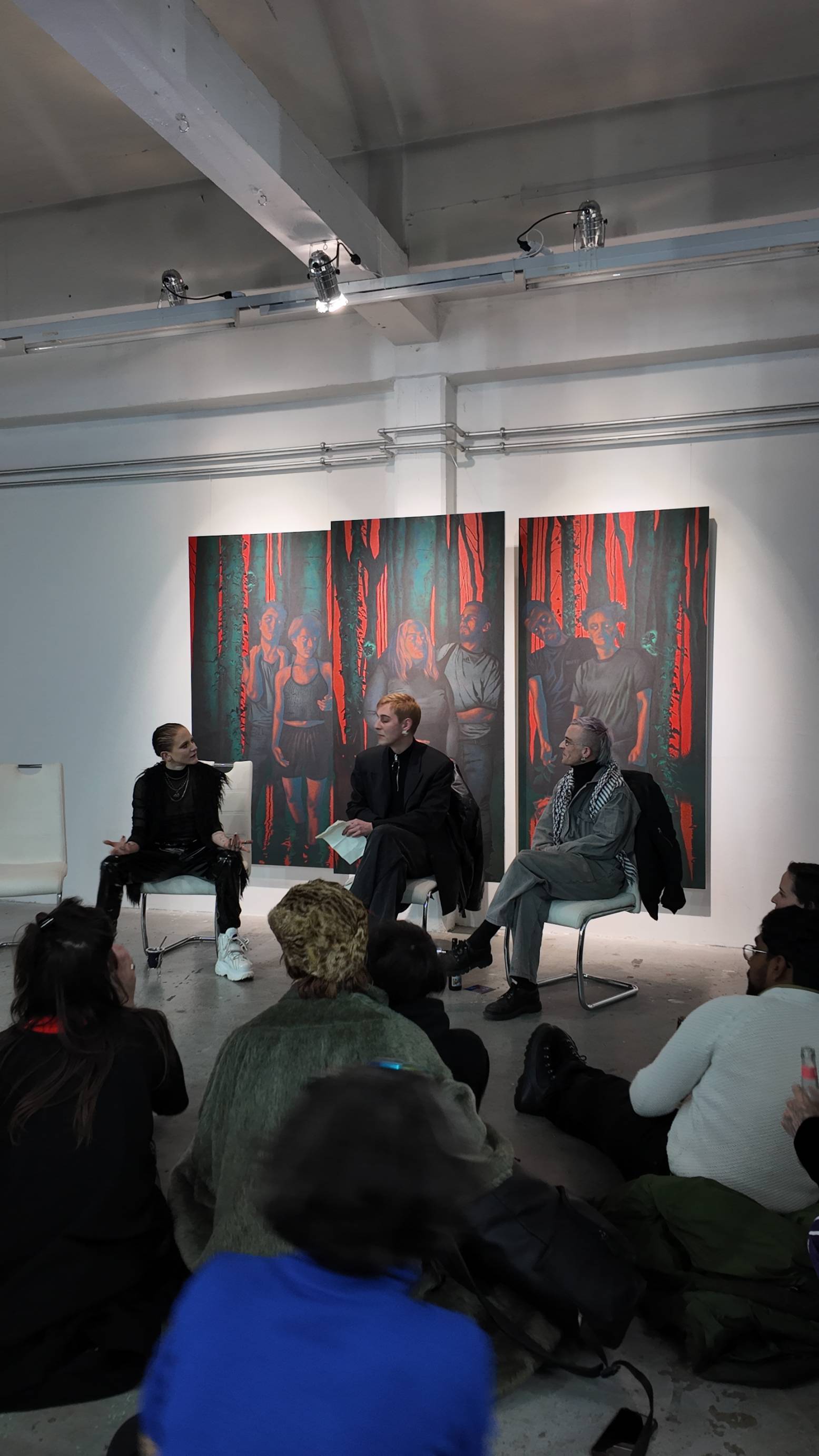
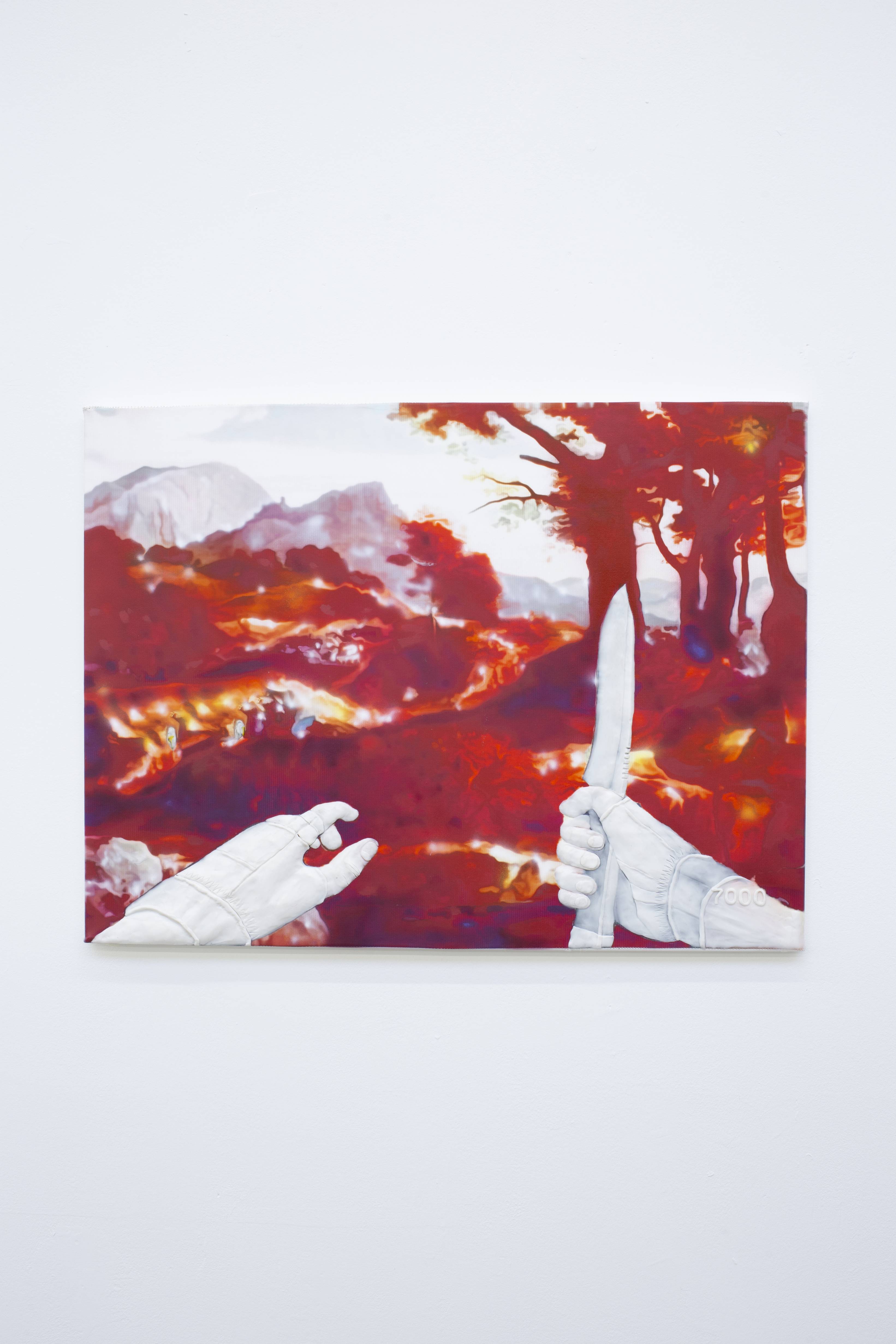
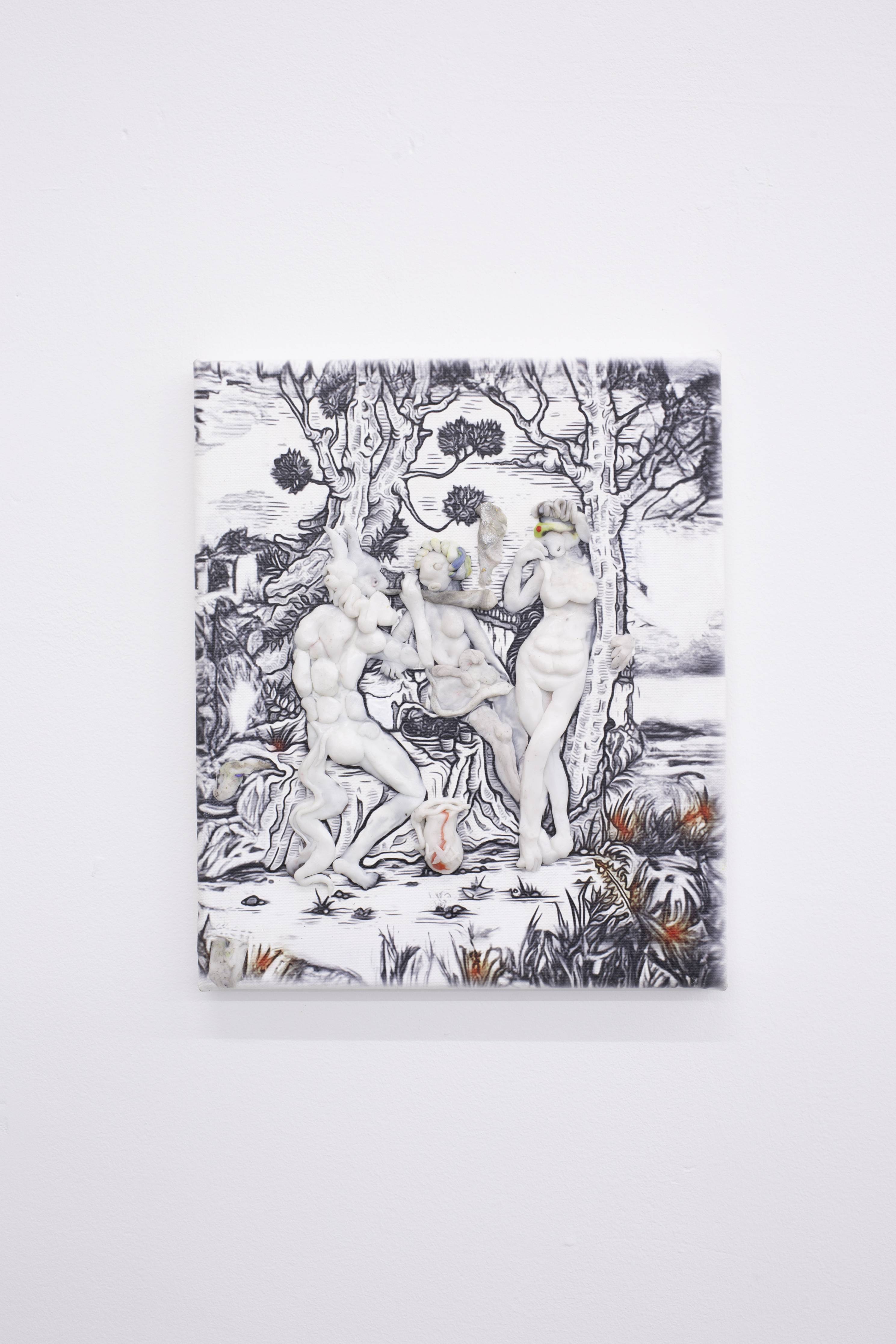
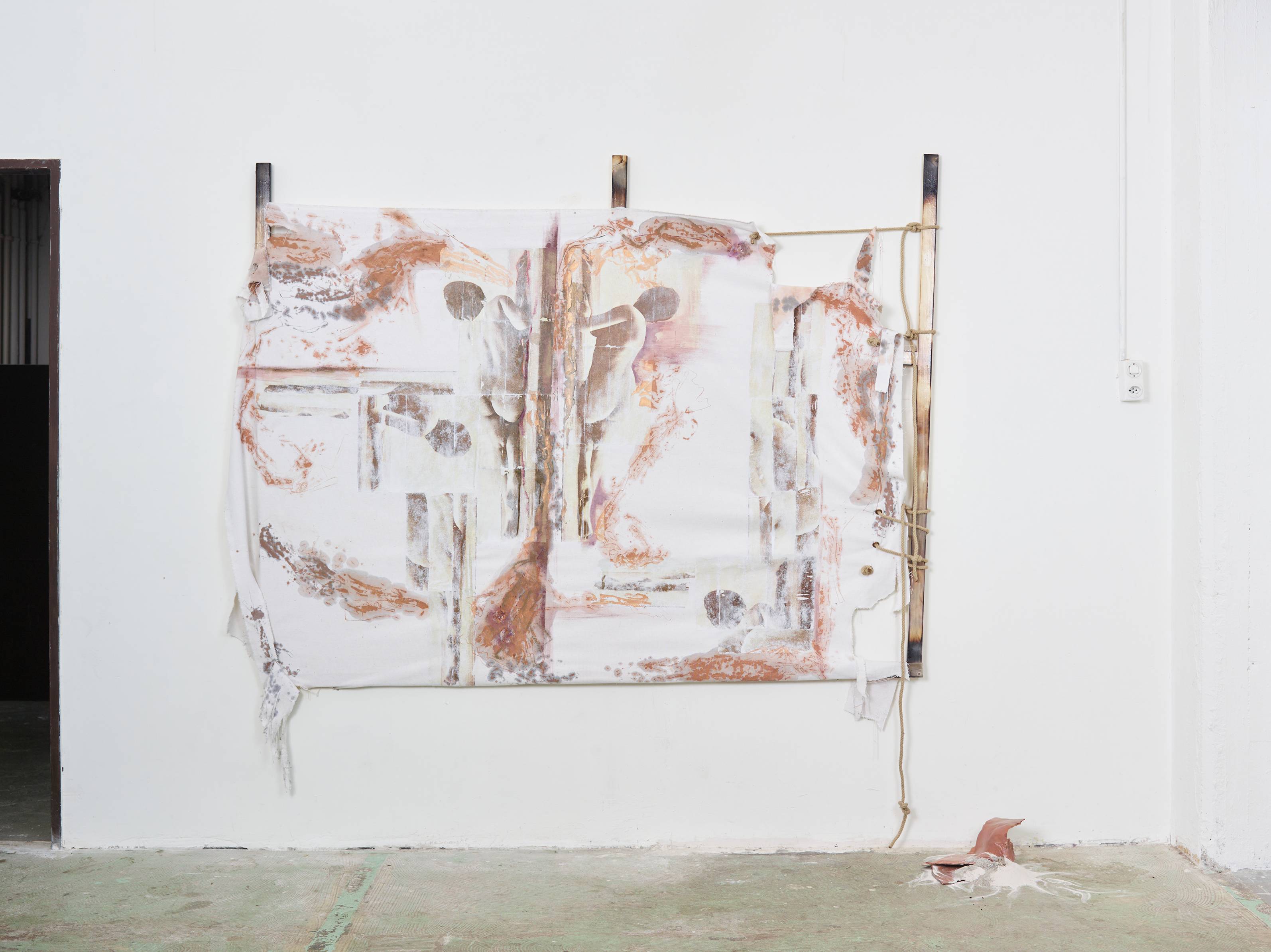
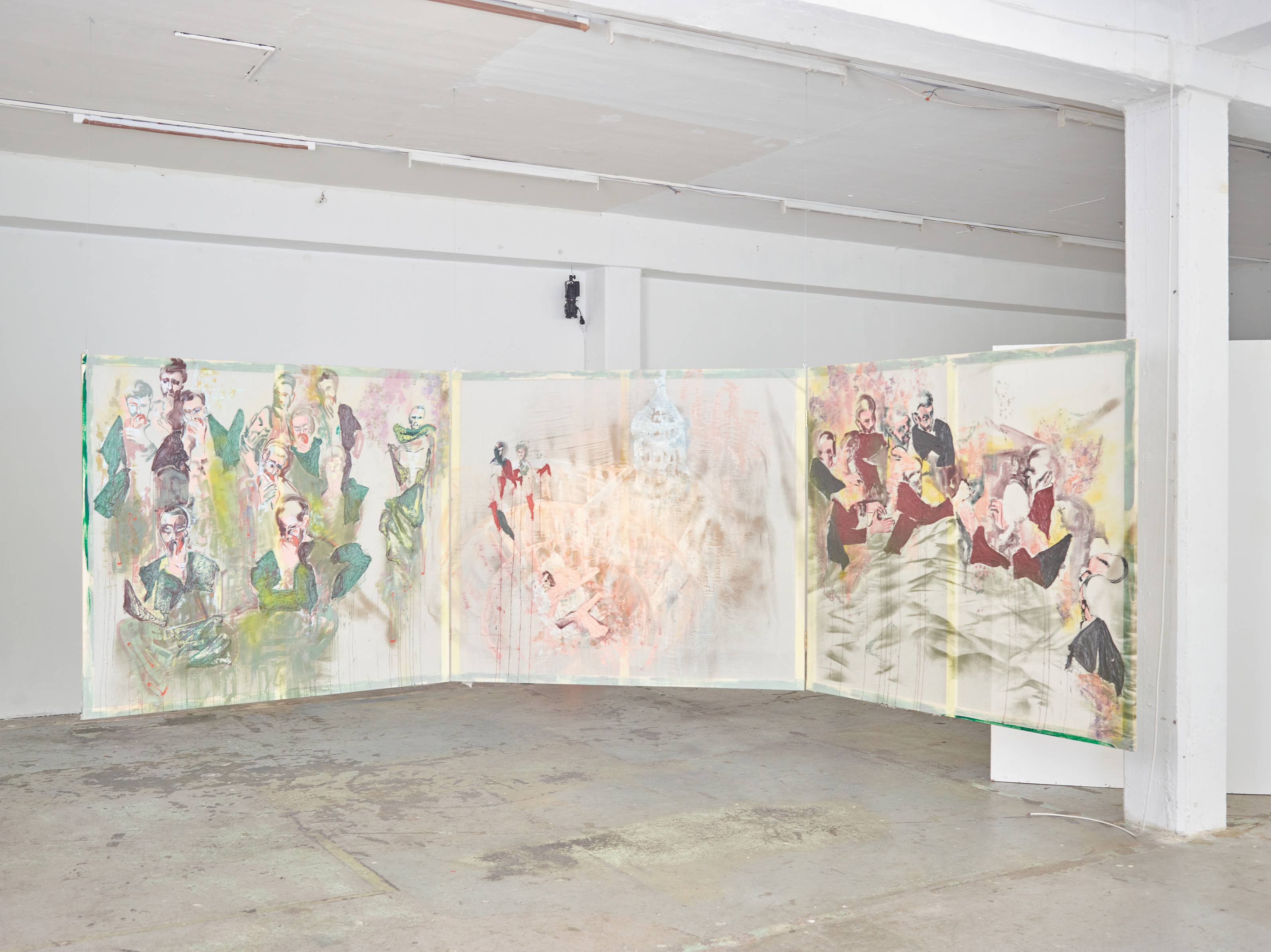
    The Heart Is Ours is inspired by the series of paintings Nastagio degli Onesti, created by S. Botticelli during the 15th century.

    The tale of Nastagio degli Onesti unveils the story of a young man rejected by the woman who was promised to marry him. While wandering through the forest, heartbroken and lost, he is startled by the appearance of a furi- ous horseman massacring a naked young woman. The horseman suddenly speaks to Nastagio: “As soon as we appear, I catch her, I stab her, open her chest, tear out her heart, and feed it to the dogs.”

    The horseman and the young woman are actually revenants, cursed to re- appear every Friday in the forest, endlessly repeating the same gruesome scene. The curse was a punishment because both of them were doomed for their „unmoral“ behavior - the women, because she was damned for refusing the marriage because “her cold heart never opened to love or compassion” and the horseman, because he committed suicide due to the woman’s refusal of marrying him. This pagan story was very popular during the Italian Renaissance and served as warning tale to any woman refusing marriage.

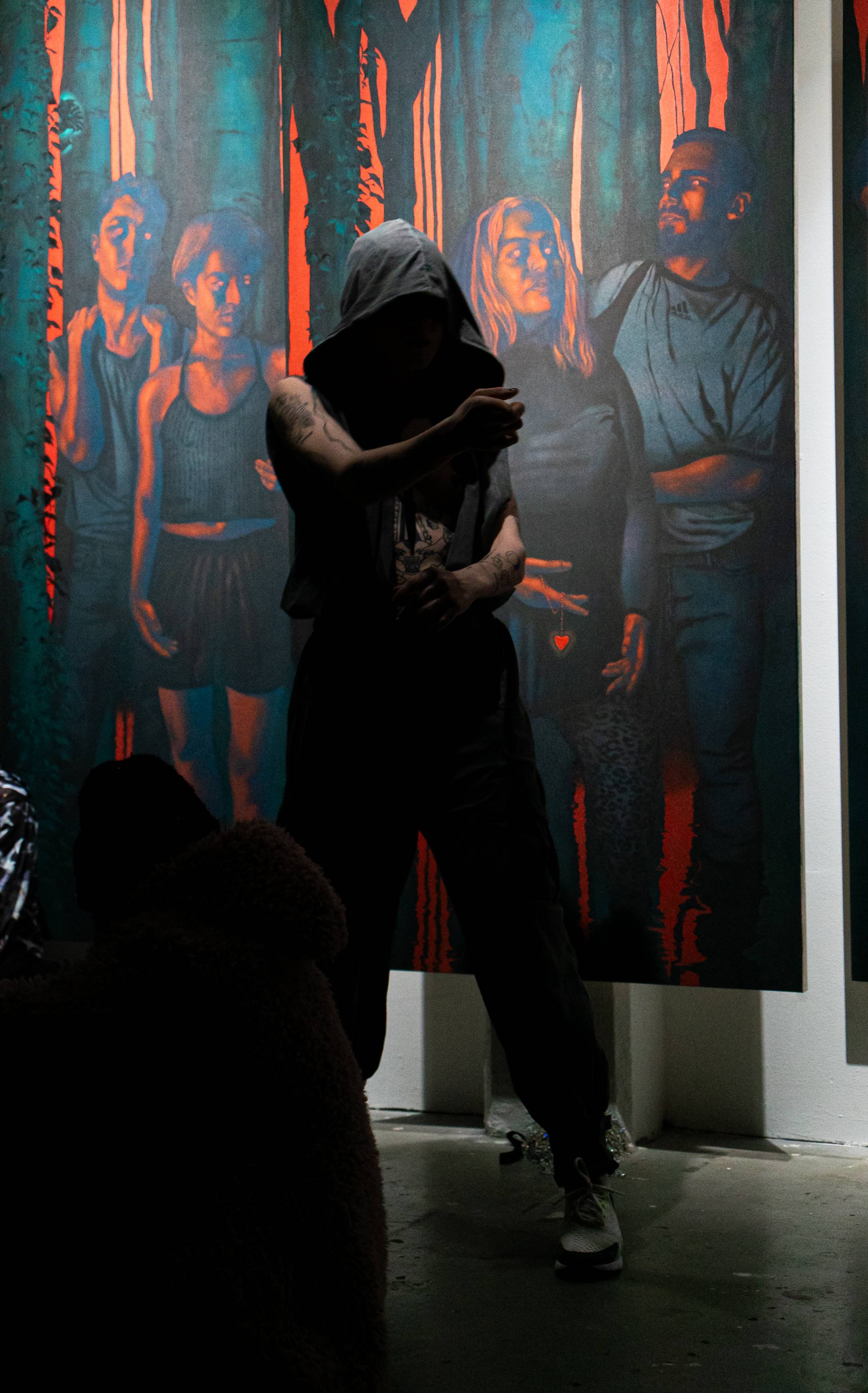
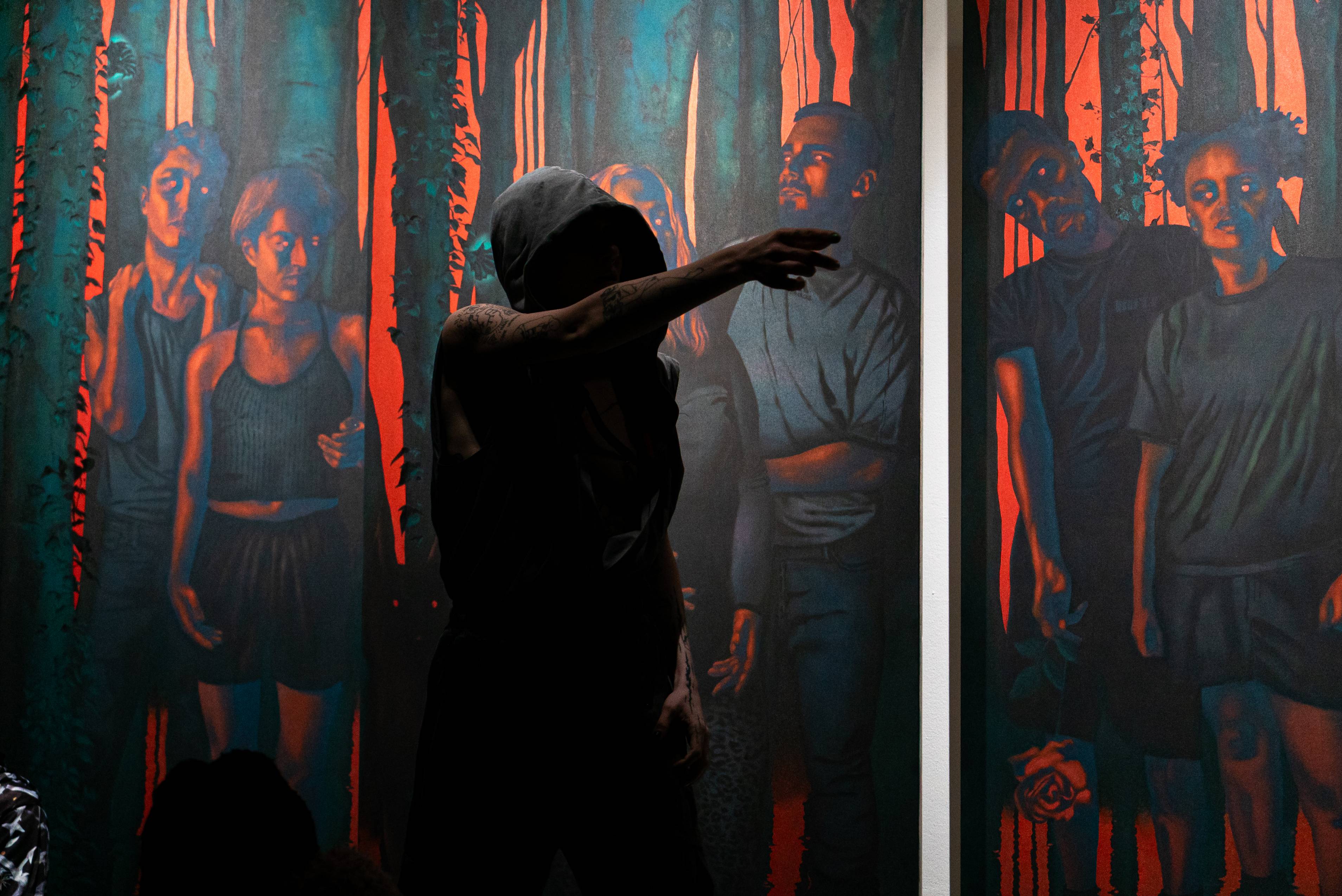
    In response to the warm invitation by Valerie Reding to collaborate for monsters, I wanted to revisit and reinterpret some of the thematic and iconographic elements of Botticelli›s series of paintings Nastagio degli Onesti, in order to bring a symbolic re-reading as well as a strong feeling of empowerment to the people represented, side by side: Aron, Bast, Pauline, Robyn, Salou and Will.

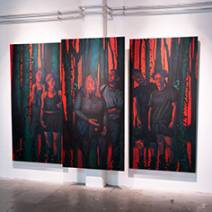
    What could Nastagio have rediscovered, centuries later, during his stroll through the forest? The forest is as dense and all-enveloping as it used to be, but the sky is hellishly red, radiating. The twilight scene, perhaps “post-rave”, echoing a group ritual, now represents a frieze of united individuals, facing the viewer with sharp, luminescent eyes. The dogs are by their side, defiant, guarding the recovered heart. Several whispers can be heard, seemingly emanating from the swamp. They sing: The Heart is Ours!

    artistic direction & concept Valerie Reding
    performance, photography, costumes, make-up, scenography & text Valerie Reding
    painting The Heart Is Ours David Weishaar
    soundscape Lou Drago
    music for performance Tyler Holmes
    people portrayed & texts Aron Smith, Bast Hippocrate, Pauline Canavesio aka BORA, Robyn Cloé Iyongo, Salou Sadras, William Cardoso
    lights Thomas Giger
    costume assistance Nahuel Mendez
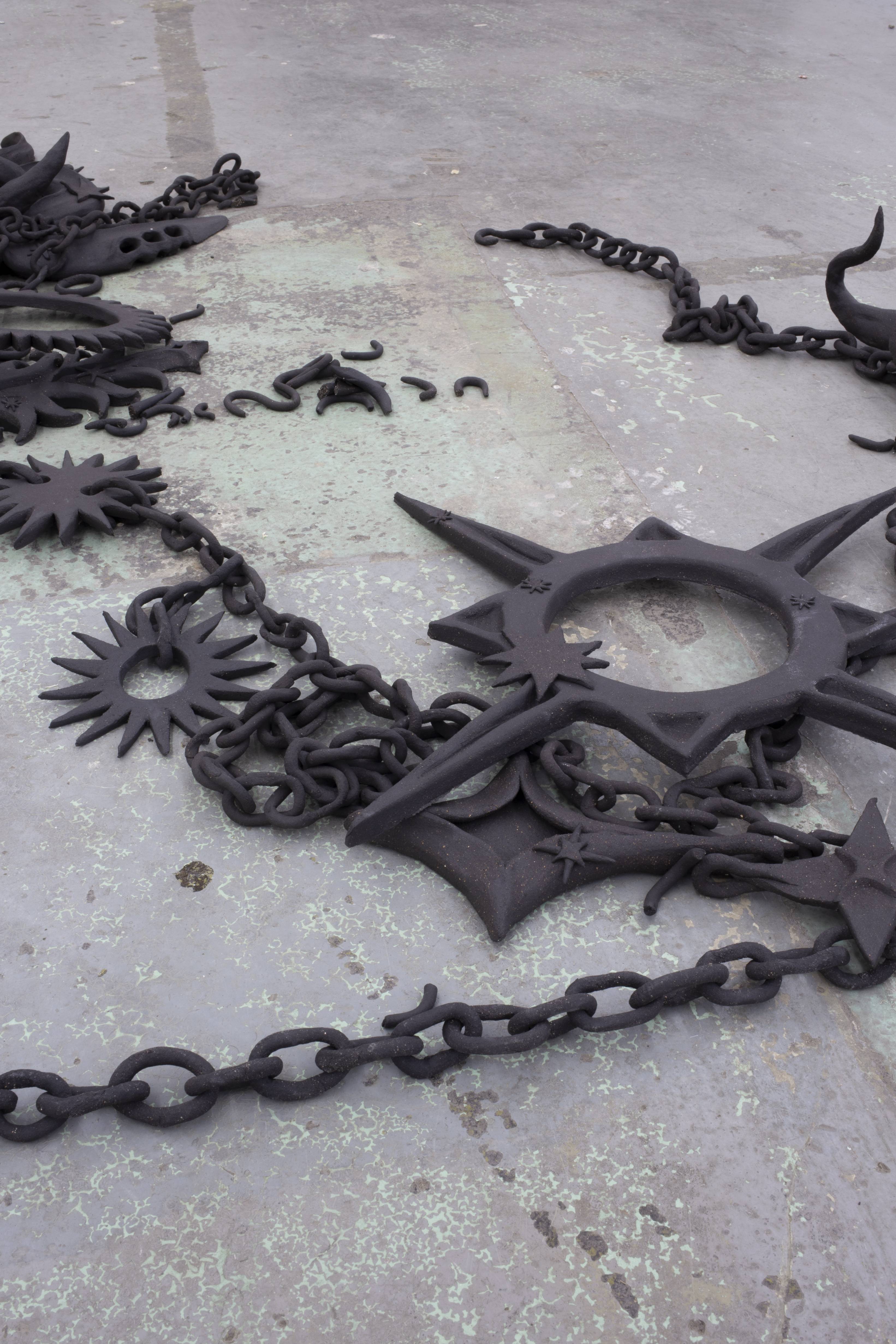
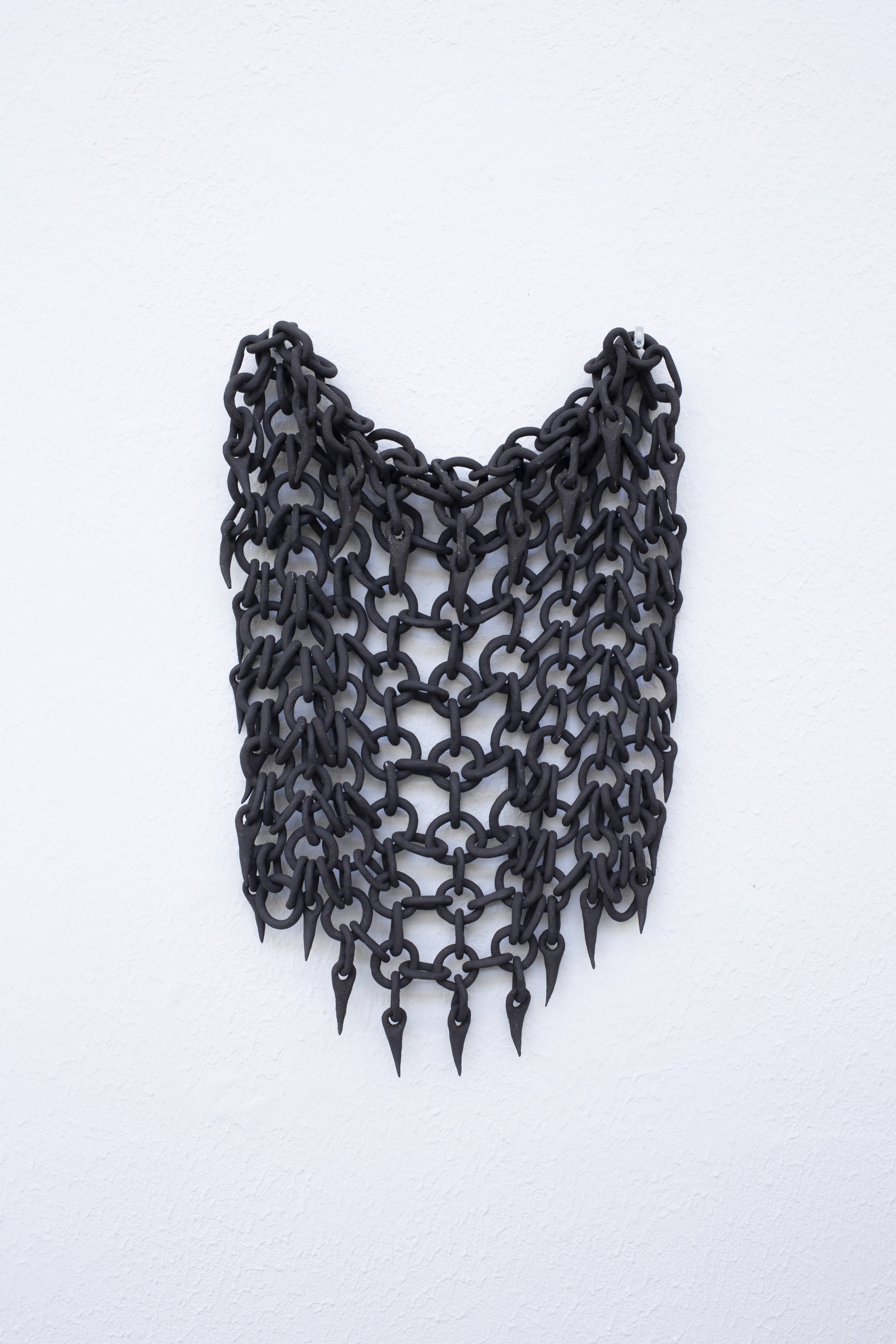
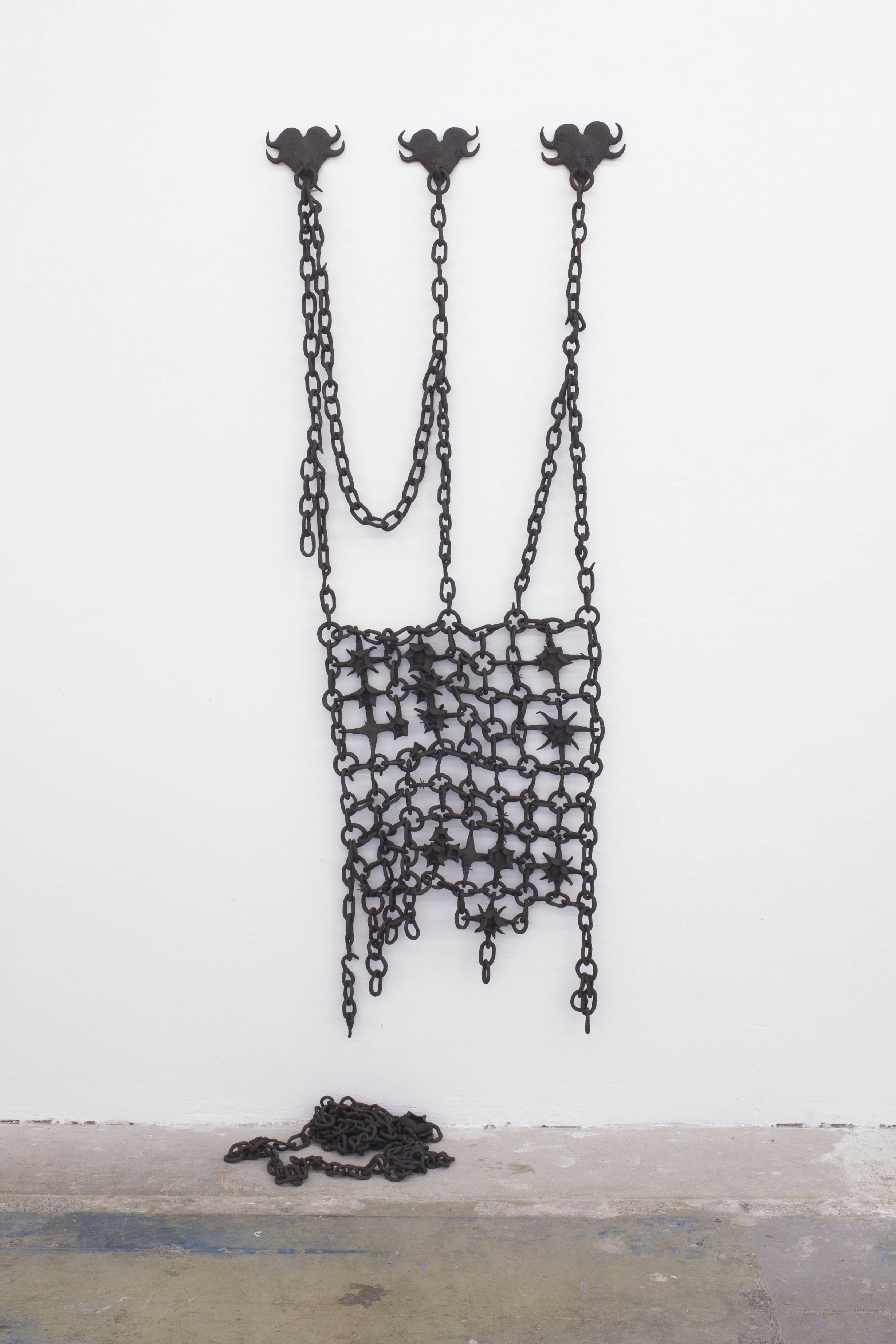
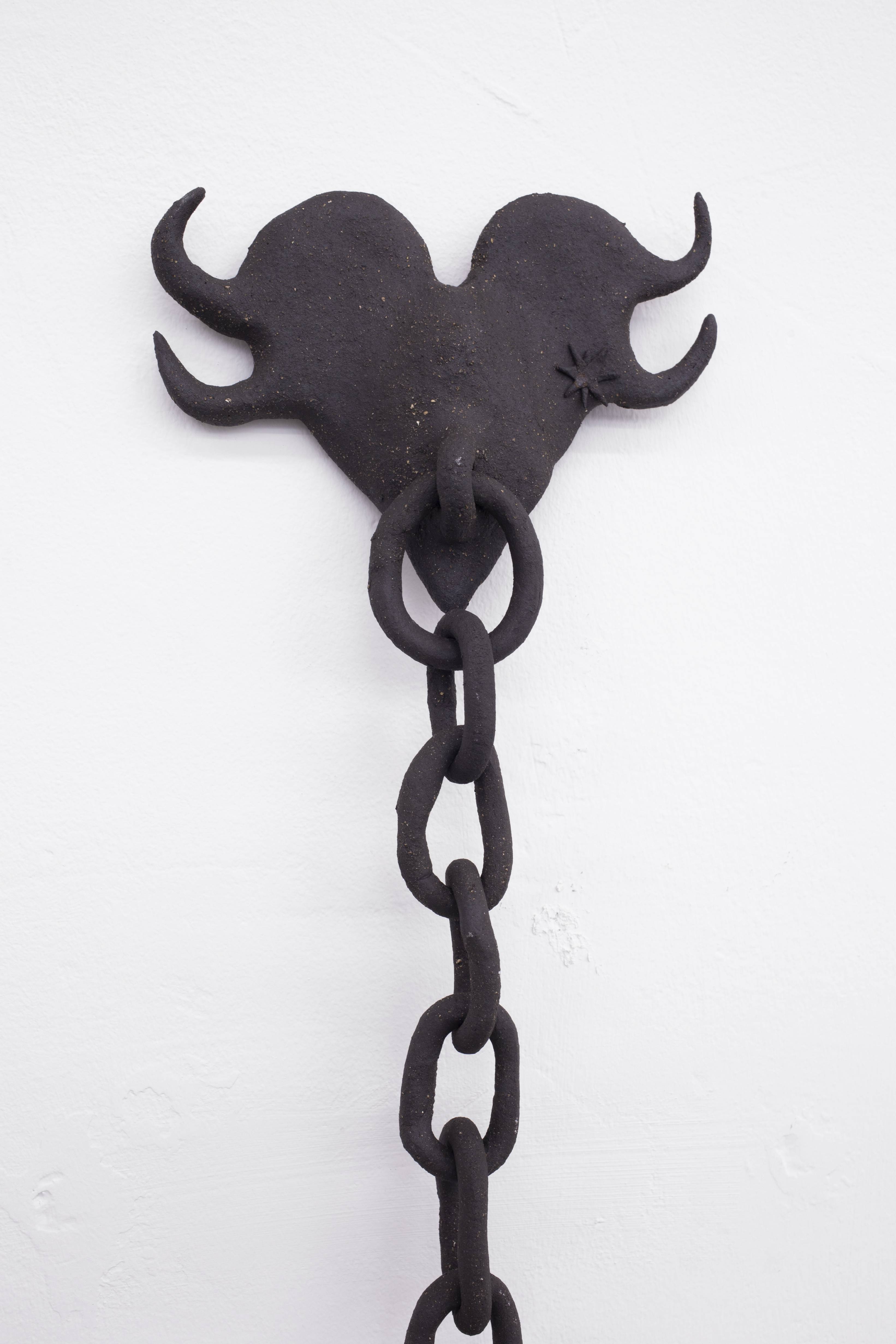
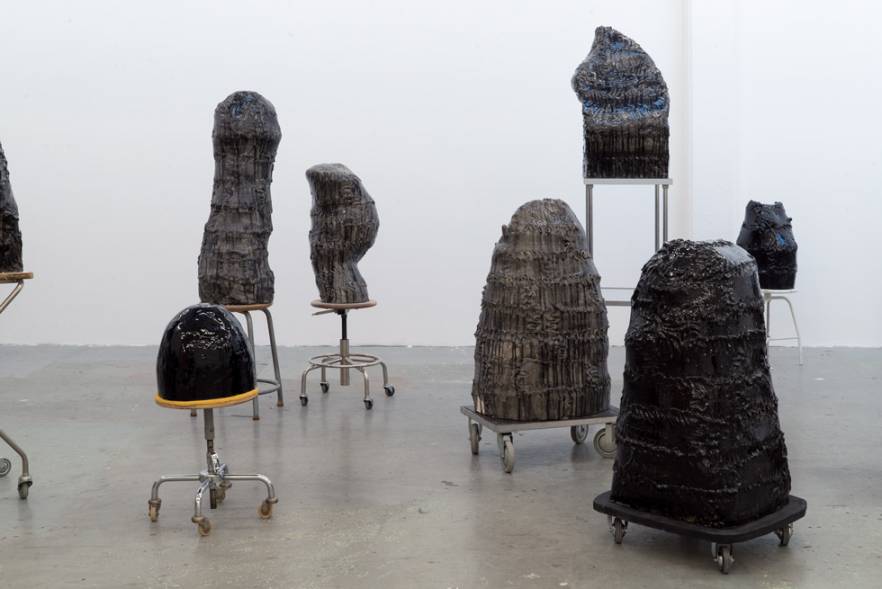
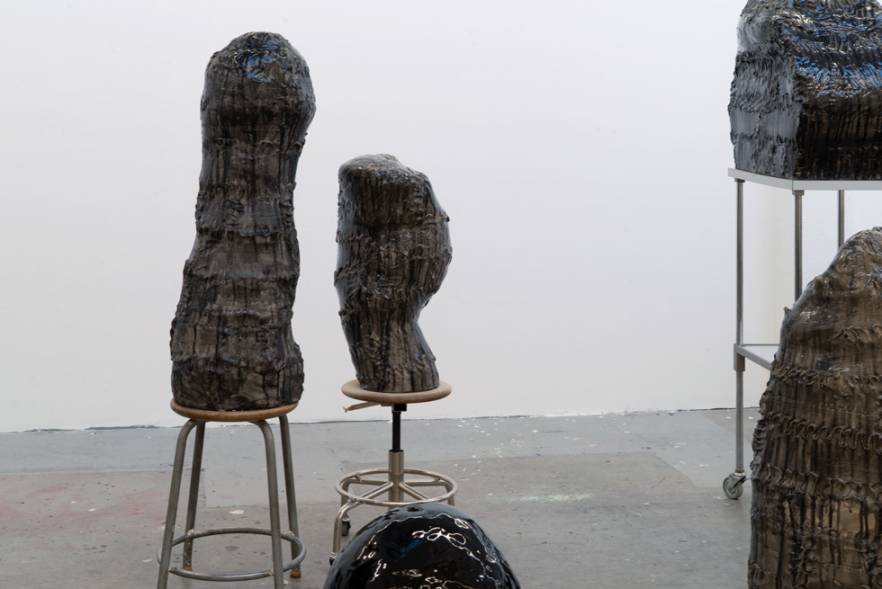
    ceramic objects Kwadrat by Luka Stamenkovic
    production assistance Nicolas Dubosson
    communication & flyers Valerie Reding

    Monsters_Saaltext Kopie.pdf
    Valerie Reding.jpg

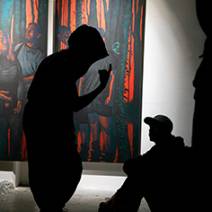
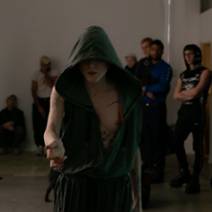
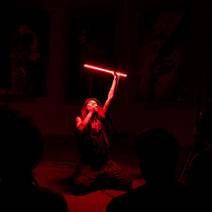
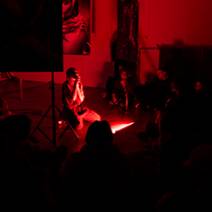
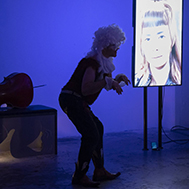
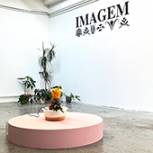
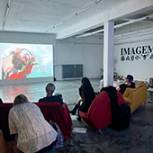
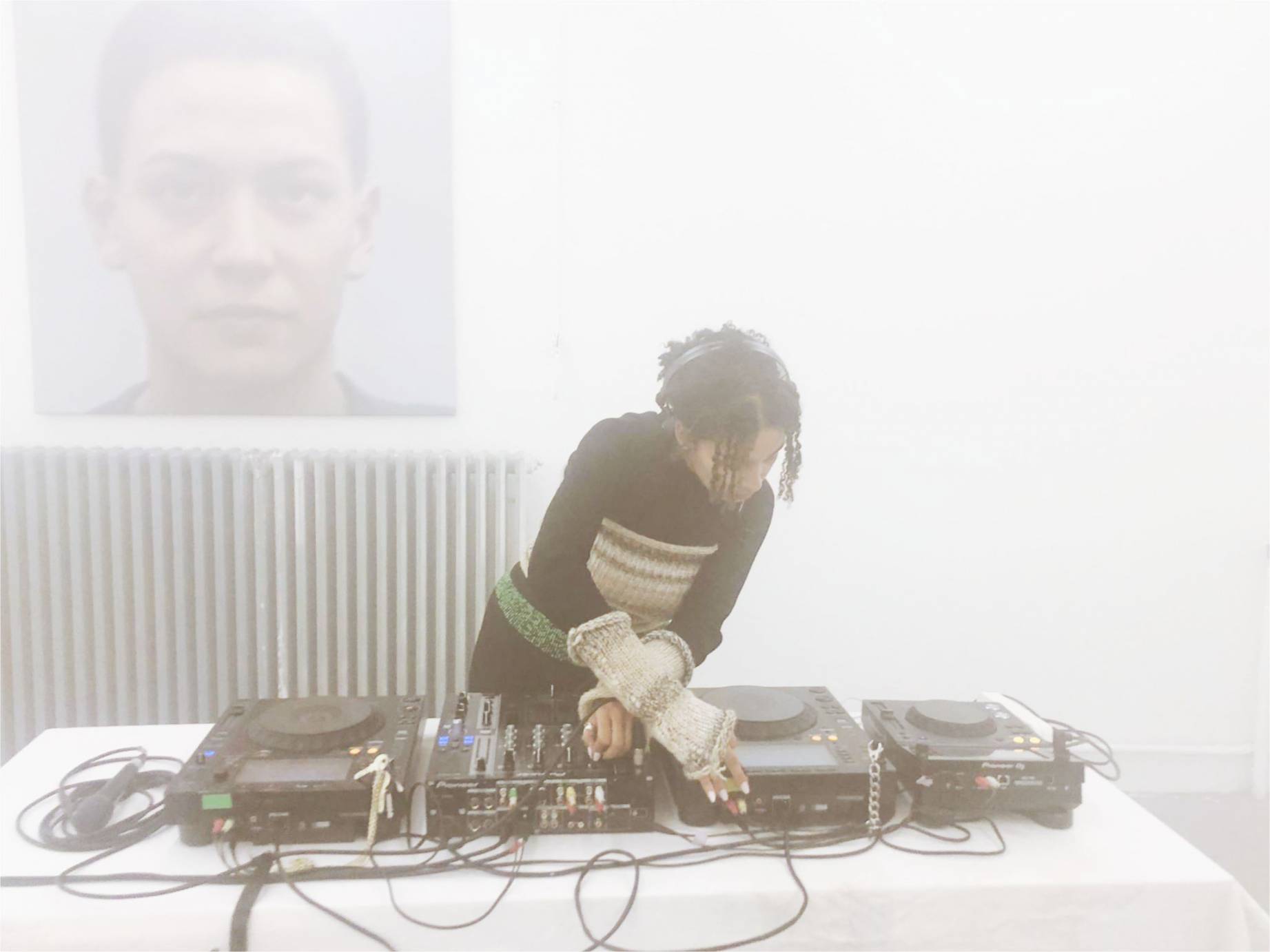
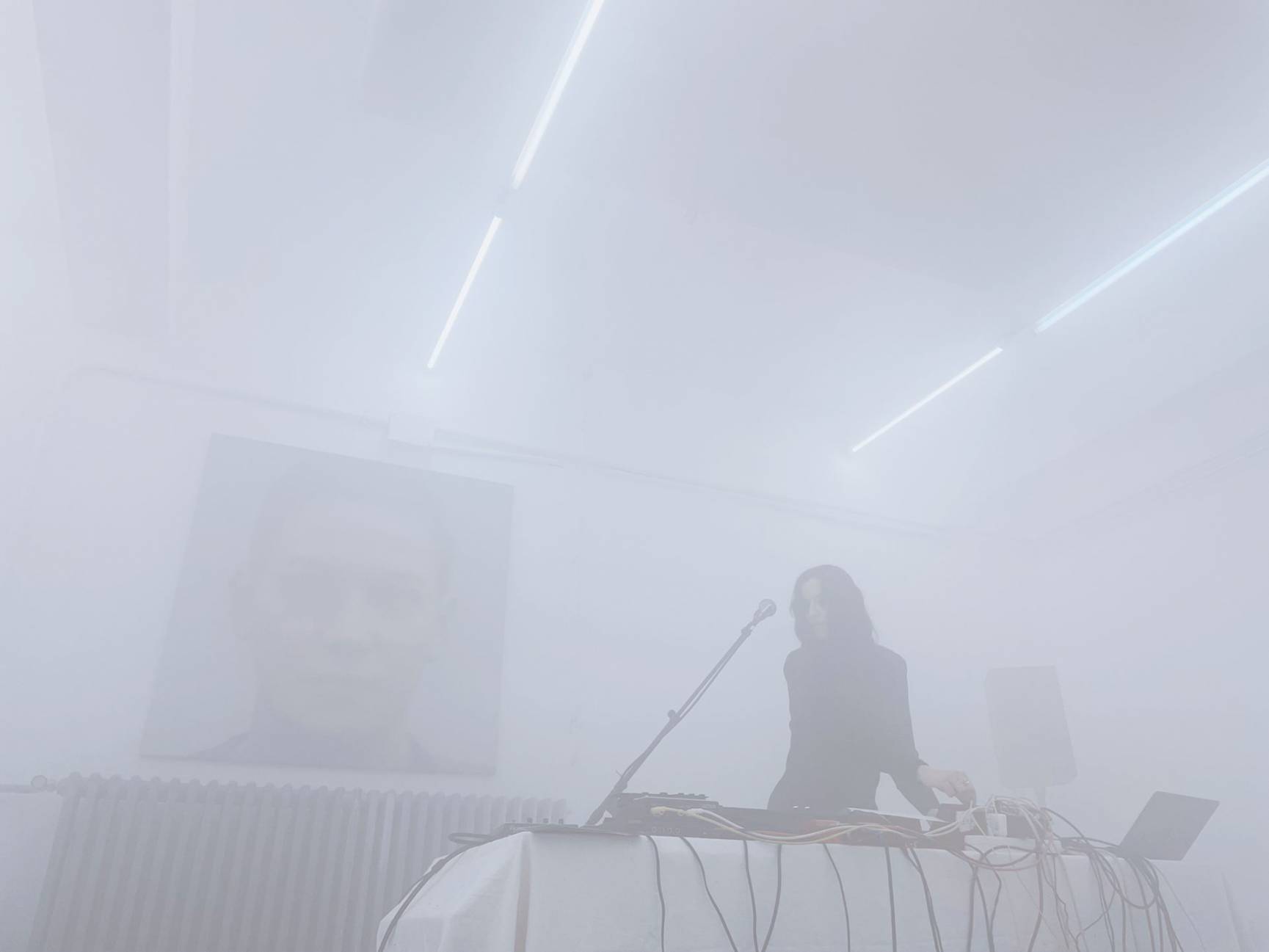
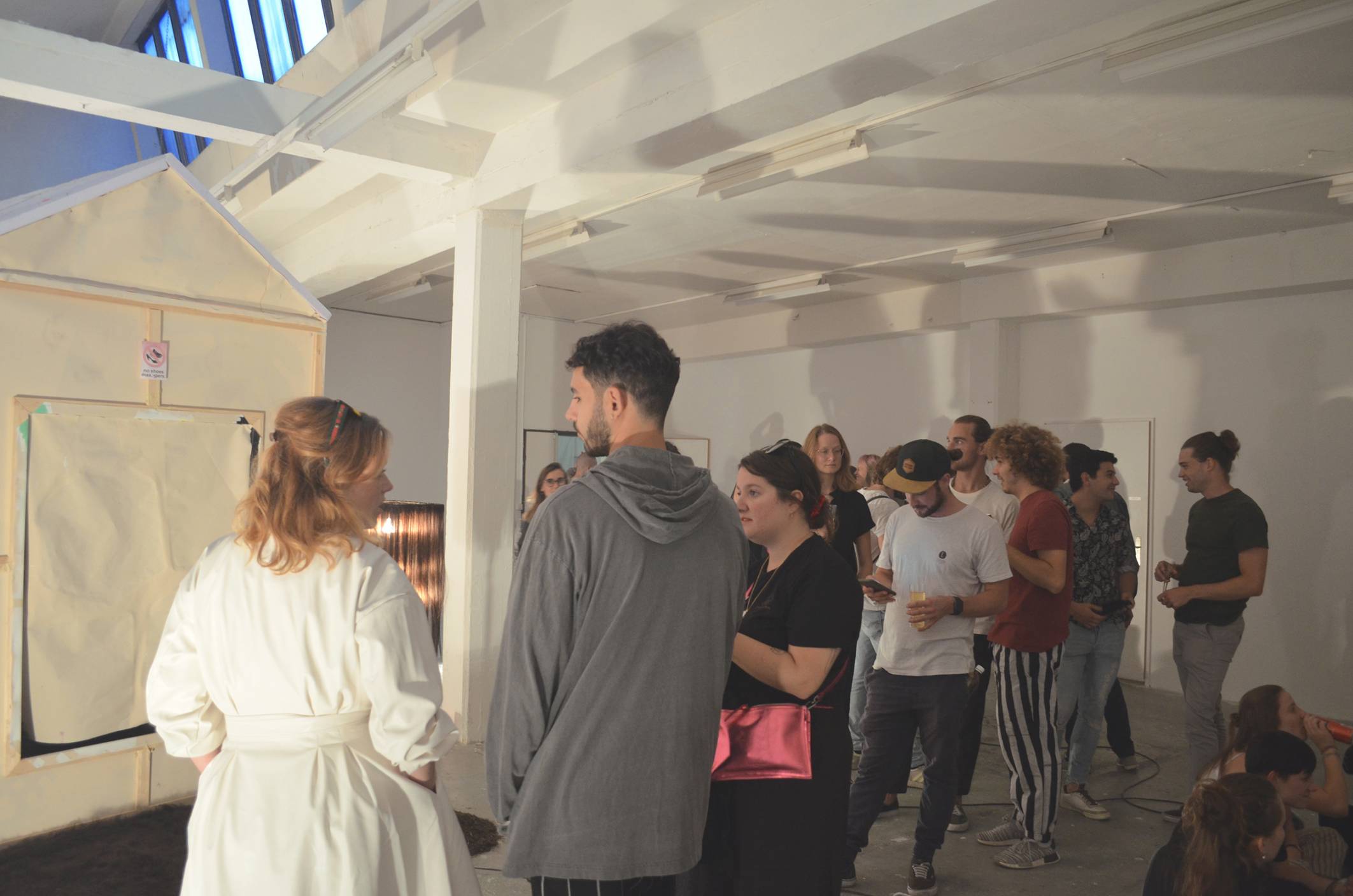
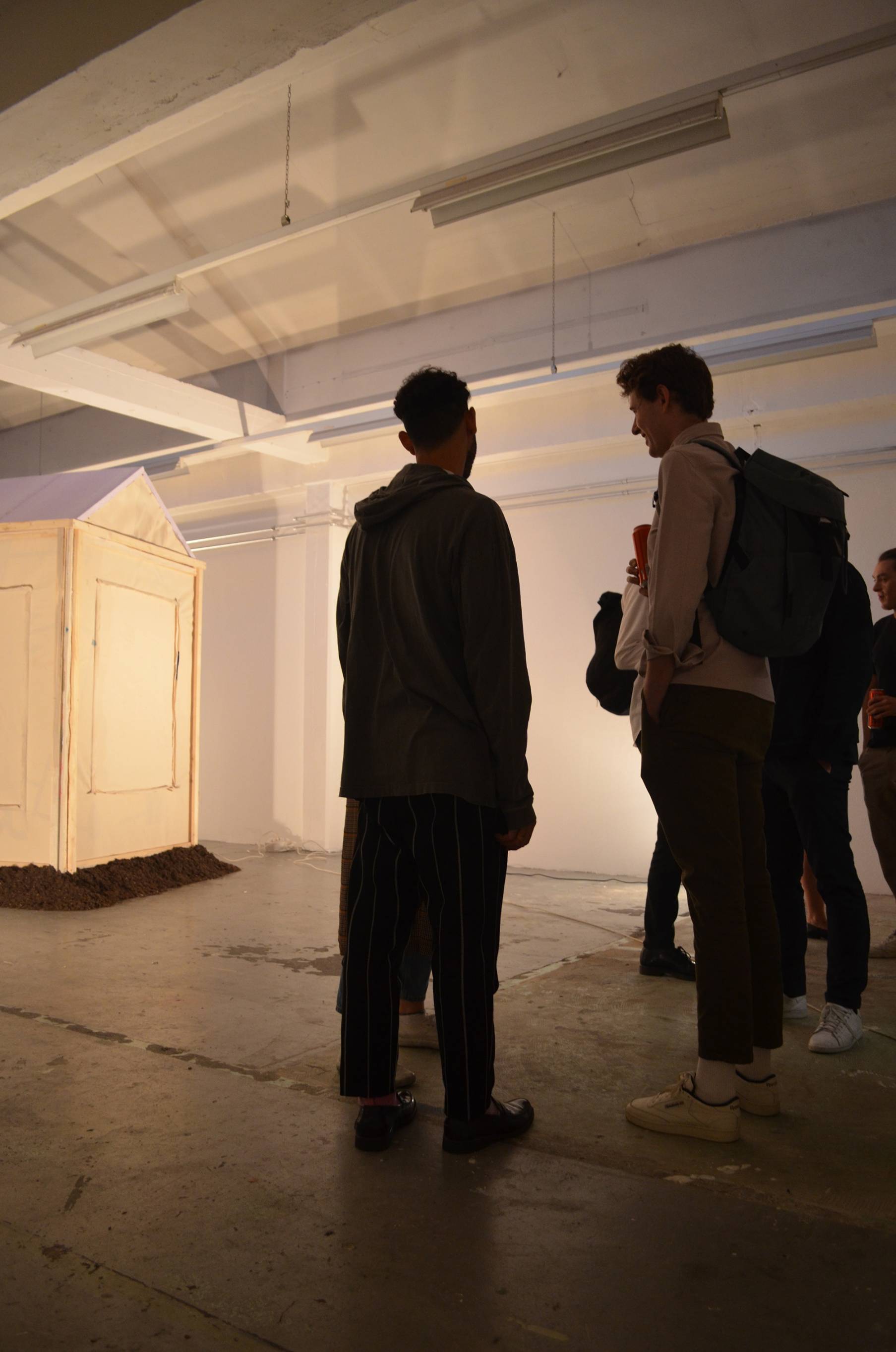
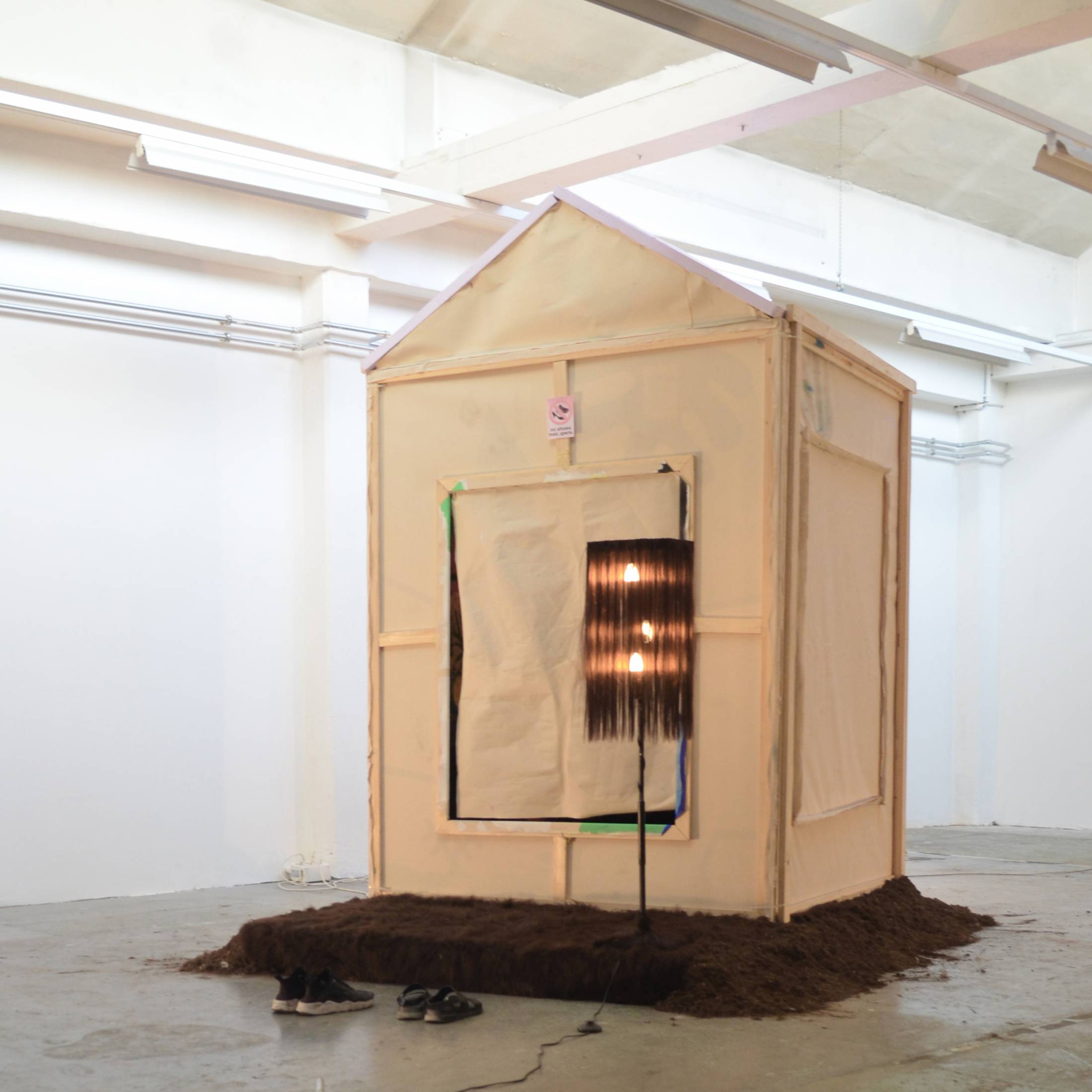
    Performance view, MONSTERS by Valerie Reding

    Toxi space, Zürich, 2024

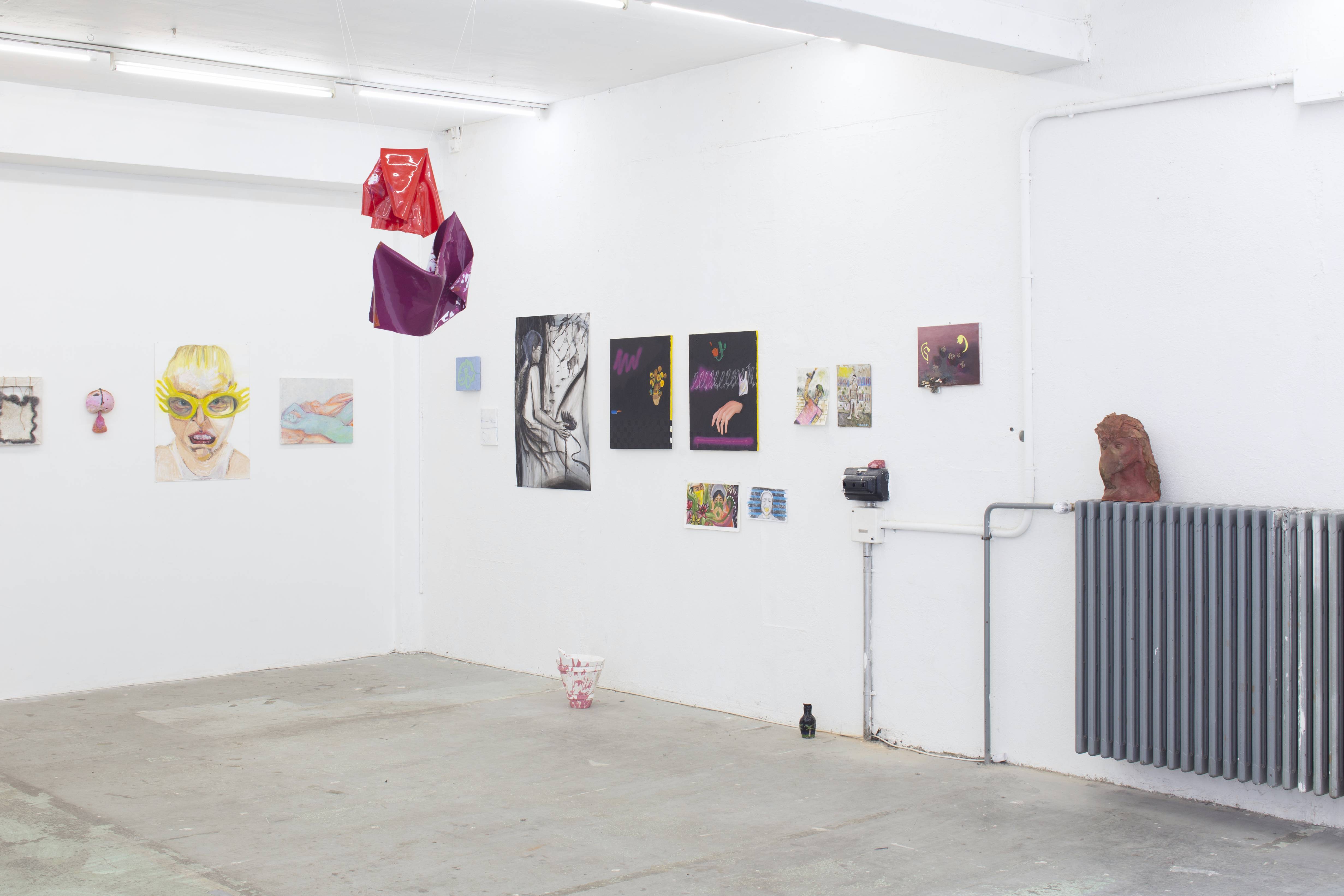
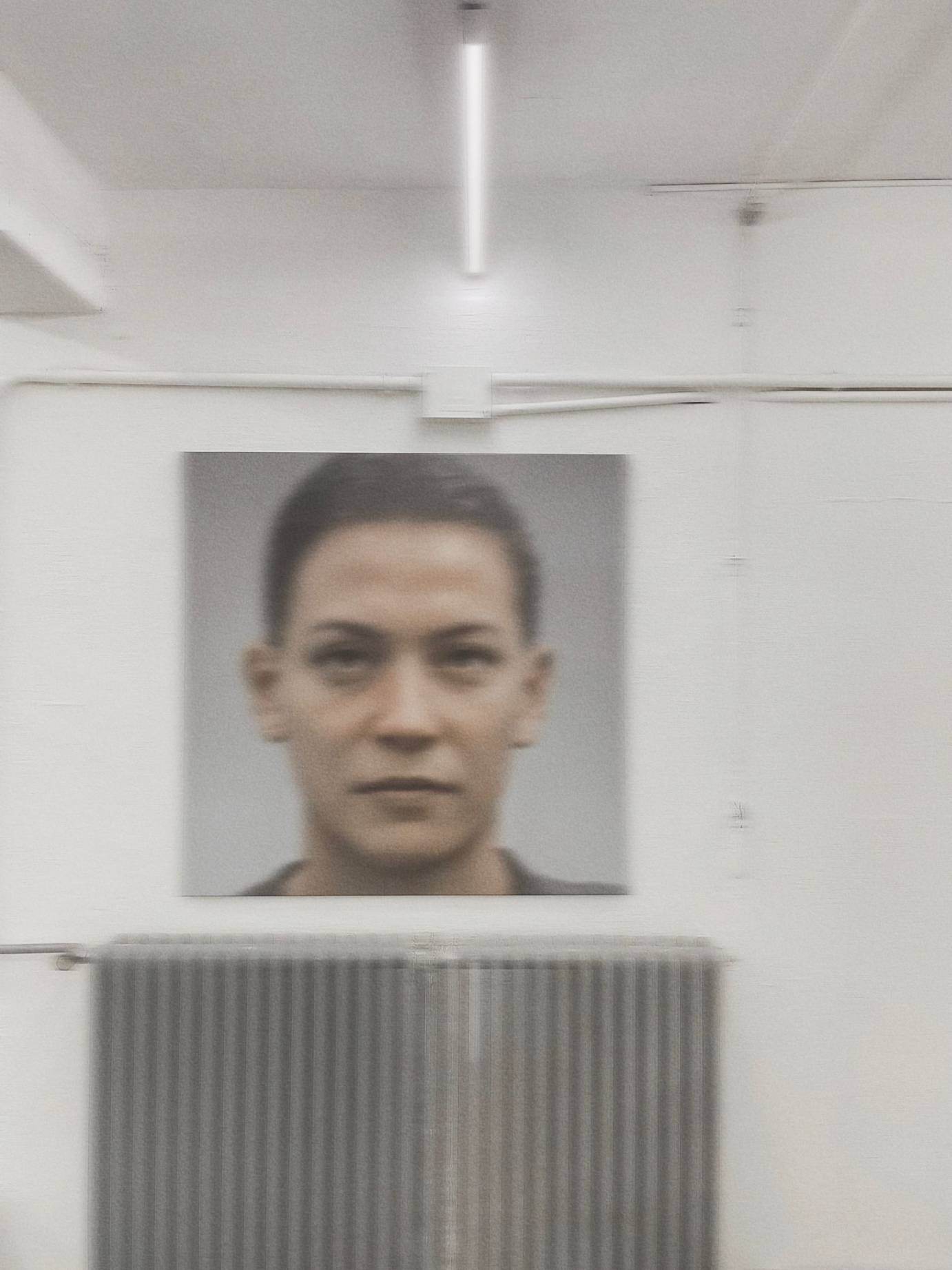
    Exhibition view, MONSTERS by Valerie Reding

    Toxi space, Zürich, 2024

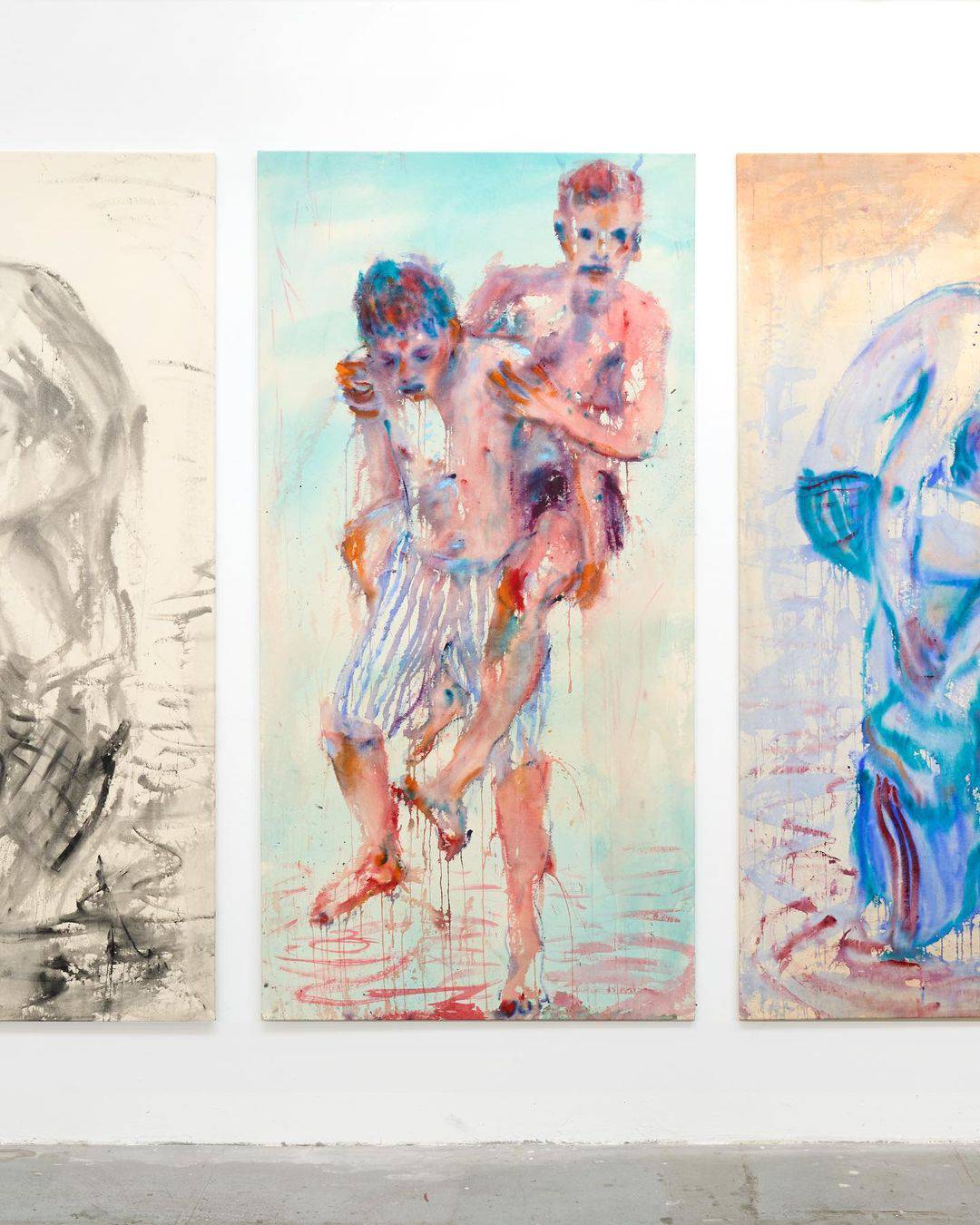
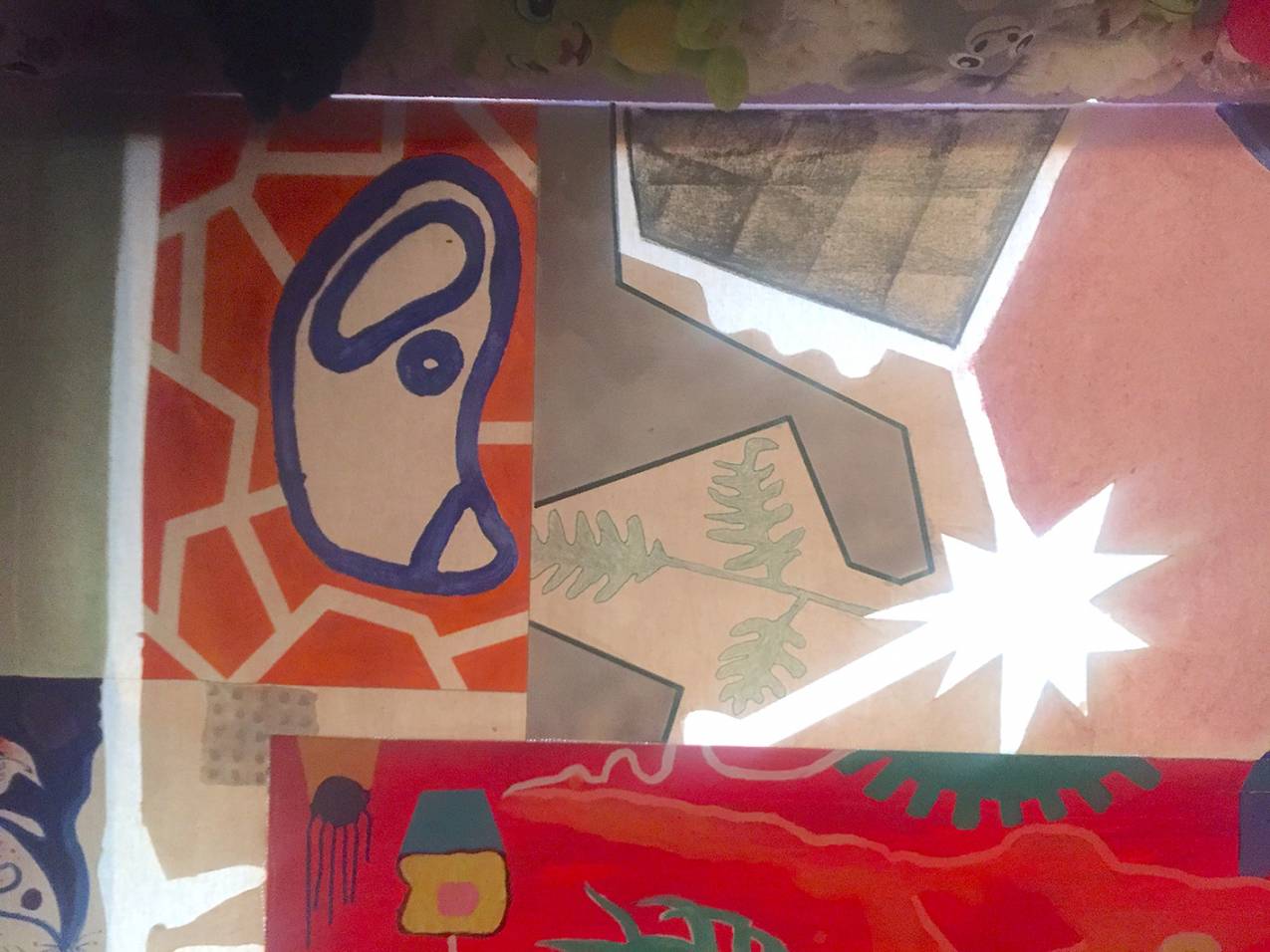
    David Weishaar

    The Heart Is Ours,

    2023

    acrylic and oil paint on canvas
    200 cm x 300 cm (triptych of 3 canvases of 100 cm x 100 cm each)

    Valerie Reding

    monsters (Aron & Salou),

    2023

    original print on tarp (recto verso), 120cmx180cm

    David Weishaar

    The Heart Is Ours,

    2023

    acrylic and oil paint on canvas
    200 cm x 300 cm (triptych of 3 canvases of 100 cm x 100 cm each)

    Valerie Reding,

    monsters (Will & Aron),

    2023

    original print on tarp (recto verso) 120cmx180cm

    Valerie Reding,

    monsters (Robyn & Salou),

    2023

    original print on tarp (recto verso) 120cmx180cm

    Valerie Reding,

    monsters (Aron & Pauline),

    2023

    original print on tarp (recto verso) 120cmx180cm

    Valerie Reding,

    monsters (Pauline & Bast),

    2023

    original print on tarp (recto verso) 120cmx180cm

    Exhibition view, MONSTERS by Valerie Reding

    Toxi space, Zürich, 2024

    Valerie Reding,

    monsters (Salou & Will),

    2023

    original print on tarp (recto verso) 120cmx180cm

    Valerie Reding,

    monsters (Will & Aron),

    2023

    original print on tarp (recto verso) 120cmx180cm

    Valerie Reding,

    monsters (Robyn & Salou),

    2023

    original print on tarp (recto verso) 120cmx180cm

    Valerie Reding,

    monsters (Bast & Robyn),

    2023

    original print on tarp (recto verso) 120cmx180cm

    Exhibition view, MONSTERS by Valerie Reding

    Toxi space, Zürich, 2024

    Exhibition view, MONSTERS by Valerie Reding

    Toxi space, Zürich, 2024

    Exhibition view, MONSTERS by Valerie Reding

    Toxi space, Zürich, 2024

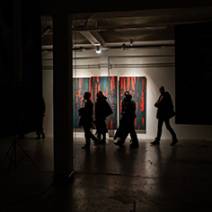
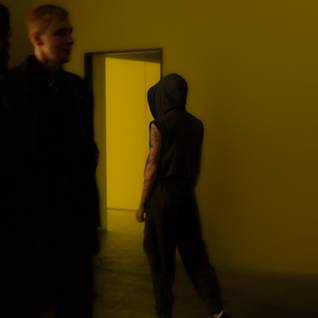
    Performance view, MONSTERS by Valerie Reding

    Toxi space, Zürich, 2024

    Performance view, MONSTERS by Valerie Reding

    Toxi space, Zürich, 2024

    Performance view, MONSTERS by Valerie Reding

    Toxi space, Zürich, 2024

    Performance view, MONSTERS by Valerie Reding

    Toxi space, Zürich, 2024

    Performance view, MONSTERS by Valerie Reding

    Toxi space, Zürich, 2024

    Performance view, MONSTERS by Valerie Reding

    Toxi space, Zürich, 2024

    Performance view, MONSTERS by Valerie Reding

    Toxi space, Zürich, 2024

    Performance view, MONSTERS by Valerie Reding

    Toxi space, Zürich, 2024

    Performance view, MONSTERS by Valerie Reding

    Toxi space, Zürich, 2024

    Performance view, MONSTERS by Valerie Reding

    Toxi space, Zürich, 2024

    Performance view, MONSTERS by Valerie Reding

    Toxi space, Zürich, 2024

    Performance view, MONSTERS by Valerie Reding

    Toxi space, Zürich, 2024

    Performance view, MONSTERS by Valerie Reding

    Toxi space, Zürich, 2024

    Performance view, MONSTERS by Valerie Reding

    Toxi space, Zürich, 2024

    Performance view, MONSTERS by Valerie Reding

    Toxi space, Zürich, 2024

    Performance view, MONSTERS by Valerie Reding

    Toxi space, Zürich, 2024

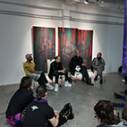
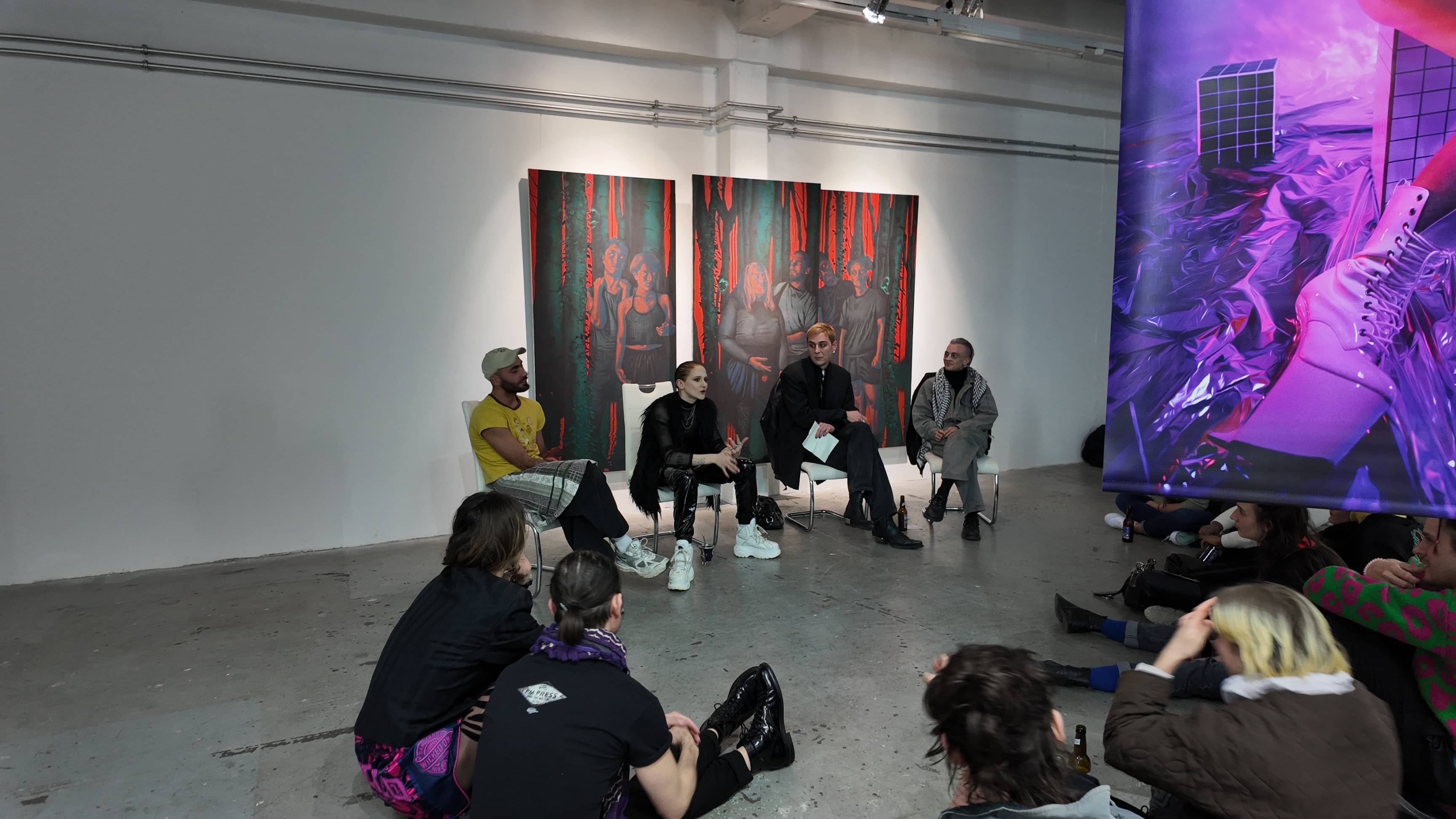
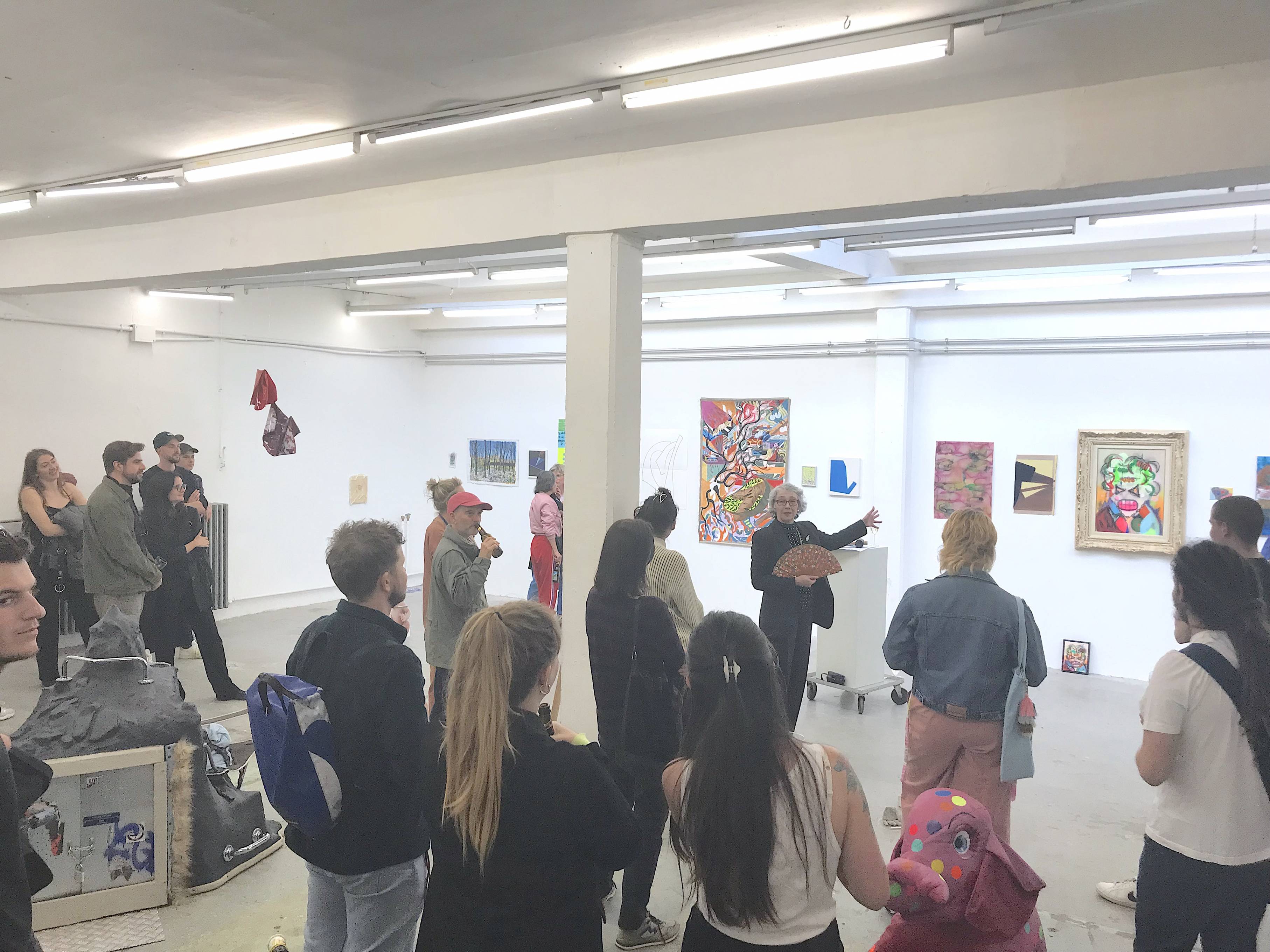
    Artist talk moderated by Oz Oderbolz with Valerie Reding, David Weishaar & Lou Drago

    Toxi space, Zürich, 2024

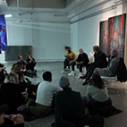
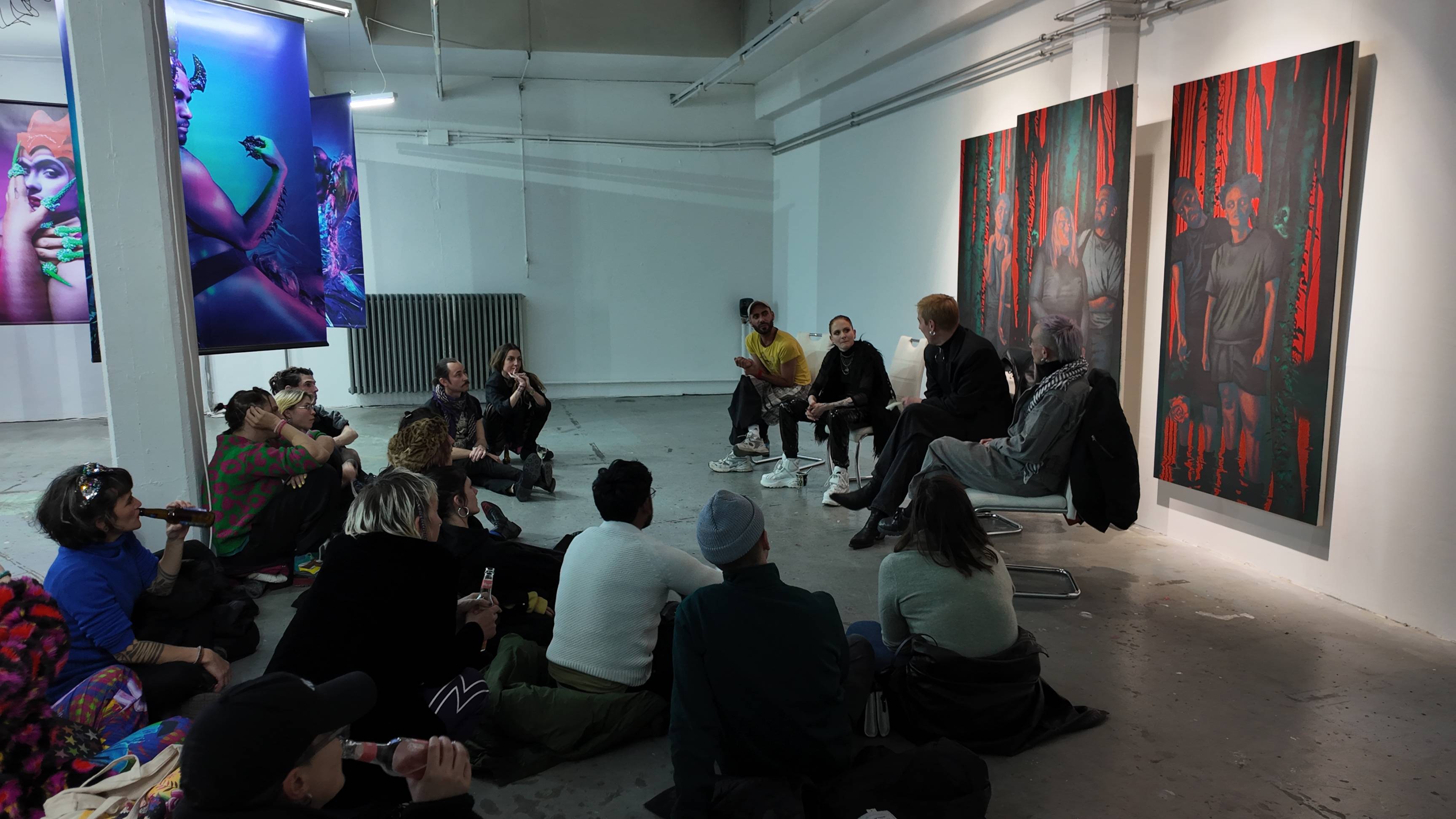
    Artist talk moderated by
    Oz Oderbolz with Valerie Reding, David Weishaar & Lou Drago

    Toxi space, Zürich, 2024

    Artist talk moderated by Oz Oderbolz with Valerie Reding, David Weishaar & Lou Drago

    Toxi space, Zürich, 2024

    Artist talk moderated by Oz Oderbolz with Valerie Reding, David Weishaar & Lou Drago

    Toxi space, Zürich, 2024

  •  02.12.2023DESIRELESS - Nicola Genovese

    6.4311 Death is not an event in life: we do not live to experience death. If we take eternity to mean not infinite temporal duration but timelessness, then eternal life belongs to those who live in the present. Our life has no end in just the way in which our visual field has no limits.
    Ludwig Wittgenstein, Tractatus Logico-Philosophicus


    In a post-capitalist and perhaps post-war Europe, the CEO of an unnamed corporation presents a new product. It is called Warp, a digital service that enables manipulation of the space-time continuum and access to a new Lebensform. It promises to dissolve nostalgia and the ambiguous passions that tinge the future into the fold of an endless present.

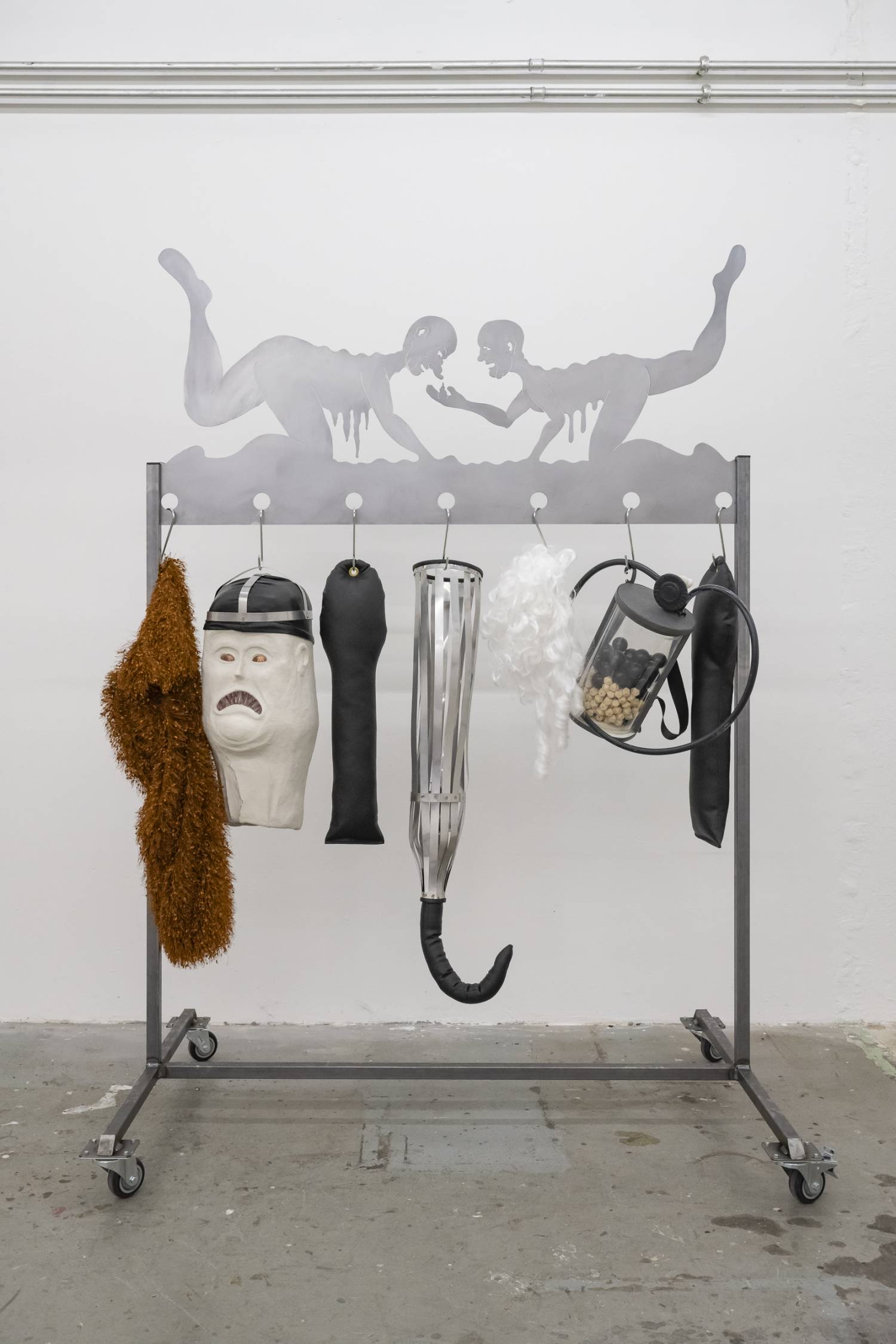
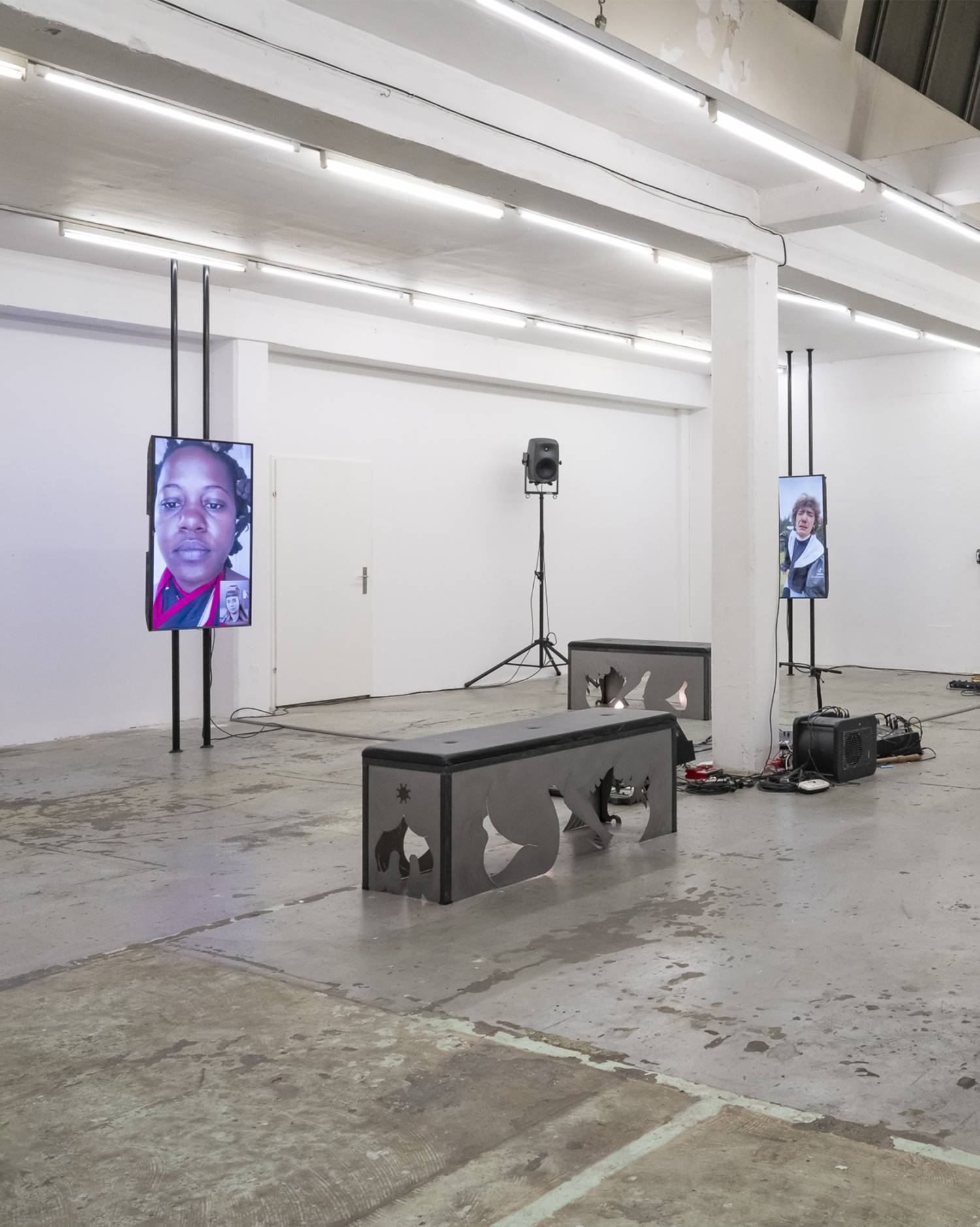
    Part speculative science-fiction and part Commedia dell'arte, Desireless takes the viewer into the depths of this temporal dimension. Through a blend of monologues, choreography, and live music, the performance by Nicola Genovese, curated by Francesco Urbano Ragazzi, exposes the masks, codes, and feelings of a semi-privileged humanity, torn between the remnants of a late-imperial world, the bondage of a technocratic hell, and the fantasy of a biomedical Nirvana.

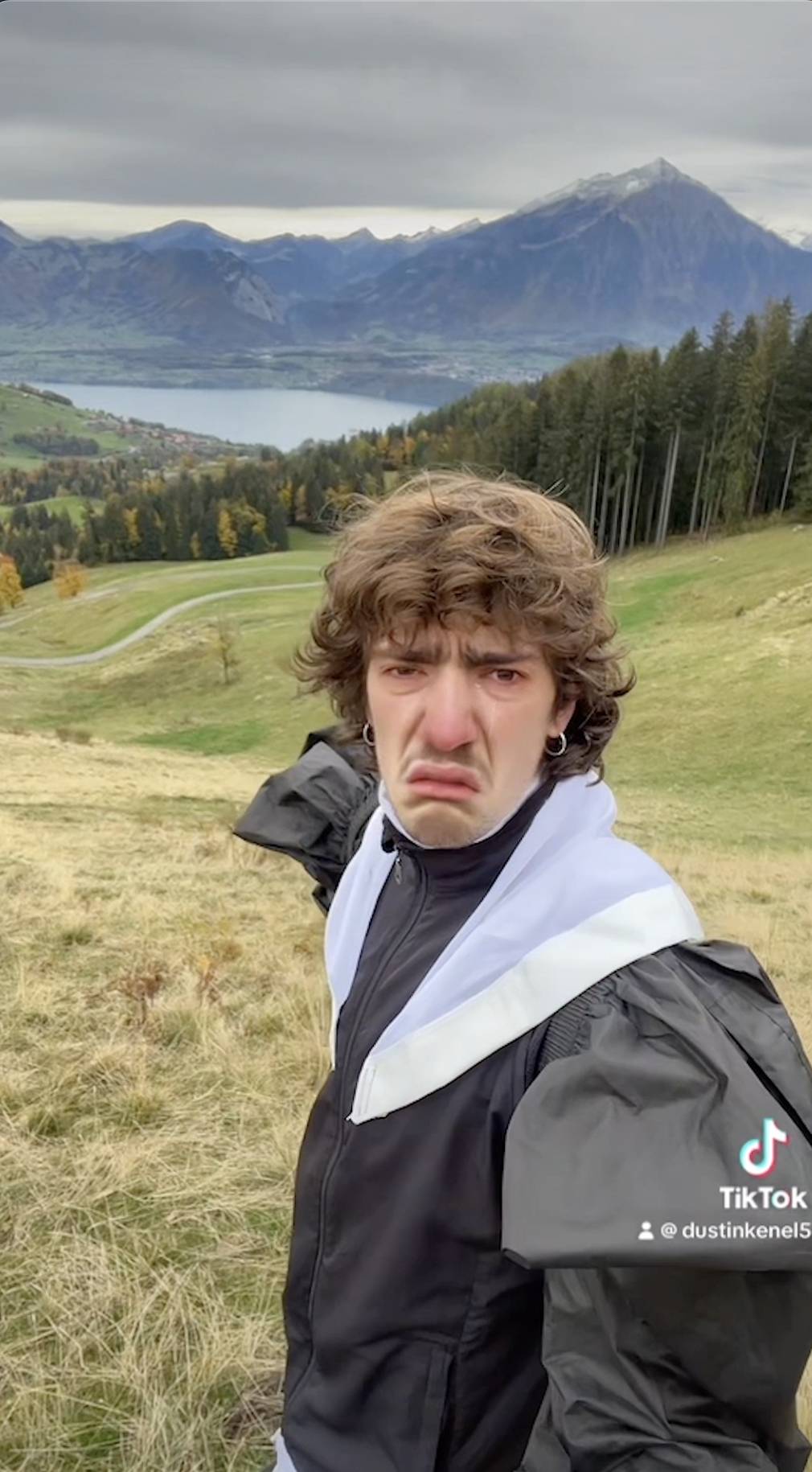
    The work itself is conceived as a machine of doubt and indistinction. In creating Desireless, Nicola Genovese has collaborated with artists Dustin Kenel, Patricia Meier, Dauen Park, Maria Sabato, Thembeka Sincuba, the goth rock band They Die, and various artificial intelligence apps. The stage/exhibition space thus coincides with the action field of a partially non-human collective mind that extends beyond the individual identity of the artist. Video installations and sculptures become props and vice versa, depending on how they are activated. They transcend the boundaries between theatre and visual arts.

    A performance and solo exhibition by Nicola Genovese
    Curated by Francesco Urbano Ragazzi
    With: They Die
    Dustin Kenel
    Patricia Meier
    Dauen Park
    Maria Sabato
    Thembeka Sincuba
    Sculptures production assistant: Ricardo Meli
    Light design: Imanol Egea
    External eye: Ketty Ghnassia
    Co-production: Fabriktheater Rote Fabrik
    Funded by: Stadt Zürich Kultur, Ernst Göhner Stiftung, Walter Haefner Stiftung

    00a Press release.pdf
    06a Desireless poster.jpg
  •  13.11.2023STAGH-NÁ – STACK - Leevi Toija, Eero Karjalainen, Jonne Väisänen, Dominic Michel, Paavo Kärki, Hynek Alt

    Smash it

    Kill it

    [R]ea[d]t it

    Digest it

    [R]ea[d]t it again

    Like a cow

    For eternity1

    Stagh-ná – stack → to sweat, dig, grab, read, speak and repeat ⌧ to find and/or open up (on(/))to something.

    Concealed under layers and layers and stacks – lays a stratum of (mis) usages. Locations, meanings, signs, and initial ideas blurr and shift back and forth between lexicons ⌧ eventually melting all back together into an (in)significant, altered entity. However, it all remains (un)clear in which realm they all belong to; the public and/or the private.

    ...and we will thread the needle and see which ones function in the public and which ones in the private realm.

    ⌧
    ⌧

    Like the above written lyrics from a techno-ambient track suggests, Stagh- ná is meant to be ruminated perpetually ⌧ at least until the next exhibition in TOXI.


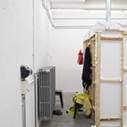
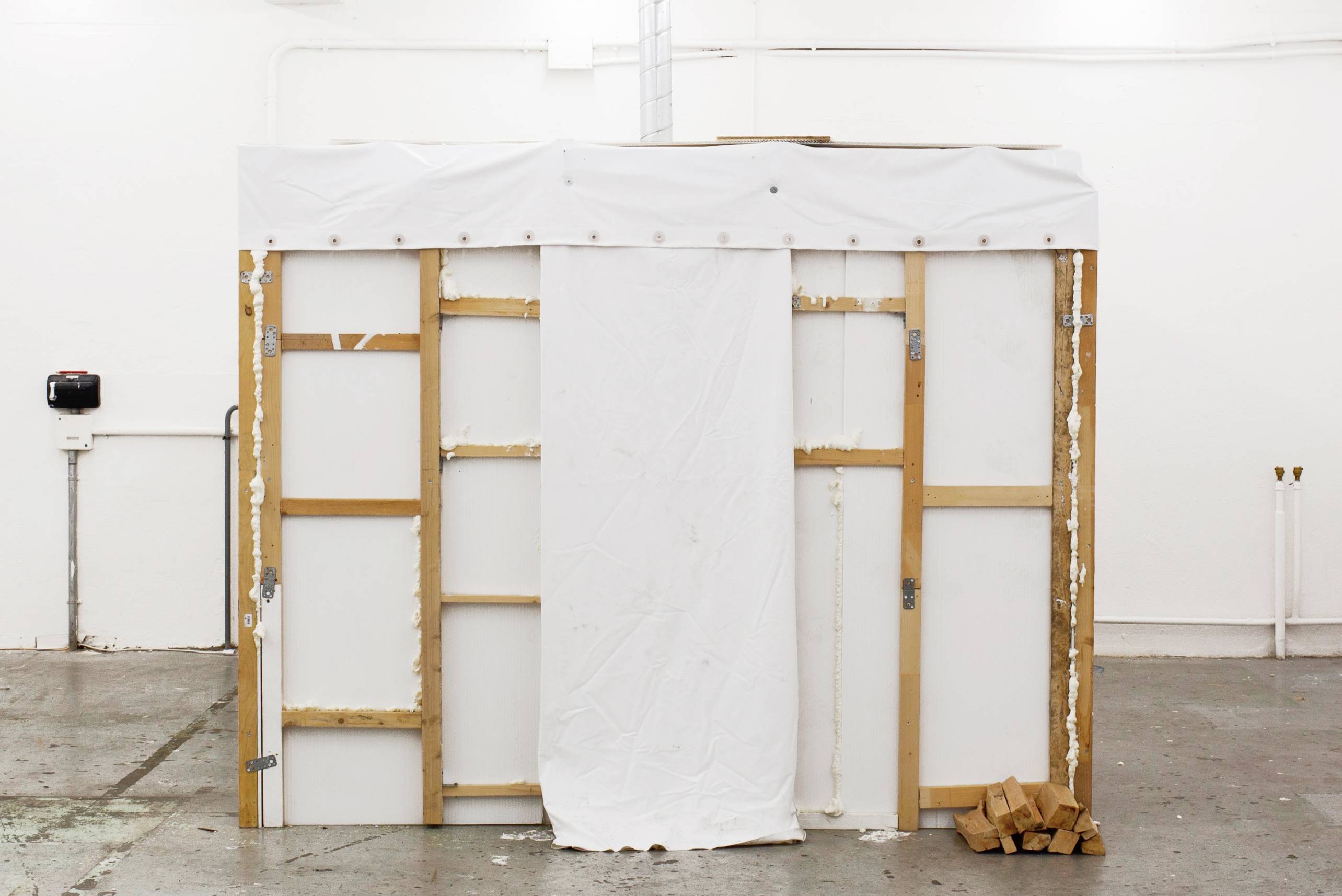
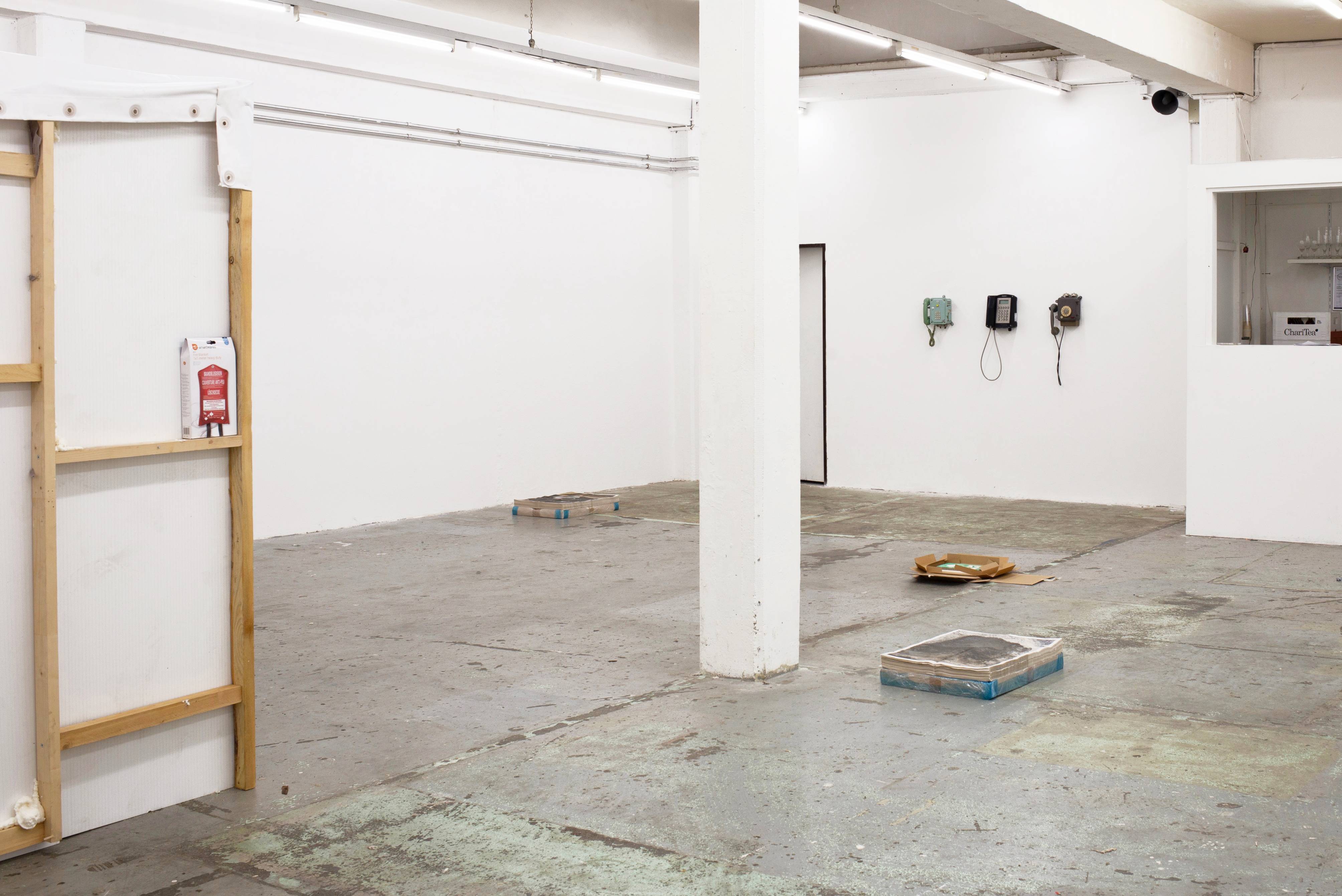
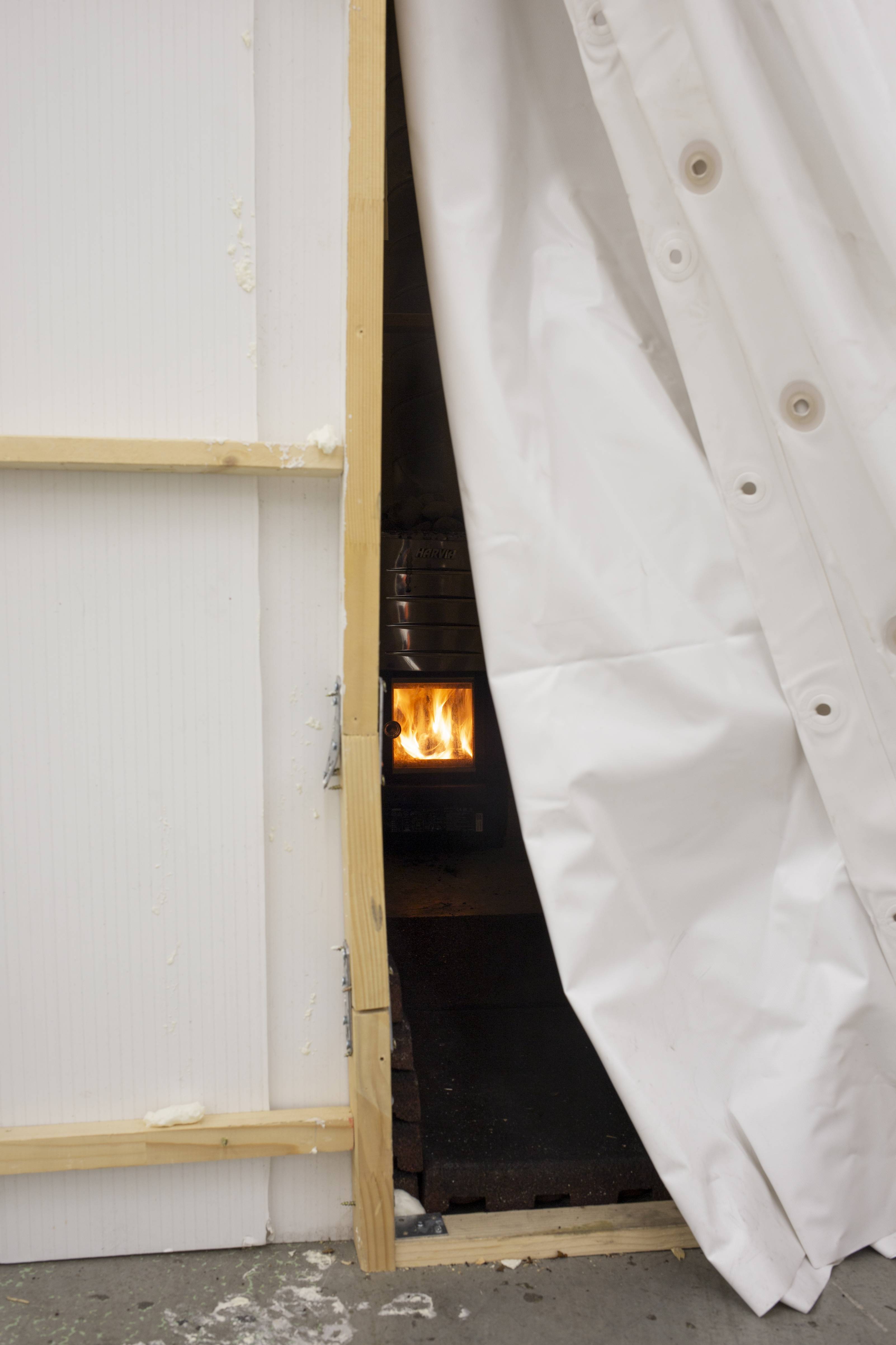
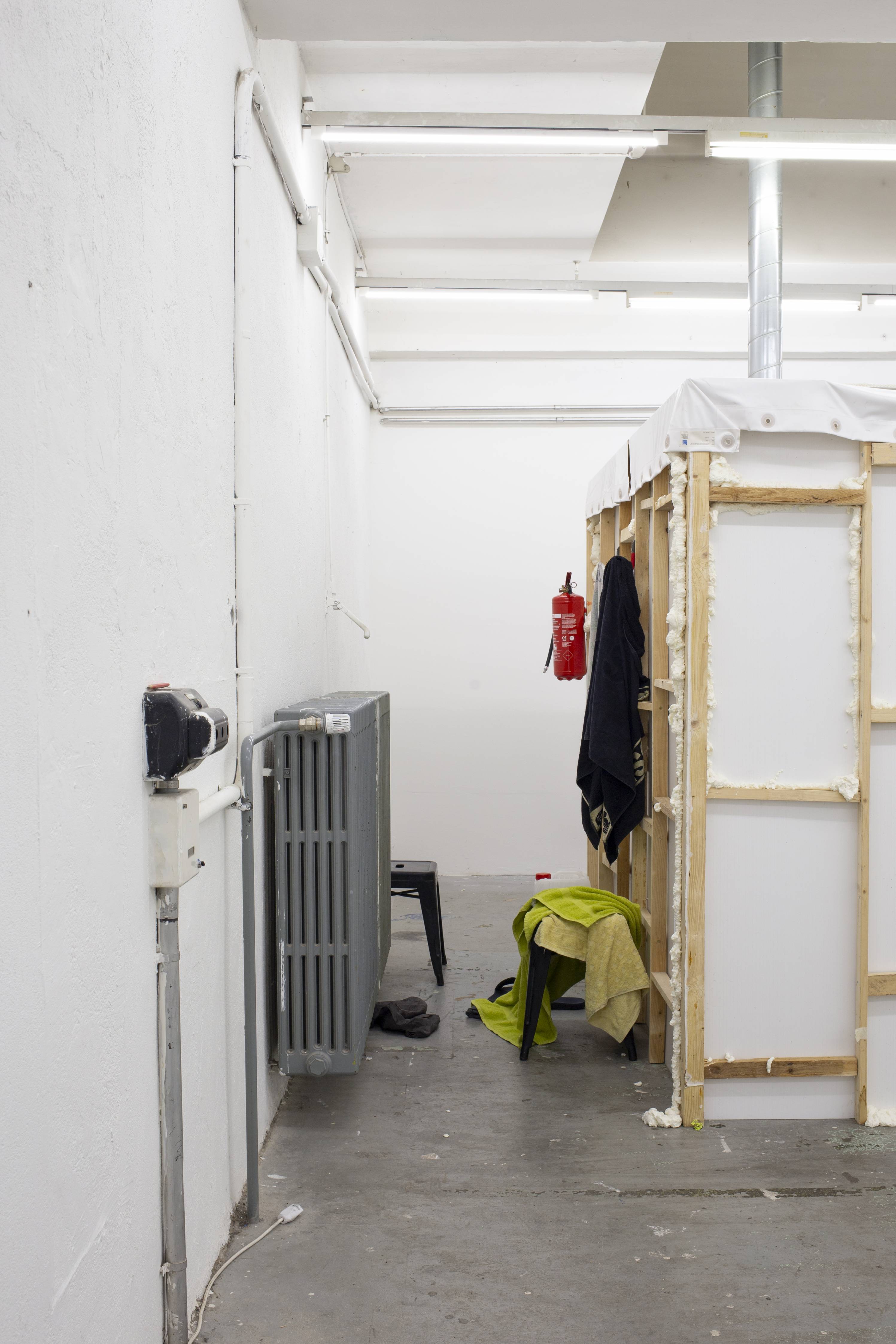
    Once upon a time, a sauna was a space to give birth, heal, and to perhaps open up. Nowadays such concepts are often associated with consumer wellness ⌧ in TOXI these ideas are misused, turned upside down, and camouflaged into some sort of a metastructure ⌧ an accumulation made out of the past. In the context of art it is clear that the erected structure will not be there for long either, and should represent some kind of value. However, the sauna can function as a temporary limbo to rethink the surrounding scenery ⌧ as the central (and the only) (functional) (super)structure of the white cubical womb in the context of the affect.


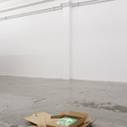
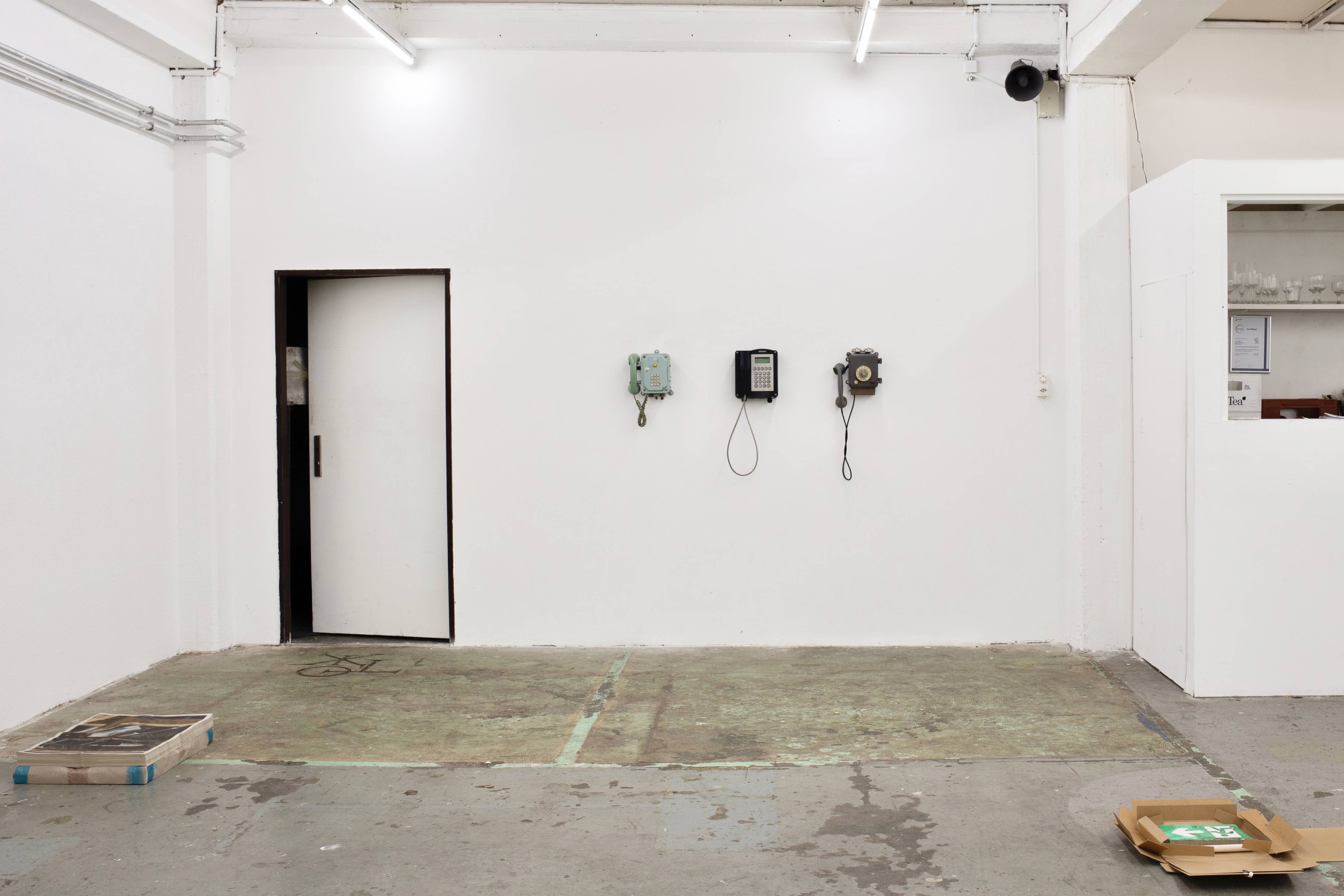
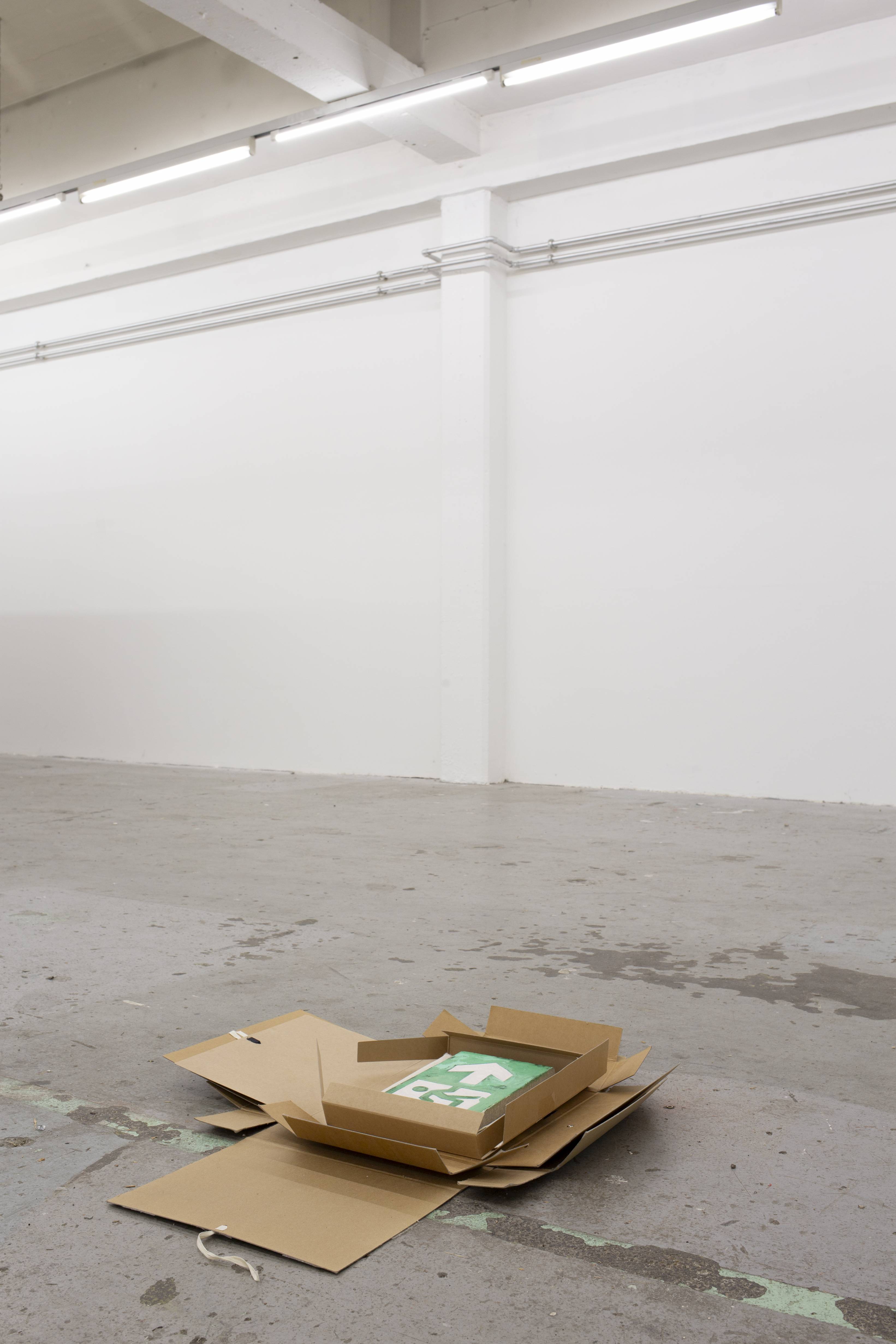
    A(n) (painted) emergency exit sign of Paavo Kärki is taken out from its basic position of a wider archival project and displayed on the floor of the gallery space in three opened-up archival cardboard boxes, in which it was also sent to Zürich. In the new environment the very public and standardized sign not only attempts to gain privacy, but simultaneously becomes misleading and obsolete ⌧ a representation of something very familiar to all of us, available in the closest Bauhaus. The painting does not show the way out, but perhaps invites to question the essence of the way itself. The work by Kärki is not actually a comment on a certain space - of this space, TOXI - but on the contrary it is rather a subtle shift from individual praxis to collective performativity. The gesture of taking one painting, shipping it to an exhibition is simultaneously a small alteration to a way of working for a short period of time and a significant blur between the public and the private.


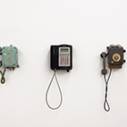
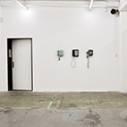
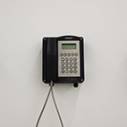
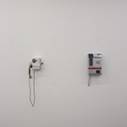
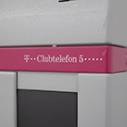
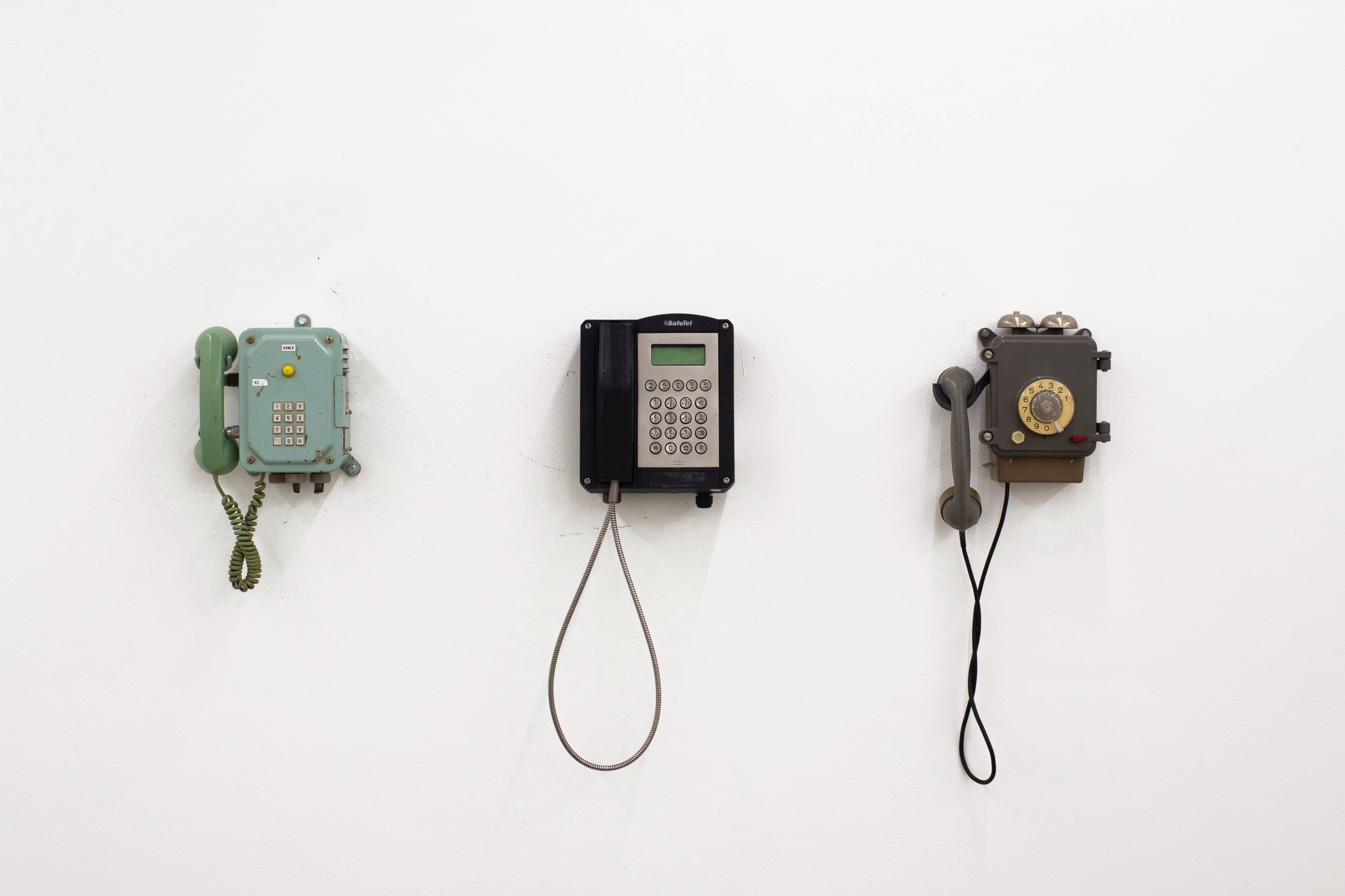
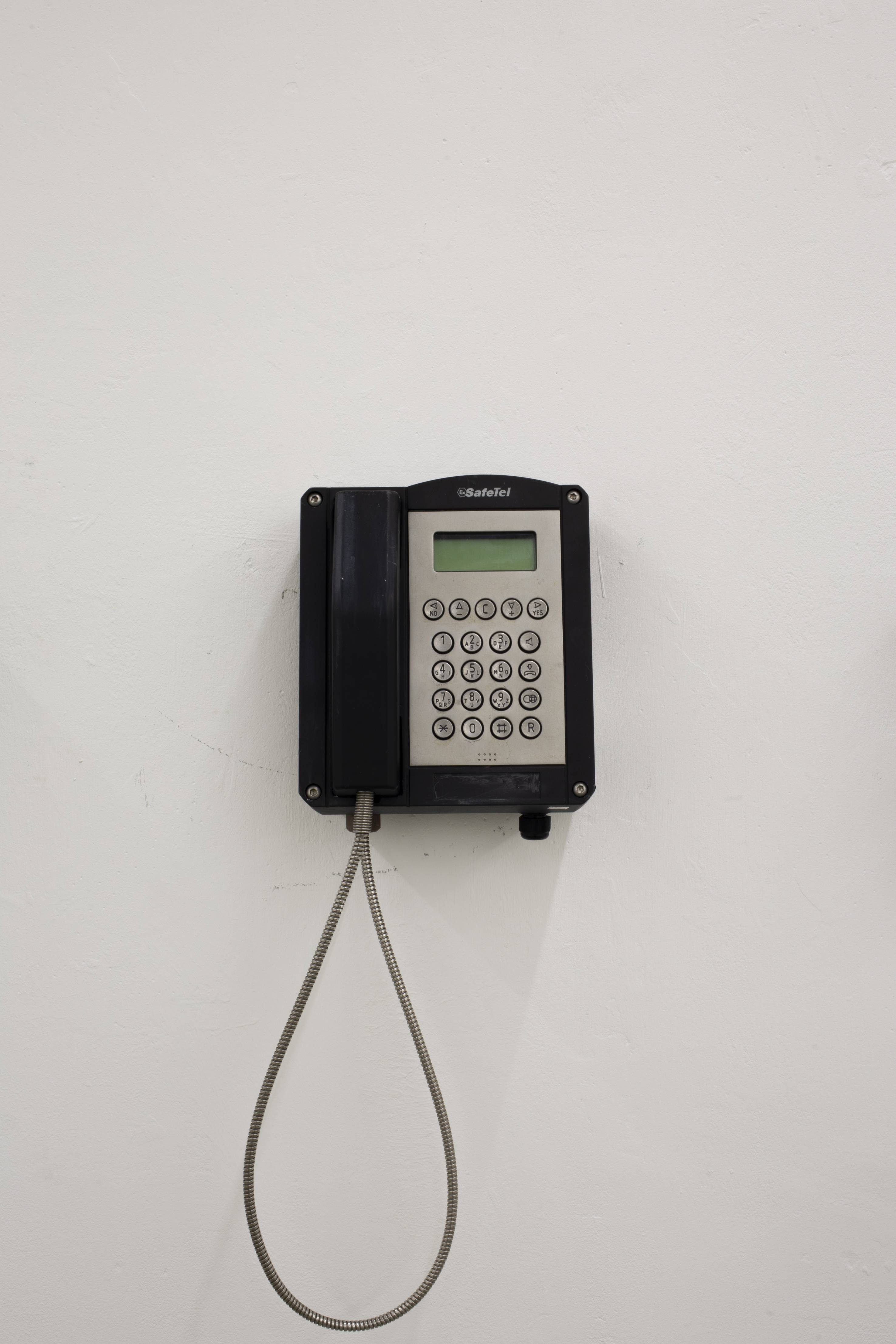
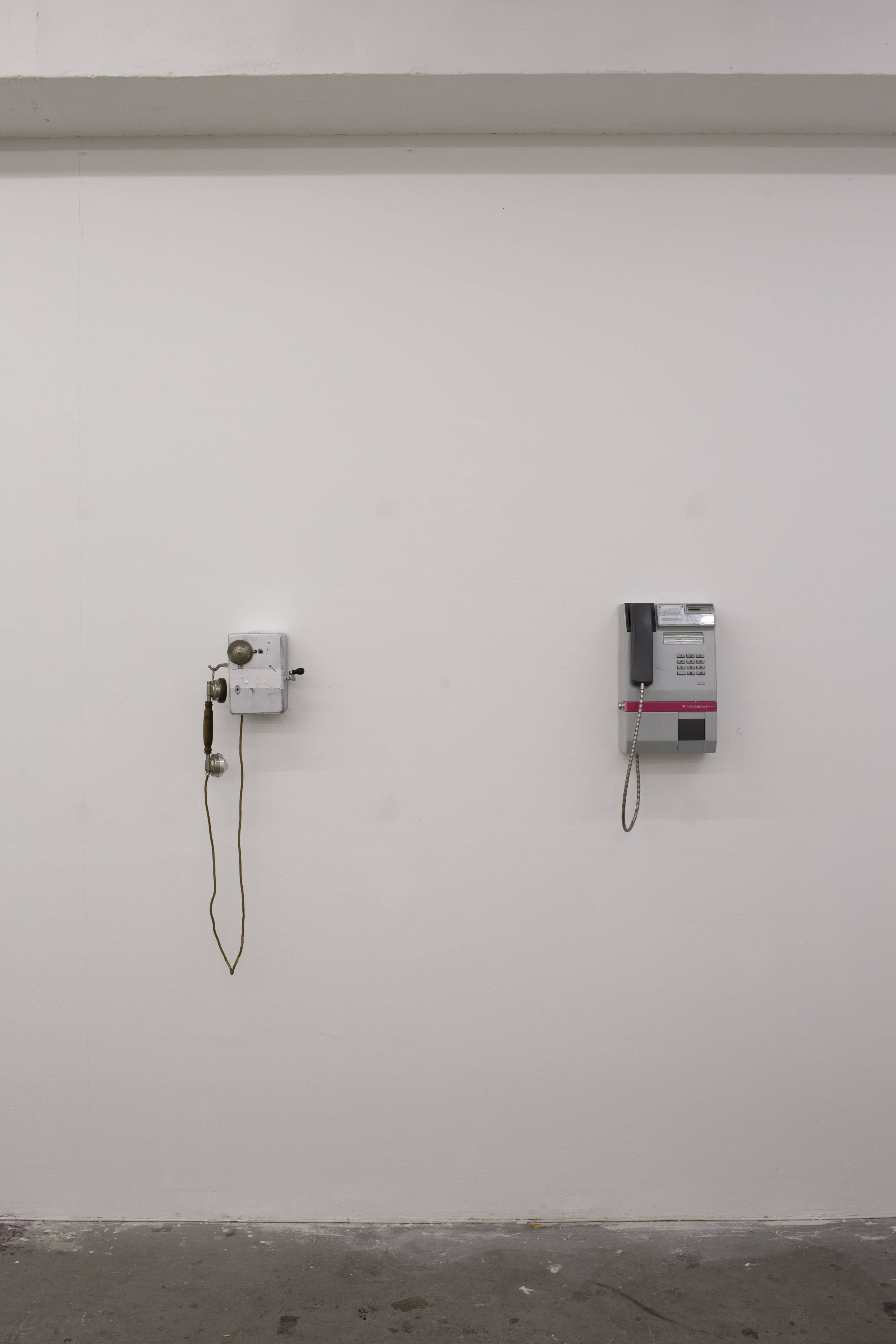
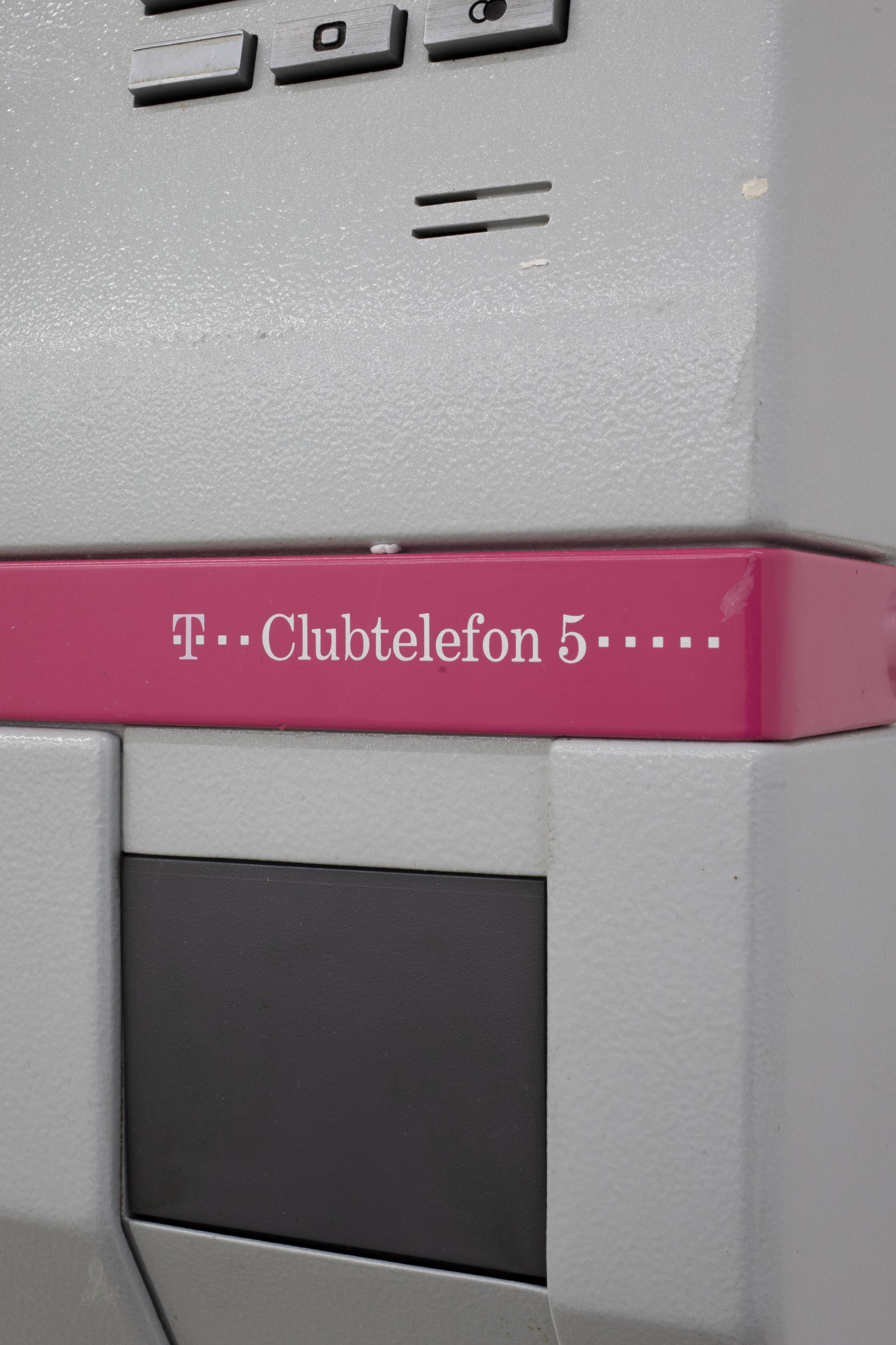
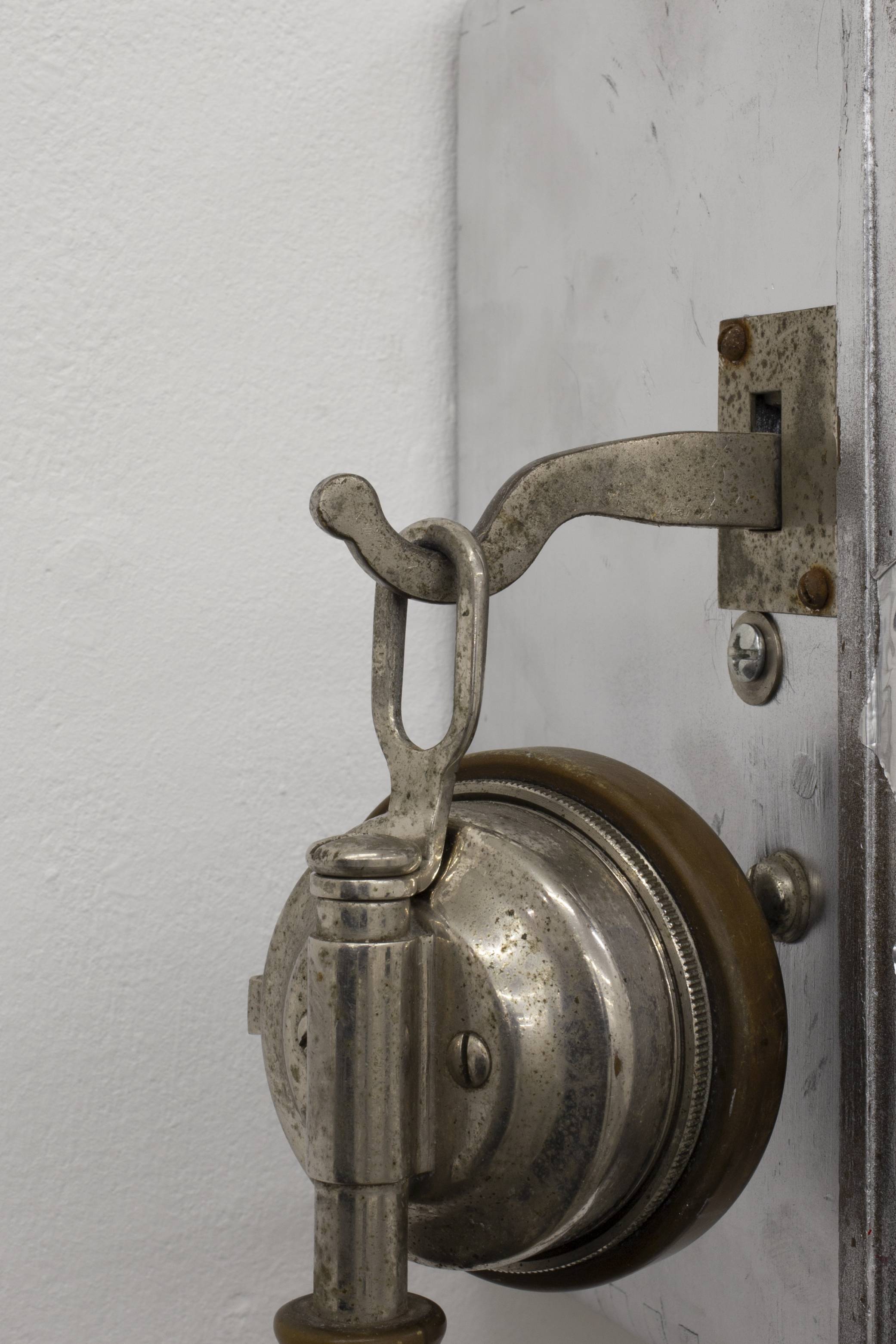
    Once upon a time landline phones were the main artifacts of intercommunication, keeping the world wired (very literally in(_)deed) ⌧ today they have reached a state of obsolescence in their purpose. Dominic Michel’s readymade sculptures transfer the absence of this mostly forgotten infra- structure into the semi-private art space ⌧ a formal signifier of (private?) communication that was once commonly accessible right under the gaze of others. Whereas the obviously dysfunctional objects function as relics of communication through time and space, the tales once told through the phones still creep the viewers via their recognizable formal qualities and popular culture.


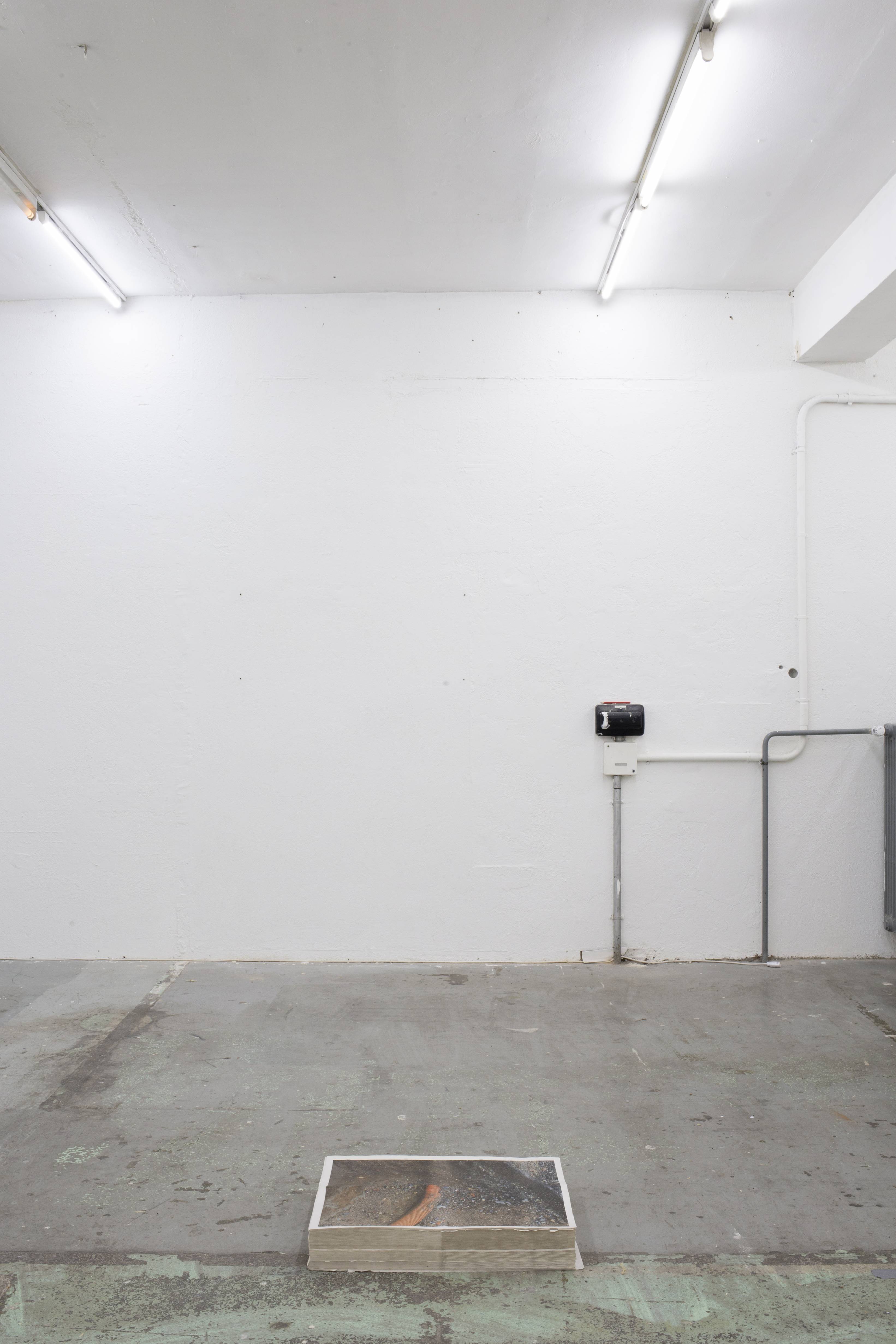
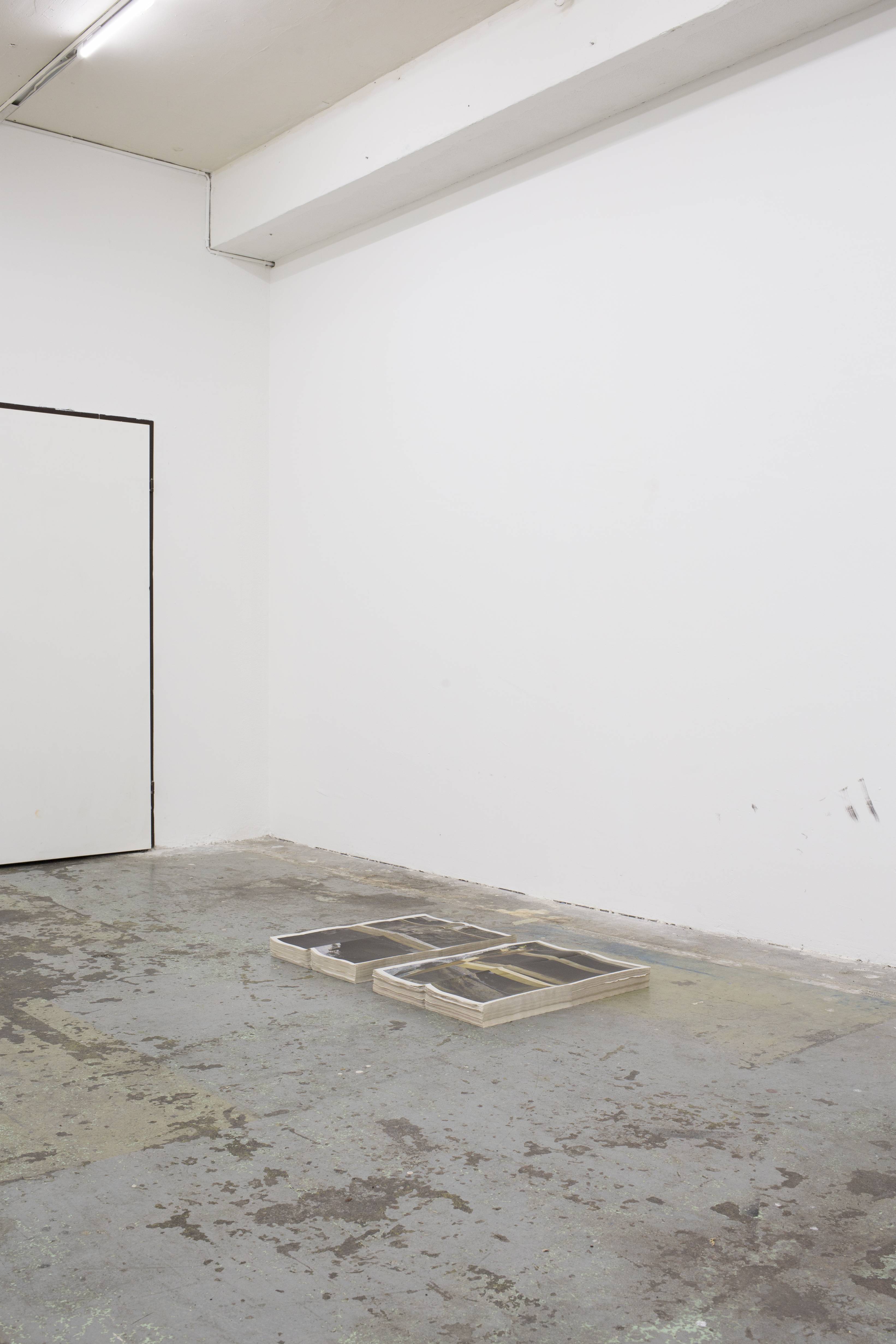
    The rotary off-set prints of Hynek Alt stacked on the floor offer the spec- tator a repetitive glimpse below everyday surfaces. The piles resemble of the usually overlooked (infra)structures, which supposedly keep the world running (forward) ⌧ the pictured sewers, pipes and wires remind the visitor of the absence of such hidden necessities in-and-out the superstructure. “As part of a series of infrascapes, the holey city of infrastructures opens up a way to understand what multiple realities hide inside surfaces we don’t immediately see through. As for the practice of opening up, it also has similar connotations.”2


    Archive 2 “Dm Excerpts Between @skaeliptom & @chloewise_” Varg2TM Track 12 on Nordic Flora Series Pt.5: Crus
    Parikka, Jussi, et al. Untitled (Infrastructures & The Beach). Artmap / Academy of Performing Arts in Prague, 2020. pp.153-154

    Curated by Leevi Toija
    Text by Leevi Toija & Jonne Väisänen

    floorplan.pdf
    flyer_mockup_copy.png

    Leevi Toija, Eero Karjalaien & Jonne Vaisanen

    X,

    2023

    Exhibition view, STAGH-NÁ – STACK

    Toxi space, Zürich, 2023

    Dominic Michel,

    A jungle of presence, a Dickicht of foresight, full of snakes, futuristic shamans, incredible confusion, piss, ghosts, sunlight, drifts, birds' nests & - eggs - joyful aggression,

    2023

    PTT 9-39 (1984)

    Dominic Michel,

    Connected and bounded by that silver chain that outlines the terrain of sensuality, transgression and vision,

    2023

    FHF Safe Tel DSTI

    Dominic Michel,

    Mid-May in a state that begins with "I", so two-dimensional that it can hardly be said to have a geography at all - the rays so insistent and palpable that you have to seek the darkness to think in words,

    2023

    Nippon OKI ODA-1360 (1991)

    Exhibition view, STAGH-NÁ – STACK

    Toxi space, Zürich, 2023

    Leevi Toija, Eero Karjalaien & Jonne Vaisanen

    X,

    2023

    detail

    Exhibition view, STAGH-NÁ – STACK

    Toxi space, Zürich, 2023

    Paavo Kärki

    27,

    2023

    Dominic Michel,

    Connected and bounded by that silver chain
    that outlines the terrain of sensuality, transgression and vision,

    2023

    FHF Safe Tel DSTI

    Dominic Michel,

    Story and Emblem,

    2023

    Zellweger G.A. 24 (1932)

    Dominic Michel,

    Punks dreaming of piercing their ears,
    animistic cyclists gliding in grinding dust through welfare streets of random
    flowers, roving pickpockets, smilling robbers of totems and loose change,

    2023

    Telekom Clubtelefon 5 (1995)

    Dominic Michel,

    Punks dreaming of piercing their ears,
    animistic cyclists gliding in grinding dust through welfare streets of random
    flowers, roving pickpockets, smilling robbers of totems and loose change,

    2023

    detail, Telekom Clubtelefon 5 (1995)

    Dominic Michel,

    Story and Emblem,

    2023

    detail, Zellweger G.A. 24 (1932)

    Hynek Alt,

    Untitled (Today),

    2018

    Rotary offset press, 63x47 cm (Berliner format), 3000 pieces Print by MAFRA

    Hynek Alt,

    Untitled (Today),

    2018

    Rotary offset press, 63x47 cm (Berliner format), 3000 pieces Print by MAFRA

    Leevi Toija, Eero Karjalaien & Jonne Vaisanen

    X,

    2023

    detail

  •  04.10.2023BITTER FACADE - Hannah Rose Stewart & Jordi Theler

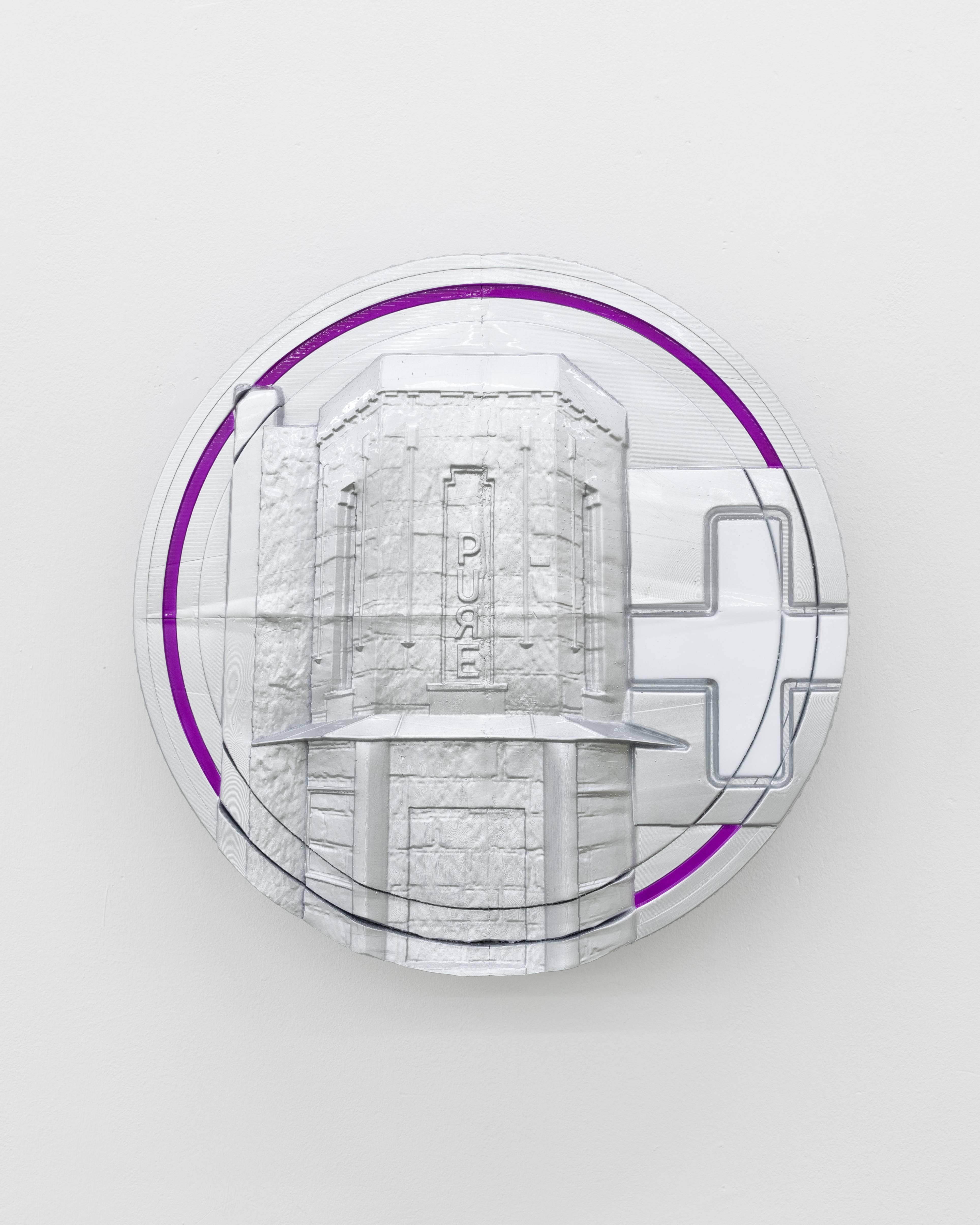
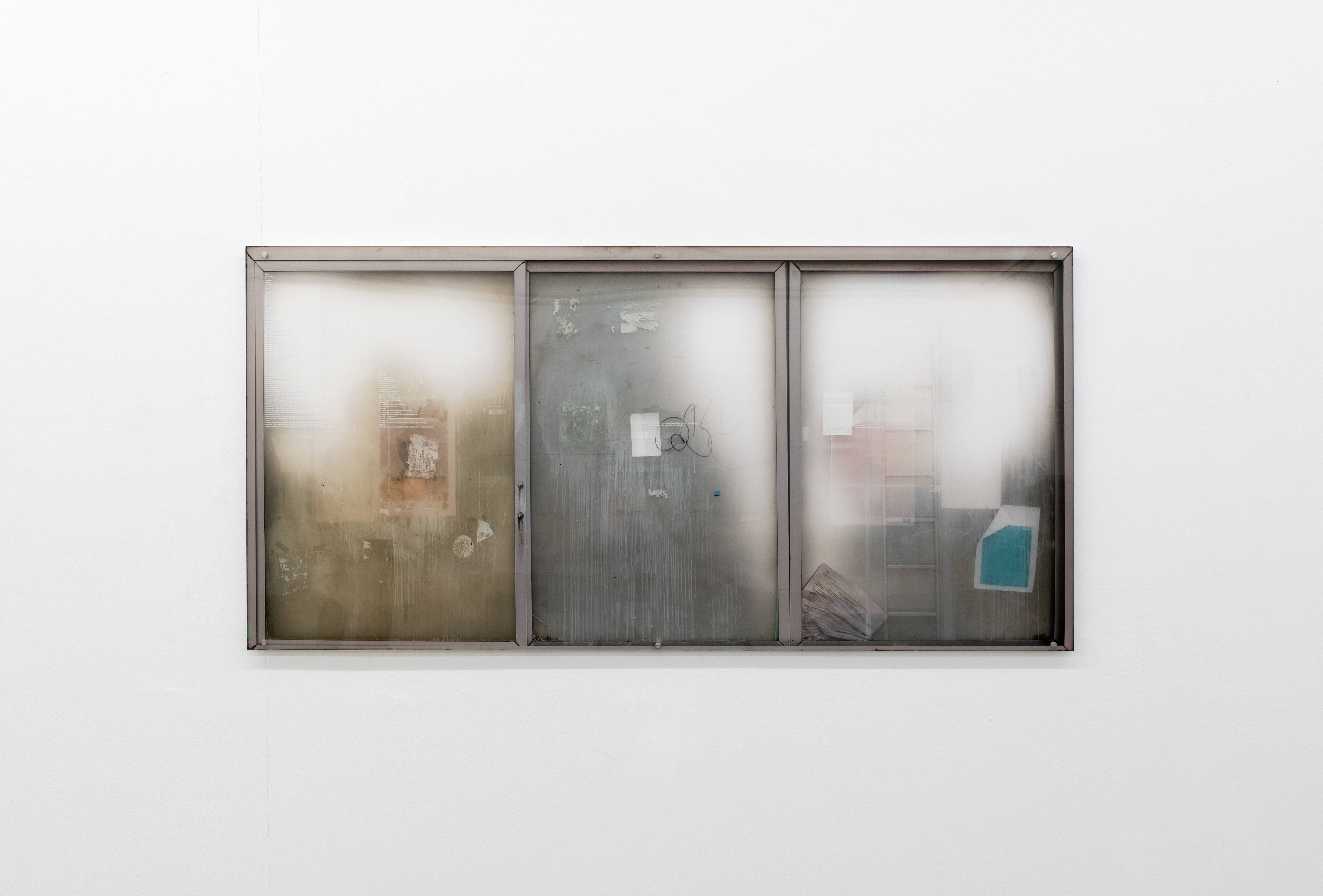
    It wasn’t until the mid- or late 19th century that free wall space in London became privatized for commercial use. However, the present day sees much more accelerated financial shifts. Take the repeat emergence and bursting of speculative bubbles, where asset classes reach asymptotic valuations before becoming completely worthless. Meanwhile, advertisement narrative and subject matter proliferate and adapt in response to the cost of living, resulting in a usually discreet, yet striking parallel between visual space and a collective experience in flux. Bitter Facade offers a starting point to navigate such rapid change. Debuting at Toxi Space, Hannah Stewart’s ‘Citizen Coin’ series subverts the symbology behind modern currency, swapping historical icons with commonplace images and portraits. This direct association between raw materials, resources, individual experiences and money initiates a way to understand the successive financialization of everyday life — a catalyst for the disruption of urban visual space which Jordi Theler’s ‘Public Display’ in-part clarifies. Billboard and architectural facades appear disused, worn down from postering and perhaps structural intervention. There are messages ingrained within each layer, serving as ephemera of bygone periods that exist simultaneously to the present. The displays memorialize life cycles of visual space, oscillations between the death and birth of narratives that occur along a constant surface. In Bitter Facade, Theler provides both a context and response to transformations posed by Stewart. A dialogue emerges wherein the former anticipates a situation the latter attempts to trace; a period of hyper-financialization and what remains in its aftermath.

    Commuting through city corridors, surrounded by a totalizing representation of our condition.

    Erst ab Mitte -Ende des 19. Jahrhunderts wurden
    freie Wandflächen in London für die kommerzielle Nutzung privatisiert. In der heutigen Zeit sind die Veränderungen im Finanzsektor jedoch wesentlich schneller. Man denke nur an das wiederholte Auftauchen und Platzen von Spekulationsblasen, bei denen Anlageklassen asymptotische Bewertungen erreichen, bevor sie völlig wertlos werden. In der Zwischenzeit vermehren sich die Werbetexte und -themen und passen sich den Lebenshaltungskosten an, was zu einer meist diskreten, aber auffälligen Parallele zwischen dem visuellen Raum und einer kollektiven Erfahrung im Wandel führt. Bitter Facade bietet einen Ausgangspunkt für die Navigation durch diesen schnellen Wandel. Hannah Stewarts Serie «Citizen Coin», die erstmals im Toxi Space zu sehen ist, untergräbt die Symbolik moderner Währungen, indem sie historische Ikonen mit alltäglichen Bildern und Porträts austauscht. Diese direkte Verbindung zwischen Rohstoffen, Ressourcen, individuellen Erfahrungen und Geld eröffnet einen Weg, die sukzessive Finanzialisierung des Alltags zu verstehen - ein Katalysator für die Störung des urbanen visuellen Raums, den Jordi Thelers «Public Display» zum Teil verdeutlicht. Plakatwände und architektonische Fassaden erscheinen unbenutzt, abgenutzt durch Plakatierung und vielleicht systematische Eingriffe. In jede Schicht sind Botschaften eingearbeitet, die als Ephemera vergangener Zeiten dienen und gleichzeitig in der Gegenwart existieren. Die Displays erinnern an die Lebenszyklen des visuellen Raums, an die Oszillationen zwischen dem Tod und der Geburt von Erzählungen, die entlang einer konstanten Oberfläche stattfinden. In Bitter Facade liefert Theler sowohl einen Kontext als auch eine Antwort auf die von Stewart aufgeworfenen Transformationen. Es entsteht ein Dialog, in dem Ersterer eine Situation vorwegnimmt, die Letzterer nachzuvollziehen versucht: eine Periode der Hyperfinanzialisierung und das, was nach ihr bleibt.

    Wir pendeln durch die Korridore der Stadt, umgeben von einer totalisierenden Darstellung unseres Zustands.

    Curated by Oz Oderbolz
    Text by Matt Dell

    Bitter Facade_Saaltext.pdf
    flyer_Hannah&Jordi.jpg

    Exhibition view, BITTER FACADE

    Toxi space, Zürich, 2023

    Hannah Rose Stewart

    Citizen Coin 001,

    2023

    3D Printed Polyurethane Resin, Carlack Varnish, Aluminium mount, 50x50x10cm

    Hannah Rose Stewart

    Citizen Coin 002,

    2023

    3D Printed Polyurethane Resin, Carlack Varnish, Aluminium mount, 50x50x10cm

    Hannah Rose Stewart

    Citizen Coin 002,

    2023

    3D Printed Polyurethane Resin, Carlack Varnish, Aluminium mount, 50x50x10cm

    Jordi Theler

    PublicDisplay(UntouchedPersuasion),

    2023

    Aluminium Print, Plexiglass Print, Stainless steel Screws, 170x83x3cm

  •  16.09.2023HEAVY BLOSSOM - Andrej Dubravsky & Tanja Roscic
    flyer_huvvzuofvuzovuzovouzvluglvhulvhu.jpg
  •  25.08.2023AESTHETICS AND SPA - Florencia Palacious
    flyer_aesthetics&spa.jpg
  •  06.07.2023THE THIRD LANDSCAPE - Aline Witschi, Julius Bobke, Giselle Gorostiaga & Kristina Bekker

    Hello [ LuvPunk12 ]
    ..
    Three captivating landscapes lie before you, each with its own allure and mysteries waiting to be unraveled.

    < select one >
    ...
    Will you venture into the untouched beauty of the first landscape, where nature reigns supreme and wildlife thrives?
    ..
    Will you embrace the cultural wonders and human technological achievements that shape the second landscape?
    ..
    Will you dare to delve into the enigmatic depths of the third landscape, where nature and culture merge, where the boundaries between the organic and the technical have dissolved and we find hybrid conditions.


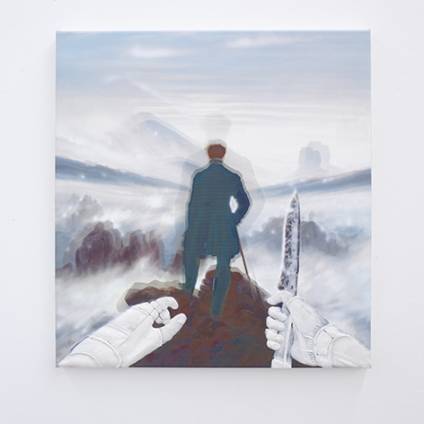
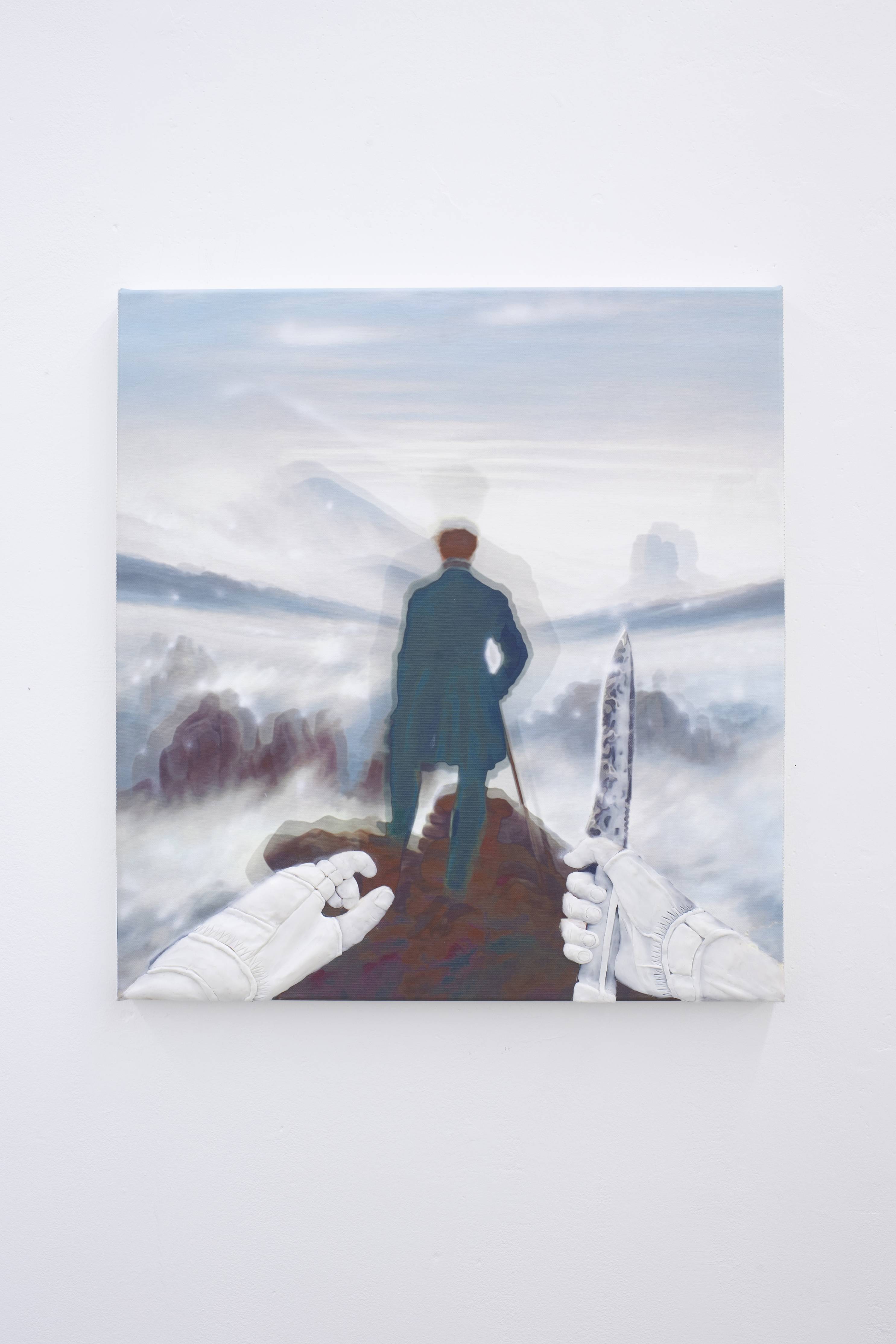
    A man gazing into the distance. Standing alone, the wanderer, his gaze wanders over the sea of mist beneath him, from which isolated rocky peaks emerge. He is in the midst of nature, feeling in harmony with it, looking down upon it. We, the observers, meanwhile study his back.
    Less eerie: Two activists of the Last Generation enter the Hamburg Kunst- halle and intend to overlay «The Wanderer above the Sea of Fog» with a LOVINGLY collaged version of the same painting. The new variant no longer shows a sea of fog above the forests, but smoke and flames.

    POV: You fall in love with the beauty of nature.

    The blind reverence for the divine, persistently continuing: «Forget about taxonomy, ontology, and psychology. Who knows why people do what they do? The point is that they do it, and we can measure it with unprecedented accuracy. When we have enough data, the numbers speak for themselves.»1

    This self-forgetfulness in the face of unlimited vastness. The mistake of the romanticist, thinking they are in harmony with nature, believing they are the center of the world.

    The first-person shooter perspective displays the area lying before you on the monitor, the body serving as a means to an end, a tool. The perspective that makes the body invisible seeks to reward players with immersion. They are supposed to follow the narrative and create the narrative while being able to forget themselves.

    The question aims at the positioning of the self: Is there a way to see, to play, and to decide without constantly considering the self?


    1818: The idea of landscape is invented. Land-shaping.


    How to contemplate desire, longing, the sublime, and beauty when one is their blind spot?


    POV: If you truly love Nature, you will find Beauty everywhere.


    «Vision is always a question of the ability to see – and perhaps a question of the implicit violence in our visualization practices. Whose blood was shed for my eyes to see?»2 Being able to see everything from nowhere, a myth, or as Donna Haraway writes, - a divine trick.

    The unbiased gaze of the wanderer, godlike, looking into nowhere. «This gaze is mythically inscribed on all marked bodies, giving the unmarked category the power to see without being seen, to represent and at the same time escape representation.»3 This gaze designates the unmarked position of humans in the Anthropocene.


    The GLITCHY Sublime.


    «I» gaze over the sea, I gaze toward the smoke. Eerie in a way, everything.


    POV: Been there, done that.


    Hello [ LuvPunk12 ]
    ..
    Three captivating landscapes lie before you, each with its own allure and mysteries waiting to be unraveled.

    < select one >
    ...
    Will you venture into the untouched beauty of the first landscape, where nature reigns supreme and wildlife thrives?
    ..
    Will you embrace the cultural wonders and human technological achievements that shape the second landscape?
    ..
    Will you dare to delve into the enigmatic depths of the third landscape, where nature and culture merge, where the boundaries between the organic and the technical have dissolved and we find hybrid conditions.


    Ein Mann, der in die Ferne blickt. Einsam steht er da, der Wanderer, sein Blick schweift über das Nebelmeer unter ihm, aus dem vereinzelt Felsspitzen emporragen. Er ist mitten in der Natur, fühlt sich im Einklang mit ihr, schaut auf diese herab. Wir, die Betrachter:innen, studieren währenddessen seinen Rücken.
    Weniger unheimlich: Zwei Aktivist:innen der Letzten Generation betreten die Hamburger Kunsthalle und nehmen sich vor, «Der Wanderer über dem Nebelmeer» mit einer LIEBEVOLL collagierten Variante des gleichen Bildes zu überkleben. Die neue Variante zeigt kein Nebelmeer mehr über den Wäldern, sondern Rauch und Flammen.

    POV: You fall in Love with the Beauty of Nature.

    Die blinde Ehrfurcht vor dem Göttlichen, sich beharrlich fortsetzend: «Vergessen Sie Taxonomie, Ontologie und Psychologie. Wer weiss schon, warum Menschen tun, was sie tun? Der Punkt ist, dass sie es tun, und wir können es mit nie dagewesener Genauigkeit messen. Wenn wir genug Daten haben, sprechen die Zahlen für sich selbst.»1

    Diese Selbstvergessenheit beim Anblick der unbegrenzten Weite. Der Irrtum des Romantikers, er sei im Einklang mit der Natur, er sei das Zentrum der Welt.

    Die One-Person-Shooter-Perspektive zeigt auf dem Monitor das vor einem liegende Areal, der Körper ist Mittel zum Zweck, Werkzeug. Die Perspektive, die den Körper unsichtbar werden lässt, möchte die Spieler:innen mit Immersion belohnen. Sie sollen der Erzählung folgen und die Erzählung erschaffen – und dabei sich vergessen können.

    Die Frage zielt auf die Positionierung des Ichs ab: Gibt es ein Sehen, ein Spielen und Entscheiden – ohne, dass das Ich ständig mitgedacht wird?


    1818: Die Idee der Landschaft wird erfunden. Land-schaffen.


    Wie über das Begehren, über die Sehnsucht, das Erhabene und die Schön- heit nachdenken, wenn man selbst ihr blinder Fleck ist?


    POV: If you truly love Nature, you will find Beauty everywhere.


    «Vision ist immer eine Frage der Fähigkeit zu sehen – und vielleicht eine Frage der unseren Visualisierungspraktiken impliziten Gewalt. Wessen Blut wurde vergossen, damit meine Augen sehen können?»2 Alles von nirgendwo aus sehen können, ein Mythos, oder wie Donna Haraway schreibt,– ein göttlicher Trick.

    Der unbefangene Blick des Wanderers, gottgleich blickt er ins Nirgendwo. «Dieser Blick schreibt sich auf mythische Weise in alle markierten Körper ein und verleiht der unmarkierten Kategorie die Macht zu sehen, ohne gesehen zu werden sowie zu repräsentieren und zugleich der Repräsentation zu entgehen.»3 Dieser Blick bezeichnet die unmarkierte Position des Menschen im Anthropozän.


    Das GLITCHY Sublime.


    «Ich» blicke übers Meer, ich blicke dem Qualm entgegen. Unheimlich irgendwie alles.


    POV: Been there, done that.


    Chris Anderson: The Wired, 2008
    Donna Haraway: Situiertes Wissen. Die Wissenschaftsfrage im Feminismus und das Privileg einer partialen Perspektive. In: Ders.: Die Neuerfindung der Natur. Primaten, Cyborgs und Frauen. Frankfurt/New York 1995, S. 73-97, hier S. 85.
    Ebd., S. 80

    Curated by Nemo Bleuer
    Text by Robyn Muffler

    saaltext_de.pdf
    saaltext_en.pdf
    flyer_mockup.png

    Kristina Bekker

    Mother,

    2018

    unglazed earthenware, sterling silver, 30 x 30 x 30 cm

    Exhibition view, THE THIRD LANDSCAPE

    Toxi space, Zürich, 2023

    Aline Witschi

    Between Mud and Star,

    2022

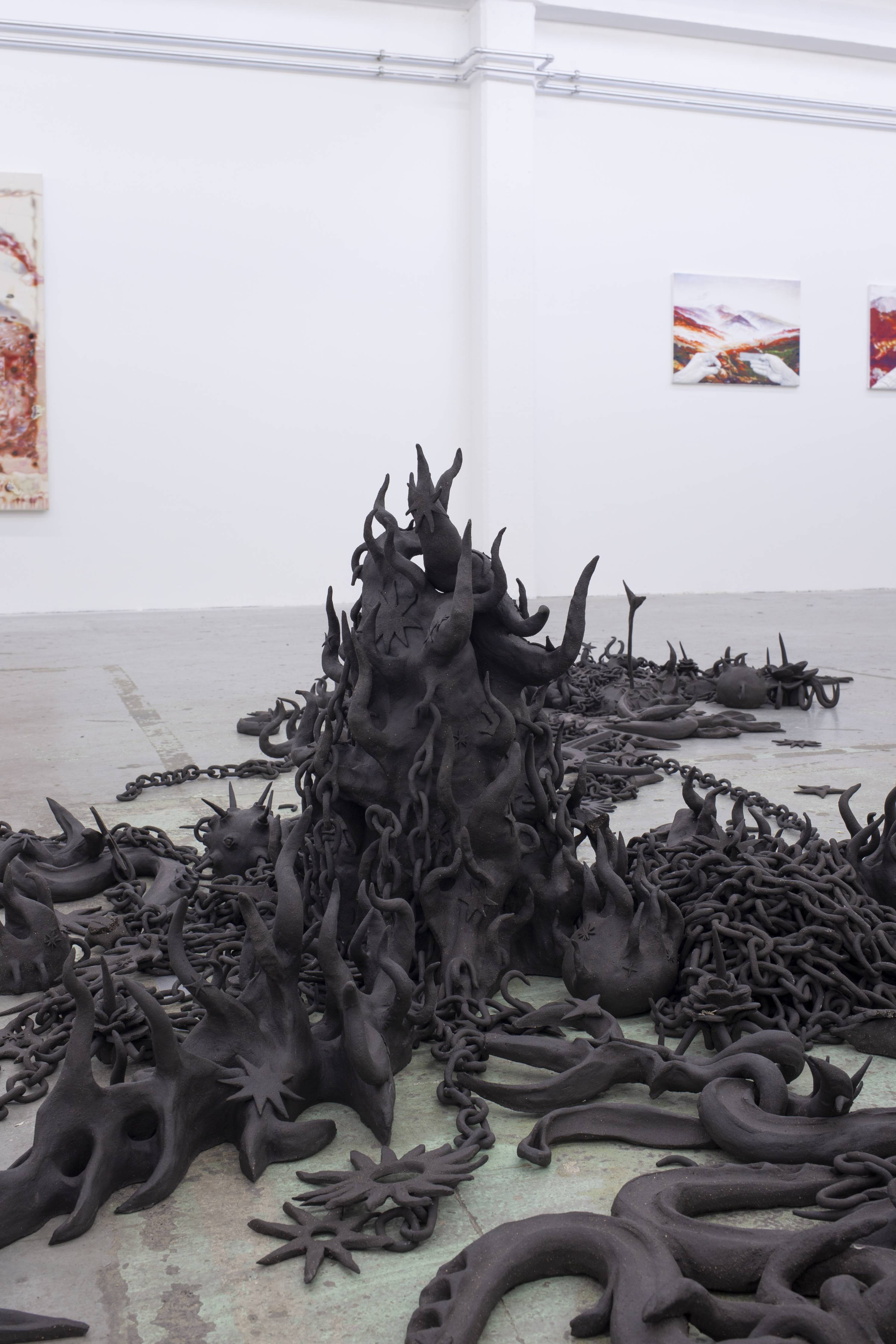
    detail, burned clay, dimension variable

    Julius Bobke

    Lets fucking go,

    2022

    acrylic, digital print, oil, plasticine on sewn canvas, 60 x 80 cm

    Julius Bobke

    On the way up,

    2022

    acrylic, digital print, oil, plasticine on canvas, 60 x 80 cm

    Aline Witschi

    Bone with Hair,

    2023

    burned clay, 60 x 40 cm

    Aline Witschi

    Another Piece of Gaia,

    2023

    burned clay, 60 x 180 cm

    Aline Witschi

    Another Piece of Gaia,

    2023

    detail, burned clay, 60 x 180 cm

    Julius Bobke

    Blaze of Vesper,

    2023

    acrylic, digital print, glitter, oil, plasticine on canvas, 30 x 25 cm

    Exhibition view, THE THIRD LANDSCAPE

    Toxi space, Zürich, 2023

    Julius Bobke

    Happy Face,

    2022

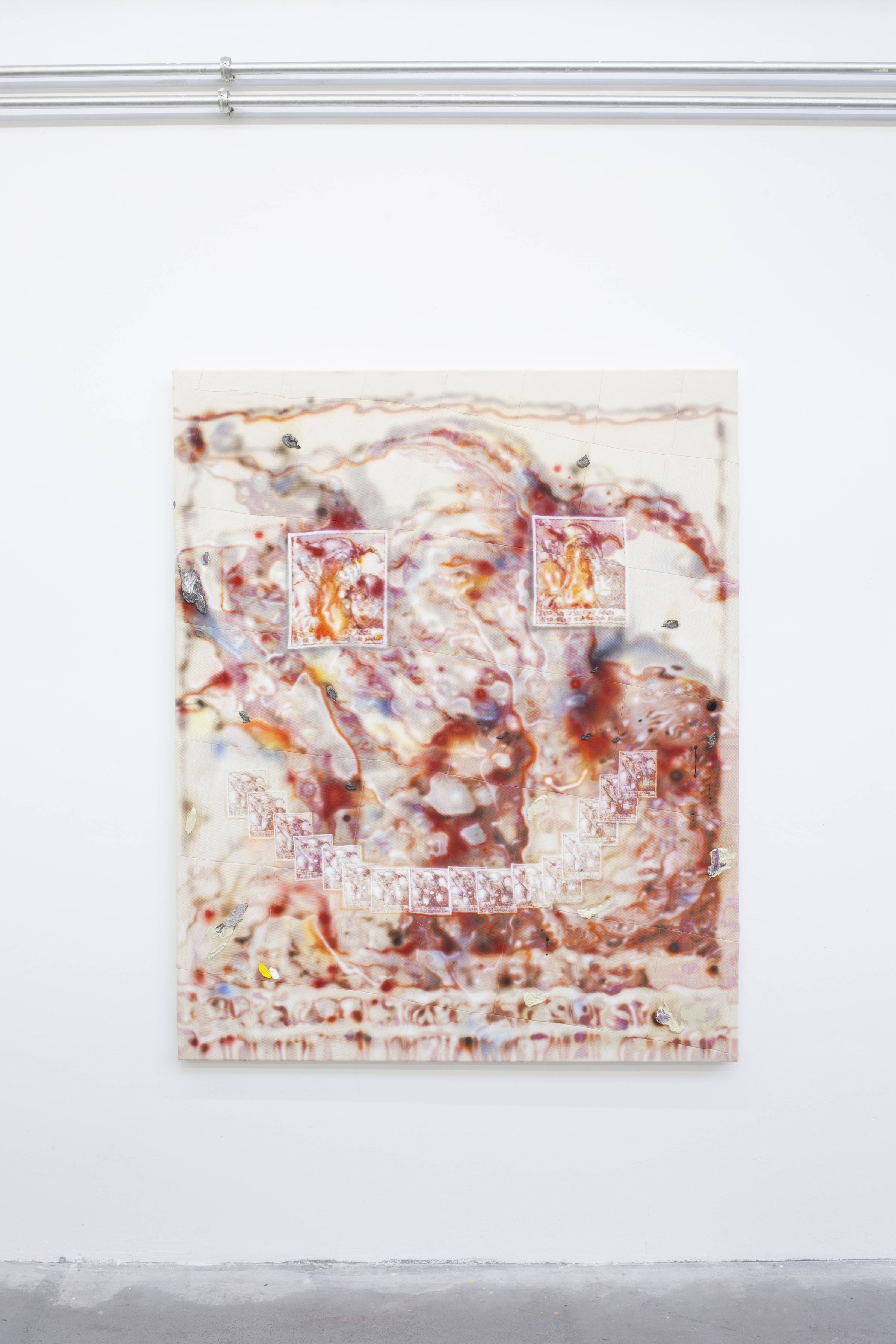
    acrylic, digital print, oil on sewn canvas, 160 x 130 cm

    Exhibition view, THE THIRD LANDSCAPE

    Toxi space, Zürich, 2023

    Exhibition view, THE THIRD LANDSCAPE

    Toxi space, Zürich, 2023

    Kristina Bekker

    Mother,

    2018

    unglazed earthenware, sterling silver, 30 x 30 x 30 cm

    Giselle Gorostiaga

    For an,

    2022

    copper electroplate, varnish, steel chain, dimension variable

    Giselle Gorostiaga

    Lost connection,

    2023

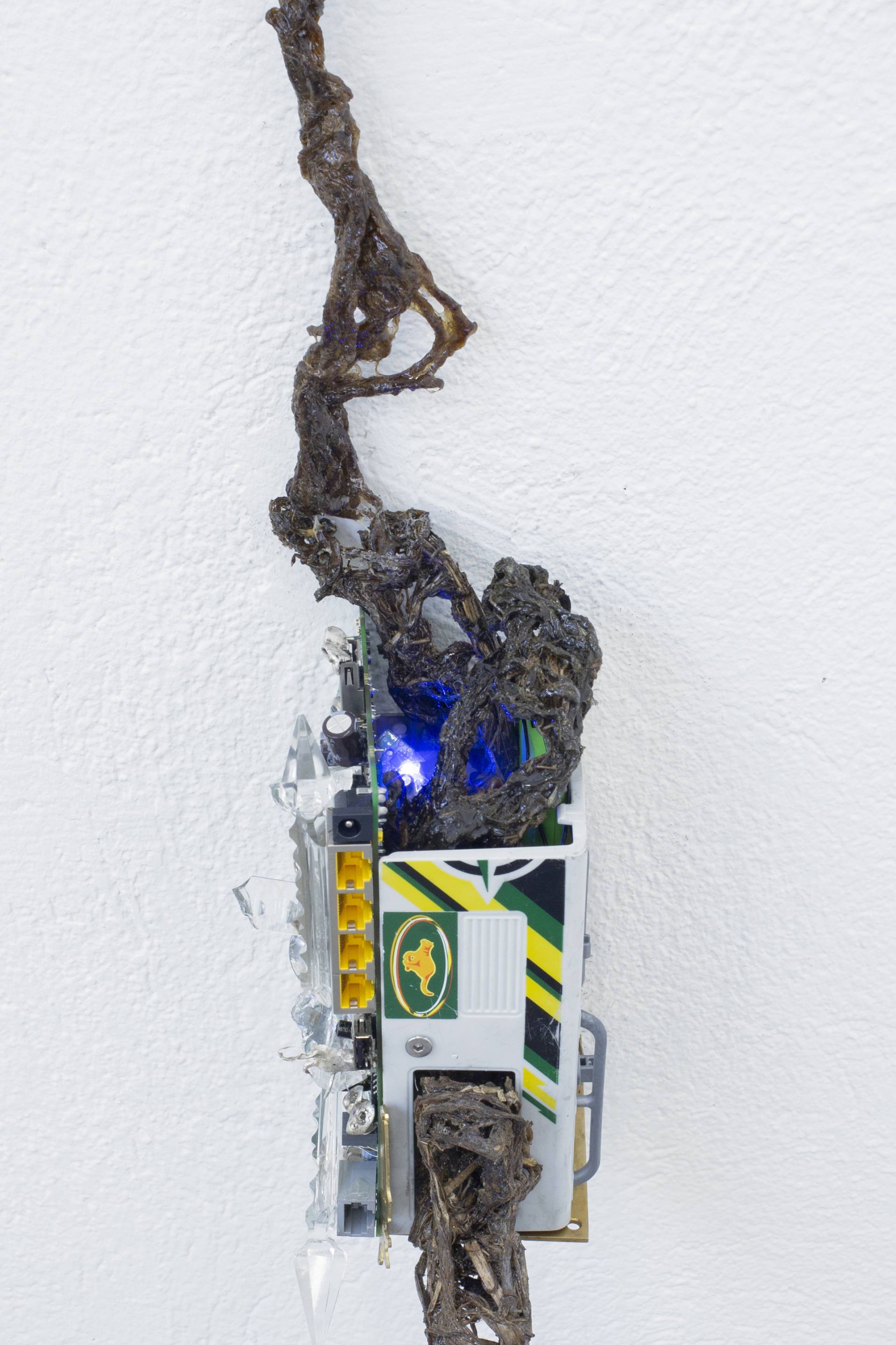
    brass, router, cristals, silver wire, vegetal fibers, latex, sterling silver,
    playmobil part, water, humidifier, led light, essential oil, power bank, pvc tube,
    silicone, virgin wool, 8 x 25 x 12 cm

    Giselle Gorostiaga

    Lost connection,

    2023

    detail, brass, router, cristals, silver wire, vegetal fibers, latex, sterling silver,
    playmobil part, water, humidifier, led light, essential oil, power bank, pvc tube,
    silicone, virgin wool, 8 x 25 x 12 cm

    Julius Bobke

    at the top,

    2022

    acrylic, digital print,oil, plasticine on canvas, 65 x 60 cm

    Giselle Gorostiaga

    Seraphim,

    2023

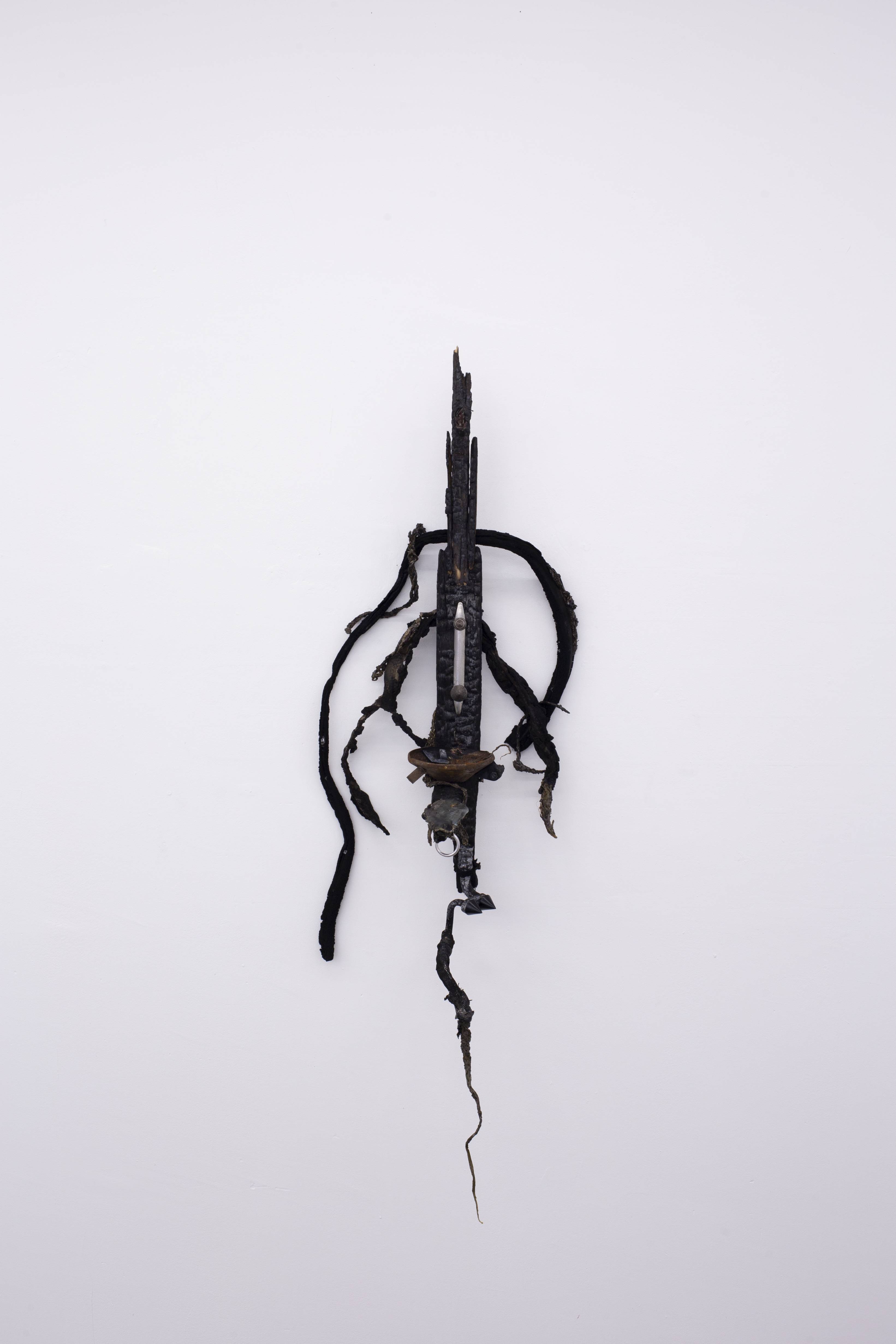
    steel, burnt wood, burnt tire, burnt glass, burnt shopping bag,
    burnt exhaust cannon, iron plate, water, vegetal fibers,sugar caramel, bioplastic,
    latex, cristals, silver wire, dimension variable

    Giselle Gorostiaga

    Seraphim,

    2023

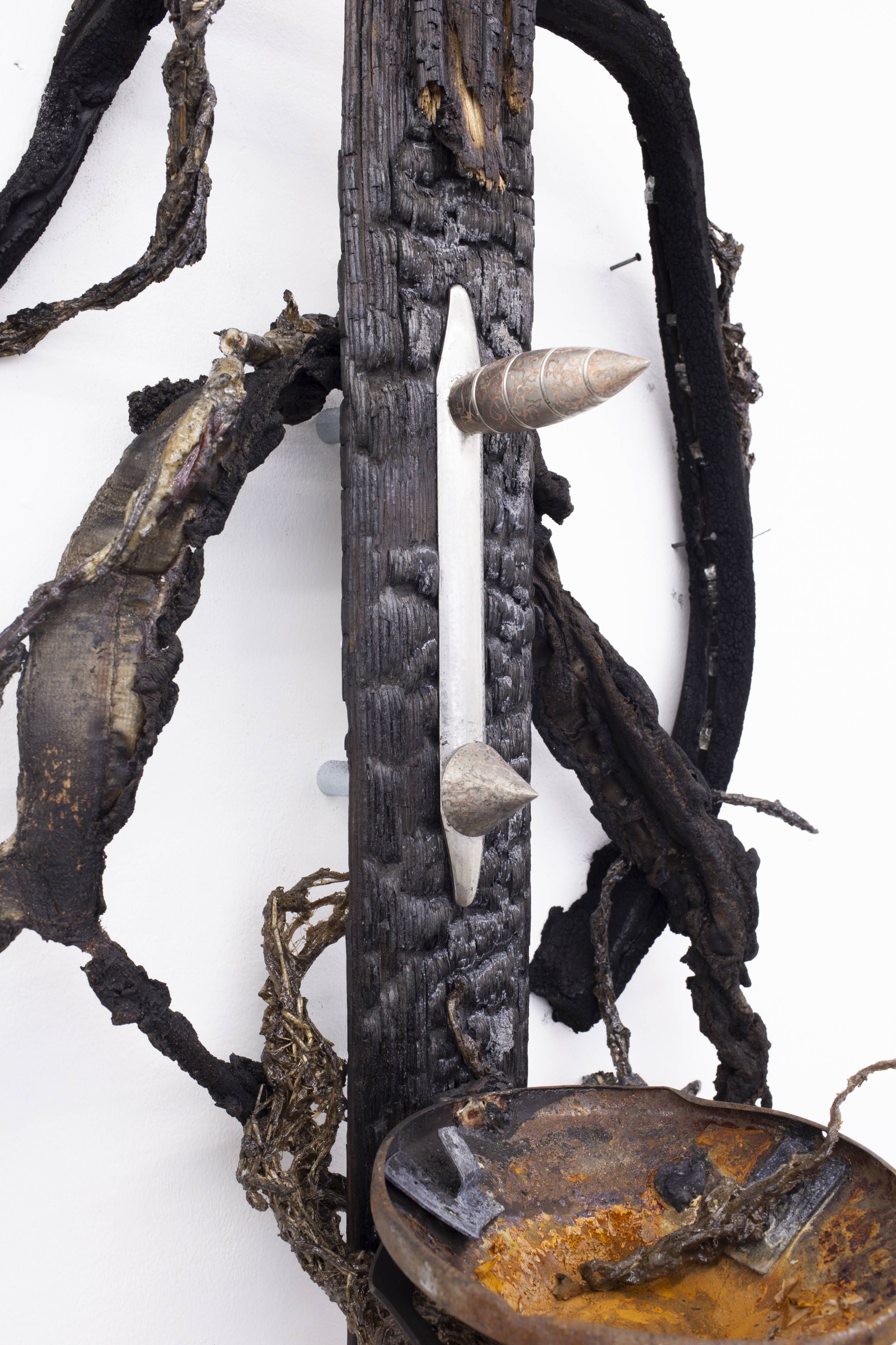
    detail, steel, burnt wood, burnt tire, burnt glass, burnt shopping bag,
    burnt exhaust cannon, iron plate, water, vegetal fibers,sugar caramel, bioplastic,
    latex, cristals, silver wire, dimension variable

    Exhibition view, THE THIRD LANDSCAPE

    Toxi space, Zürich, 2023

    Kristina Bekker

    (Mating) Predators,

    2023

    aluminum, sterling silver, tourmaline jade, tourmaline quarz, rose quarz, goat hair,
    recycled fur, 100 x 100 x 210 cm

    Giselle Gorostiaga & Kristina Bekker

    The dilema of the heuristic and biases,

    2023

    aluminium steel, iron, copper, cristals, silver wire, broken caliber, rubis, glass,
    water, essential oil, humidifier, led light, pvc tube, virgin wool, 15 x 35 x 15 cm

  •  10.06.2023I‘M YOUR SILHOUETTE - Valentina Stieger

    Paradoxically, a silhouette simultaneously unveils
    and conceals. The silhouette disembodies physical form and lived experience into an emptied shape. To what extent is an outline nevertheless an unmistakable image, and when does it tip over into the stencil-like? Through norm measurements, an abstracted human form underlies numerous objects surrounding us in everyday life – especially the «serviceable» design objects – as an anthropomorphic borrowing.

    The title of Valentina Stieger’s (Zurich, *1980) solo exhibition «I’M YOUR SILHOUETTE» resonates with the projection of a counterpart. Interpersonal relationships unfold not only physically and socially but spatially. What or whom we perceive in our environment and how depends on how we are oriented. At the same time, our togetherness is shaped by rituals and norms. Sociability influences, among other things, that we remember spaces as structural and temporal. They are thus not neutral containers that enclose us – they shape our behavior and orient our bodies. Comfort unfolds here only, theorist Sara Ahmed reminds us, if one is able to inhabit them by fitting in: «the effect of bodies being able to ‘sink’ into spaces that have already taken their shape.»

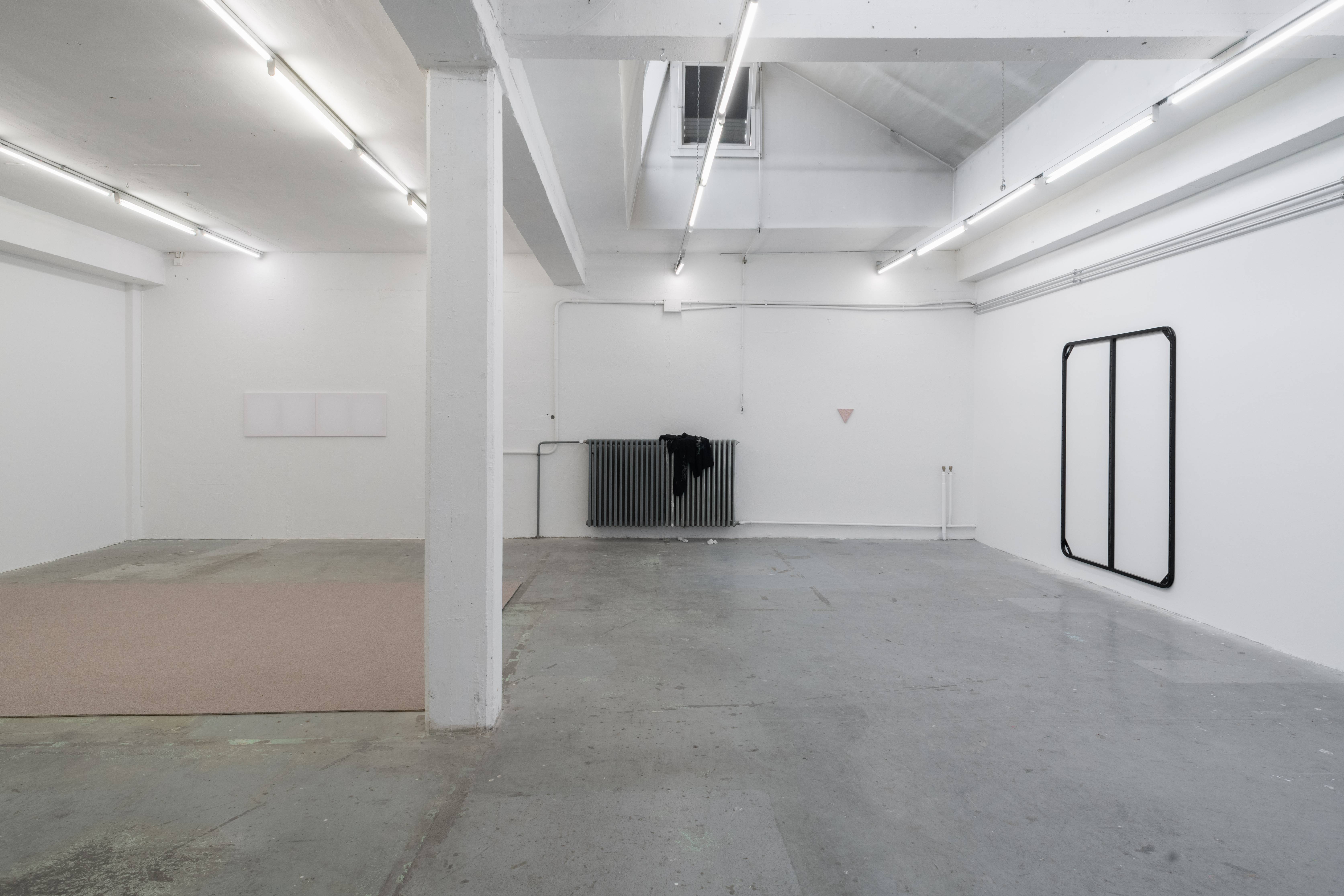
    In her exhibition, Stieger cites the domestic setting with specific elements. She adopts and abstracts them, thus opening their form and intimacy to ambiguity. In A Unique Layout (DJERBA) (2022), for example, a piece of fitted carpet in the dimensions of her bedroom floor plan transfers the assumed seclusion and intimacy into the post-industrial, semi-public exhibition space. Stretch carpet has largely disappeared from contemporary domestic interiors. While the rich textile floor coverings were ubiquitous in the 1970s and 1980s, today, they often characterize office spaces needing renovation. Unlike the widely published photograph of Lina Loos’s bedroom, lush with furs and delicate curtains, Stieger’s conceptual rendering does not satisfy our «voyeurism.» We can form an idea but not a picture of the artist’s retreat, let alone draw conclusions about Stieger herself. The boundaries between private and public, places of recreation and work, as well as personal and standardized, become blurred.

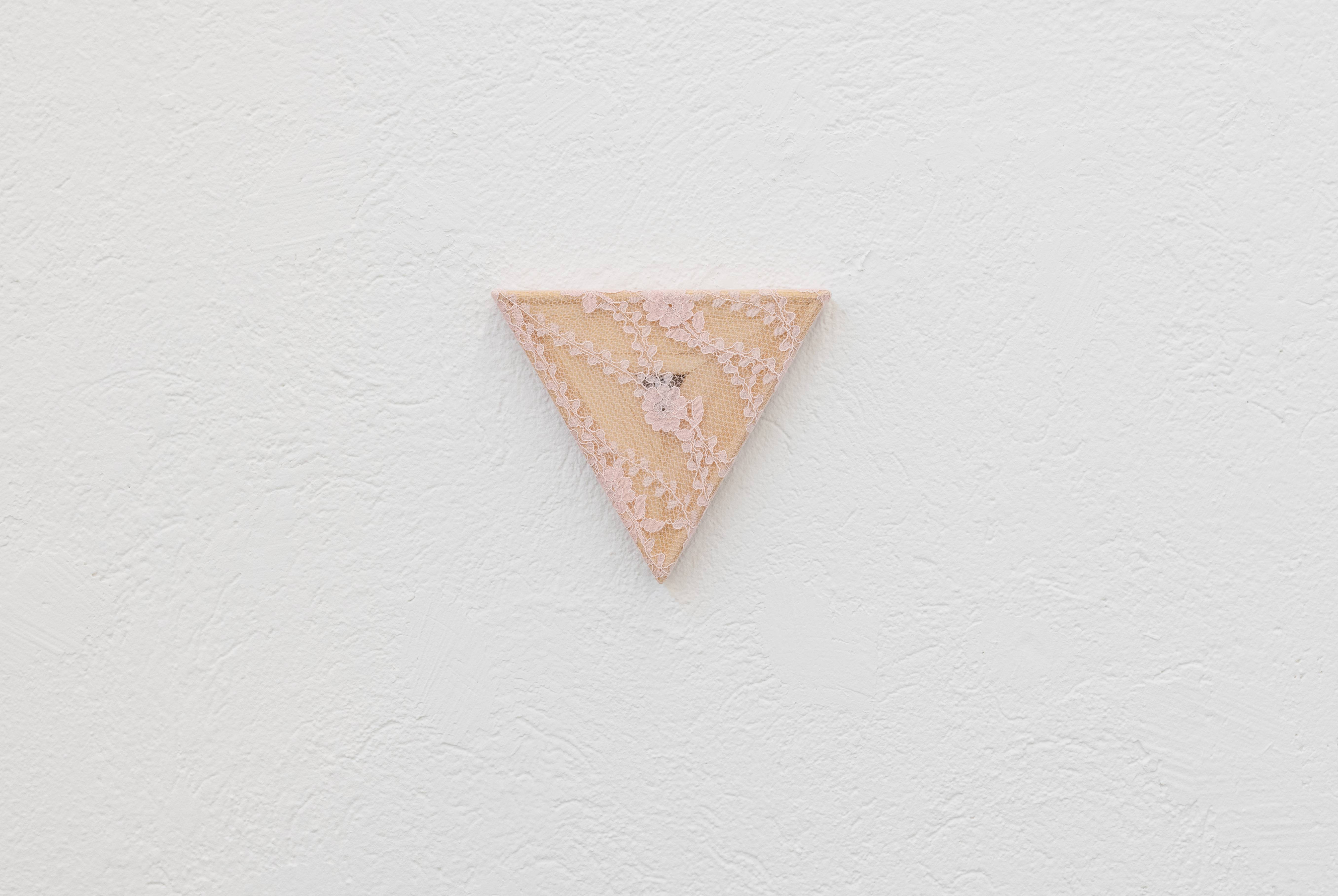
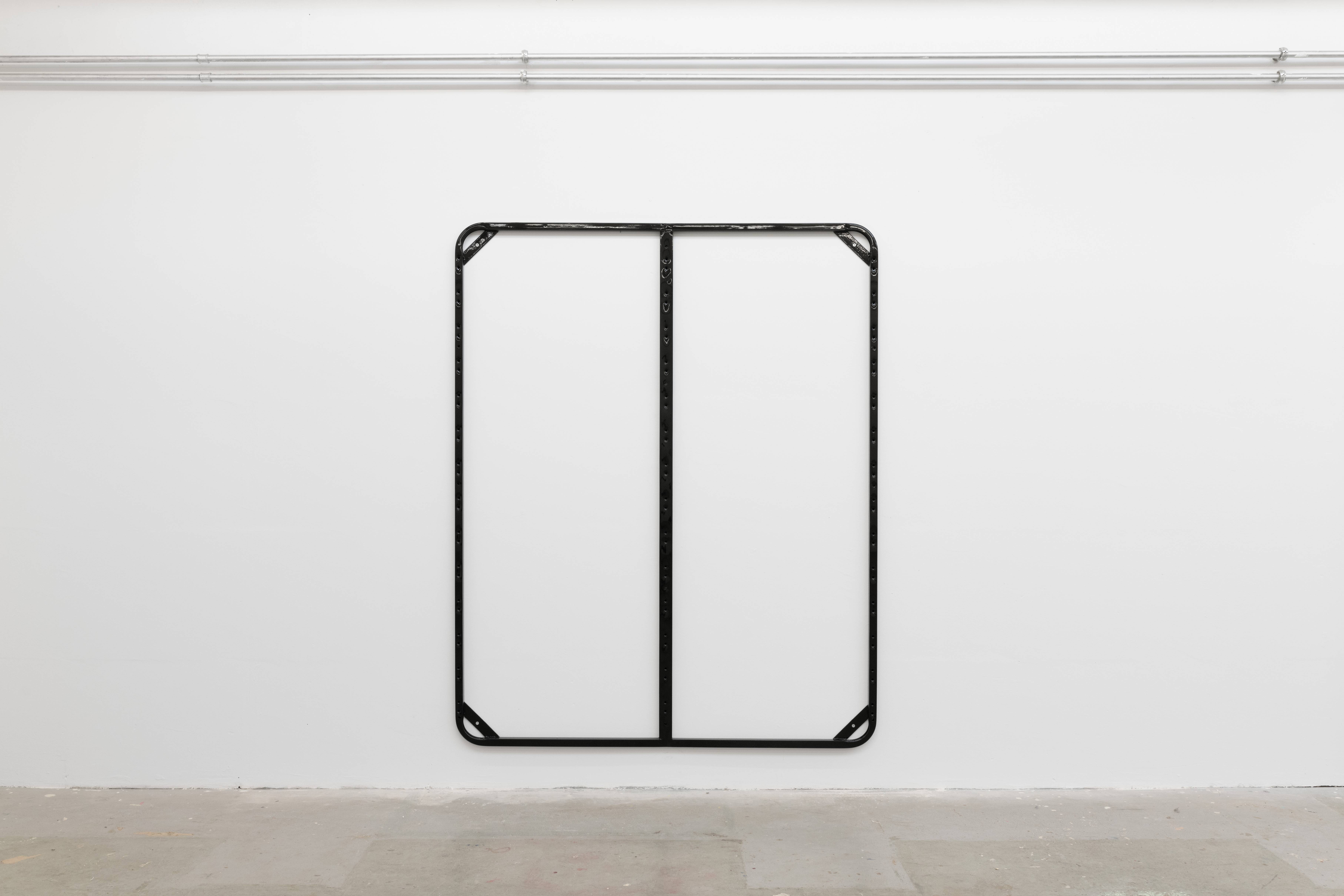
    Treats Infinity (What is love?) (2023) makes its appearance as a geometric «shaped canvas.» Found lace replaces the classic canvas over a small-format, triangular stretcher frame. With quiet irony, the decorative floral fabric, reminiscent of lingerie, comments on the abstract-minimalist painting discourse of the 20th century between gendered connotations and esoteric New Age symbolism. When Stieger covers pairs of rectangular frames with white-woven, immaculate cotton fabrics, her series White Linen (Streamlined for Dispatch) (2023) spreads across the walls of the exhibition space. It winkingly invokes memories of Robert Ryman’s monochrome-white paintings or the subtly conceptual works of Agnes Martin. Unlike Blinky Palermo’s «Rothkos aus dem Textilkaufhaus» – the Düsseldorf artist used commercially available fabrics in the late 1960s to paint them with industrial colors – the sets of pillowcases used here remain untreated. At the same time, they transport us through the figure of the two into the intimacy of the bedstead. The bed, in turn, appears elsewhere in Fade to Black (2023) in the form of a dysfunctionally attached, disused bed frame as a ready-made devoid of any sexualization.

    Regarding the «political economy of intimacy,» sociologist Emma Dowling notes that the romantic ideal of love has historically been based on the domestic contract between two heterosexual partners. Stieger’s reflection, by contrast, does not remain fixed to this coupling. The work Untitled (Because you saw me when I was invisible) (2023), meanwhile, shrewdly makes us aware that couple relationships put a romantic ideal into the picture with which household decorations such as alternate frames are ultimately advertised to us.

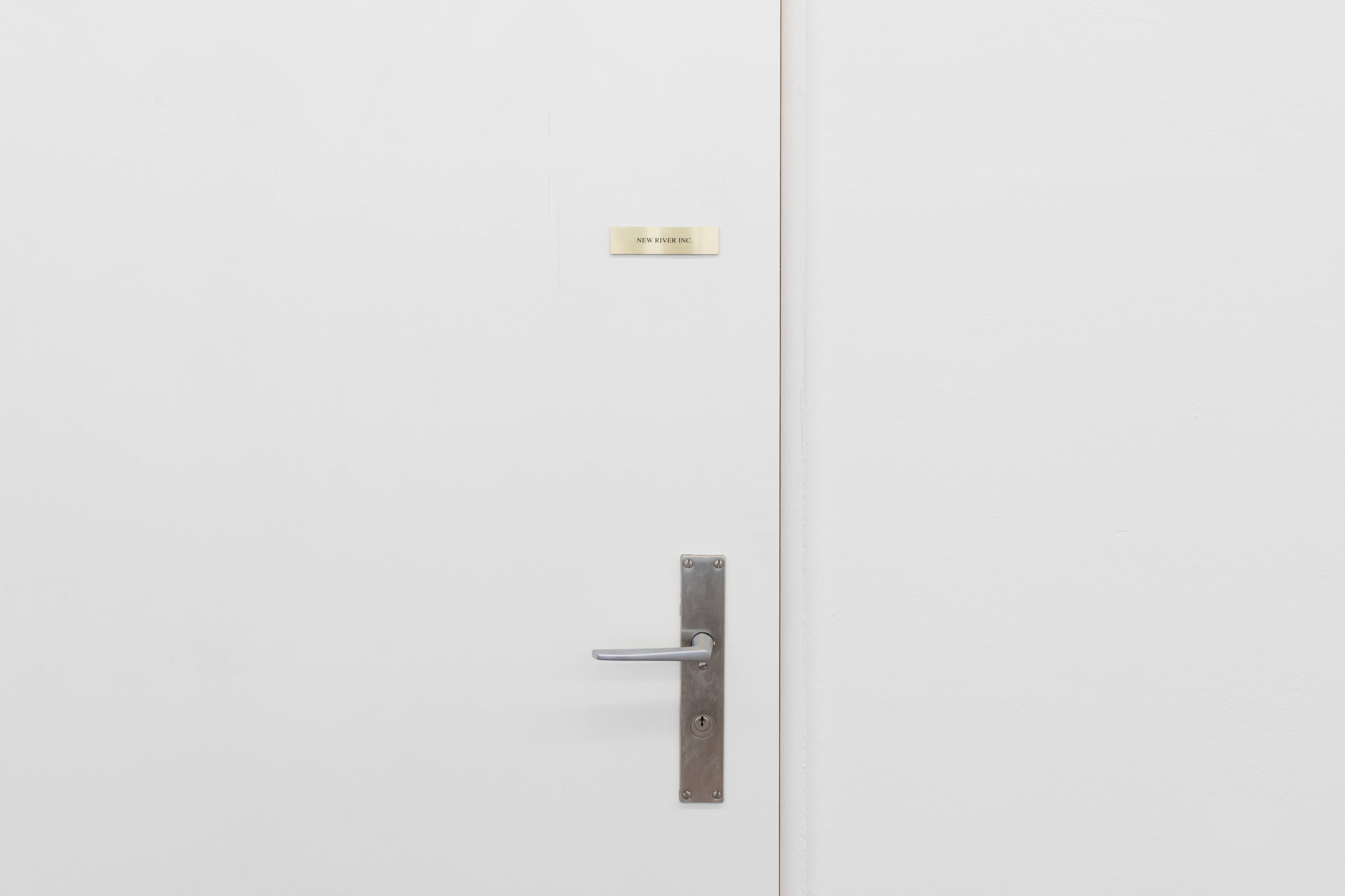
    The American activist bell hooks aptly describes how the idea of love as romance prescribes role models and thereby stands in the way of feeling love: «When romance is depicted as a project, or so the mass media, especially movies, would have us believe, women are the architects and planners. Everyone likes to imagine that women are romantics, sentimental about love, men follow where women lead. Even in non-heterosexual relationships, the paradigms of leader and follower often prevail, with one person assuming the role deemed feminine and another the designated masculine role.» When hooks speaks of mass media and movies, we can also think of fairy tales and popular narratives. From infancy, they dovetail role and relationship images with romantic love. Their reappraisal in Walt Disney films provides not only colorful sequences of pictures but a fitting soundtrack. The soundtrack to the Disneyfied search for «Prince Charming» is the starting point of the sound installation Someday I’ll be Part of Your World (2023). Here, however, the sound distorts in eerie dissonances to a cacophony or a ponderous piano exercise. Whether a corporation hides behind a door designated with the engraved sign NEW RIVER INC., (2023), what and how it produces remains open.

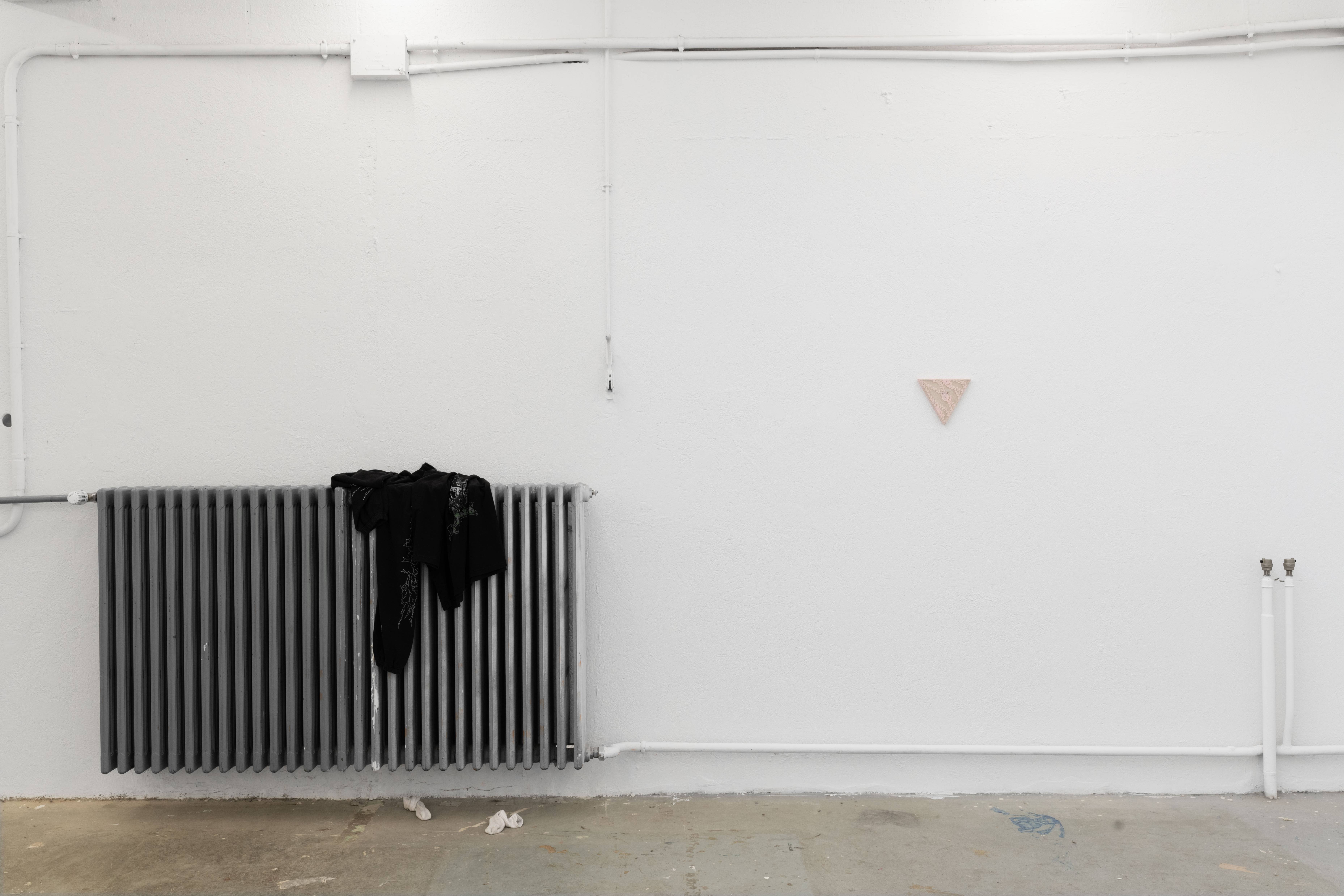
    Thrown carelessly, as if to dry, over a radiator that belongs to the permanent infrastructure of the exhibition space, track pants and a shirt with label prints, including a used pair of socks, make up for DJ, (2023). The casualness of the installation sets social distinction via coded clothing at one with its uniformity. Finally, the artist complicates the question of who or what stands at the starting point of a projection. What impression and imprint replace the void when the counterpart disappears? How does the subject reconstitute itself? Does it make itself the measure of all things? The idealized couple relationship corresponds just as little as the neoliberal myth of the free, autonomous individual to the actual interdependence of social relationships. We process experiences not only with and for ourselves but through and with others. Valentina Stieger uses object installations and silhouettes in her exhibition to highlight the multi-layered entanglements between body, domestic space, and (romantic) projection in our society. Perhaps more than the economy of intimacy, she lets everyday images, desires, and afterimages resurface and hints at how romantic narratives commodify them.

    Paradoxerweise ent- und verhüllt eine Silhouette
    zugleich. Als Schattenriss entkörperlicht sie physische Form und gelebte Erfahrung zur entleerten Gestalt. Inwiefern ist ein Umriss dennoch unverwechselbares Abbild, wann kippt er ins schablonenhafte? Mit Norm-Massen liegt eine abstrahierte menschliche Gestalt zahlreichen uns im Alltag umgebenden Gegenständen – insbesondere den «dienstbaren» Design-Objekten – als anthropomorphe Anleihe zugrunde.

    Im Titel von Valentina Stiegers (Zürich, *1980) Einzelausstellung «I’M YOUR SILHOUETTE» schwingt die Projektion eines Gegenübers mit. Zwischenmenschliche Beziehungen entfalten sich nicht nur körperlich-sozial sondern räumlich. Was oder wen wir in unserer Umwelt wie wahrnehmen, hängt davon ab, wie wir orientiert sind. Unser Zusammensein ist zugleich von Ritualen und Normen geprägt. Die Sozialität beeinflusst dabei unter anderem, dass wir Räume nicht nur als baulich sondern auch als zeitlich begrenzt erinnern. Sie sind somit keine neutralen Behältnisse, die uns schlicht umfangen – sie formen unser Verhalten, richten unsere Körper zu. Komfort entfaltet sich darin nur, merkt die Theoretikerin Sara Ahmed überdies an, wenn Körper bereits die Form des Raumes um sie herum angenommen haben und sich ungehindert darin ausdehnen.

    Mit spezifischen Anleihen zitiert Stieger in ihrer Ausstellung das häusliche Setting. Sie übernimmt Elemente, abstrahiert diese und öffnet so deren Form und Intimität zur Mehrdeutigkeit. In A personal layout (DJERBA), (2022) etwa überträgt ein Stück Spannteppich in den Abmessungen ihres Schlafzimmer-Grundrisses die angenommene Abgeschiedenheit und Intimität in den postindustriellen, halböffentlichen Ausstellungsraum. Spannteppich ist aus dem zeitgenössischen Interieur weitgehend verschwunden. Waren die satten, textilen Bodenbeläge in den 1970er- und 1980er-Jahren allgegenwärtig, charakterisieren sie heute oft renovationsbedürftige Büroräumlichkeiten. Im Unterschied zur vielfach publizierten Fotografie des üppig mit Fellen und zarten Gardinen bestückten Schlafzimmers von Lina Loos befriedigt Stiegers konzeptuelle Übertragung unseren «Voyeuerismus» nicht. Wir können uns zwar eine Vorstellung, aber eben kein Bild vom Rückzugsort der Künstlerin machen – geschweige denn davon auf Stieger selbst Rückschlüsse ziehen. Dabei verschwimmt nicht nur die Grenze zwischen privat und öffentlich, Erholungs- und Arbeitsort, sondern auch zwischen persönlich und standardisiert.

    Als geometrische «shaped canvas» tritt Treats Infinity (What is love?), (2023) in Erscheinung. Gefundener Spitzenstoff ersetzt die klassische Leinwand über einem kleinformatigen, dreieckigen Keilrahmen. Mit leiser Ironie kommentiert das an Dessous erinnernde, ornamental-florale Gewebe den abstrakt-minimalistischen Malereidiskurs des 20. Jahrhunderts zwischen geschlechtlich konnotierter und esoterischer New Age-Symbolik. Wenn Stieger jeweils zwei Rahmen mit weiss-gewebten, unbefleckten Baumwollstoffen bespannt, ruft sie mit ihrer über die Wände des Ausstellungsraumes verteilten Serie White Linen (Streamlined for Dispatch), (2023) augenzwinkernd Erinnerungen an Robert Rymans monochrom-weisse Malerei oder die subtil konzeptuellen Arbeiten von Agnes Martin auf. Anders als Blinky Palermos «Rothkos aus dem Textilkaufhaus» – der Düsseldorfer Künstler verwendete Ende der 1960er-Jahre handelsübliche Stoffe, um sie mit Industriefarben zu bemalen – bleiben die hier verwendeten Zweier-Sets von Kissenbezügen unbehandelt. Zugleich transportieren sie uns durch die Figur der Zwei in die Intimität der Bettstatt. Diese taucht wiederum an anderer Stelle als Fade to Black (2023) in Form eines dysfunktional angebrachten, ausgedienten Bettrahmens als Ready-Made bar jeglicher Sexualisierung auf.

    Über die «politische Ökonomie der Intimität» bemerkt die Soziologin Emma Dowling, dass dem romantischen Ideal der Liebe historisch gesehen der häusliche Vertrag zwischen zwei heterosexuellen Partner:innen zugrunde lag. Stiegers Reflexion bleibt im Unterschied dazu nicht darauf fixiert. Dass Paarbeziehungen ein romantisches Ideal ins Bild setzen mit dem uns schliesslich Haushaltdekorationen wie Wechselrahmen angepriesen werden, macht derweil die Arbeit Untitled (Because you saw me when I was invisible), (2023) gewitzt bewusst.

    Die amerikanische Aktivistin bell hooks beschreibt treffend, wie die Vorstellung von Liebe als Romanze Rollenbilder vorgibt und dabei dem Empfinden von Liebe im Weg steht: «When romance is depicted as a project, or so the mass media, especially movies, would have us believe, women are the architects and planners. Everyone likes to imagine that women are romantics, sentimental about love, that men follow where women lead. Even in non-heterosexual relationships, the paradigms of leader and follower often prevail, with one person assuming the role deemed feminine and another the designated masculine role». Wenn hooks von Massenmedien und Filmen spricht, können wir auch an Märchen und populäre Erzählungen denken. Bereits im Kindesalter verzahnen sie Rollen- und Beziehungsbilder mit der romantischen Liebe. Ihre Aufarbeitung in Walt Disney Filmen liefert neben bunten Bildfolgen auch eine passende Tonspur. Der Soundtrack zur disneyfizierten Suche nach «Prince Charming» steht denn auch am Ausgangspunkt der aus dem Nebenraum tönenden Soundinstallation Someday I’ll be Part of your World, (2023). Hier verzerrt sich der Klang allerdings in unheimlichen Dissonanzen zur Kakofonie oder zur schwerfälligen Klavier- übung. Ob sich hinter einer mit dem gravierten Schild NEW RIVER INC., (2023) designierten Tür tatsächlich eine Korporation verbirgt, was und wie diese produziert, bleibt dabei offen.

    Über einen zur permanenten Infrastruktur des Ausstellungsraumes gehörigen Radiator achtlos wie zum Trocknen hingeworfen, finden sich in DJ, (2023) Trainerhose und Shirt mit Label-Aufdrucken, darunter ein gebrauchtes Paar Socken. Die Beiläufigkeit der Installation setzt hier soziale Abgrenzung über codierte Kleidung mit deren Uniformität in Eins. Die Künstlerin verkompliziert schliesslich die Frage, wer oder was am Ausgangspunkt einer Projektion steht. Welcher Eindruck und Abdruck tritt an die Leerstelle, wenn das Gegenüber verschwindet? Wie re-konstituiert sich das Subjekt? Macht es sich selbst zum Mass aller Dinge? Die idealisierte Zweierbeziehung entspricht ebenso wenig wie der neoliberale Mythos des freien, autonomen Individuums der realen Interdependenz sozialer Beziehungen. Erlebtes verarbeiten wir nicht nur mit und für uns allein, sondern durch und mit anderen. In ihrer Ausstellung fördert Valentina Stieger anhand von Objekt-Installationen und Silhouetten die vielschichtigen Verstrickungen zwischen Körper, Wohnraum und (romantischer) Projektion in unserer Gesellschaft zutage. Mehr vielleicht als die Ökonomie der Intimität selbst, zeichnen sich darin Alltags-, Wunsch- und Nachbilder ab; Und wie romantische Erzählungen diese verwertbar machen.

    Curated by Oz Oderbolz
    Text by Gabrielle Schaad

    _Saaltext.pdf
    flyer_ValentinaStieger_I'mYourSilhouette.pdf

    Exhibition view, I'M YOUR SILHOUETTE

    Toxi space, Zürich, 2023

    Valentina Stieger

    DJ,

    2023

    T-Shirt, Trainerhose, Socken

    Valentina Stieger

    Treats Infinity (What is love?),

    2023

    Textil, Keilrahmen, 20 x 17 cm

    Valentina Stieger

    Treats Infinity (What is love?),

    2023

    Textil, Keilrahmen, 20 x 17 cm

    Valentina Stieger

    Fade to Black,

    2023

    Bettgestell, Metall, lackiert, 200 x 160 cm

    Valentina Stieger

    NewRiverInc.

    2023

    Schild, Gravur, 2.5 x 10 cm

  •  11.05.2023BRING YOUR MOST HATED ARTWORK
    FlyerOpenCall2023.pdf

    Finissage and GRAND AUCTION with Esther Eppstein

    Toxi space, Zürich, 2023

  •  16.03.2023LET THE WHOLE GODDAMN THING SHORT-CIRCUIT - Thalia Bassim, Cibelle Cavalli Bastos, Danielle Brathwaite-Shirley, Corentin Darré, FAFSWAG, Su Yang, Lucas LaRochelle, 4FSB

    How does digitality affect queer art? Raising this question, the group show ‘Let the Whole Goddamn Thing Short-Circuit’ features works of queer artists who use digital tools and appropriate the aesthetics of the virtual world. Beyond highlighting the manifold forms of their plastic, digital, or hybrid pieces, this exhibition aims at finding possible thematic axes that lie at the heart of their creation. In fact, three distinct aspects that have shaped queer art history stand out as constitutive elements of the topics they reflect on; memory/ commemoration, stereotypes/clichés and the relationship to the body.

    Initially, cyberspace was thought to offer a utopian field of endless possibilities, brandishing an emancipatory, liberal and horizontality-promising potential. These glorious perspectives now seem ridiculously far off from the reality we are experiencing. Not only are tech-giants gradually monopolising online-platforms, the World Wide Web also turned into a major stage for all kinds of violence that are boosted by the algorithmically generated echo chambers and filter bubbles. Cyber-bullying and hate speech have become a tragically common phenomenon, as they have systematically and efficiently benefitted from user-anonymity for years. Moreover, geolocating apps have made LGBTQIA+ easy targets for aggressors resulting in physical assault, as well as arrest in some states.

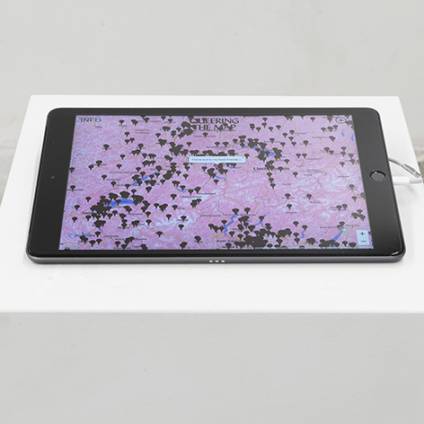
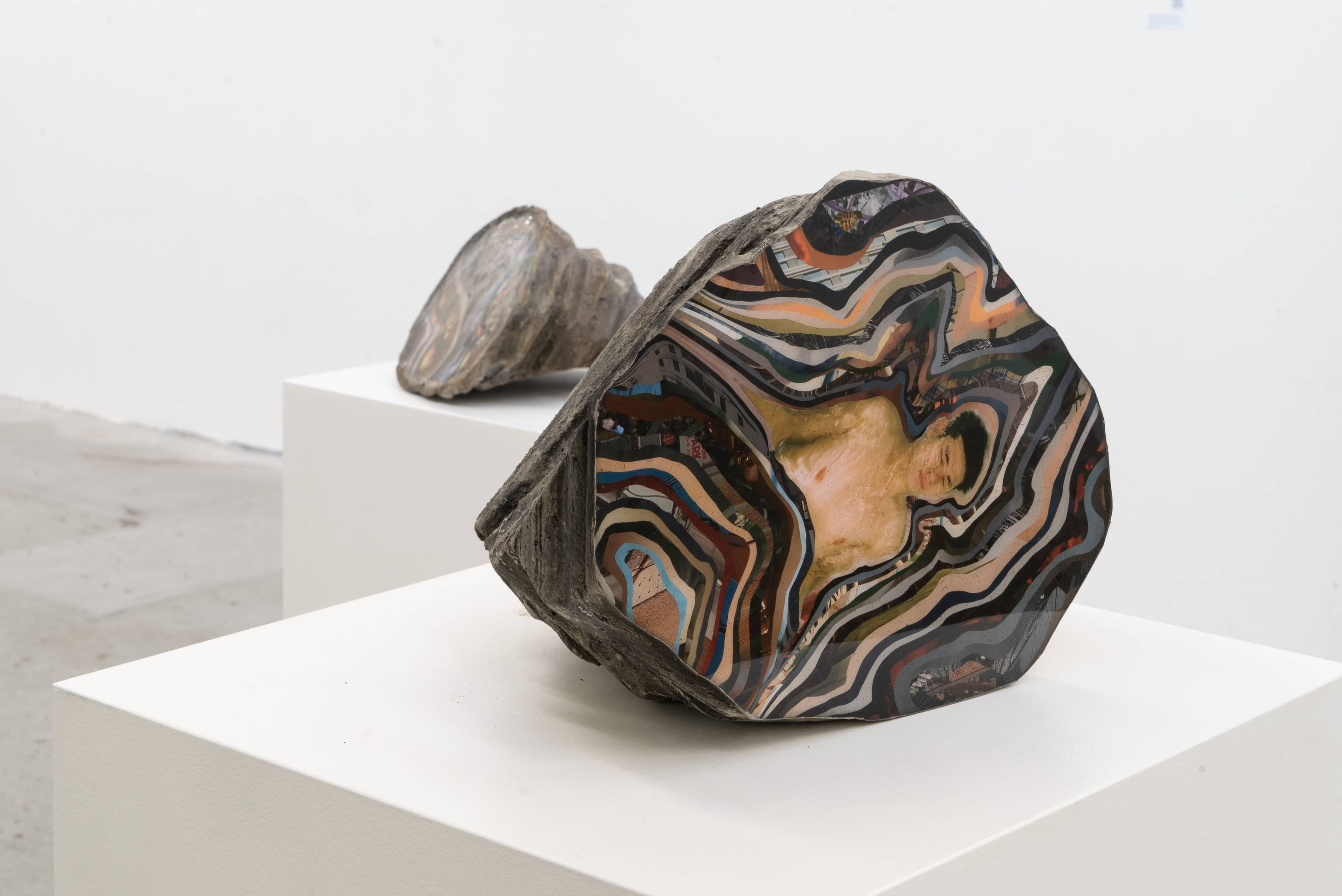
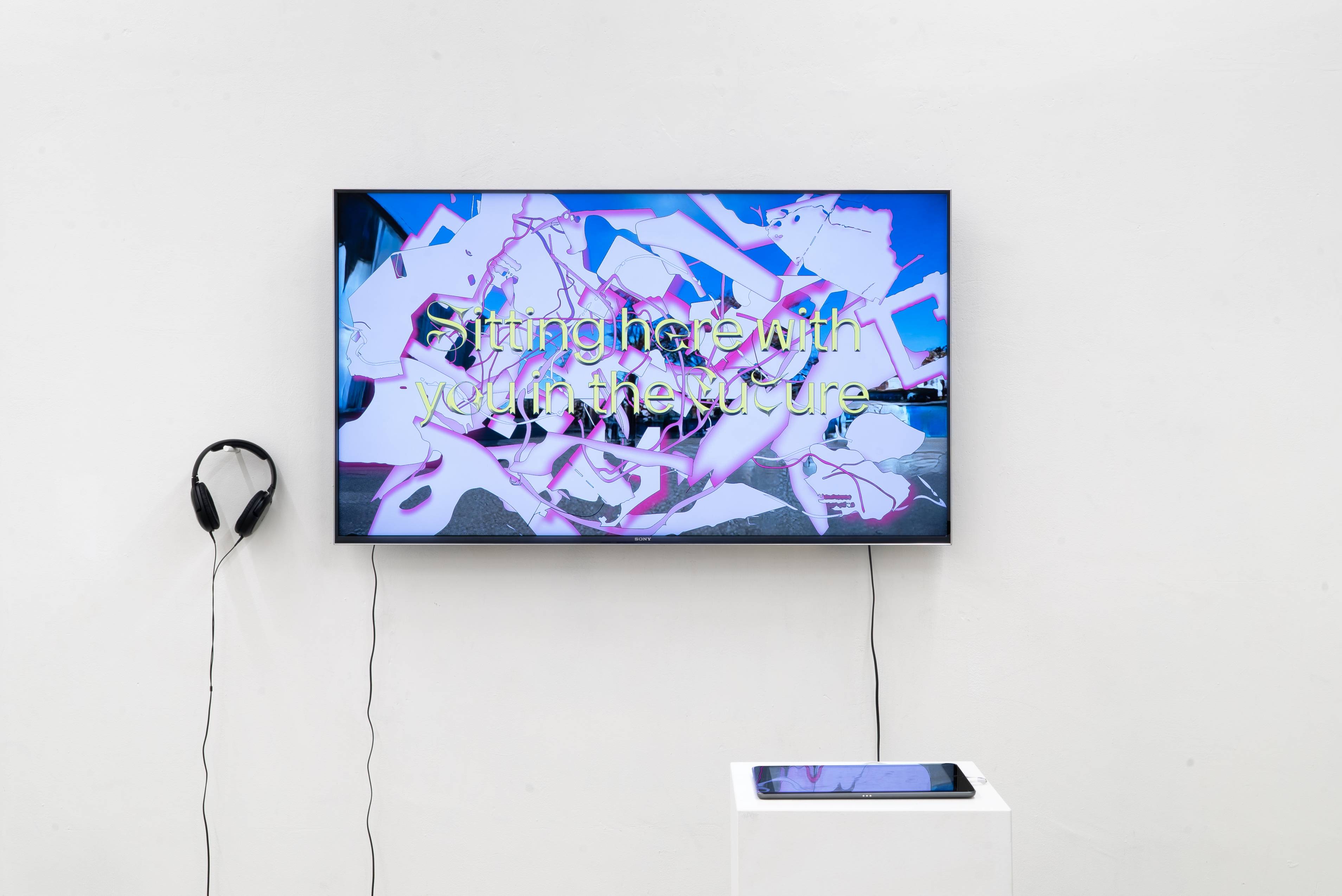
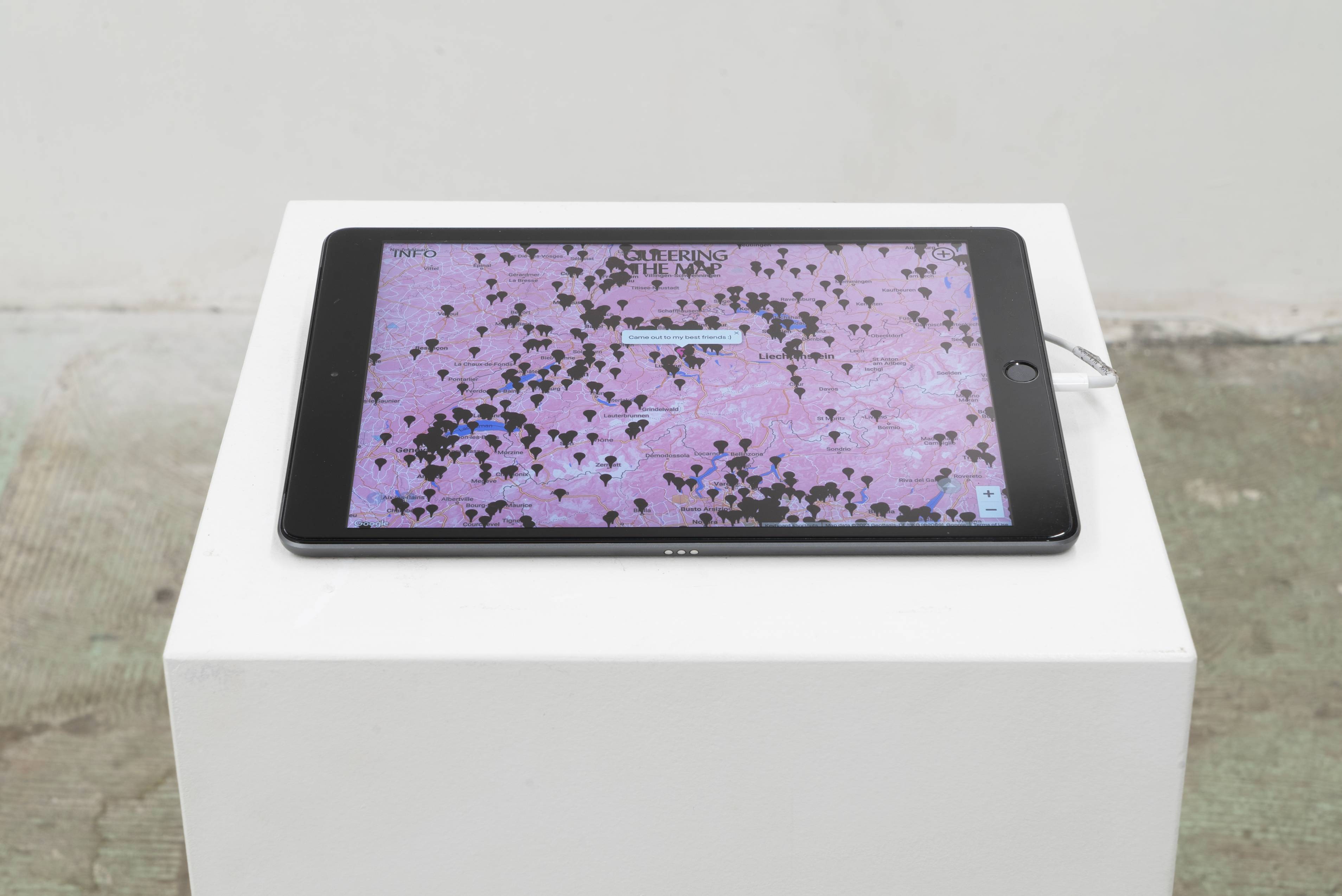
    Lucas LaRochelle appropriates these very technological tools and functions, creating the interactive site called queeringthemap, through which queer experience of love, as well as traumas can be archived geographically. With an artificial intelligence that they endearingly call the QT.bot, working with Street View and text-data from the user’s pins on that map, LaRochelle created a fun and touching video-piece: an algorithmically constructed tale of queer fiction. Archiving experience is what Danielle Brathwaite-Shirley bases their work on as well. Their video game centers Black Trans people’s bodies and underlines the violence they endure, the battles they have fought and the resilience that they have proven to have. Players interact with Black Trans people who have been systematically marginalised and erased from documented history The artist Su Yang on the other hand chooses a geologically inspired approach to materialise the strata of his queer existence, the virtual part of which is especially doomed to stay hidden and invisible in his native China.

    As the World Wide Web, through online forums, dating apps and video games has become a platform for LGBTQIA+-phobic stereotypes to flourish, transphobic and racist hate speech has also seen itself commonly spread inside some parts of the queer communities. Appropriating stereotypes to point at the problem they represent is a way for artist to fight against the global spread of violence and is part of many of the works presented here. In his work, 4FSB crosses post-internet-era references with archetypical elements from queer culture creating fascinating and ruthlessly grotesque photomontages highlighting the aesthetics of the deep meanders of the Web.

    The era of digitality we are living in has resulted in users all over the world forming new relationships with their bodies, as the idea of a virtual self has emerged. Digital worlds like ‘Second Life’ made it possible for the generation of that time to shape their body as they wished, albeit a virtual one. Being able to create an avatar that is isolated from material reality is a form of agency that raises some questions. Does digitality generate increasing isolation of individuals or does it do the exact opposite and create new virtual community spaces? Does physicality even stand in opposition to virtuality or can they merge? Furthermore, would the fusion of both worlds - the material and the digital one - mean that we are imagining new forms of existing?

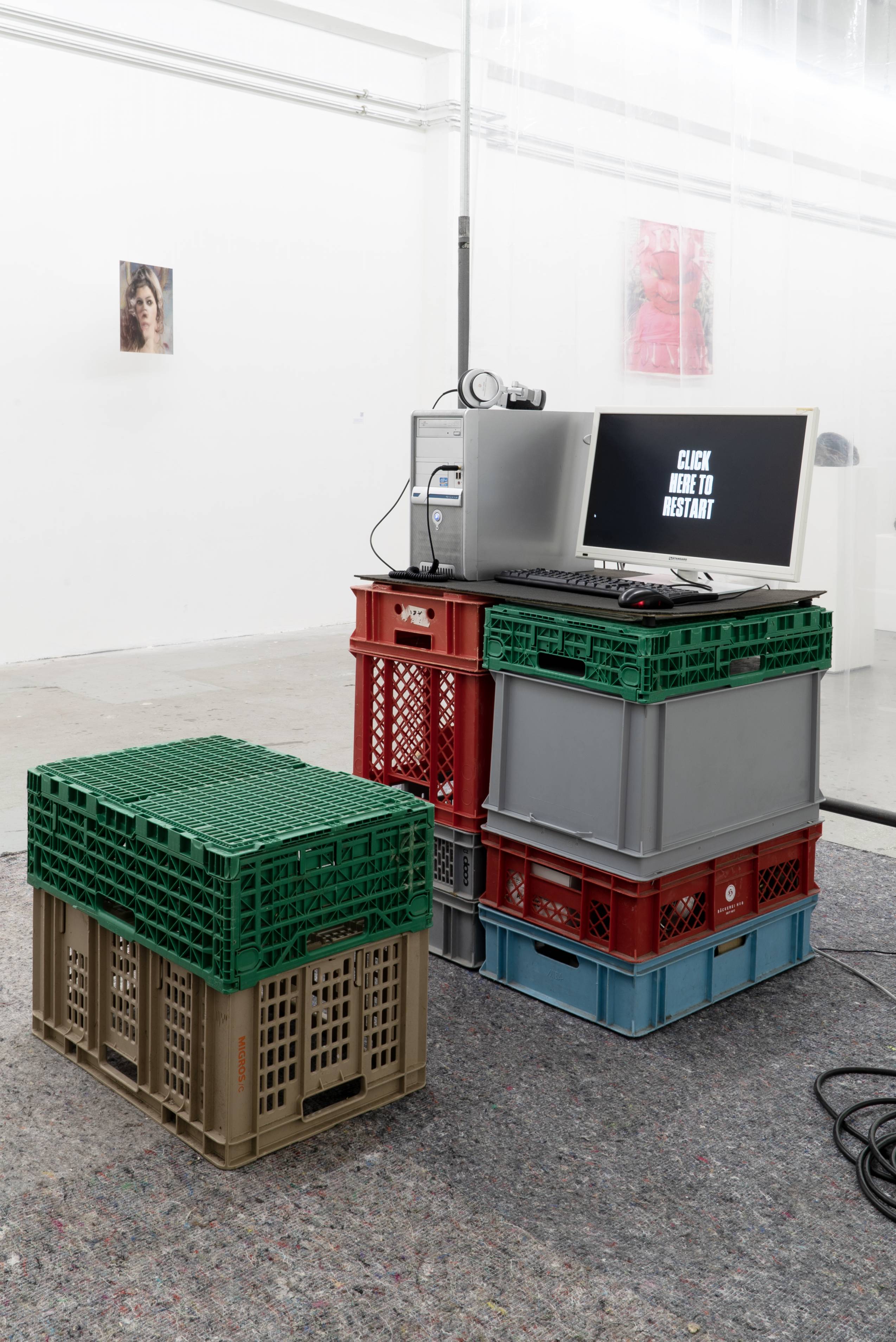
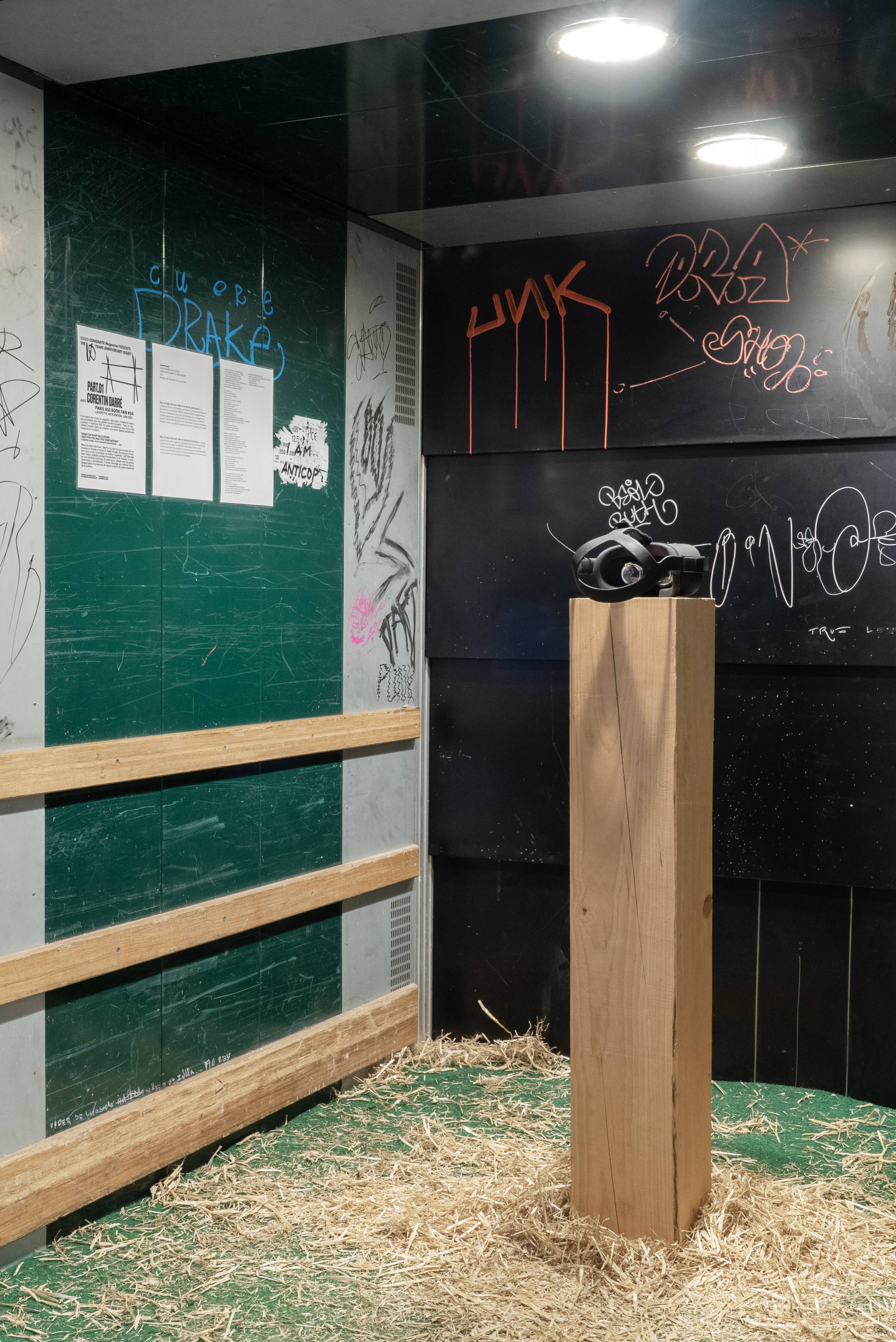
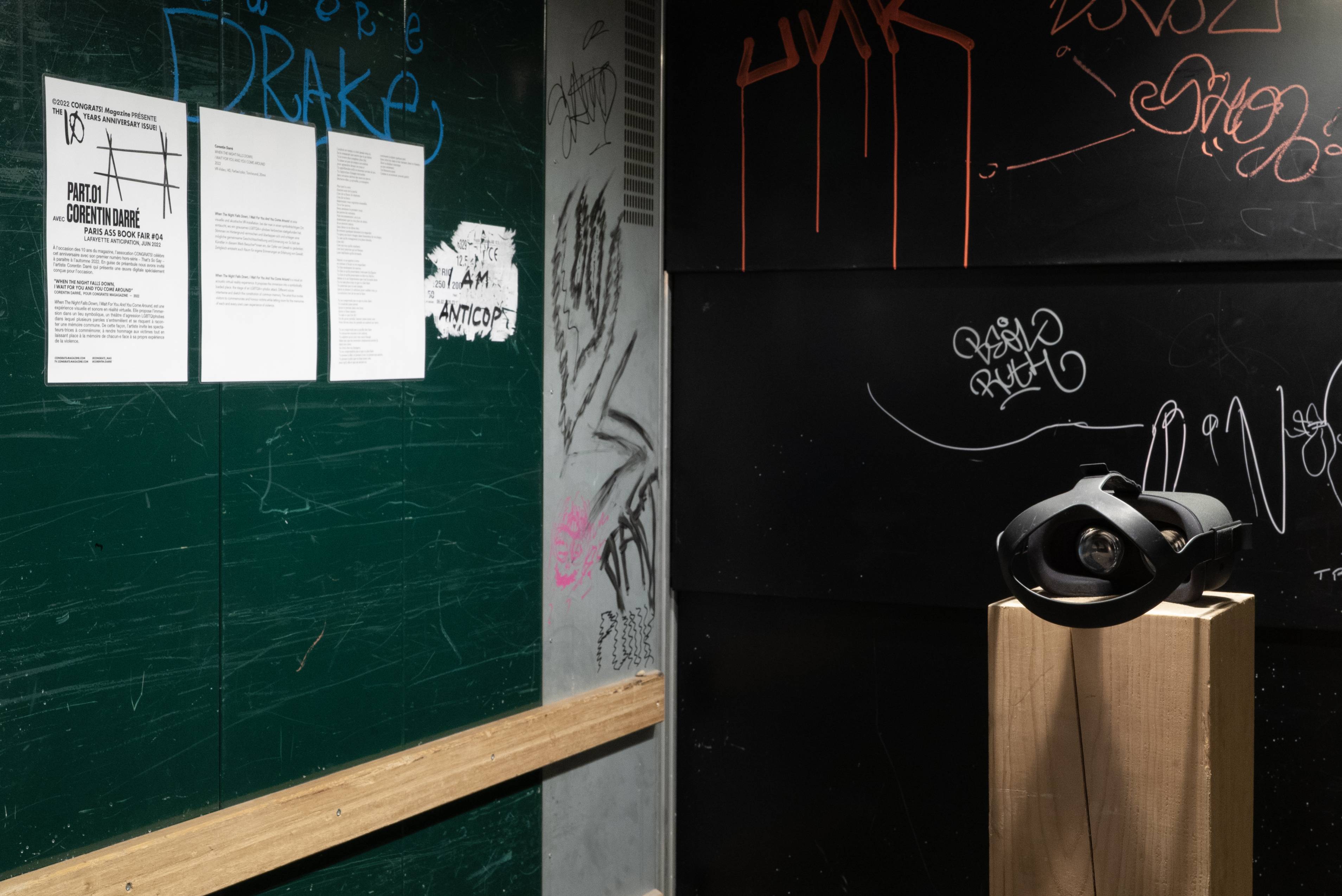
    Thalia Bassim’s illusion-infused video-work sketches their personal quest of defining their hybrid presence in a physically and virtually shaped existence. Cibelle Cavalli Bastos’ approach on the other hand is very much questioning the medium itself and creating pieces that blur the lines between traditional art forms, blending virtual and physical components, thus inducing a reflection on gender and the broad spectrum of identities that should be explored. Breaking the seal separating the physical world from virtuality is what Corentin Darré does by making elements from his animations break into the exhibition space. His medieval-themed work addresses topics around queer love, sexuality and violence, with sculptural requisites of his virtual mythology at hand.

    FAFSWAG offer an extensive confrontation with stereotypes and clichés, a spectacular mise- en-scène of bodies as well as a documentary collection of recorded queer experience. The art collective put forward an interactive video-installation, savvily demonstrating how the three thematic axes discussed in this exhibition are intertwined and form a common cause.

    The artists honoured in this group show thus demonstrate how recurring topics of queer art history are being reflected on and reinterpreted in the age of digitality. Their works are the result of widely different led research, proposing ever so different kinds of reflexion and consequently contributing to contemporary queer history writing.

    “It’s time for new mechanics
    Let’s mutate please
    Bye, binary! Buffer forever

    Usurp the body. Become your avatar. Be the glitch.
    Let the whole goddamn thing short-circuit.“


    Legacy Russel, Glitch Feminism: A Manifesto, 2020

    Wie wirkt sich das Digitale auf queere Kunst aus?
    Von dieser Frage ausgehend präsentiert die Ausstellung „Let the Whole Goddamn Thing Short-Circuit“ Werke queerer Künstler*innen, die mit digitalen Mitteln arbeiten und sich der Ästhetik virtueller Universen bedienen. Über die Vielfalt der Formen ihrer plastischen, digitalen, oder hybrid-geschaffenen Werke hinaus, soll hier auf mögliche thematische Achsen, die den Arbeiten zugrunde liegen, hingewiesen werden. In ihnen zeichnen sich nämlich drei, der queeren Kunstgeschichte altbekannte Aspekte heraus: Erinnerung und Gedenken, Stereotypen und Klischees, und die Beziehung zum Körper.

    Ursprünglich war der Cyberspace als utopisches Feld der unendlichen Möglichkeiten gedacht. Er versprach Emanzipation, Freiheit und Horizontalität. Heute scheinen diese Perspektiven jedoch weit entfernt von der Realität. Neben der Monopolisierung zahlreicher Plattformen durch Tech-Giganten ist das World Wide Web auch zum Schauplatz vielfältiger Formen von Gewalt geworden, die durch algorithmisch generierte Echokammern und Filterblasen gefördert wird. Cyber-Mobbing und hassschürende Parolen, denen systematisch und effizient durch die Anonymität der Nutzer*innen der Weg freigemacht wird, gehören leider der Normalität an. Geolokalisierungstools mancher Applikationen ermöglichen im äussersten Fall physische gewaltsame Angriffe auf LGBTQIA+-Personen, oder deren Festnahme in manchen Staaten.

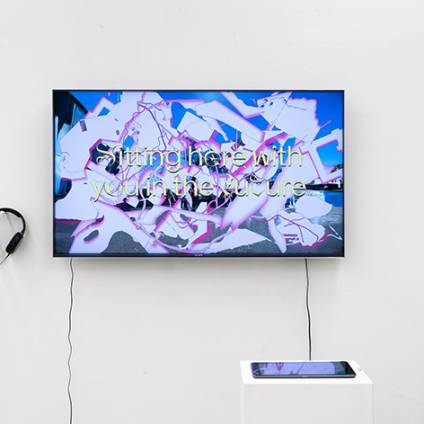
    Lucas LaRochelle eignet sich genau diese Tools an und hat die interaktive Seite queeringthemap kreiert, auf der queere Erfahrungen der Liebe, aber auch Traumata geographisch archiviert werden können. Mithilfe einer künstlichen Intelligenz, dem QT.bot schaffte LaRochelle im Video Sitting with you here in the future anhand von Street-View- und Text-Daten dieser Erzählungen ein amüsant-rührendes Werk queerer Fiktion. Der Aspekt der Archivierung der Erfahrungen erscheint auch im Werk von Danielle Brathwaite-Shirley. Ihr Videospiel stellt die extreme Gewalt, die schwarze Trans-Menschen erfahren ins Zentrum, und ehrt deren Kampf und Resilienz. Spieler*innen interagieren dabei mit schwarzen Trans-Menschen, die in der Gesellschaft systematisch ausgegrenzt werden, und in der Geschichtsschreibung ausgelassen wurden. Der chinesische Künstler Su Yang materialisiert in seinen Skulpturen wiederum auf steinhart physische Weise seine queere Existenz, die in seinem Heimatland zur Unsichtbarkeit verdammt ist.

    Im Web, auf Dating-Applikationen, sowie in Videospielen werden teilweise bestimmte LGBTQIA+-feindliche Stereotypen wiederbelebt, verbreitet wenn nicht sogar verstärkt. Dies äussert sich in ständig wieder auftretenden homo- und transphoben, sowie rassistischen Klischees, die auch innerhalb der Communitys selbst aufzufinden sind. In seinen faszinierenden und teils grotesken Fotomontagen kreuzt 4FSB visuelle Archetypen der Queer-Kultur mit mit Bildelementen der Post-Internet-Ära, die er in den Mäandern des Webs sammelt.

    Mit dem digitalen Zeitalter geht zudem einher, dass allerseits von User*innen neuartige Beziehungen geschaffen werden zwischen ihrem physischen und ihrem virtuellen Körper. Digitale Universen wie Second Life haben es einer ganzen Generation ermöglicht, einen neuen, wenn auch virtuellen Körper nach ihrem Belieben zu erschaffen. Das Kreieren eines, von der materiellen Realität isolierten Avatar wirft eine Reihe von Fragen auf. Trägt das Digitale zur Isolation der Individuen bei, oder entstehen dabei neue, virtuelle Community- Spaces? Stehen das Physische und das Virtuelle im Widerspruch zueinander, oder können sie miteinander fusionieren? Würde die Verschmelzung beider Welten, der materiellen und der digitalen, bedeuten, dass wir eine neue Form des Daseins definieren können?

    So skizziert das Werk von Thalia Bassim mittels eines Spiels von Projektionen und Illusionen eine persönliche Auseinandersetzung mit der hybriden, physisch-virtuellen Existenz und Präsenz. Cibelle Cavalli Bastos hingegen schlägt eine Kreuzung verschiedener traditioneller und digitaler Kunstmedien vor und ahmt dabei eine Form von Verwirrung nach, welche manche Leute bei Gender-Fragen vor den Kopf stossen. In ähnlicher Weise bricht das virtuelle Universum von Corentin Darré in die Welt des Physischen ein. Er schöpft aus seinen Animationen, in denen Avatare zu mittelalterlich anmutenden Protagonist*innen moderner Legenden über queere Liebe, Sexualität und Gewalt werden, und schafft plastische Requisiten seiner virtuellen Mythologie.

    In einer umfangreichen Auseinandersetzung um Stereotypen und Klischees, einer spektakulären Inszenierung der Körper und einer dokumentarischen Sammlung von Schilderungen ihrer queeren Existenzen sieht man mit der interaktiven Video-Installation der Künstler*innen FAFSWAG vielleicht am anschaulichsten, dass die drei leitenden Themen- Felder in einem Kunstwerk eingebunden werden können.

    Auf diese Weise zeigen die in dieser Ausstellung vorgestellten Künstler*innen auf, wie wiederkehrende Sujets der queeren Kunstgeschichte im Zeitalter des Digitalen neu aufgegriffen und interpretiert werden können und müssen. Ihre Werke sind das Ergebnis sehr unterschiedlich geführter Recherchen, die ebenso vielfältige Reflexionen vorschlagen und ungemein zur zeitgenössischen, queeren Geschichtsschreibung beitragen.

    “It’s time for new mechanics
    Let’s mutate please
    Bye, binary! Buffer forever

    Usurp the body. Become your avatar. Be the glitch.
    Let the whole goddamn thing short-circuit.“


    Legacy Russel, Glitch Feminism: A Manifesto, 2020

    Curated by Quentin Emery

    text_en.pdf
    text_de.pdf
    Let the whole damn thing.Flyer.pdf
  •  01.12.2022REVIVED CRUSH - Maya Hottarek, Orson Egloff, Emma Pidré, Gaspard Emma Hers

    it’s dripping, you said.
    while i felt the warmth cringing in.
    while i float away between the edges.
    finding myself in between what i couldn’t tell you.
    not because i didn’t want to because the language of words didn’t give me the right ones.
    an empty frame but still erupting lava.
    instead the lips formed, do you know that we would burn at the temperature clay hardens? do you know we would be dust in minutes when not seconds? disapear when one stays forever?

    in der sprache, die mir entwischt, möchte ich dich umschliessen. dich einfangen, dich umrunden. umzingeln – festhalten für immer und ewig. entwischt steht dazwischen das verlangen, das dich sucht um aufzuleben, was zu verschwinden droht. ewige flammen die lodern.

    metall melts at temperatures my body would burn into dust in minutes when not seconds, i said to you.
    a heat so hot my heart feels in the longing for you. it drops. it melts. flows. and you said, it’s dripping again.

    crush
    crush and
    crushes for it, when we
    crush in it.
    forms willing to form what we‘re longing. hearts burn up while clay becomes its shape. it hardens as it’s trying to hold what’s only felt in seconds.

    für immer und ewig dem ewigen entgegen.
    kanten umzingelnd öffnet sich eine landschaft. sie verbinden sich, wo ich mich in eine vergangene ferne wiege. für das immer suchend, dir nach.
    knirscht das laub unter meinen füssen, der wind flüstert und die sonnen- strahlen warm auf meiner haut die kälte lügen. ich schwinde zwischen dem hier dahin, verblasst in dem damals das mich in dem verlangen der ewigkeit halten will. doch der fluss links neben mir fliesst.

    it was dripping, you said.
    (while i felt the cold cringing in.)
    now you push it. squeeze it through my skin in my flesh. pointy edges. hard and cold.
    yes, you smile, not that smile when our fluids exchanged. different. schämisch oder schelmisch. hidden in the frame or hold by it.
    feel the coldness, icy. while some droplets fly away.

    ich wirble durch die strömung. erfrischt, kleines kitzeln mich erweckt. nähre ich das wasser mit der sehnsucht die mich durchfliesst? knirscht das feuer im wald, wo wasser in dampf verschwindet. mein herz aufflammt, pocht. immer wieder, immer wieder, immer wieder. wartest du auf mich?

    clay hardens while my heart would burn as it burns for you in search to speak to find what once was (or never?).

    für immer in ewigem. in fires. in rivers, in clouds, in wood, in metall, in clay, in wait, i’m thirsty so lets have a lick at the melting edge. clinging into the freshness.
    small hats kept forever.
    yes, you smile but i don’t see it. lost in ways opening a landscape i’m lon- ging for too long.
    dust liquefied and i’m oscillating between what your smile shows and showed.
    let me have a sip by the fountain. transparent young blood. drop. drop. drops. and flows. drown in history by what so called nature.

    Curated by Nemo Bleuer
    Text by Margaretha Jüngling

    e_floorplan_crush2222.pdf
    flyer_mockup copy copy.jpg

    Exhibition view, REVIVED CRUSH

    Toxi space, Zürich, 2022

    Orson Egloff

    Lover's Lament / Fleshscape III,

    2022

    acrylics, oil on canvas, 160 x 160 cm

    Orson Egloff

    Behind the Veil of Mist,

    2022

    oil on canvas, 160 x 160 cm

    Orson Egloff

    A Place for Lost Songs,

    2022

    oil on canvas, 160 x 160 cm

    Maya Hottarek

    5G,

    2019

    ceramic, glaze, articifial hair, 45 x 30 x 4 cm

    Gaspard Emma Hers

    Untitled,

    2022

    graphite on paper, wood, 20 x 25 cm

    Emma Pidré

    For an instant your body and mine got into a dance with the forces
    of two galaxies colliding,

    2022

    PLA, zink paint, graphite paint, copper electroplate, varnish, steel chain,
    dimension variable

    Maya Hottarek

    Heavy Drip,

    2021

    glazed ceramic, water pump, water, beewax, 40 x 45 x 30 cm

    Maya Hottarek

    Gangnam Style,

    2019

    ceramic, glaze, 30 x 45 x 4 cm

    Exhibition view, REVIVED CRUSH

    Toxi space, Zürich, 2022

    Emma Pidré

    For an instant your body and mine got into a dance with the forces
    of two galaxies colliding,

    2022

    PLA, zink paint, graphite paint, copper electroplate, varnish, steel chain,
    dimension variable

    Exhibition view, REVIVED CRUSH

    Toxi space, Zürich, 2022

    Maya Hottarek

    Sextoy for alien,

    2019

    ceramic, sand, gelatine, meister proper, dimension variable

    Exhibition view, REVIVED CRUSH

    Toxi space, Zürich, 2022

  •  04.11.2022TANGIBLE DREAMING - Nadia Hauri & Una Szeemann

    ‘A very sad, gray valley. Stony slopes. Cement roads below, built on the slope, like the greenhouses of a plant nursery. From them, like flowers, sprout dried skeletal hands.’1
    – Meret Oppenheim, Dec. 15, 1935

    What remains of a dream? Sometimes it’s only moments of memory, so-called dream fragments, that vaguely recall what has been dreamt, othertimes it’s rather clear images that will be remembered for long. Instead of keeping a diary, the Swiss artist Meret Oppenheim (1913 – 1985) journaled her dreams throughout the course of her life. The fragments of the night, which she meticulously noted down in a little book, each with their belonging dates, often seem both grotesque and disruptive. At times Meret Oppenheim turned these fragments of dreams and memories into works of art.

    Prior to the exhibition, Nadia Hauri and Una Szeemann together visited ‘Casa Costanza’, the Oppenheim familys residence, which was redesigned by the artist herself. There, Hauri and Szeemann came across a variety of traces from the artist, may it be in the different rooms, in the furniture, in notes or photographs. These impressions stuck in their minds ever since.

    In the duo exhibition ‘Tangible Dreaming’, Una Szeemann and Nadia Hauri explore the phenomenon of dreaming through a combined perspective. Exhibited together for the first time, the two artists are primarily concerned with exploring the complex relationship of the body and mind during the process of dreaming. In the work of both artists, dreams appear as fragmentary, processual, yet in their material form they become tangible as works of art, and through their interplay in space, their reciprocity opens up new references to the theme.

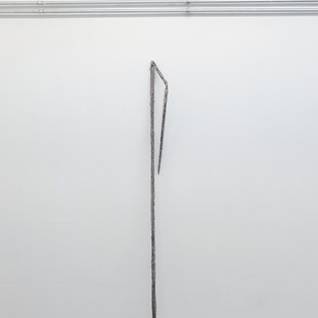
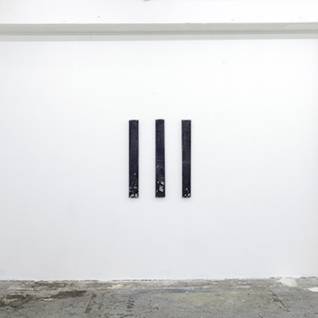
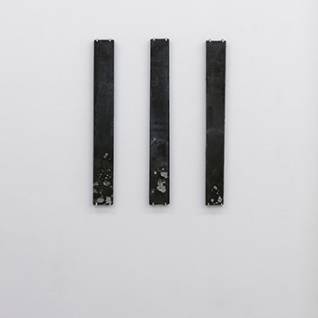
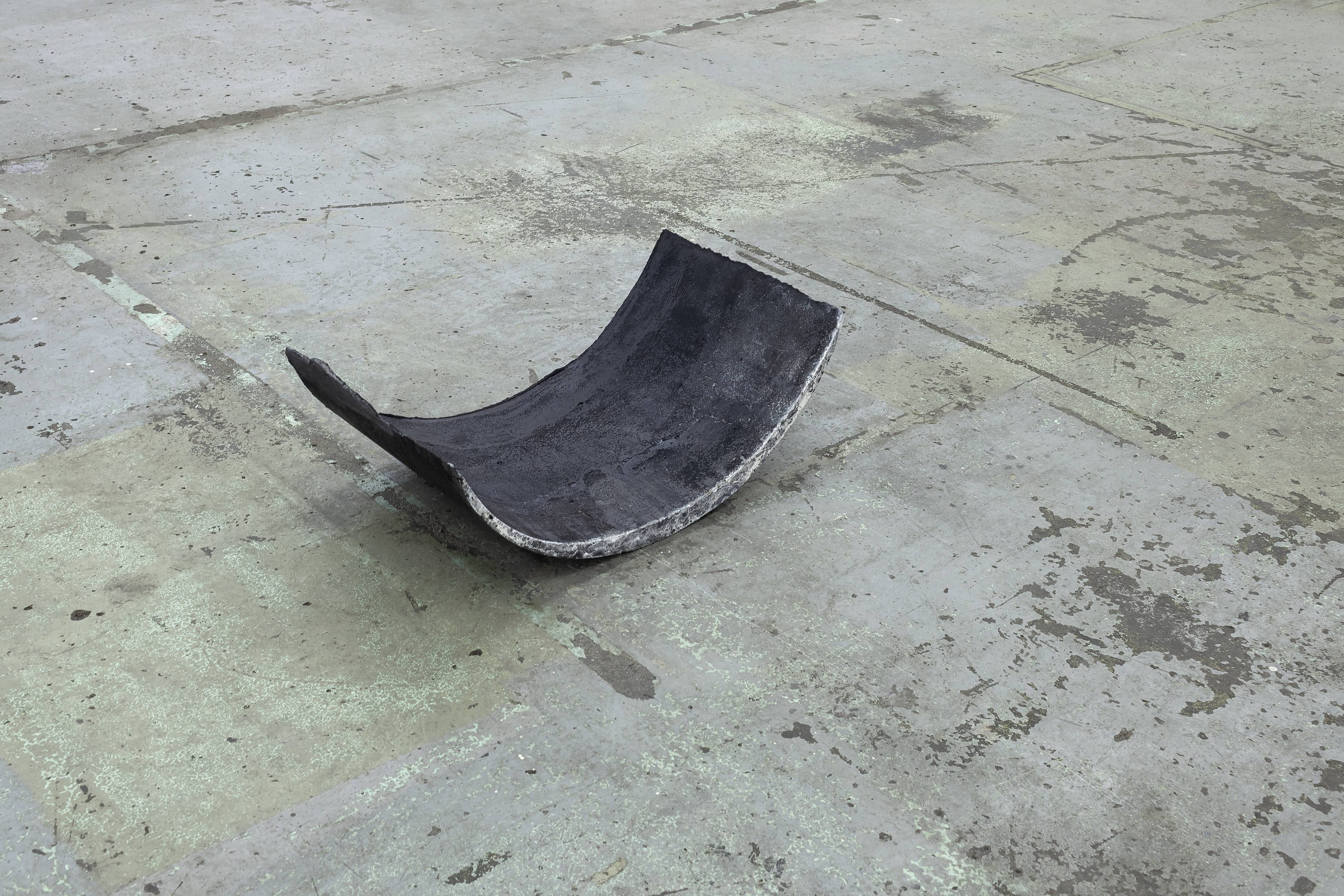
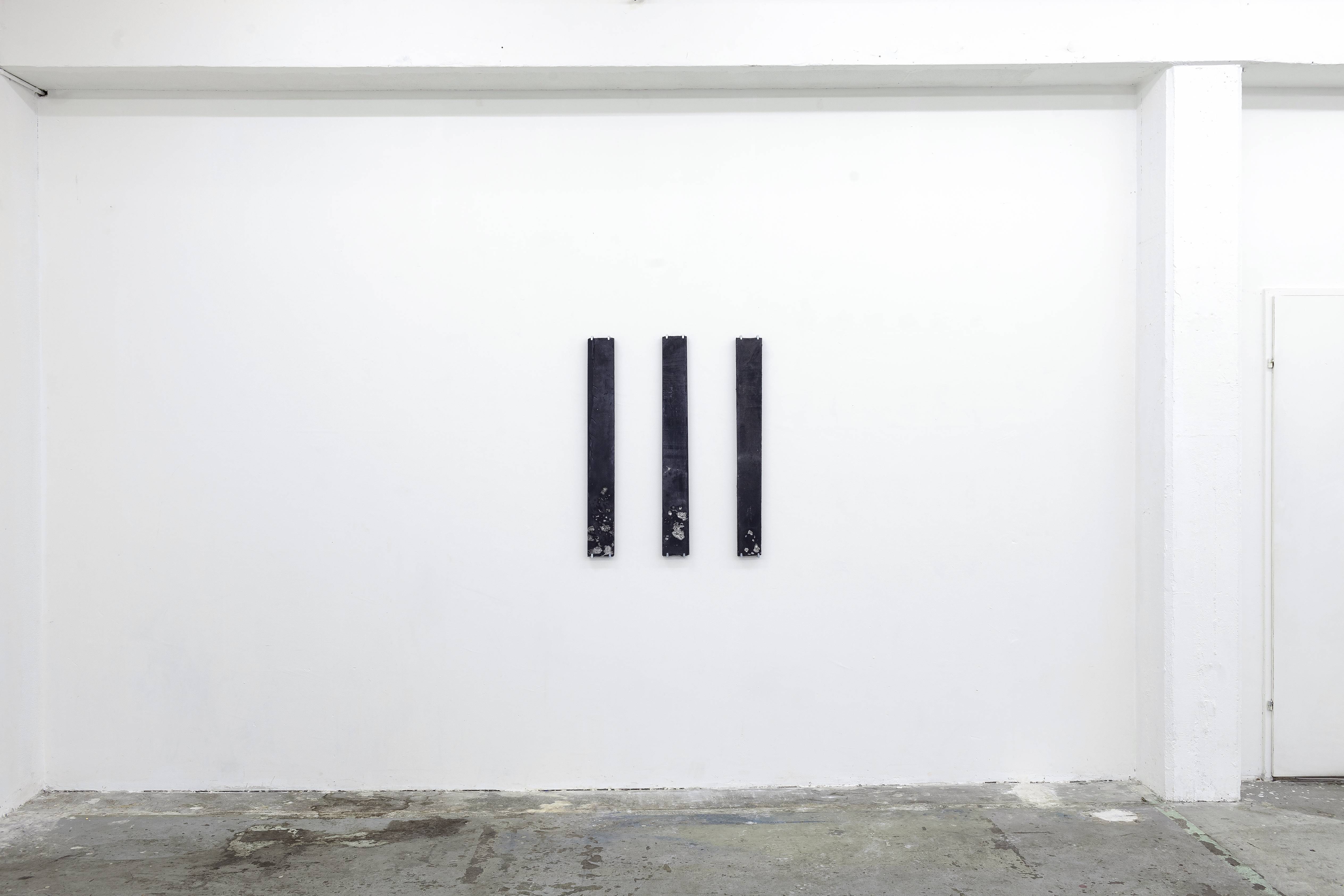
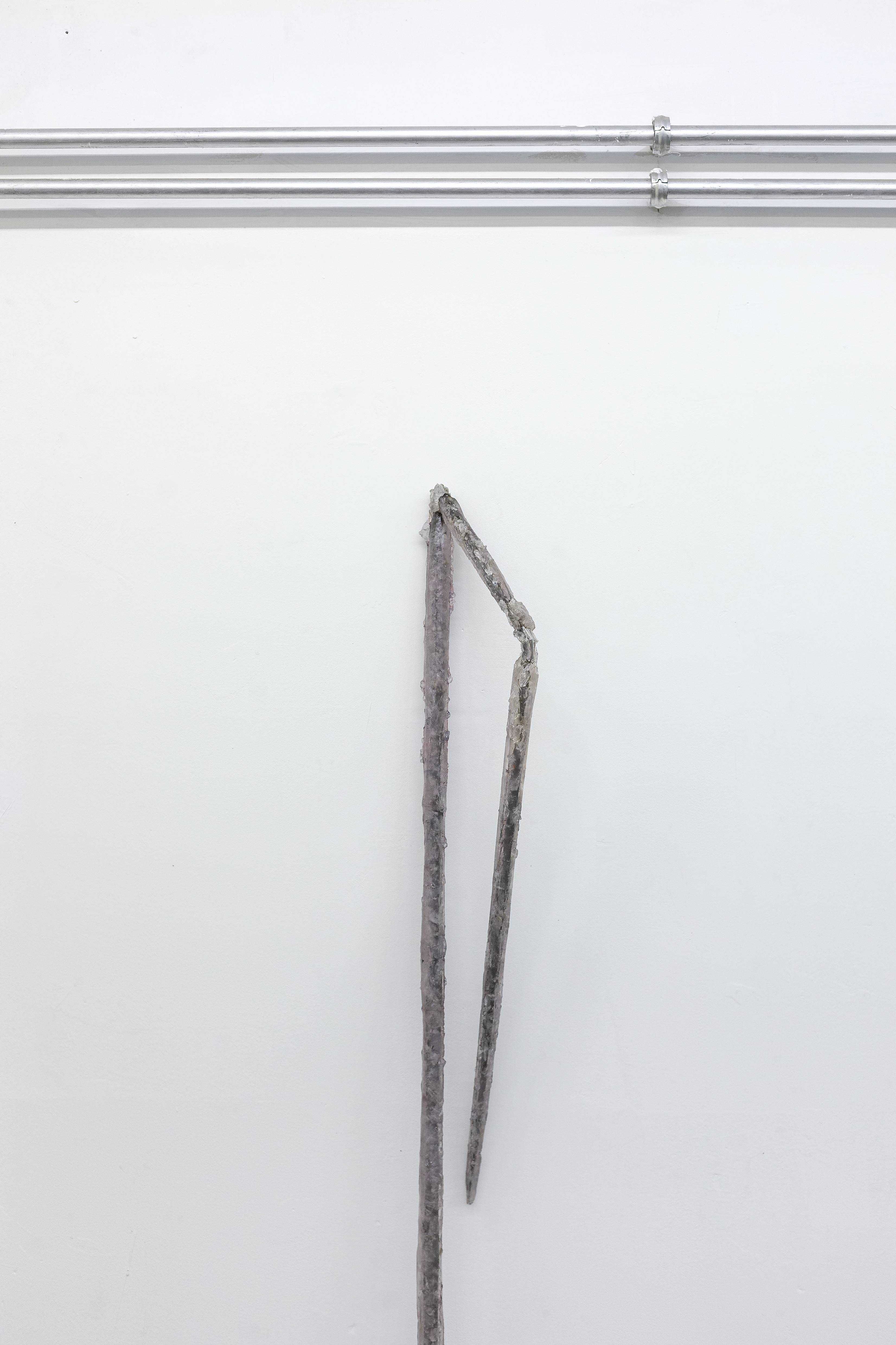
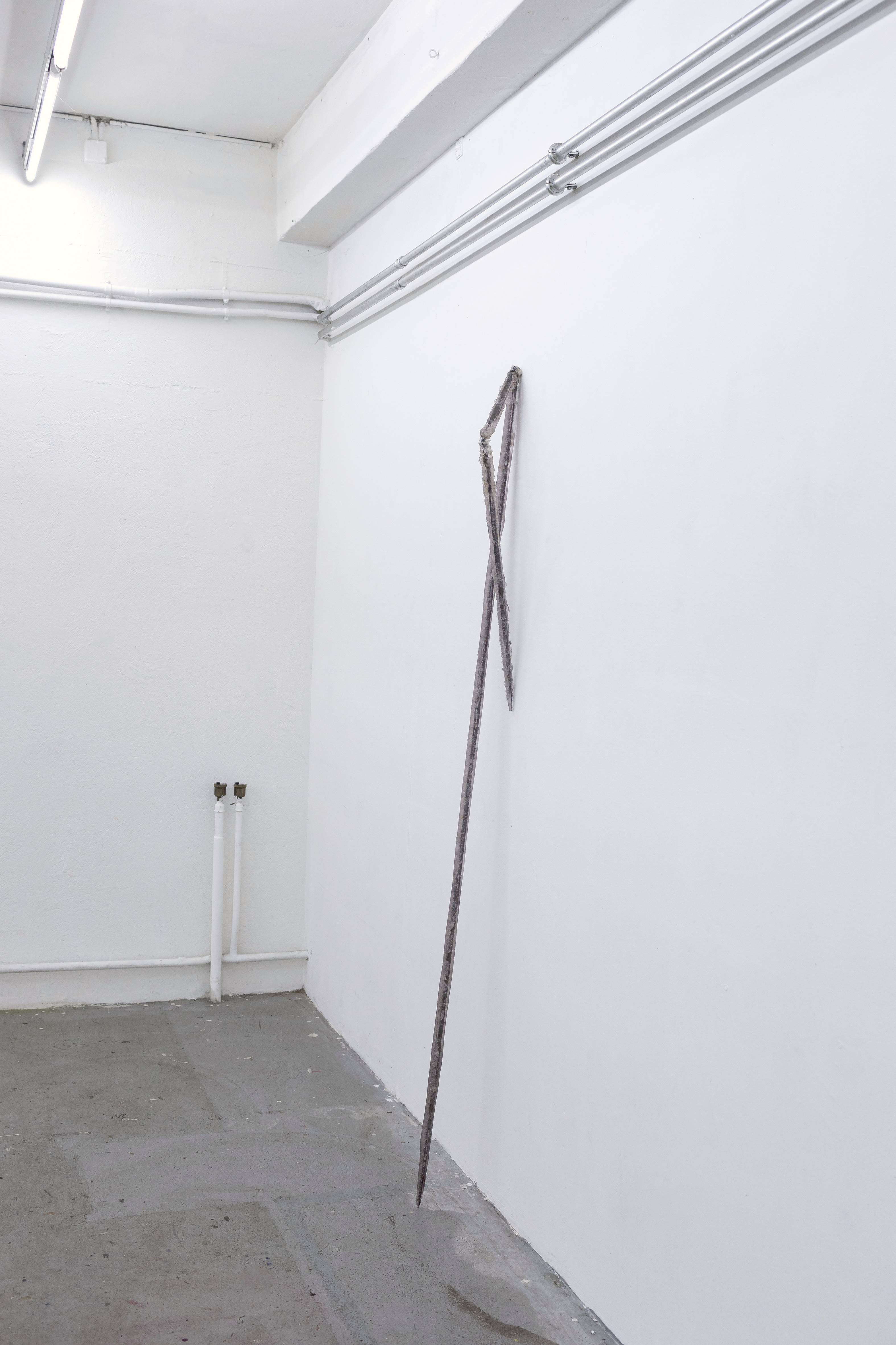
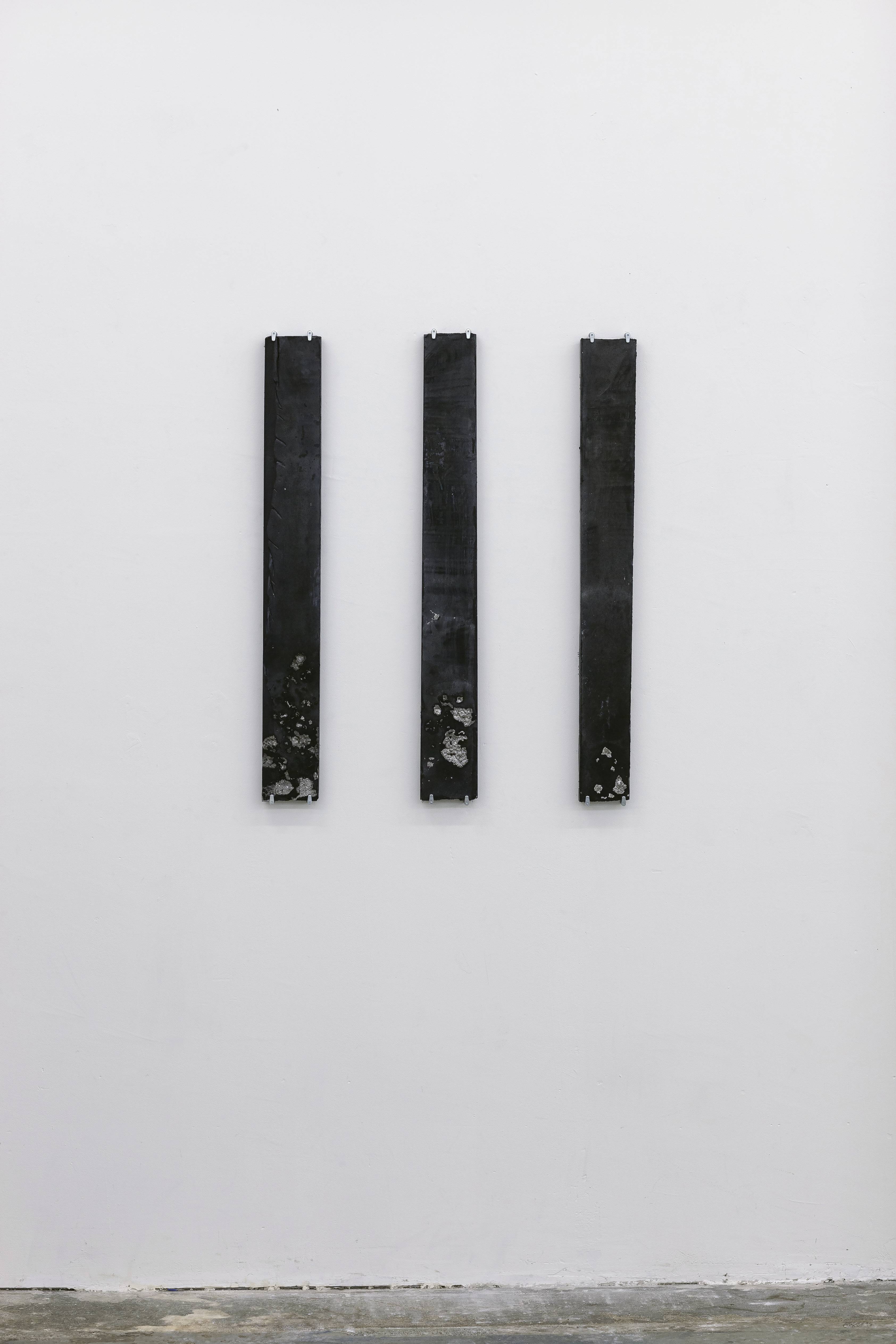
    Nadia Hauri’s work examines primarily the psychological and physical experiences of the dreaming body – with the process of remembering and sensing. Thereby, the chosen materials and forms play an essential role. In Eye movements transitioning in soft radiance (2022), a crystal stick made of lavender quartz is being attributed with a calming and relaxing effect. Contrasting with this are the sculpture’s tapered ends, which point into three different directions, inviting the viewer to look around. Here, Hauri draws analogies to the state of REM (rapid eye movement), a phase of sleep in which the eyes move rapidly while the body appears to be at rest. A similar relation emerges with the sculpture Echo (2022), suggesting the idea of a bowl. A hypnotic swaying might come to mind, capable of evoking a dreamy state. In Neighboring states (2022), silver stains run through three black concrete panels, referencing the moments when states begin to intermingle, reality merging into dreams, or dreams into reality.

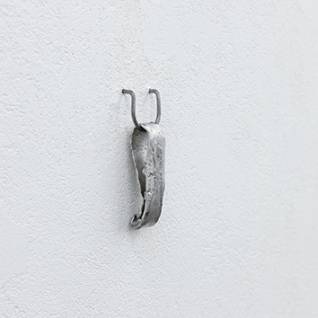
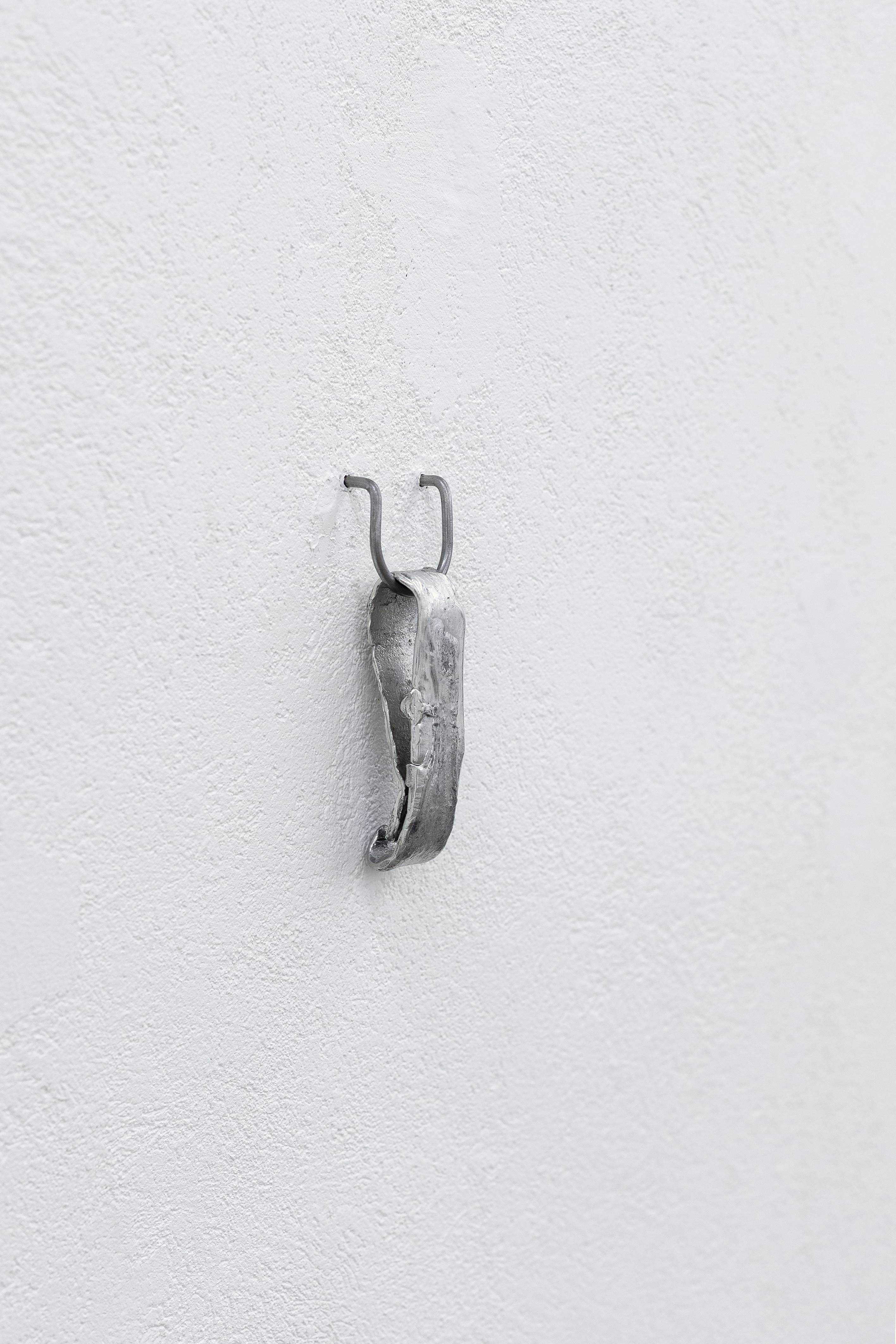
    The unique textures of the three panels are the result of a physical reaction during the casting process, in which the pigment-colored concrete reacts with the liquid tin. Tin is also used in Hold it to your ear and bend it back and forth (2022). The work resembles a stuck out tongue, which at first glance appears both grotesque and provocative. If pure tin is squashed or bent when being worked, the so-called ‘tin scream’ occurs, a sound that refers to the limits of the material. How much can it withstand before it breaks? At the same time, Hauri thus shows the limits of the psyche’s ability to process during sleep and demystifies dreaming as a healing process, for example in the case of recurring individual traumas.

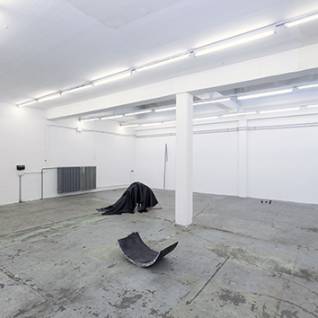
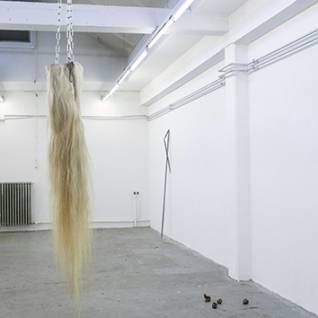
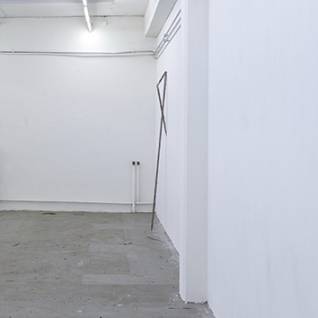
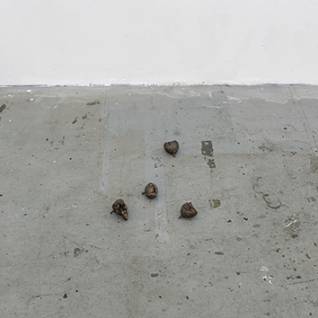
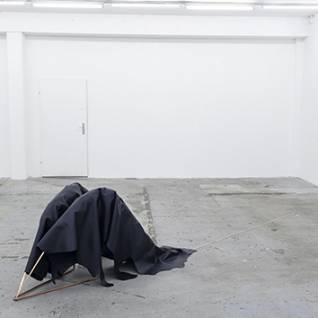
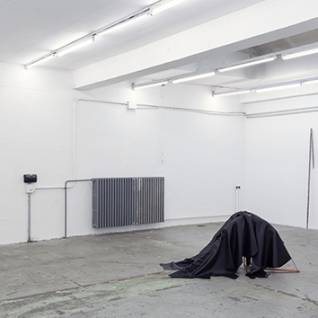
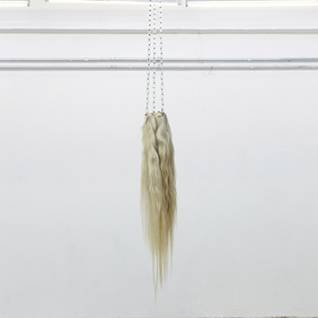
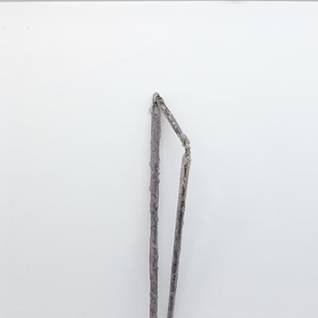
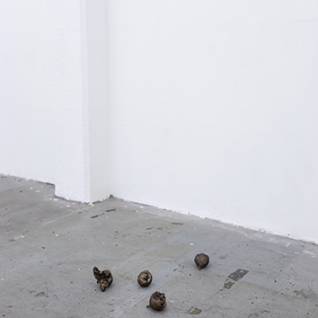
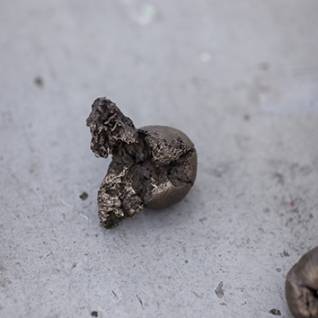
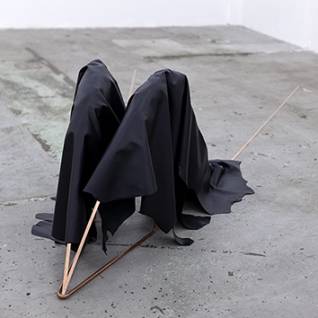
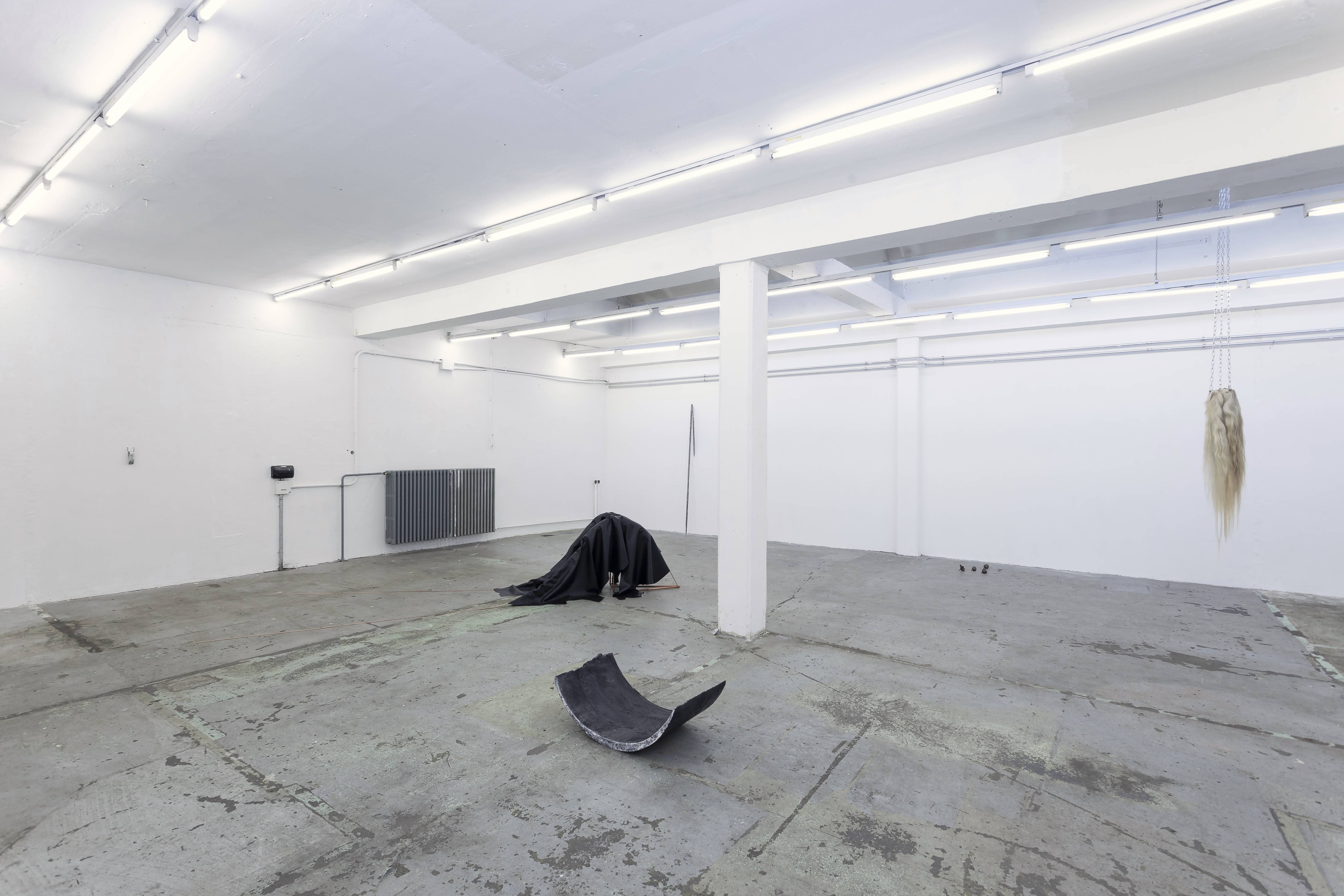
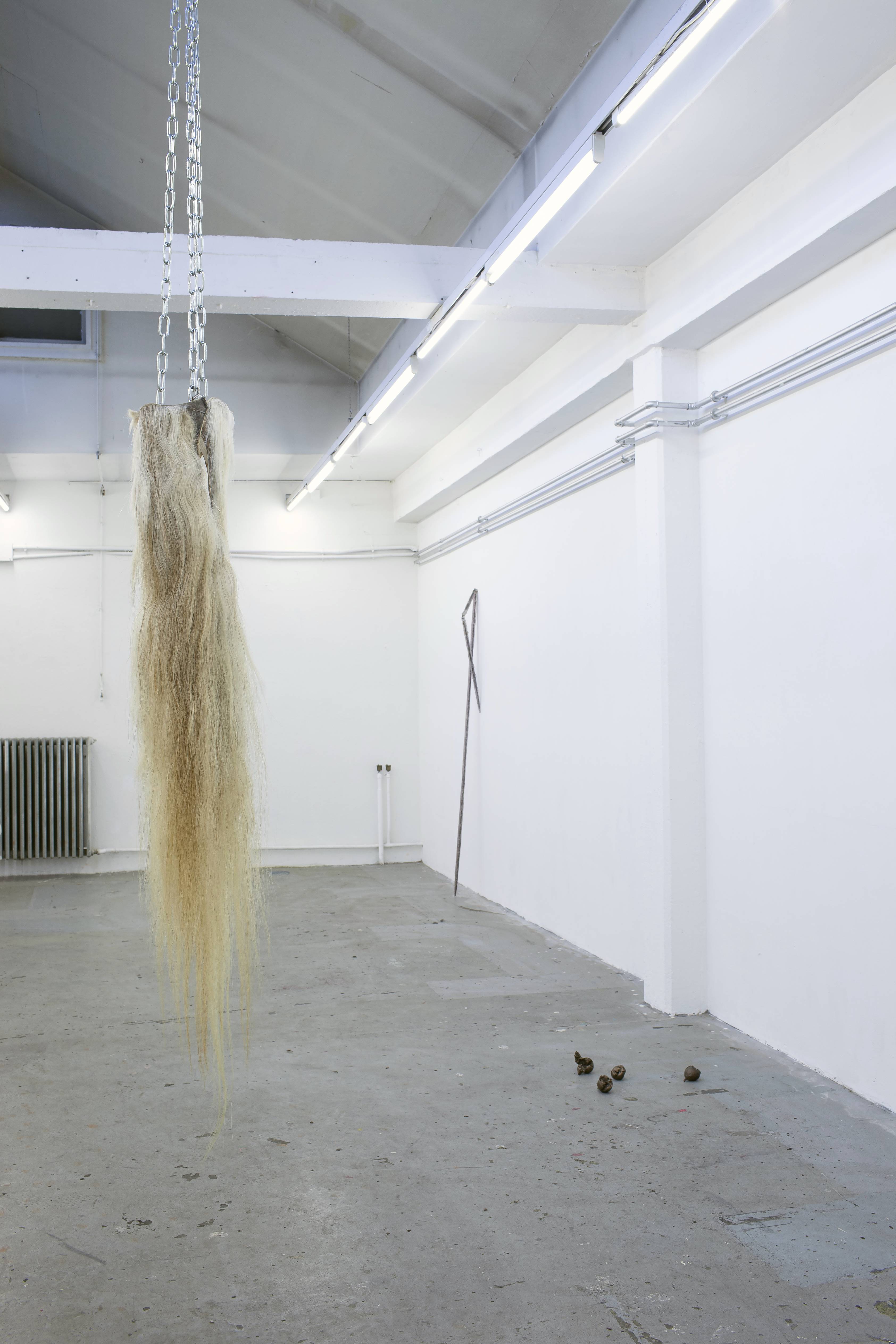
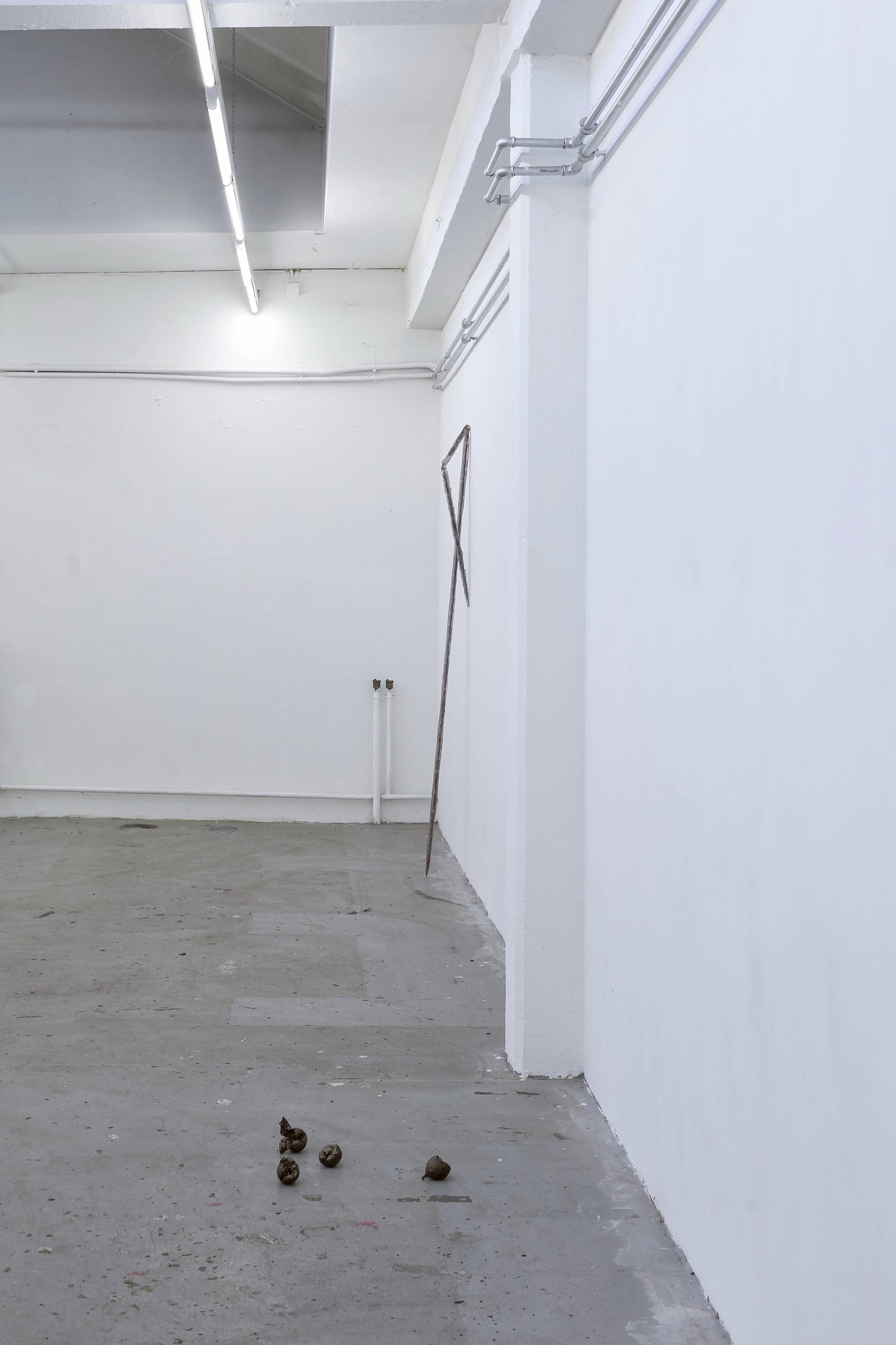
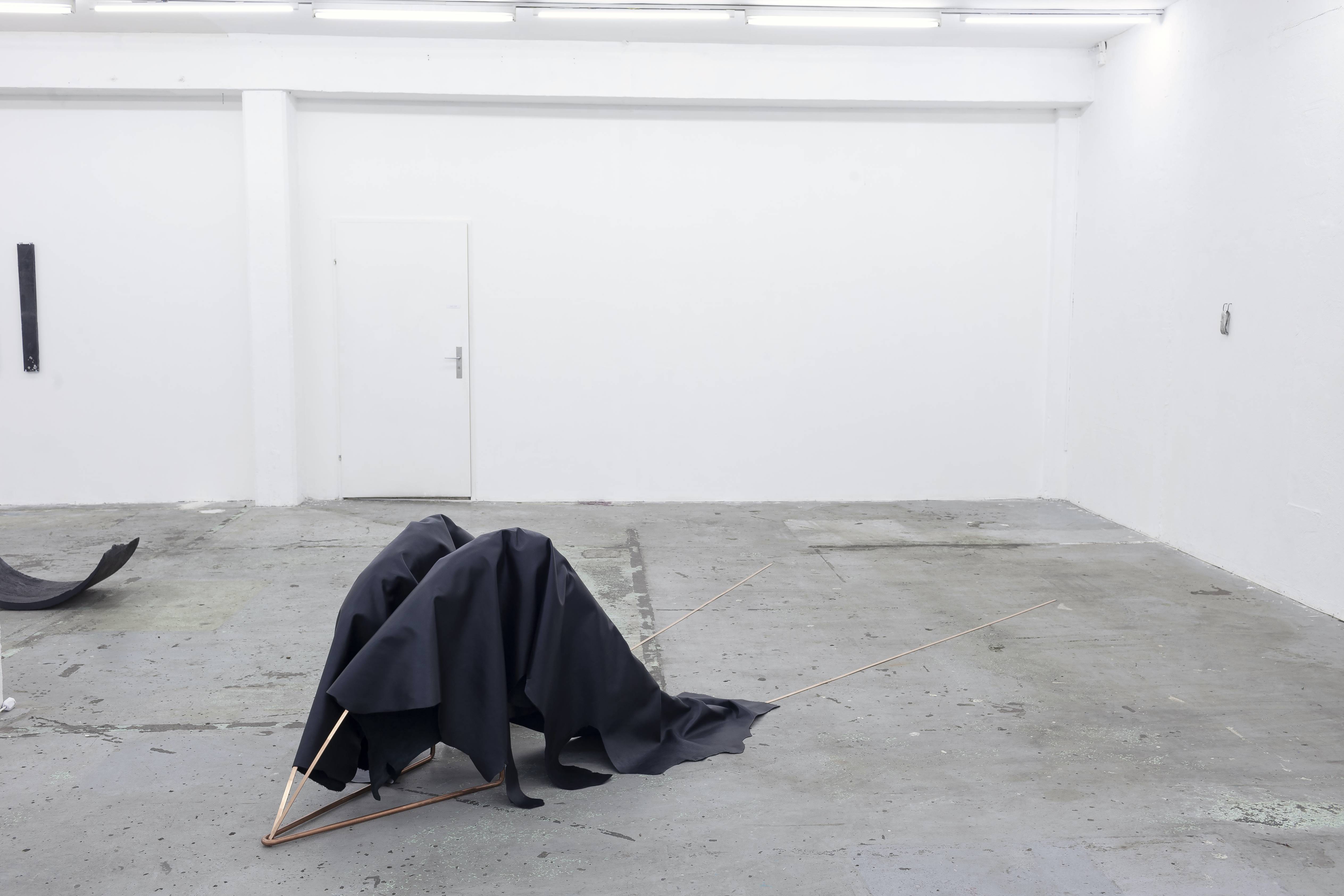
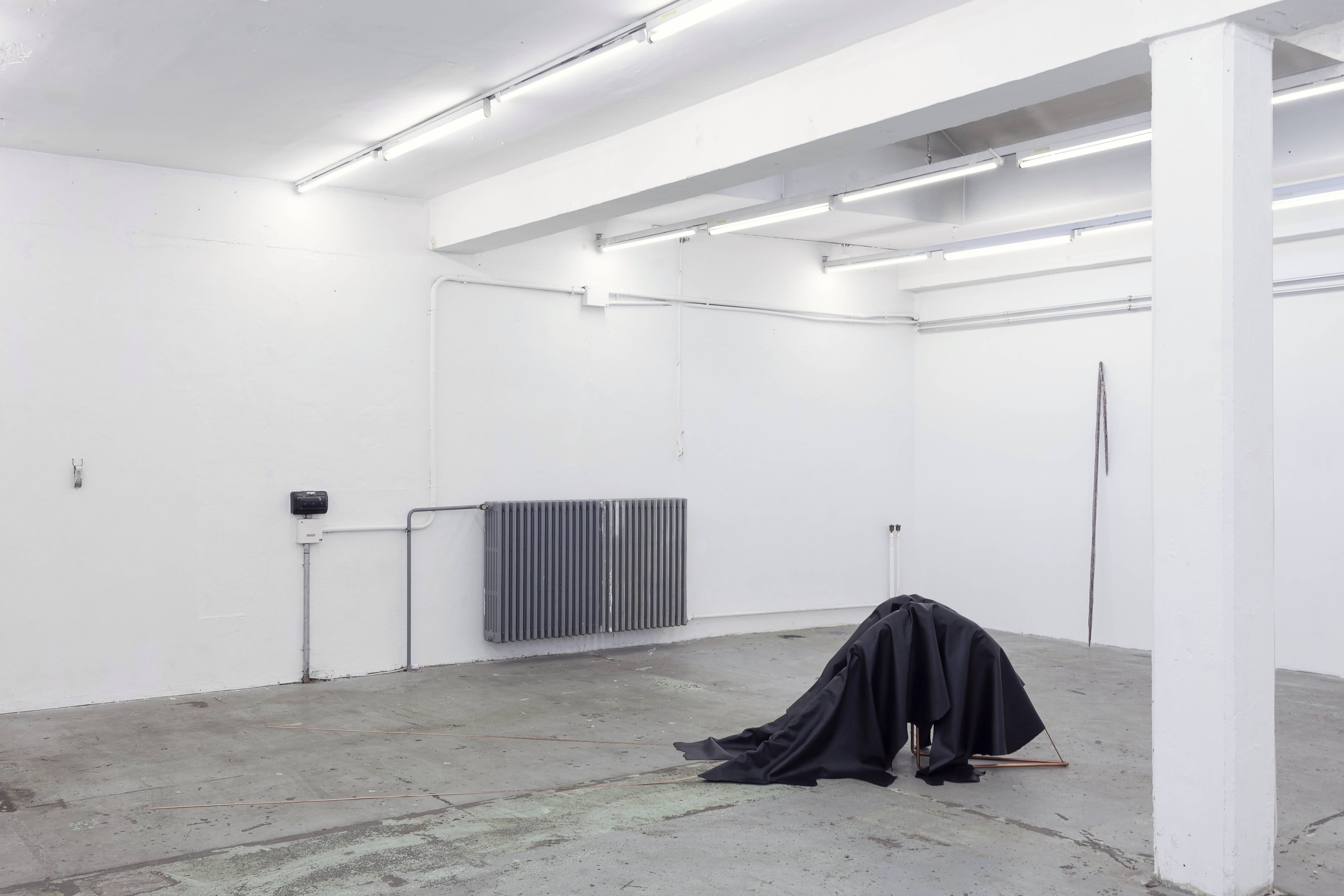
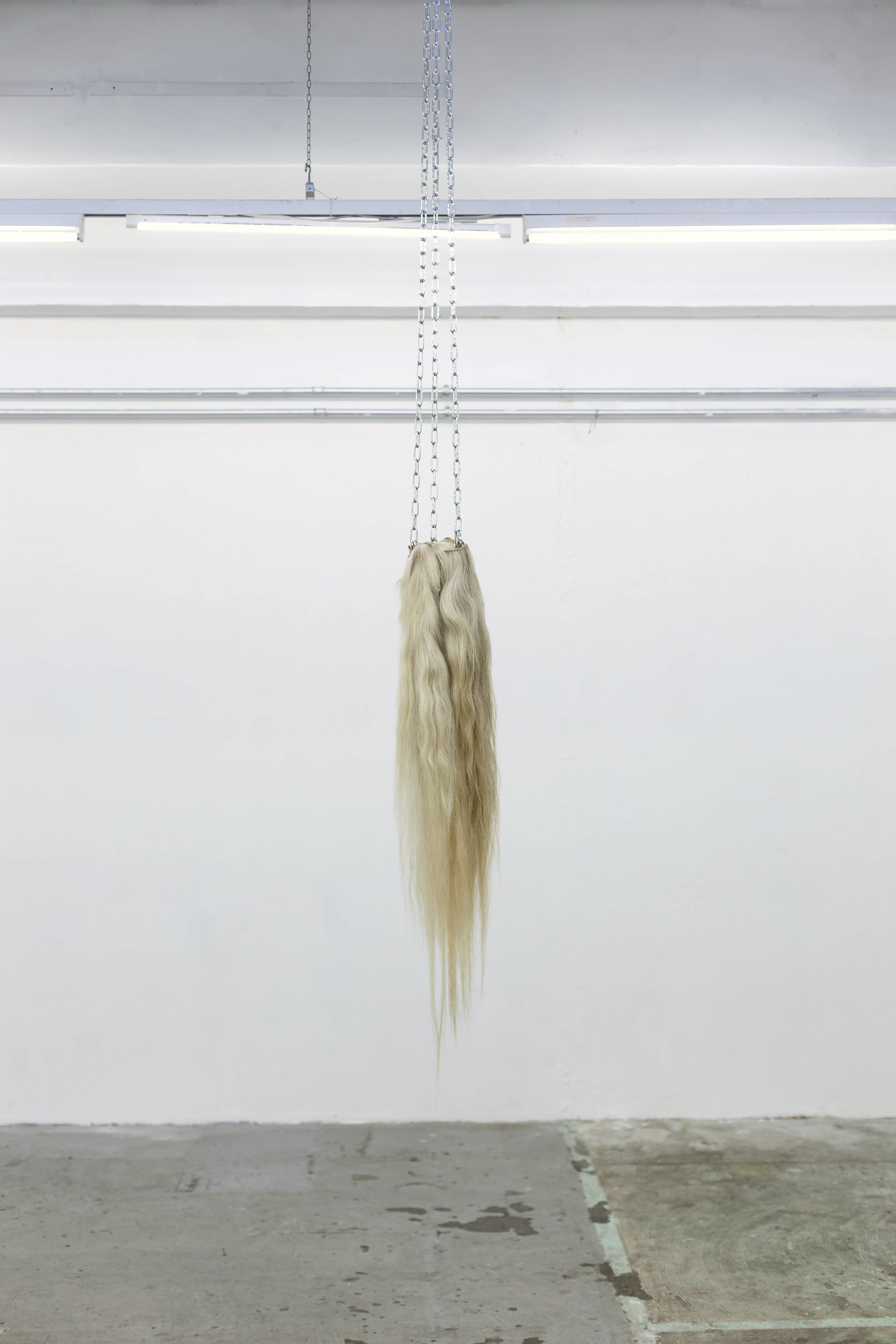
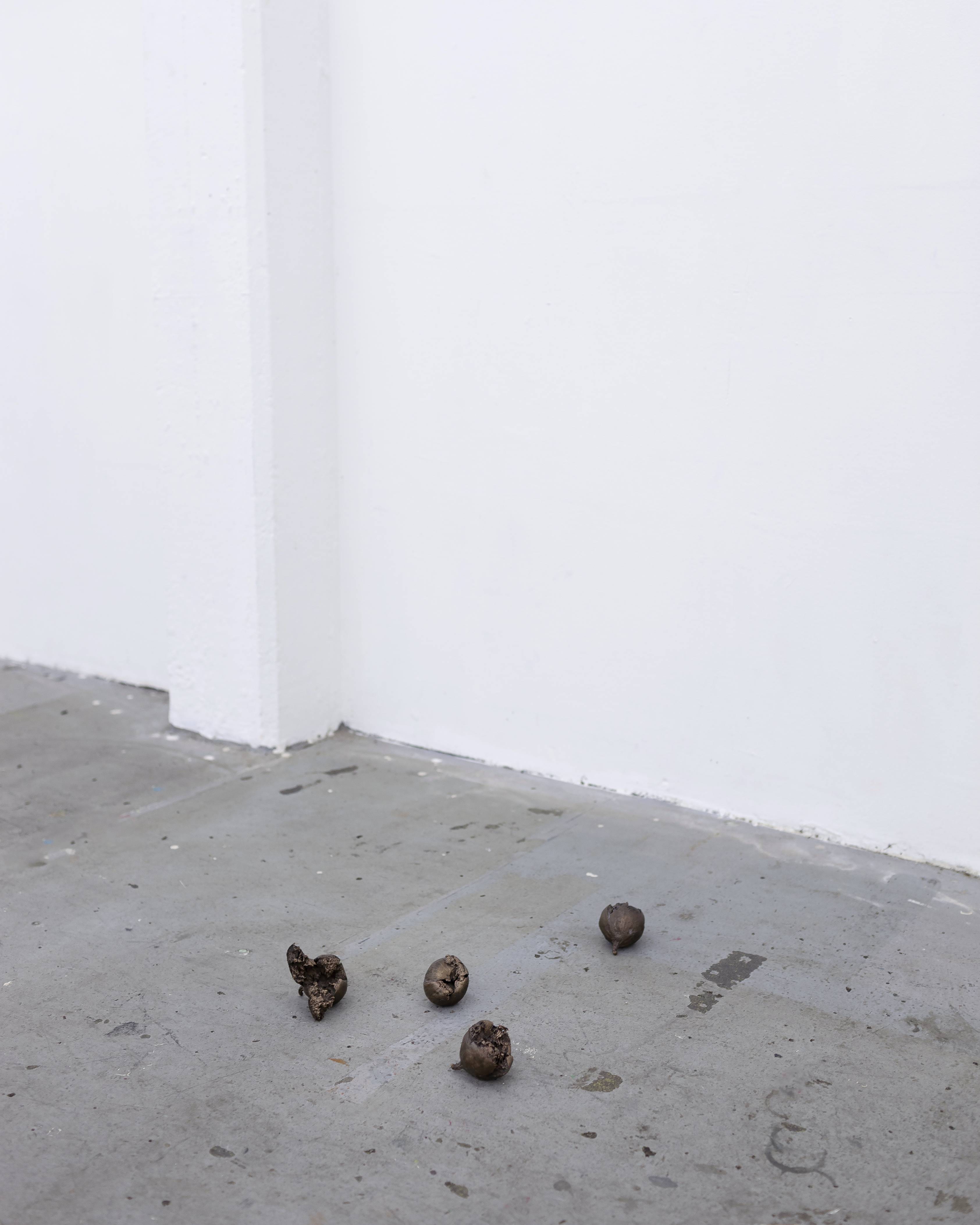
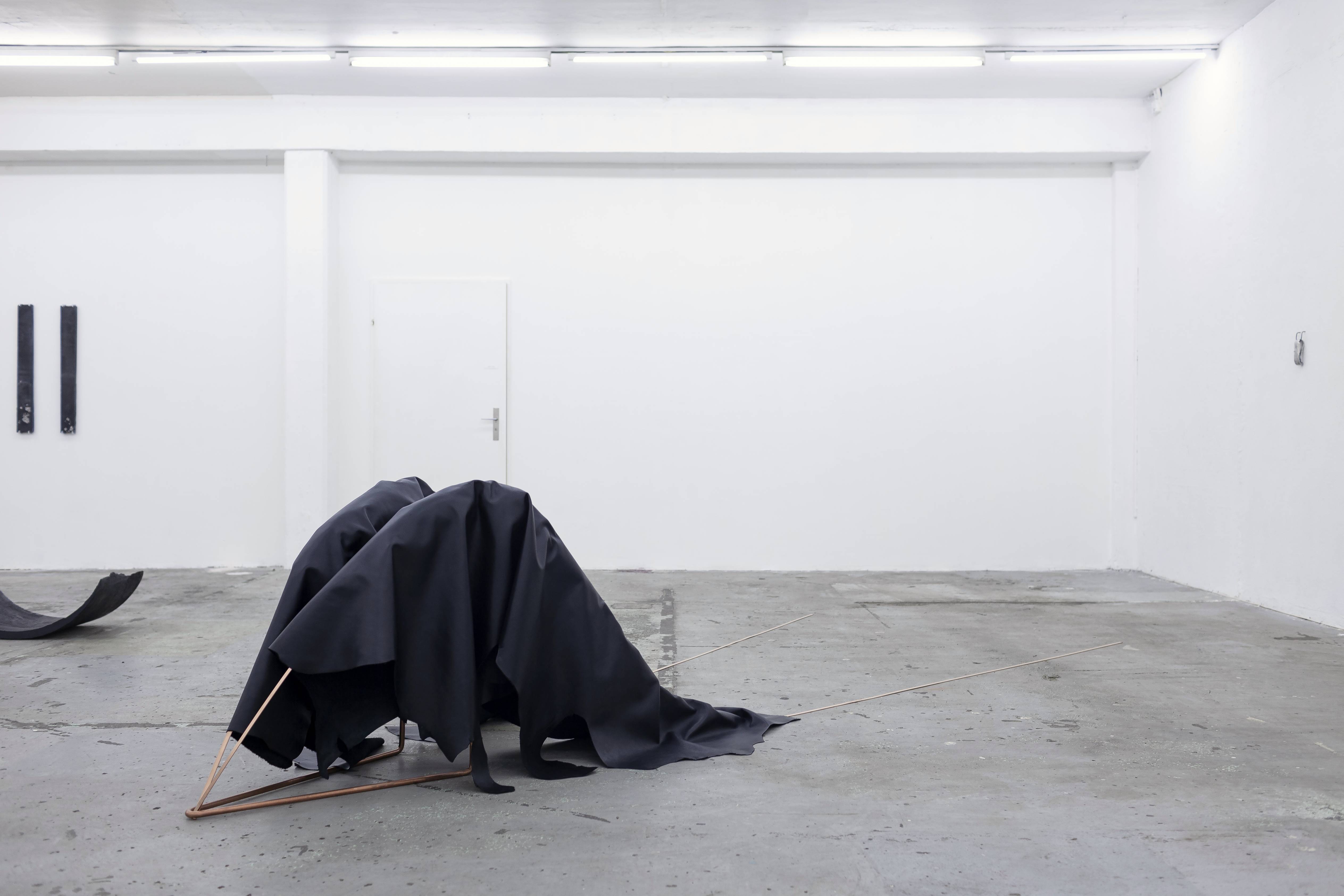
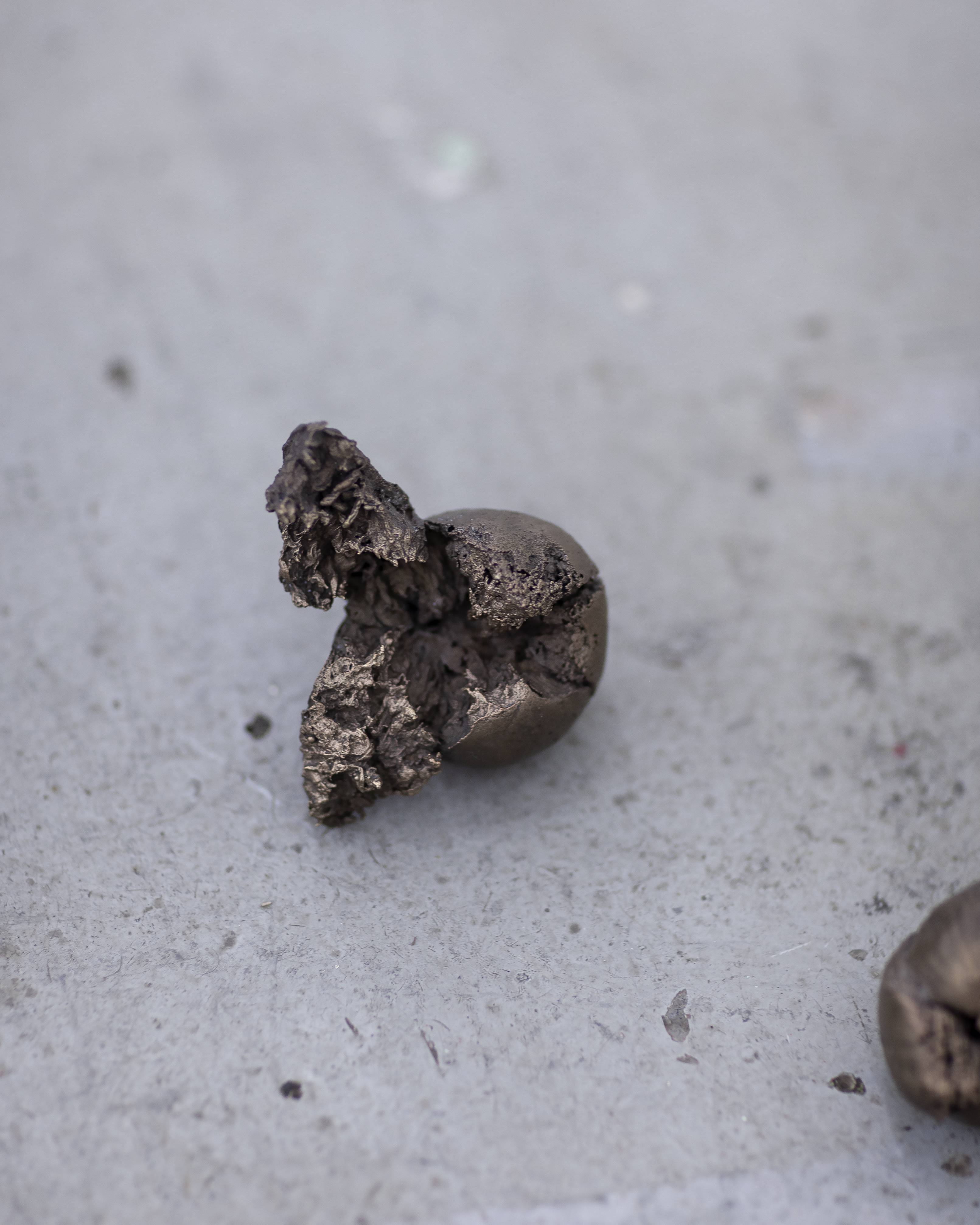
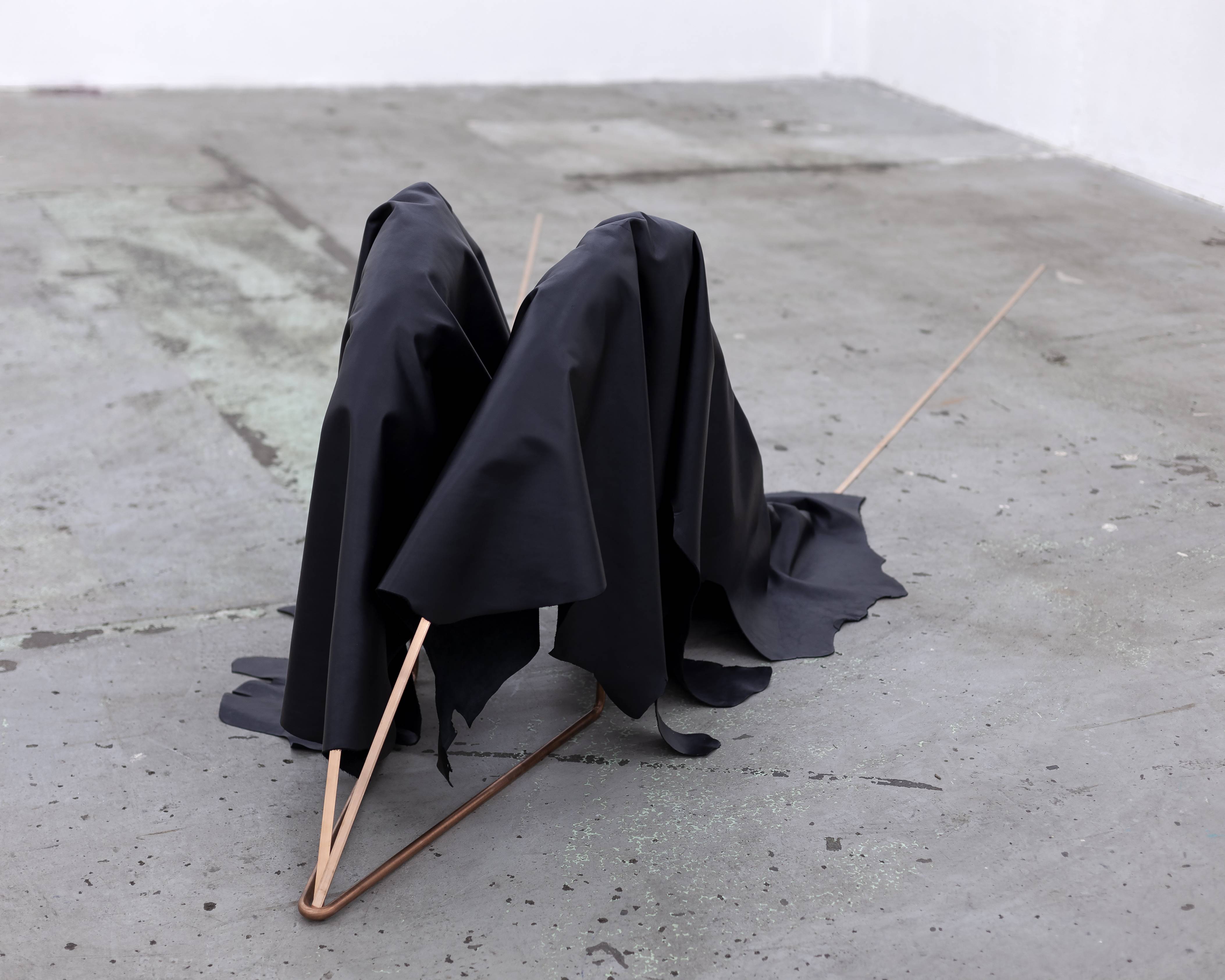
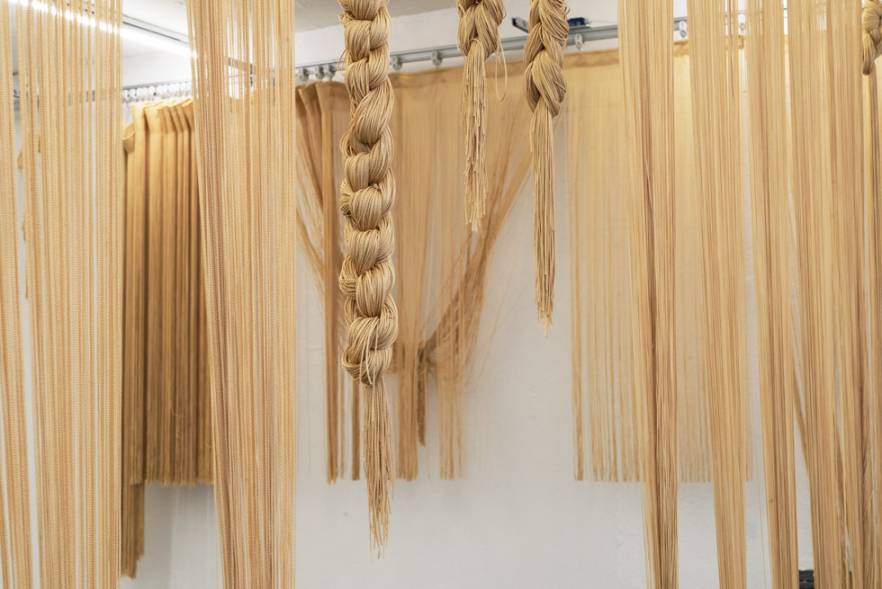
    Una Szeemann is primarily concerned with the seeming separation of body and mind during dreaming, which she explores through folkloric fertility rites and symbolisms. For her leather sculpture Inapt to move, so out they went (2022), Szeemann drew inspiration from the legends surrounding the northern Italian benandanti (‘good walkers’), who were born with an intact membrane and were therefore attributed with supernatural powers and good fortune.2 As defenders of the fertility of the fields, in the 16th and 17th centuries they would step out of their bodies during sleep to fight against evil witches and demons (malandanti) to ensure good harvests for the coming season. Szeemann gives form to this transitional moment and makes it tangible by covering copper struts, with a skin of leather. She thereby creates a being that is simultaneously present and absent, and refers to the ambivalence of body and mind whilst dreaming. Organic materials such as leather and hair play a recurring role in Szeemann’s work, questioning dualities of vitality and death, reality and dream. This is also the central theme of E sono cento (2021), an installation of three long blond horse tails hanging from the ceiling. These heads without bodies continue the narrative of the nocturnal excursions of the benandanti. For the horsehair, now dead matter, evokes in its new form memories of its sensory effect on living bodies. The four split open figs, preserved for eternity only by its bronze casting, stand in reference to the benandanti for a symbol of fertility and its significance for the harvest. Meanwhile, the reminiscence of the formerly red flesh, brought to light by the artist herself when breaking the ripe fruit, provokes an erotic evocation - which, in the context of dreaming, unites disgust and shame, but also lust.

    So, what will remain of a dream? In Hauri and Szeemann’s work, it is above all the ambivalence of the dreaming body that they make tangible through their sculptures.

    „Ein sehr trauriges, graues Tal. Steinige Abhänge. Unten Zementstrassen, am Hang angelegt, wie die Treibhäuser einer Gärtnerei. Daraus spriessen wie Blumen ausgetrocknete Skeletthände.“1
    - Meret Oppenheim, 15. Dez. 1935

    Was bleibt übrig von einem Traum? Manchmal sind es Momente der Erinnerung, sogenannte Traumfragmente, die nach dem Aufwachen vage an das Geträumte erinnern, aber auch klare Bilder, die noch lange im Sinn bleiben. Statt Tagebuch zu führen protokollierte die Schweizer Künstlerin Meret Oppenheim (1913 – 1985) zeitlebens ihre Träume. Fragmente der Nacht, die sie akribisch mit Daten versehen in ein Büchlein notierte und die manchmal sowohl grotesk wie auch verstörend anmuten. Mehrmals liess sie sich von diesen Traumfetzen und Erinnerungen zu Werken inspirieren.

    Im Vorfeld der Ausstellung besuchten Nadia Hauri und Una Szeemann zusammen die „Casa Costanza“, den von Oppenheim gestalteten Familiensitz im Tessin. Dort fanden sie Spuren der Künstlerin in allen Räumen, in Möbeln, Notizen und Fotografien, die sie seither nicht mehr loslassen.

    In der Zweierausstellung „Tangible Dreaming“ widmen sich Una Szeemann und Nadia Hauri dem Thema des Träumens aus einer gemeinsamen Perspektive. Erstmals zusammen zu sehen, geht es den beiden Künstlerinnen vor allem darum, die komplexe Beziehung des Körpers und Geistes während dem Prozess des Träumens zu erforschen. Bei beiden Künstlerinnen erscheinen Träume als fragmentarisch, prozesshaft, werden jedoch in ihrer materiellen Form als Kunstwerk greifbar und eröffnen durch ihr Zusammenspiel im Raum in ihrer Wechselseitigkeit neue Bezüge auf das Thema.

    Nadia Hauri setzt sich in ihren Werken vor allem mit den psychischen und physischen Erfahrungen des träumenden Körpers auseinander – mit dem Prozess des Erinnerns und Empfindens. Dabei spielt immer wieder die Wirkung der gewählten Materialien und Formen eine wichtige Rolle. Eye movements transitioning in soft radiance (2022), einem aus Lavendelquarz gefertigten Kristallstab, wird zum Beispiel eine beruhigende und entspannende Wirkung zugeschrieben. Im Kontrast dazu stehen die spitz zulaufenden Enden der Skulptur, die in drei verschiedenen Richtungen in den Raum weisen und zum Umhersehen auffordern. Hauri zieht hier Analogien zum Zustand des REM (Rapid-Eye-Movements), einer Phase des Schlafes, in welchem die Augen sich schnell bewegen, während der Körper scheinbar ruht.

    Ähnlich verhält es sich bei der aus Beton gegossenen Skulptur Echo (2022), die an eine Schale erinnert. Dabei wird ein hypnotisches Schwingen imaginiert, das einen träumerischen Zustand hervorzurufen vermag. In Neighboring states (2022) durchziehen silberne Einschüsse aus Zinn drei tiefschwarz eingefärbten Betonplatten und verweisen auf die Momente, in welchen die Zustände beginnen sich zu vermischen, die Realität in den Traum übergeht, oder der Traum in die Realität. Die einzigartigen Maserungen der drei Platten sind auf eine physikalischen Reaktion während des Gussprozesses zurückzuführen, bei welcher der pigmentgefärbte Beton mit dem flüssigen Zinn reagiert. Auch in Hold it to your ear and bend it back and forth (2022) kommt Zinn zum Einsatz. Die Arbeit erinnert an eine herausgestreckte Zunge, die im ersten Augenblick sowohl grotesk wie provokant wirkt. Wird purer Zinn bei der Bearbeitung gequetscht oder gebogen, kommt es zum sogenannten „Zinn-Schrei“, ein Geräusch das auf die Grenzen des Materials verweist. Wie viel hält es aus, bevor es bricht? Gleichzeitig zeigt Hauri damit die Grenzen der Verarbeitungsfähigkeit der Psyche während des Schlafens auf und entzaubert das Träumen als heilenden Prozess, zum Beispiel bei wiederkehrenden individuellen Traumata.

    Una Szeemann beschäftigt sich vor allem mit der scheinbaren Trennung von Körper und Geist während des Träumens, die sie anhand von folkloristischen Fruchtbarkeitsriten und -symbolen untersucht. Für ihre Lederskulptur Inapt to move, so out they went (2022), liess sich Szeemann von den Erzählungen um die norditalienischen benandanti („Gute Wander:innen”) inspirieren, die mit einer intakten Fruchtblase geboren und daher übersinnliche Kräfte und Glück zugeschrieben wurden.2 Als Verteidiger:innen der Fruchtbarkeit der Felder traten sie im 16. und 17. Jahrhundert im Schlaf aus ihrem Körper heraus, um gegen bösartige Hexen und Dämonen (malandanti) zu kämpfen und so für die kommende Saison gute Ernten zu sichern. Szeemann verleiht diesem transitorischen Moment eine Form und macht ihn greifbar, indem sie Kupferstreben mit einer Haut aus Leder bedeckt. Sie erschafft dadurch ein Wesen, das gleichzeitig an-, aber auch abwesend ist und verweist auf die Ambivalenz von Körper und Geist beim Träumen. Organische Materialien wie Leder und Haar spielen in Szeemanns Werk eine wiederkehrende Rolle und stellen Dualitäten von Lebendigkeit und Tot sowie Realität und Traum in Frage. Zum Thema wird das auch in E sono cento (2021), einer Installation aus drei langen blonden Pferdeschweifen, die von der Decke herabhängen. Diese Köpfe ohne Körper spinnen die Erzählung der nächtlichen Ausflüge der benandanti weiter. Denn das Rosshaar, mittlerweile tote Materie, evoziert in seiner neuen Form Erinnerungen an seine sensorische Wirkung bei lebendigen Körpern. Die vier aufgestülpten Feigen, die nur durch ihren Bronzeabguss für die Ewigkeit haltbar gemacht wurden, stehen in Anlehnung an die benandanti für ein Symbol der Fruchtbarkeit und deren Bedeutung für die Ernte. Gleichzeitig ruft die Erinnerung an das ehemals rote Fleisch, das beim Brechen der reifen Früchte von der Künstlerin selbst zum Vorschein gebracht wurde, eine erotische Evokation hervor – die im Kontext des Träumens Ekel, Scham, aber auch Lust verbindet.

    Was bleibt also übrig von einem Traum? Bei Hauri und Szeemann ist es vor allem die Ambivalenz des träumenden Körpers, die sie durch ihre Skulpturen greifbar machen.

    Auszug aus Meret Oppenheim, Träume, Aufzeichnungen, 1928-1985, Hrsg. von Christiane Meyer-Thoss, Berlin 2010, S. 19.
    Vgl. hierzu: Carlo Ginzburg, I benandanti. Stregoneria e culti agrari tra Cinquecento e Seicento, Turin 1966.

    Curated by Nemo Bleuer
    Text by Kristin Brüggemann

    d_floorplan_n_u_4nov.pdf
    e_floorplan_n_u_4nov.pdf
    flyer_mockup copy.jpg

    Exhibition view, TANGIBLE DREAMING

    Toxi space, Zürich, 2022

    Exhibition view, TANGIBLE DREAMING

    Toxi space, Zürich, 2022

    Exhibition view, TANGIBLE DREAMING

    Toxi space, Zürich, 2022

    Una Szeemann

    Le Benandanti (Diana, Rossa, Anna, Lucina),

    2022

    bronze, 8 x 8 x 8 cm each

    Una Szeemann

    Inapt to move, so out they went,

    2022

    copper, leather, polyurethane, polyamid, 427 x 197 x 85 cm

    Nadia Hauri

    Eye movements transitioning in soft radiance,

    2022

    steel, resin, lavender quartz, tin, 233 x 21 x 6 cm

    Exhibition view, TANGIBLE DREAMING

    Toxi space, Zürich, 2022

    Nadia Hauri

    Echo,

    2022

    concrete, 80 x 48 x 4 cm

    Nadia Hauri

    Neighboring states,

    2022

    concrete, tin, 91 x 11 x 3.5 cm

    Una Szeemann

    E sono cento,

    2021

    horse hair, stainless steel, 140 x 45cm, dimensions variable

    Nadia Hauri

    Eye movements transitioning in soft radiance,

    2022

    detail, steel, resin, lavender quartz, tin, 233 x 21 x 6 cm

    Nadia Hauri

    Hold it to your ear and bend it back and forth,

    2022

    tin, steel, 6 x 6 x 4 cm

    Una Szeemann

    Le Benandanti (Diana, Rossa, Anna, Lucina),

    2022

    bronze, 8 x 8 x 8 cm each

    Nadia Hauri

    Eye movements transitioning in soft radiance,

    2022

    steel, resin, lavender quartz, tin, 233 x 21 x 6 cm

    Exhibition view, TANGIBLE DREAMING

    Toxi space, Zürich, 2022

    Una Szeemann

    Le Benandanti (Diana, Rossa, Anna, Lucina),

    2022

    detail, bronze, 8 x 8 x 8 cm each

    Nadia Hauri

    Neighboring states,

    2022

    concrete, tin, 91 x 11 x 3.5 cm

    Una Szeemann

    Inapt to move, so out they went,

    2022

    copper, leather, polyurethane, polyamid, 427 x 197 x 85 cm

  •  14.10.2022CROSS PLAY : EXPENSION III - Thilda Bourqui, Fabiola Nongla Siegfried, GERXHALITA, Yadin Bernauer, Emma Bertuchoz, Giuliana Gjorgjevski, XV06-Y

    Embracet[1]

    Performance
    30min
    2021/22

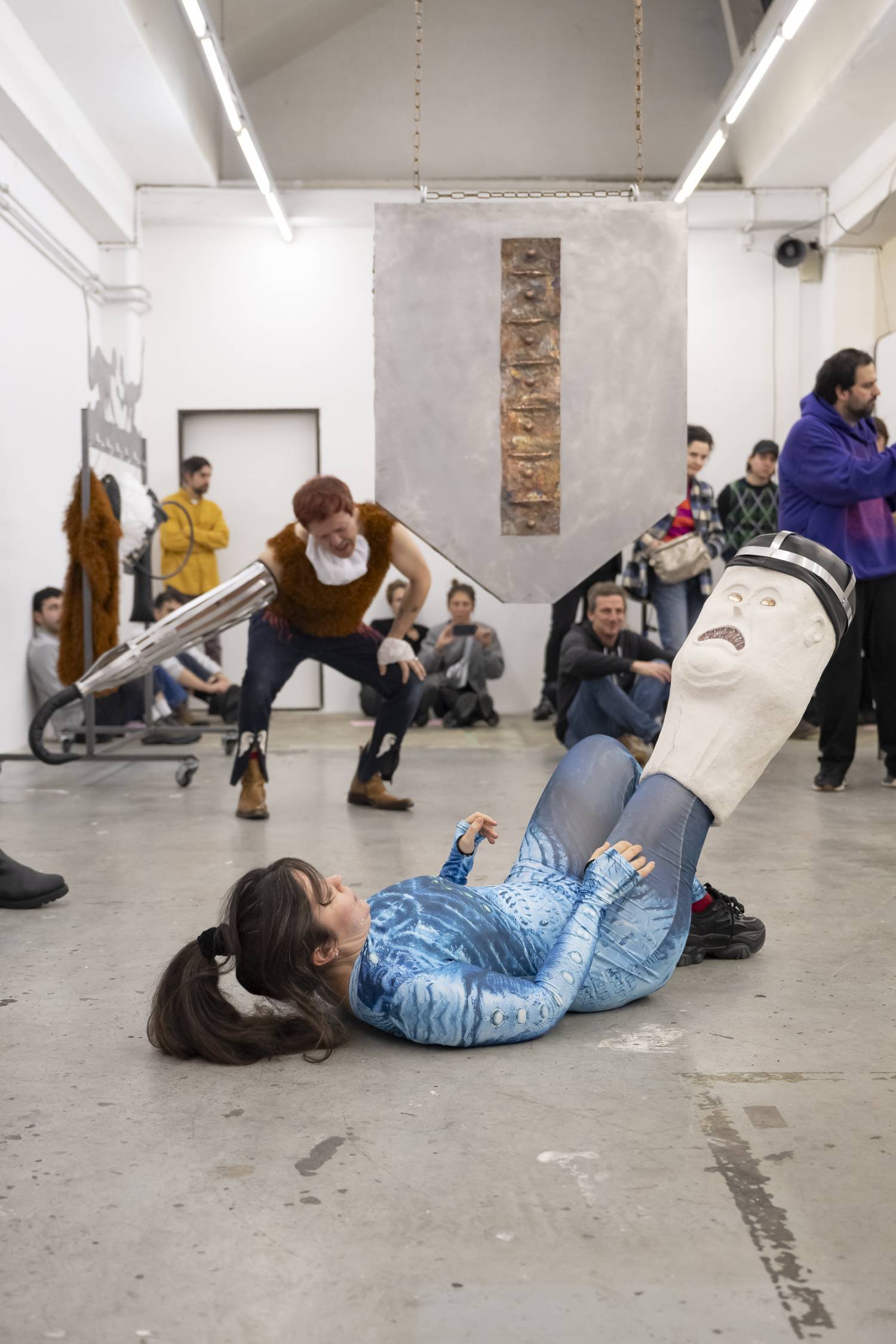
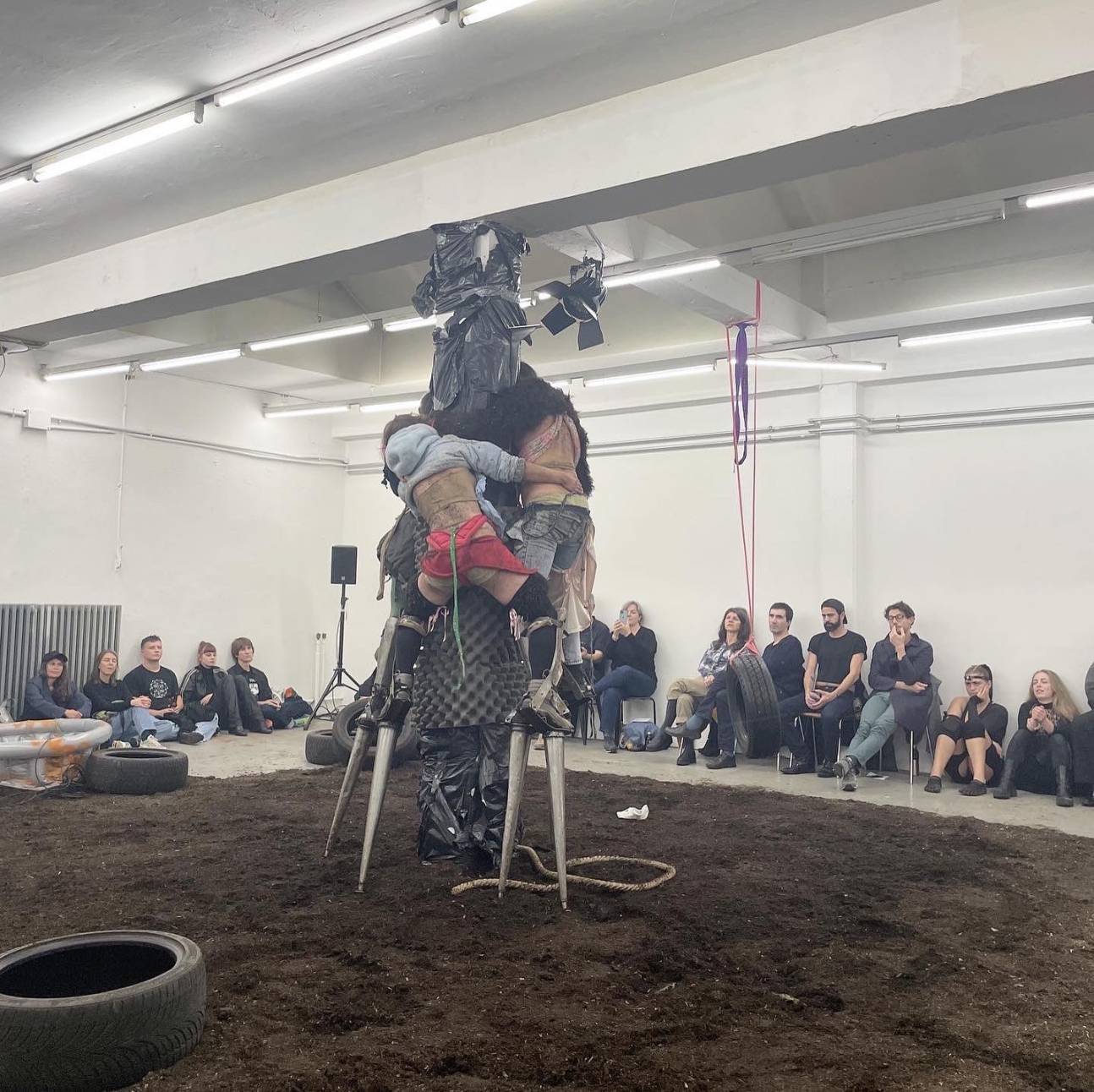
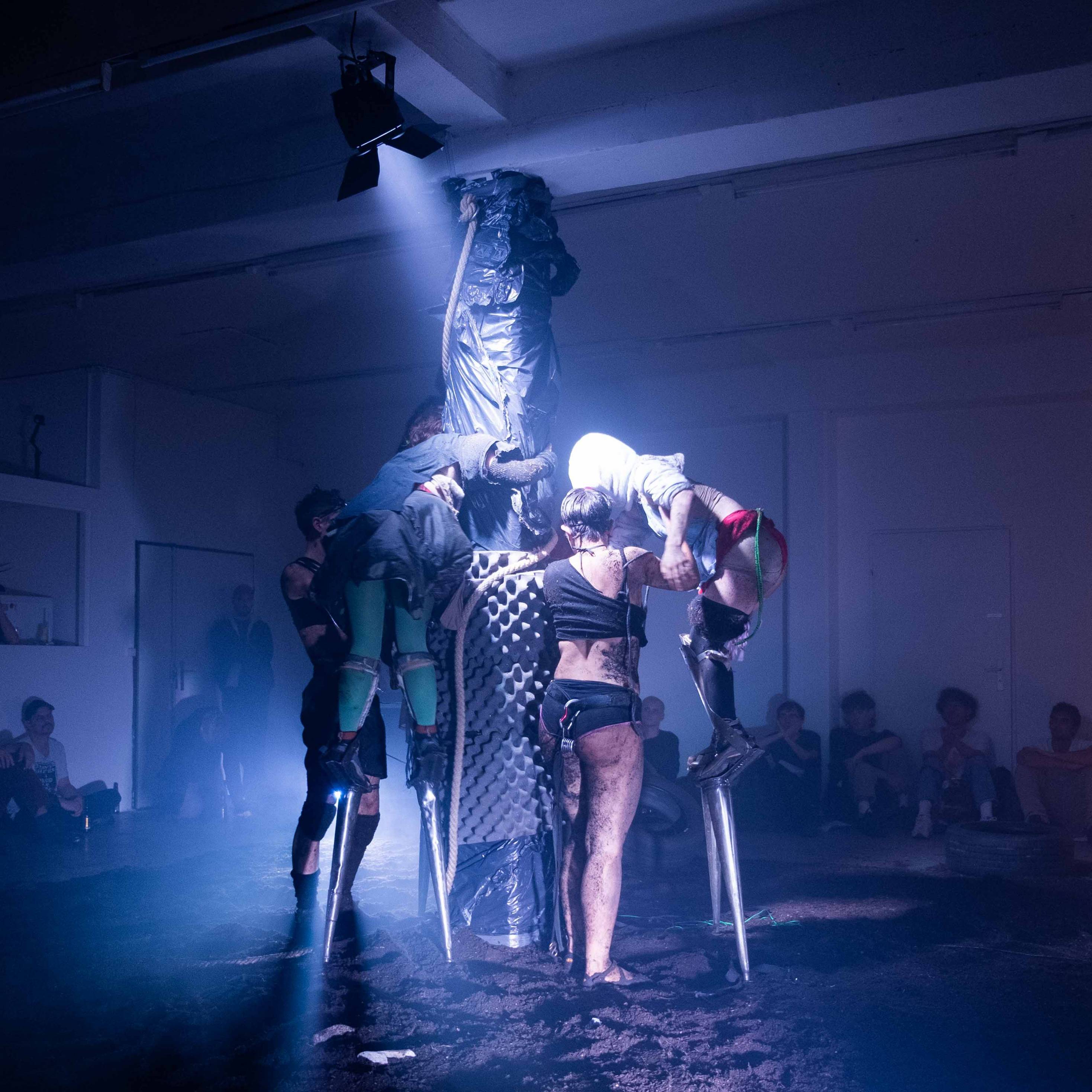
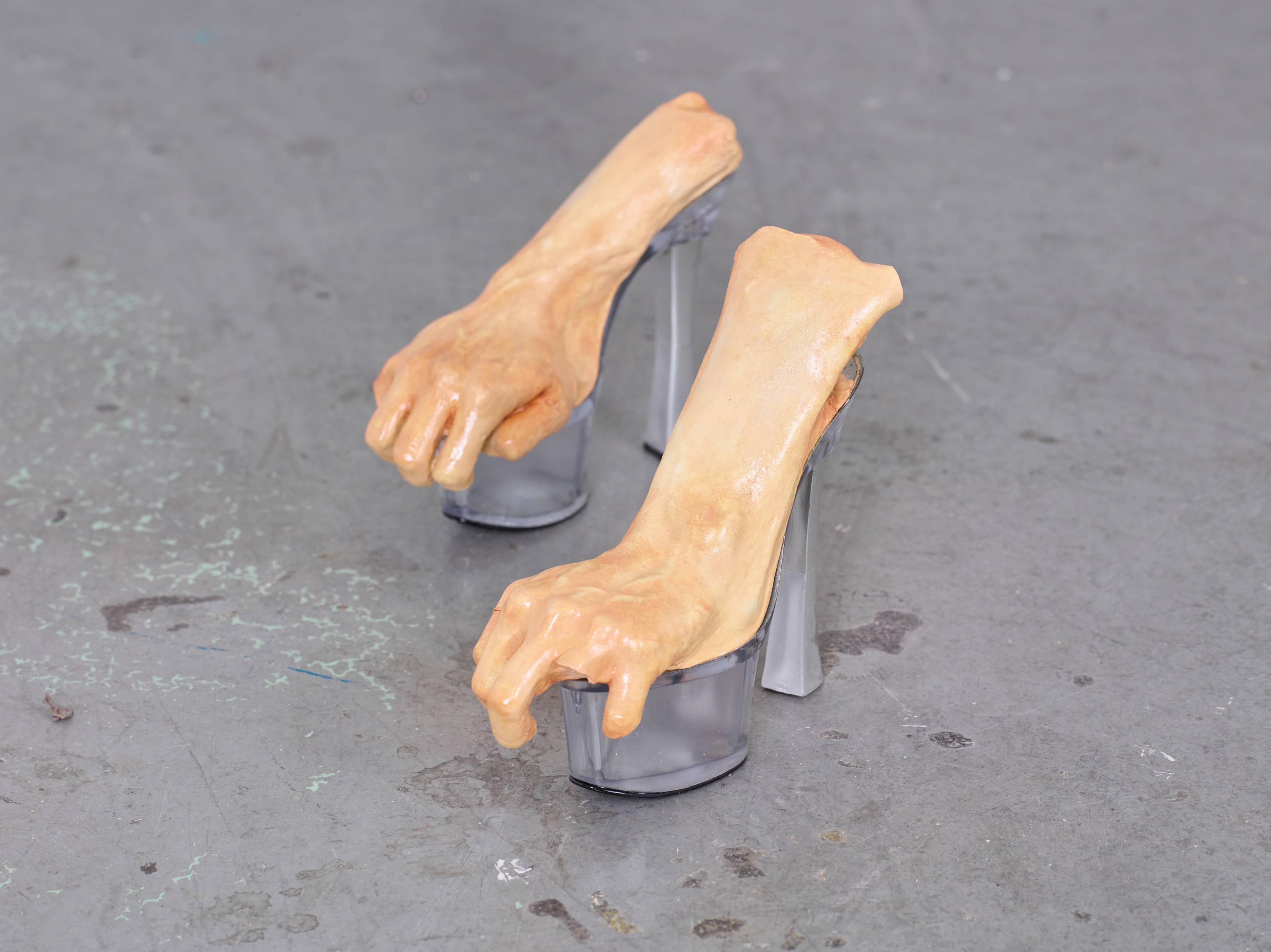
    «Embracet» is a performance that seeks stability in great heights. On our feet: sharp and dangerous shoes. As in de-skilling, we create impracticality which oblige us to find new ways of moving. Merging into each other, going through evolutions. And in the end, what does it take to move along?
    The performance collective from Zurich / Jura / Lucerne consisting of Yadin Akira Bernauer (all pron), Emma Bertuchoz (she/her), Giuliana Gjorgjevski (she/her). They explore aspects of collaboration, their individual positions as well as the relationships to each other. With body, text and sound they work on performances, video works and installations, which are influenced by internet and pop cultural elements. A tension between questions of authorship, claims to space (material/immaterial) and the exploration of intimacy and privacy are core themes of their work.

    «embracet» winter/fall edition
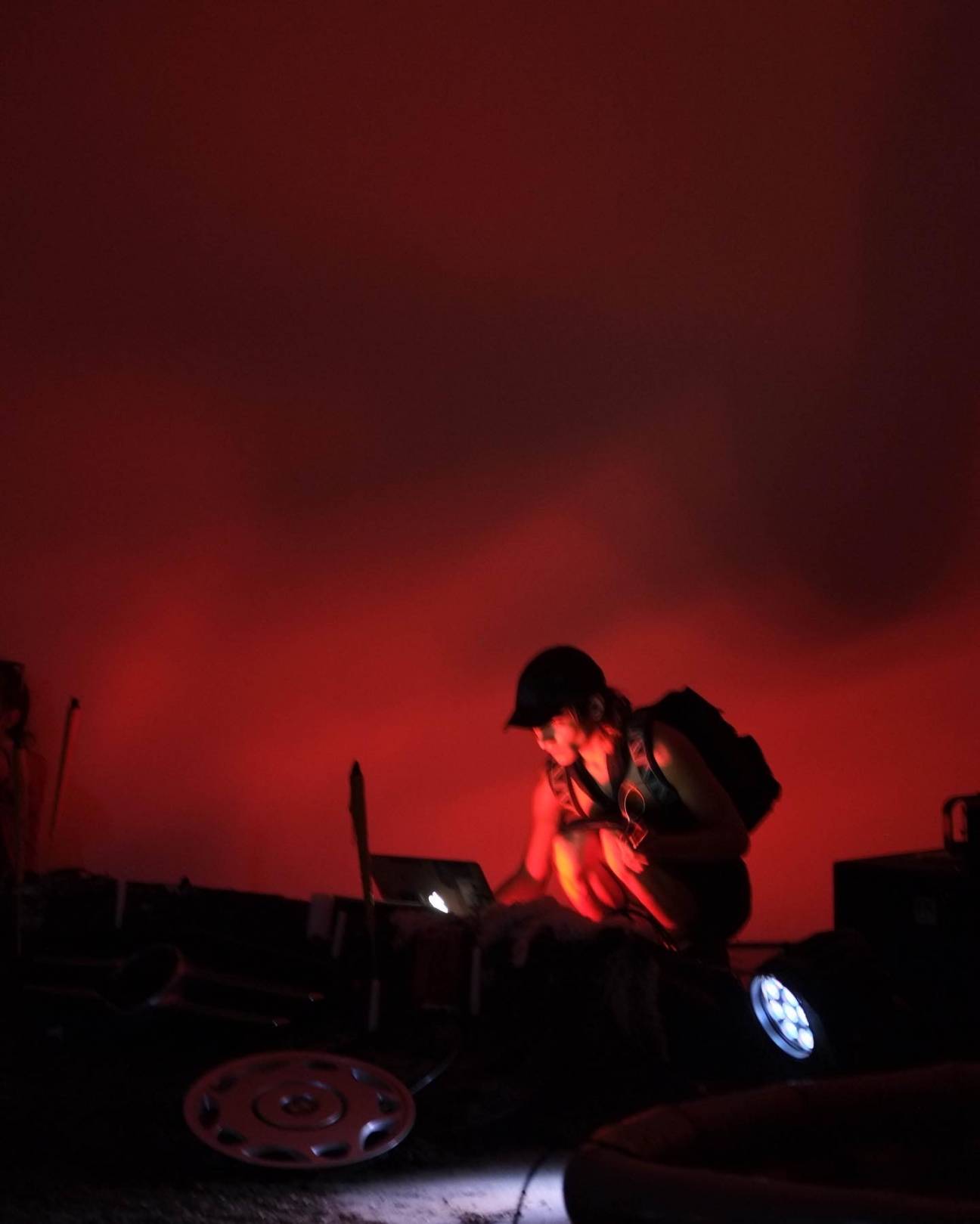
    seasons change. originally in «embracet» the performers were set into soil, beneathe loving trees. It was always performed outside. Through time and different locations site specific notions change. «Embracet» at Toxi is a different piece as it was. The summer was with love to the soil-ground, in the wilds. now they find themselves within neonlights and vehicle garbage. dystopian furry fairy cosplay zootopia embracet. still figuring out the same struggles of gravital attraction.


    Credits:
    Performers: Emma Bertuchoz, Giuliana Gjorgjevski und Yadin
    Choreography and Concept: Emma Bertuchoz
    *in co:work with Giuliana Gjorgjevski and Yadin

    Costumes: Sven Gex and Emma Bertuchoz
    “impossible shoe” concept and design: Emma Bertuchoz


    untitled[2]

    Performance
    30min
    2022

    «My engine is roaring for your smile, therefore unknown drives push me further the off grid road where I may find the last sip of seminal fossil flesh»

    The piece follows performers GERXHALITA, Fabiola Siegfried & Thilda Bourqui, exploring the relations between bodies, machines and the engine mechanisms that drives it. The «work in progress» performance tells the story of an immergent disaster and the aftermath of it.
    The performance is underlined by a sound piece from XV06-Y with colla- boration from Blood of Aza.


    Credits:
    Performers: GERXHALITA, Fabiola Siegfried, Thilda Bourqui
    Choreography, Concept, Costumes: GERXHALITA, Fabiola Siegfried, Thilda Bourqui
    Sound: XV06-Y, Blood of Aza


    Soundpiece/Liveset[3]

    Performance
    8min
    2022

    Calling upon sentient relics, transmitting sourceless prophecies, awakening ancient data.
    XV06-Y is a multidisciplinary artist based in Zürich. Their practice engineers modes of radical participation between terrestrial entities and the outside, embracing tool organisms of post-industrial force and transfigurative sound design. Their goal is to give rise to convective helical turbulent motions through mutated sound and pave a way for impossible but dreamed of realities.


    Credits:
    Set-design/Installation: Oz Oderbolz

    en_saaltext_Crossplay.pdf
    flyer_Crossplay.png
  •  15.09.2022VISION AND MISSION STATEMENT - Simon Risi
    Toxi_flyer_mockup copy.jpg
  •  15.07.2022INVERNADERO - Fernanda Laguna, Dafna Maimon & Sol Calero, Monica Heller, Biquini Wax, Luiz Roque, Valentín Demarco, Básica TV, Mauro Guzmán, Sofia Córdova, Wisrah Villefort, Radamés Juni Figueroa

    Fernanda Laguna / Argentina[1]

    @fernanda_laguna55

    Video Presentation N1
    Single Channel Video
    9.04 min
    2015

    In Video Presentation No1 artist Fernanda Laguna, speaking Spanglish, affirms: «I want to be an international artist» while giving a guided tour of a selection of her works to an unknown international curator. The presentations ironically externalize a critique of the visibility regimes established by the artistic circuits where artists from New York or London, due to their cultural hegemony and privileged geographical location, have more opportunities to become established in the world ́s artistic elite than others who produce their works in more peripheral places, such as Latin America. The handcrafted nature of the video is in line with the trash and precarious aesthetics to which Laguna has resorted since the beginning of her career to question, in her own way, the essence of the work of art with its reified attributes of beauty and originality and thus open the senses to experimentation and spontaneous expression.


    Sol Calero & Dafna Maimon / Venezuela & Finland[2]

    @solcalero_ @dafnamaimon

    Desde el Jardín
    Single Channel HD-Video
    28.25 min
    2016

    Desde el Jardín is a collaboration between Sol Calero and Dafna Maimon. Imitating the structure of telenovelas, Desde el Jardín recreates an opulent hacienda that evokes the illusion of luxury, wealth and glamour that this genre often represents. Working with cultural codes, Maimon and Calro underline the normalized social dynamics that are portrayed in telenovelas, such as gender roles, socioeconomic positionality and class aspiration. They use the basis of this discourse, developed in plots of greed, envy, infidelities, family drama and tragic twists, to create their own abstraction, taking extravagance to all levels of the assemblage.


    Monica Heller / Argentina[3]

    @hellermoon

    The Piccone Parlante
    3D Animation video
    12.56 min
    2022

    The Piccone Parlante is part of Heller’s actual presentation at the Argentinian Pavilion, 59th Biennale di Venezia — a video installation conformed by several 3D animated videos. The Piccone Parlante presents a soliloquio, a script made by the interaction between an AI web text generator and the artist›s inputs. The result is this insistent pigeon who talks non-stop and leaves no issue untouched in a paradoxical and absurd statement in which the humor, the abject, social satire and metaphysical spatiality come together. The characters created by Heller in each of the exhibited pieces come from a deeply personal, handcrafted matrix with which she addresses the symbolic world around her.


    Biquini Wax EPS / México[4]

    @biquiniwax_tv

    Sa La Na, A Yuum, Iasis/Laissez Faire-Laissez Passer.
    Single Channel Video
    10.48 min
    2020

    The video is part of Sa La Na, A Yuum, Iasis/Laissez Faire-Laissez Passer, a multimedia installation conceived as a parodic allegory of Mexico›s economic liberalization between 1986 and 1996. It consists of a pseudo-documentary video about the story of Keiko—the first superstar killer whale who became famous for playing the role of Willy in the eponymous movie. With means of a virtual mask designed on Snapchat, the video shows the orca conducting an interview with himself, vocalized in the language of cetaceans, narrating the neoliberal failure of Mexico, as well as his experience as a national icon while held in captivity in a Mexican amusement park during these key years in the country’s economic history.


    Luiz Roque / Brazil[5]

    @luiz_roque

    ZERO
    Single Channel HD-Video
    5.30 min
    2019

    In Luiz Roque’s short film ZERO we follow a dog moving alone onboard an aircraft that flies over a vast desert. The dog seems tranquil as if keeping up with its daily routine in an environment in which the human presence is completely absent. The disturbing image of the animal left adrift — perhaps the only remaining living being in existence — is interspersed with the shiny mirrored surface of high-tech skyscrapers emerging out of the sand, in what might have once been an oasis. The continuum is only interrupted by the word ZERO. In times in which emerging technology points to the overcoming of the very concept of the human, the contrast between the desert’s dust, the futuristic skyline, and the lone creature seems like a timely alert to the environmental and social consequences of much of the political and economic choices of the 20th century. The film suggests an inevitable return to a sort of ground zero of the species, whatever this might be. The inconclusiveness of its plot makes us wonder about extinction, whether it concerns either the disappearance of the human race itself or perhaps of the cultural construct that we call “human civilization.”


    Valentin Demarco / Argentina[6]

    @valentindemarco

    Cebame
    Single Channel HD-Video
    8.32 min
    2019

    Demarco’s video Cebame revisits the Argentinian daily ritual of drinking mate as a way to reflect on tradition, sexuality, and social conventions. The work belongs to a wider research the artist has been developing regarding the silversmiths of his hometown, attempting to update their traditional craftwork to today’s imagery. A collection of ornamented silver mate cups designed to work simultaneously as anal sextoys are the leading characters of the video that features a number of people in colloquial scenes sharing the popular infusion served directly from a subject’s rectum. In the video, the silver mates thus leave their patrimonial status to become part of everyday consumption; they are removed from their showcase and returned to the community. Using a humorous and at the same time naive tone, the video advocates for an unapologetic inclusion of sexual pleasure an practice into daily life while simultaneously subverting cultural folklore by affording this symbolic object a new bodily dimension. It ultimately questions established social norms and the shaping of traditions.


    Básica TV / Uruguay[7]

    @basicatv

    Hemorrhoids: The Movie
    Single Channel HD-Video
    42.32 min
    2018

    A perfect example of Basica TV’s playful appropriation of media formats, Hemorrhoids combines aesthetic tropes from documentaries, art films, reality television, commercials, and music videos, seamlessly, yet overwhelmingly, weaving a multi-layered, multi-channeled visual narrative. The majority of the footage comprises interviews with subjects — most of whom are shot from within their private bathrooms — including artists, activists, doctors, collectors, and a survivor of colon cancer, among other personalities. If through the 2010s, hip hop and videoclips centered the ass, in 2018 Hemorrhoids wonders why is the ass the furthest we have gone, re-activating one of Queer Studies legendary questions: Is the rectum a grave? Well, discussing hemorrhoids publicly for sure equals social death. Taking this taboo topic as a point of departure, Basica TV forces us to face our discomfort, while interrogating contemporary ideas on inhibition, privacy, corporeality, and sexuality.


    Mauro Guzmán / Argentina[8]

    @mmmauroguzmannn

    La guzmania y el amante de las hiedras hermafroditas
    Single Channel Video
    6.24 min
    2014-2017

    La Guzmania is a project that resorts to a chimeric iconography of exaggeration to embody a trash sensibility out of the aesthetic and political dimension of metamorphosis. It departs from research conducted in Spain and during which Guzmán discovered in a Chinese supermarket a hermaphroditic plant called Guzmania belonging to the family of Bromeliaceas — a kind of plant native to South America and the Antilles. After blooming during the summer Guzmanias die, yet not without allowing new seeds to sprout out of the dying mother-plant. In the video, Guzmán dresses up and personifies different varieties of Guzmanias in the form of eccentric and surreal drag muses in lush tropical settings of fruits, cloths, bags and stuff bought at the flea market.


    Xuxa Santamaría (Sofia Cordova & Matthew Gonzalez Kirkland) Puerto Rico & USA.[9]

    @yagrumo_yal

    BILLIONAIR RAINBOW
    Mixtape & videos
    2015

    BILLIONAIR RAINBOW a 6 track mixtape by XUXA SANTAMARIA (Córdova's collaborative experimental music project with partner and musician, Matthew Gonzalez Kirkland) and takes as its concept our relationship to money: labor, debt, desire, power, revulsion, mixed-feelings at wanting it. Each song on the album features a video piece ranging from durational performance to appropriation. The mixtape was released as a limited edition cassette with original artwork.


    Wisrah Villefort / Brazil[10]

    @wisrahvillefort

    IMAGEM MILAGRE
    Adhesive vinyl
    2021

    IMAGEM MILAGRE is an installation that proposes the approximation of the two words that make up the title — IMAGE MIRACLE in English. Each word is duplicated in the composition, written above in a serif font and below in an iconographic one in each section. The words emerge from studies on the concept of animal colonialism, especially considering the Catholic Church›s use of the symbolism of the non-human figure. The floral font, illegible, appears as a commentary on the precarious relationship between speech, reading, and writing, based on what philosopher Jacques Derrida discusses in Grammatology, a 1967 book. Despite the theoretical elaboration, by presenting two words of abstract definition, the work can also be seen as an open invitation to the potential audience to elaborate their own associations in the possible relations the work gives.


    Radamés “Juni” Figueroa / Puerto Rico[11]

    @radamesjuni

    Neverending Tropical Fountains
    Alcohol, tropical fruits, water pump
    2022

    Radamés «Juni» Figueroa creates social environments intended to evoke the experience of living in a Caribbean tropical context. Never Ending Tropical Fountains is a series of ephemeral sculptures that the artist places in his openings and invites spectators to celebration and leisure.
    Thanks to ChertLuedde, Herlitzka + Faria, Isla Flotante, Nora Fisch, Piedras Galeria, Proyectos Ultravioleta & Oz Oderbolz.

    en_saaltext_Invernadero.pdf
    flyer_Invernadero.jpg
  •  09.06.2022HOWLING PAGES - Marco Belfiore, Armen Eloyan, Nare Eloyan, Tatjana Gerhard, Davor Gromilovic ,Sande Kosz, Maria Pomiansky, Emil Rüesch Und Taro Tega
    flyer_howlingpages.png
  •  25.05.2022PURGATORY - hongsue, Alyssa Berrez, Dara Maillard
    flyer_purgatory.jpg
  •  19.03.2022S(K)INS - Manon Wertenbroek

    In English, the expression ‘to get under one’s skin’ carries a puzzling polyse- my. It can be said of something or someone that irritates – sometimes until obsession – and, at the same time, it can also refer to the fact of gaining a deeper understanding of something or, even, to manage to fill someone’s mind to the point of gaining control over them. In any case, it describes a feeling that is all at once visceral and overwhelming. This is most notable when, like in Cole Porter’s song, the expression is used in reference to someone one is not able to forget or ignore.1 There, love and pain become intrinsically enmeshed, and the skin turns into the symbolical site of this emotional entanglement.

    With S(k)ins, Manon Wertenbroek tackles precisely the interrelationship between these two feelings. The exhibition’s title is borrowed from a text by Jay Prosser in which the scholar reflects on skin as a memory surface. In particular, Prosser’s essay uses psychoanalysis to assert that our ‘skin’s memory is burdened with the unconscious’.2 Discussing psychoanalyst Didier Anzieu’s book The Skin-Ego as well as a number of what he calls ‘skin autobiographies’, Prosser argues that traumatic (family) memories, including unconscious ones, can re-emerge, sometimes generations later, in the form of a psychosomatic skin condition such as psoriasis or eczema.3 There lies the constitutive connection between ‘sin’ and ‘skin’, as highlighted by Manon Wertenbroek in the title of her exhibition: the skin ‘re-members’.4 We carry, not only under, but also on our skin, the traces of our emotional life, and even our most guilty secrets and best repressed thoughts can suddenly burst out in the form of a relentless, itchy rash.

    In her practice, Manon Wertenbroek has been exploring the duality of skin as something that singularises us and, at the same time, puts us in relation to others, a containing yet revealing organ – like a curtain providing privacy while letting the light through. Whether shaping it directly as leather or creating works that evoke it more poetically or metaphorically, she uses the image of skin as both a boundary and a point of contact, a fleshy layer that simultaneously protects and connects, to reflect on the traces left by our experiences and interactions. Though fleshy, Manon Wertenbroek’s works are usually disembodied: they are reminiscent of bodies without taking a body’s shape or volume. For it is not so much the physical being as it is the spiritual essence hidden under the surface that she seeks to uncover.

    Entering this exhibition, you may have had the feeling of crossing a threshold, of penetrating a deeper layer, of going, in some way, under the skin. This immersive space within the space is an invitation to scratch the surface, to peel off the cutaneous layers and to reveal, perhaps, a concealed emotional truth. The walls of the room are wrapped in brushed cotton covered with salt stains, as if the fabric were perspiring. Out of this greyish membrane, enigmatic objects emerge, both evocative and suggestively organic, like memories, nightmares and fantasies resurfacing from the depths of the unconscious, clawing their way out of oblivion and repression. There, in the back, opposite the door through which you entered, a recess in the wall accommodates two items, hung there like pieces of clothing forgotten in a wardrobe or a hide ready to be tanned. Three open drawers pierce through the room’s walls. One contains a zipper – a signature element in Manon Wertenbroek’s works – that incites you to look behind the surface. Similarly, in a second drawer, a hatch hints at a false bottom and truths deeper than what may seem. The third one encloses a bizarre, fleshy clump, materially similar to the objects hanging in the niche and echoing the colour of the walls; an organic protuberance already too swollen for the drawer to be pushed in again. In The Poetics of Space, Gaston Bachelard described a house’s furniture and, in particular, its storage units with their doors, shelves, double bottoms, and locks, as ‘veritable organs of the secret psychological life’.5 Chests and cabinets are necessary not only because they hold our belongings and help us organise our material life, but also because they safeguard our privacy. Pulling a drawer open or peeking inside a wardrobe also means penetrating someone’s intimacy. It amounts to sounding the depths of a soul.

    In this room that is also a body, every object exudes double entendres, seems to conceal and reveal in equal measure and to epitomise a secret chamber that has begun to overflow, to leak through the cracks and interstices in the walls. The drawers and alcove puncturing the wall’s surface suggest furniture but they are also orifices gaping on our most repressed desires and traumas. Though intimate, this space is anything but cosy. The cushions, promise of comfort, are rendered unusable, caked with latex and fused old rags. The room’s colours are not those of a healthy, rosy flesh but, rather, of a deteriorating skin, stained with sweat and oozing fluids. It is a skin made sick by fears and secrets. Yet in its illness, the space also conceals beauty and care, apparent in the meticulousness with which Manon Wertenbroek has executed her pieces, of which she often says that she simultaneously scars and nurture them. In this room that is also a body, love and hatred are put face to face. There is pain, but there is also a promise of care.

    For the artist and feminist psychoanalyst Bracha L. Ettinger, the aesthetic experience entails a therapeutic potential. She considers artists as healers who desire ‘to transform death, nonlife, not-yet-life, and no-more-life into art’.6 For S(k)ins, Manon Wertenbroek created a space in which death drive and life force, decay and eroticism go hand in hand. It is an exhibition that conveys us to an experience that is simultaneously uncanny and gestational, in which fears and pain begin to surface to be confronted rather than remaining buried and infectious. While sick, the body is still displayed here as a home to inhabit. And inhabiting one’s own body, embodying it, also means making it comfortable, homely, despite the mess that sometimes overwhelms it, spilling out of its drawers and cabinets. We are never as aware of our body as when we experience pain, when it suddenly doesn’t feel like it should. It is in these moments of alienation when our own body becomes estranged from the idea or image we have of it, that we start to acknowledge it, to be ‘in touch’ with our own self. Out of alienation emerges a possibility for connection, and for healing.

    Cole Porter, I’ve Got You Under My Skin, 1936
    Jay Prosser, ‘Skin Memories’ in S. Ahmed and Jackie Stacey (eds.), Thinking Through the Skin, Routledge, 2001 p. 52
    See Didier Anzieu, The Skin-Ego trans. Naomi Segal Routledge, 2016
    Prosser p. 52
    Gaston Bachelard, The Poetics of Space, Beacon Press, 1994 p. 78
    Bracha L. Ettinger, ‘Weaving a Woman Artist with-in the Matrixial Encounter-Event’ in The Matrixial Borderspace, The University of Minnesota Press, 2006, p. 197 Thanks to Nicole Schweizer for pointing out this reference

    Curated by Oz Oderbolz
    Text by Simon Würsten Marin

    S(k)ins_ManonWertenbroek_Saaltext.pdf
    flyer_mockup_manon.png

    Exhibition view, S(K)INS

    Toxi space, Zürich, 2022

    Exhibition view, S(K)INS

    Toxi space, Zürich, 2022

    Exhibition view, S(K)INS

    Toxi space, Zürich, 2022

    Manon Wertenbroek

    The cycle of repressing and articulating guilt,

    2022

    textile, latex, acrylic, pigments, varnish

    Exhibition view, S(K)INS

    Toxi space, Zürich, 2022

    Manon Wertenbroek

    Shivers down my spine,

    2022

    textile, latex, acrylic, pigments

    Manon Wertenbroek

    Vulnerability, tired

    2022

    textile, latex, acrylic, pigments

    Manon Wertenbroek

    Shivers down my spine,

    2022

    textile, latex, acrylic, pigments

    Manon Wertenbroek

    Vulnerability, tired

    2022

    textile, latex, acrylic, pigments

    Manon Wertenbroek

    The cycle of repressing and articulating guilt,

    2022

    detail, textile, latex, acrylic, pigments, varnish

    Manon Wertenbroek

    The cycle of repressing and articulating guilt,

    2022

    detail, textile, latex, acrylic, pigments, varnish

    Manon Wertenbroek

    The cycle of repressing and articulating guilt,

    2022

    detail, textile, latex, acrylic, pigments, varnish

    Manon Wertenbroek

    Claw,

    2021

    detail, silver, gemstones

    Manon Wertenbroek

    Claw,

    2021

    silver, gemstones

    Manon Wertenbroek

    The cycle of repressing and articulating guilt,

    2022

    textile, latex, acrylic, pigments, varnish

    Manon Wertenbroek

    Vulnerability, mouth,

    2022

    textile, latex, acrylic, pigments

    Manon Wertenbroek

    Hatch,

    2022

    wood, brass, varnish

    Manon Wertenbroek

    Zipper H30,

    2020

    embedded into drawer

  •  10.12.2021EVERYTHING / ANYTHING - Özlem Ünlü
    flyer_7346218046900158529_n.jpg
  •  02.12.2021ALLTAG UND WIRREN - i-vye, VÌZ, Bit-Tuner, Elischa Heller, Hora Lunga
    flyer_alltagundwirren-1.jpg
  •  01.10.2021COMMON GROUND - Benjamin Solt, Monika Schori, Tanja Roscic, Janet Mueller, Mark Inderbitzin, Eva Gadient, Gabi Deutsch, Rita Zubrügg, Selina Zürrer
    flyer_unnamed(2).jpg
  •  17.09.2021HERZLICHE GRÜSSE AN ALLE - Oz Oderbolz & Nemo Bleuer

    An artificial tunnel is entered hunched over.
    One’s own body is thereby moved and exposed to a sought-after experience; be it of a transcendent-spiritual or immanent-realistic nature. An experience that is supposed to make one forget worries and crises - no matter the cost. The human desire to experience an experience has provoked a culture of consumption that tries to deal with its natural resources by supplementing them with technical means. I speak here in particular of tourism and excessive parties in nature. Nature becomes the world of experience of a consumer culture1, whose society indulges in the lifestyle of closeness to nature and writes this on its forehead. Countless tourist selfies of nature made accessible on social media platforms bear witness to this. But also the spiritual journeys into nature supported by music, of the drug-savvy visitors of forest raves and festivals in the countryside. Both phenomena reveal one’s relationship to the environment and unconsciously show the interrelation with our world. The vibrations and sound waves of the music and the dancing at night during the forest parties influence the soundscape of the forest and shift the sleep-wake rhythm of the animals. On the other hand, they also illustrate the spiritual and sustainable connection with our world and enable the awareness that human is not the only decisive actor of our planet. Tourist sites such as ski resorts, hiking routes or grottos appropriate the characteristics of nature in order to turn them into a sensational experience with technical means such as lifts, lights or electronic information boards. In the example of the grotto, the illumination with artificial light triggers a growth of plants untypical for caves and thus changes their vegetation2. Accordingly, the natural merges with the artificial. In a paradoxical way, the natural environment is appropriated by us humans and transformed into a world of experience in which we can find our freedom. A freedom that creates interfaces between the artificial and the real, with the shift of the relationship of the world with human as a consequence.

    The exhibition Herzliche Grüsse an alle 3 by Oz Oderbolz and Nemo Bleuer revolves around the concepts of consumer culture, sensationalism, transformation, and appropriation, and focuses on the experience of an experiential world that here becomes a lens through which contemporary life and interaction with nature are captured. Their works consequently appropriate sign languages from the intersections between the artificial and the natural. The extensive installation opens with the recording of two situations: The artificial alteration of a grotto and the entrance to a forest rave. In addition, the world of experience is expanded by a video work. Leaving the tunnel, one encounters a sculpture that again combines natural and at the same time artificial elements in a playful and parodic way. Once through the installation, a sausage and merchandise stand awaits to satisfy our inherent greed for consumption. The sausage sculpture at the stand, however, does not embody an invigorating effect - in defiance, it leaves the visible end hanging limply downward, symbolizing a flaccid consumer society.

    Are the works to be read as a critique of the consumer culture of experiencing nature? The exhibition deliberately does not provide us with a direct answer to this question, but it does allow us to reflect on our relationship to nature through the experiences we gain.

    The collaborative works of Oz Oderbolz, who’s art practice investigates craftmentship through the performative aspect of objects by recontextualizing habits of sexist or intersectional, patriotic attitudes and Nemo Bleuer, whose work deals with the connection between human/non-human and the artificial and the natural, have the potential of critical commentary through artistic approaches. Through the staging in the White Cube as well as the abstraction of the works shown, they maintain a distance from clear critical statements and act as aesthetic objects, which is why the answer remains open.

    I am speaking here from my westernized point of view with the awareness that this does not have universal validity. In this exhibition, only cultures from Switzerland are at the center of the questioning, but this can also be transferred into a global context

    The two artists* told me about this phenomenon in conversation.

    The greeting: „Herzliche Grüsse an alle.“, is a message that was launched into space in 1977 as a data disk with image and audio information with the interstellar space probes Voyager 1 and Voyager 2. The so-called Voyager Golden Records should be a message to extraterrestrial life forms and clarifies the human effort to explore everything with the technical possibilities.


    Curated by Oz Oderbolz
    Text by Simon Würsten Marin

    Gebückt wird ein künstlicher Tunnel betreten.
    Der eigene Körper wird dadurch bewegt und ist einer ersuchten Erfahrung ausgesetzt; sei diese von transzendent-spiritueller oder immanent realistischer Art. Ein Erlebnis, das Sorgen und Krisen vergessen lassen soll – koste es, was es wolle. Die Lust des Menschen ein Erlebnis zu erfahren, hat eine Kultur des Konsums provoziert, die versucht mit ihren natürlichen Ressourcen umzugehen und jene durch technische Mittel zu ergänzen. Ich spreche hier im Speziellen von Tourismus und exzessreichen Partywelten in der Natur. Die Natur wird zur Erlebniswelt einer Konsumkultur1, deren Gesellschaft dem Lifestyle der Naturverbundenheit frönt und sich diesen auf die Stirn schreibt. Unmengen an Touri-Selfies aus der zugänglich gemachten Natur auf den Plattformen der sozialen Medien zeugen davon. Aber auch die durch Musik unterstützten, spirituellen Reisen in die Natur der drogenaffinen Besucher*innen von Waldparties und Festivals auf dem Land. Beide Phänomene lassen die Beziehung des Menschen zu seiner Umgebung deutlich werden und zeigen unbewusst die Wechselbeziehung zu unserer Welt auf. Die Vibrationen und Schallwellen der Musik und dem Tanzen in der Nacht während den Waldparties, beeinflussen die Geräuschkulisse des Waldes und verschieben den Schlaf-Wach-Rythmus der Tiere, andererseits verdeutlichen sie auch die spirituelle und nachhaltige Verbundenheit mit unserer Welt und ermöglichen das Bewusstsein, dass der Mensch nicht der/die einzige entscheidende Akteur*in unseres Planeten ist. Touristische Orte wie Skigebiete, Wanderrouten oder Grotten eignen sich die Eigenschaften der Natur an, um sie mit technischen Mitteln, wie Lifte, Lichter oder elektronischen Infotafeln zum sensationellen Erlebnis werden zu lassen. Beim Beispiel der Grotte löst das Ausleuchten mit künstlichem Licht ein Wachsen von für Höhlen untypischen Pflanzen aus und verändert dadurch deren Vegetation2. Das Natürliche verschmilzt dementsprechend mit dem Artifiziellem. Auf paradoxe Weise wird die natürliche Umwelt von uns Menschen appropriiert und zur Erlebniswelt transformiert, in der wir unsere Freiheit finden und konsumieren können. Eine Freiheit, die Schnittstellen zwischen Künstlichem und Realem kreiert, mit der Verschiebung des Verhältnisses der Welt mit dem Menschen als Folge.

    Die Ausstellung Herzliche Grüsse an alle 3 von Oz Oderbolz und Nemo Bleuer kreist um die Begriffe Konsumkultur, Sensationslust, Transformation und Appropriation und stellt die Erfahrung einer Erlebniswelt in den Mittelpunkt, die hier zu einem Objektiv wird, durch das zeitgenössisches Leben und der Umgang mit der Natur erfasst werden. Ihre Arbeiten im Raum appropriieren infolgedessen Zeichensprachen aus den Schnittstellen zwischen dem Artifiziellen und dem Natürlichen. Die raumfüllende Installation eröffnet mit der Aufnahme zweier Situationen: Die künstliche Veränderung einer Grotte und den Eingang zu einer Waldparty. Zusätzlich wird die Erlebniswelt durch eine filmische Arbeit erweitert. Verlässt man den Tunnel, trifft man auf eine Skulptur, die wiederum natürliche und gleichzeitig artifizielle Elemente auf spielerische und parodistische Weise verbindet. Ist die Installation durchschritten, wartet ein Wurst- und Merchandise-Stand, der unsere innewohnende Gier nach Konsum stillen kann. Die Wurstplastik am Stand verkörpert jedoch nicht eine stärkende Wirkung – zum Trotz lässt sie das sichtbare Ende schlapp nach unten hängen und ist damit Sinnbild einer erschlafften Konsumgesellschaft.

    Sind die Arbeiten als eine Kritik an der Konsumkultur der Erlebniswelten in der Natur zu lesen? Die Ausstellung liefert uns bewusst keine direkte Antwort auf diese Frage, doch ermöglicht sie mit den gewonnenen Erfahrungen eine Reflektion über unser Verhältnis zur Natur.

    Die in Kollaboration entstandenen Arbeiten von Oz Oderbolz, der in seiner Kunstpraxis das Handwerk durch den performativen Aspekt von Objekten untersucht, indem er Gewohnheiten sexistischer oder intersektioneller, patriotischer Haltungen rekontextualisiert und Nemo Bleuer, dessen Arbeiten die Verbindung des Menschlich/Nichtmenschlichen, Artifiziellen/ Fleischlichen thematisiert, besitzen durch die künstlerische Herangehensweisen das Potential eines kritischen Kommentars. Durch die Inszenierung im White Cube sowie die Abstraktion der gezeigten Arbeiten, erhalten sie eine Distanz zu klaren kritischen Äusserungen und wirken als ästhetische Objekte, weshalb die Antwort offen bleibt.

    Ich spreche hier aus meiner westlich geprägten Sicht mit dem Bewusstsein, dass diese keine universelle Gültigkeit besitzt. Bei dieser Ausstellung stehen ausschliesslich Kulturen aus der Schweiz im Zentrum der Befragung, doch kann dies auch in einen globalen Kontext transferiert werden

    Die beiden Künstler* erzählten mir im Gespräch von diesem Phänomen

    Der Gruss: «Herzliche Grüsse an alle!», ist eine Botschaft, die 1977 als Datenplatte mit Bild- und Audio- Informationen mit den interstellaren Raumsonden Voyager 1 und Voyager 2 ins Weltall gestartet sind. Die sogenannten Voyager Golden Records sollten eine Botschaft an Ausserirdische Lebensformen sein und verdeutlicht das menschliche Bemühen alles mit den technischen Möglichkeiten zu erkunden


    Curated by Oz Oderbolz
    Text by Simon Würsten Marin

    saaltext_Hgal.pdf
    flyer_mockup_Hgal.png

    Exhibition view, HERZLICHE GRÜSSE AN ALLE

    Toxi space, Zürich, 2021

    Exhibition view, HERZLICHE GRÜSSE AN ALLE

    Toxi space, Zürich, 2021

    Exhibition view, HERZLICHE GRÜSSE AN ALLE

    Toxi space, Zürich, 2021

    Exhibition view, HERZLICHE GRÜSSE AN ALLE

    Toxi space, Zürich, 2021

    Exhibition view, HERZLICHE GRÜSSE AN ALLE

    Toxi space, Zürich, 2021

    Exhibition view, HERZLICHE GRÜSSE AN ALLE

    Toxi space, Zürich, 2021

    Exhibition view, HERZLICHE GRÜSSE AN ALLE

    Toxi space, Zürich, 2021

    Exhibition view, HERZLICHE GRÜSSE AN ALLE

    Toxi space, Zürich, 2021

    Exhibition view, HERZLICHE GRÜSSE AN ALLE

    Toxi space, Zürich, 2021

  •  19.08.2021MOCKINGBIRD - MYXA collective, Gaia Del Santo, Salvador Marino, Anais Orr, Andri Schatz, Demian Jakob, org

    Imitation is a way of approximating the other, of adapting to ones surroundings - it is a learning process requiring attention and precision. Due to its structural principle, but also perceivably beyond its breaking point, imitation is generative.

    The mockingbird not only imitates but also interprets what it hears, creating new patterns and melodies so convincing that other birds fall for its mockery. Through its song, it reframes, transports, restructures and so opens up room for speculation.

    The exhibition resonates with themes of cyber-animism, technomateriality, networks and fabrics, interaction and interaffection, relational, fluid and layered net-culture, memetic processes, the profane and the sacred, the hyper-present, the extreme self, and the post-ironic – in a heartfelt, school of jellyfish vibing, genuine way ... it is the ordinary commenting on something out of the ordinary - a crypto-ceremony for a hypertentacular now.

    In the time leading up to this show, we encountered oversaturated, sparkly, high-definition cottagecore, enchanted geology, animated matter, neurogamy, the longing for idyllic lives, the vacuum of the sublime. In hearing the mockingbirds song echo through liminal backrooms and nonspaces, we found ourselves like bird chirps emanating from alarm clocks, buzzing asynchronously like memes on a timeline with soft angel-wings.

    myxa: animal slime or the distal end of bird mandibles

    MYXA is a transnational collective of artists that explores techno-critical post-digital practices. Many-tongued like the mockingbird, MYXA embraces the post-truths of our time and attempts, while mapping it seems impossible, to find vantage points of orientation and nodes of connection in this ever-complexifying realityscape.

    ziuuuziuuziuuziuuuziuutztztzTSCHIRP ziuuuziuuziuuziuuuziuutztztzT- SCHIRPtztz.
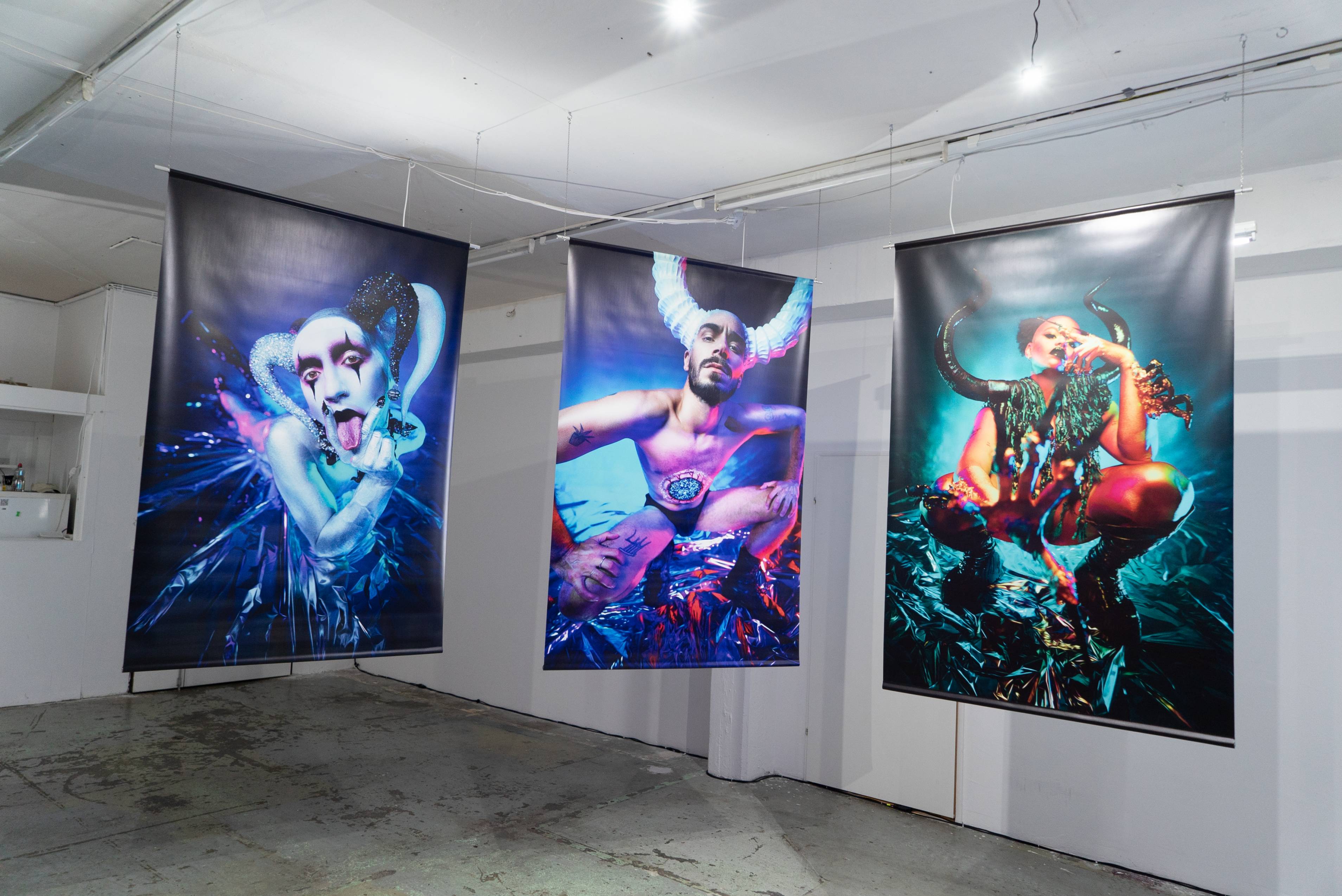
    gUUUgUuugUuuugUuuUgUUuu.
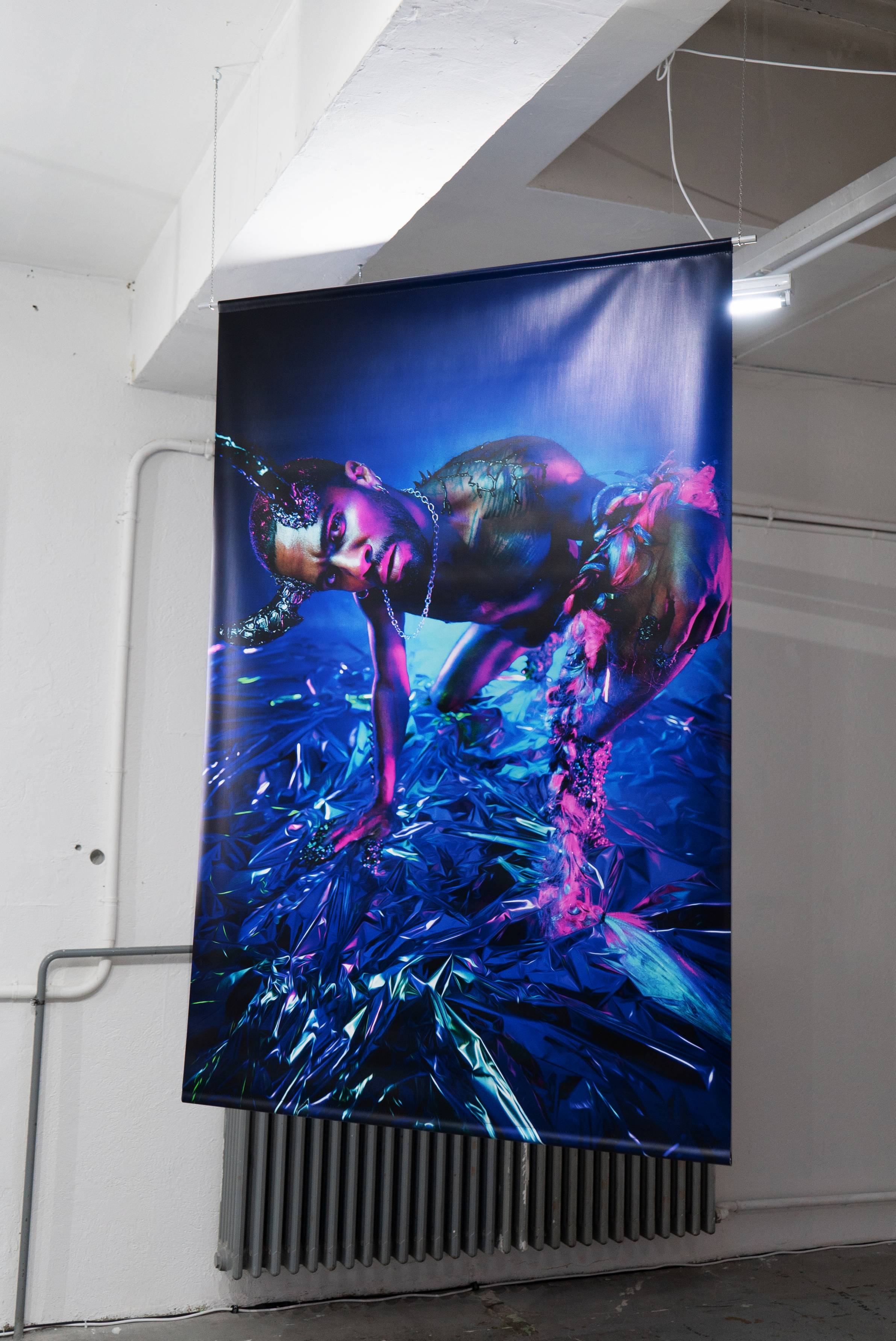
    tzoUitzOuitzOuitzOui.
    tschirptschirptschirptschirp. türulu, piep, peck, lülülü.

    cheeepcheepcheepcheepcheep zz zz zz zz zz zz zz zz zuizuizuizuizuiiiuuuu cheepcheepcheepcheepcheep. ziuziuziu ziu ziiu ziuz zuigwwrr zuigwrrr zuigwrrr ssssuiii suui suuuui sssuuuui schiu schiu schiu schiiiuuuuu nuizz nuizz nuiizzz zzzrr zrrr zuiiir zuuiir zuiiiiiiiiir zuiiiirr zuir. kri kri zrüü zrüük rak kra zrüüürrrz zruuutütz krüüz rürkzdiiiii KKRÜ KrüÖZz zwRIIIrkz KRüür Ziip Szipcheepcheep ptschirpt ziuziuK zuigwrrr ssssui. Kräzzz Zip Tschirppp tschrirrp triiilll triillö trillöööu kräz krä rüüü^^^

    kriiiiiil kriiiiiil ptschi ptschiPP Ouitrz zuuiirrrrr Friiiirrl frillllllliiiii friii ri- iiiiiiiiiiiiiiiiiiiiiiiiiii riiip ziip schiiiiäpzt schiepts tschirp, zuigwrrr ssssuiii suui. tzoUitz klürkkOuitzOuitz tschirptschirptschirptschirp. türulu, piep,ürrrz zruuutüt rürkzdiiiii zwRIIIrkz KRüür Ziip Szipcheepcheep tscjüp tschjop jiop jiop jiüp juuuirrrrr juirrrkrrizz z sii sii siiiiip siii isisiisssiiip TSCHippp kriiizzz zrüüürrrz zruuutütz..... ssssuiii suui. Tschirppp tschrirrp ptschipssszuuiirr rrrri ririr ririr rir ri rir. zirz zirz zirz zirz zirz ra zrüüürrrz zruuutütz tzoUitzOuit- zOuitzOui. ztzTSCHIRP ziuuuz Ziip Szipcheepcheep ptschirpt zruuutüt, türulu, piep, peck. friiiirrl frillllllliiiii friiiirrl friiii Friiiirrl friüüüiiii Friiiiürrl.

    Frilöölliiiii Friiiirrl frzzziiiiiptschips ptschips. Tschirppp tschrirrp.

    ZZZzwRIIIrkz KRüür Ziip, Kröökz kröökrzg grkktkkkz gräcktktktkzz zriip rziiiip tschripppp rtiitschirps sszszszszzzzkkrzzirp tschirpp tschii schtiii tschiiiirz zirz. tschirtzzzzt tschirtzzzzt tschirtzzzzt tschirtzzzzt tschirtzzzzt tschirtzzzzt tschirtzzzzt tschirtzzzzt tschirtzzzzt. Szipcheepcheep ptschirpt ziuziuK zuigwrrr.kriiizzz zrüüürrrz zruuutütz.....
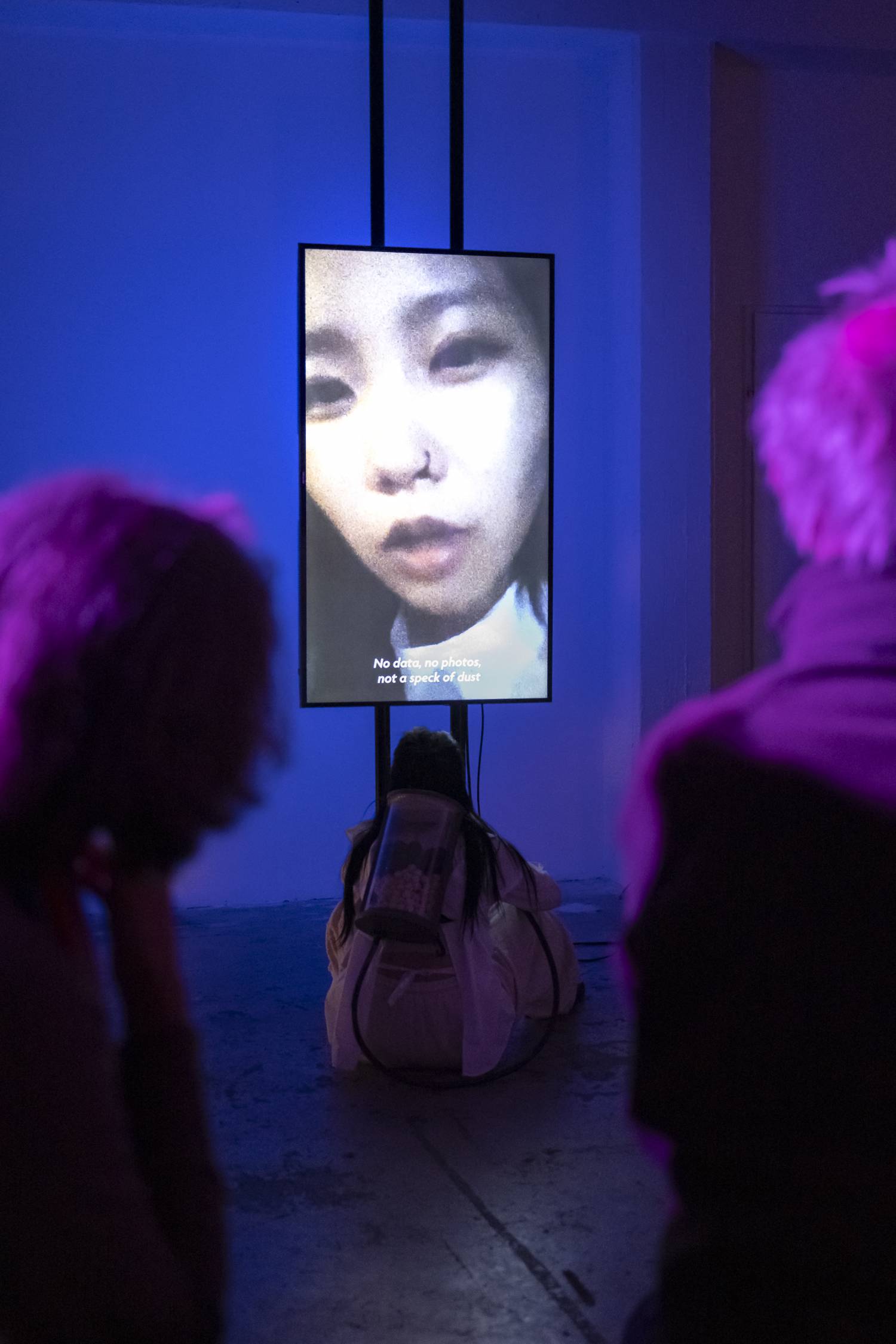
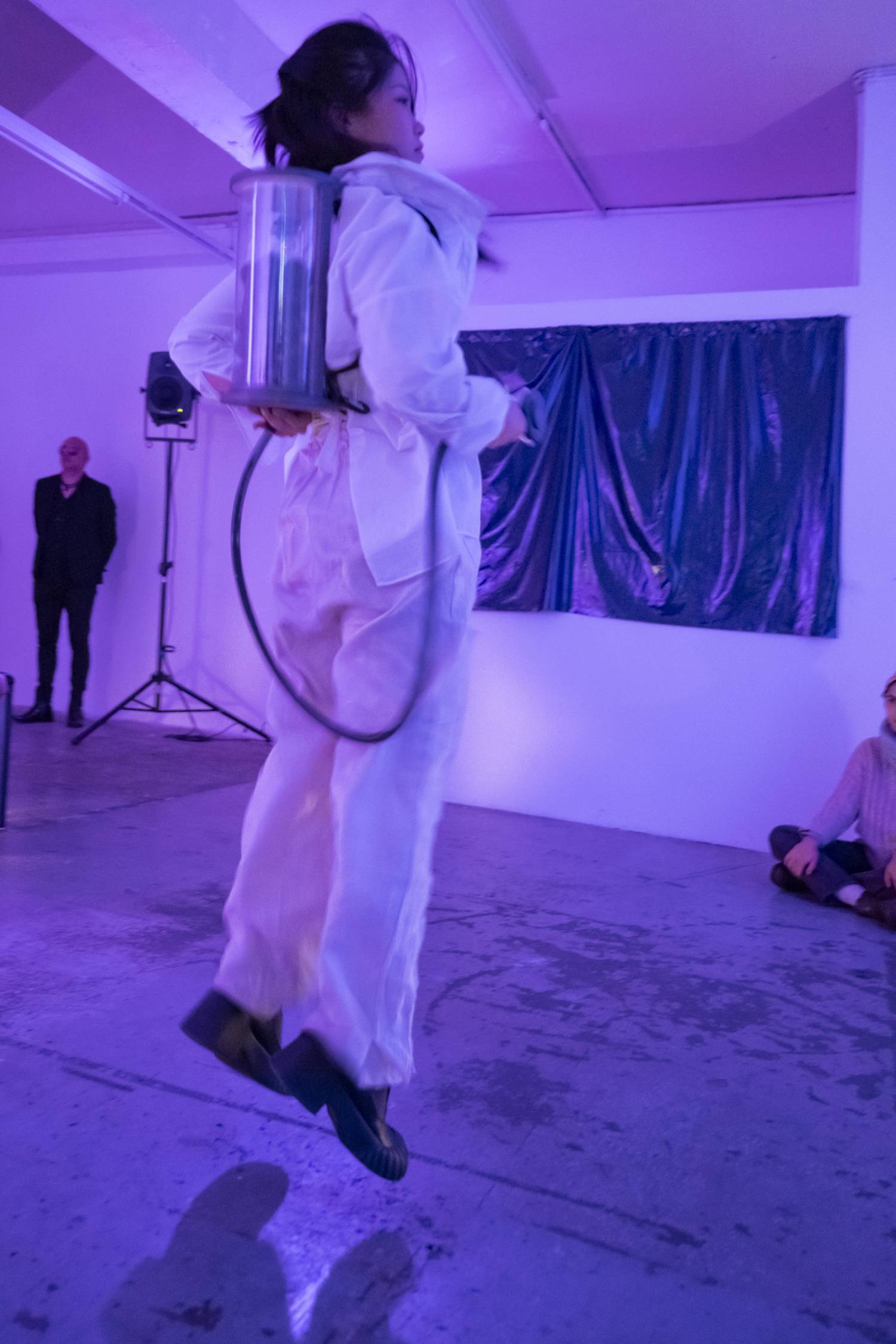
    piep.

    MOCKINGBIRD_E.pdf
    MOCKINGBIRD_D.pdf
    flyer_MOCKINGBIRD

    Exhibition view, MOCKINGBIRD

    Toxi space, Zürich, 2021

    Gaia Del Santo

    not doing so great tbh,

    2021

    Transfer print and embroidery on cotton, latex, rhinestones, glitter, 21 x 29.7 cm

    Gaia Del Santo

    the master key is causing you pain according to some angels,

    2021

    Mixed media key holder, 44.4 x 29.5 cm

    Salvador Marino

    1CU,

    2021

    Plastic, electronics, 8 x 34 x 6 cm

    Demian Jakob

    Buried under a pile of decorative stones, the Elves,

    2021

    Solenoids, granit, dimensions variable

    Gaia Del Santo

    not doing so great tbh,

    2021

    Transfer print and embroidery on cotton, latex, rhinestones, glitter, 21 x 29.7 cm

    Gaia Del Santo

    the master key is causing you pain according to some angels,

    2021

    Mixed media key holder, 44.4 x 29.5 cm

    org

    soz,

    2020

    Acrylic and varnish on canvas, 200 x 200 cm

    Anais Orr

    Softly, Hardly,

    2021

    Porcelain, razor wire, mixed media on paper, solder wire, epoxy, 46,5 x 37 x 3 cm

    Anais Orr

    Softly, Hardly,

    2021

    Porcelain, razor wire, mixed media on paper, solder wire, epoxy, 46,5 x 37 x 3 cm

    Anais Orr

    Softly, Hardly,

    2021

    Porcelain, razor wire, mixed media on paper, solder wire, epoxy, 46,5 x 37 x 3 cm

    Anais Orr

    Softly, Hardly,

    2021

    Porcelain, razor wire, mixed media on paper, solder wire, epoxy, 46,5 x 37 x 3 cm

    Andri Schatz

    ghouls of data past,

    2021

    Andri Schatz

    電相,

    2020

    Demian Jakob

    Buried under a pile of decorative stones, the Elves,

    2021

    Solenoids, granit, dimensions variable

    Gaia Del Santo

    not doing so great tbh,

    2021

    Transfer print and embroidery on cotton, latex, rhinestones, glitter, 21 x 29.7 cm

  •  03.07.2021HUND UND AMEISE - Wanda Nay, Steffen Kuhn, Monika Stalder, Muriel Gutherz, Christan Eberhard, Konstantinos Manolakis, Magdalena Baranya, Nusser Glazova, Roland Bösiger, Gabi Deutsch, Val Minnig
    Hund&ameise_flyer.jpg
  •  04.06.2021SHOW MUST GO ON - Marianne Mueller

    „Show Must Go On“ im Toxi entführt in eine Welt, die man sich als Besucher:in mit grossen Phantomen und kleinen Geistern teilt. Schwarz lasierte Tonskulpturen, die auf Rollbrettern und Hockern ihre Sockel gleich selbst mitbringen, wagen sich in den Raum vor, stellen sich den Betrachter:innen gegenüber, während nicht näher zu definierende Geräusche gleich einem Murmeln durch den Raum hallen. Offen bleibt, ob die Figuren im Moment der Bewegung erstarrt sind oder sich zu bewegen beginnen, sobald man ihnen erneut den Rücken zukehrt und sie sich unbeobachtet wähnen. Marianne Muellers Ausstellungsparcours verführt durch die taktile Qualität der verschiedenen Materialien, die hier zusammenkommen und eine Anordnung der verschiedenen Objekte, welche die Besucher:innen in ein grösser angelegtes Tableau integriert.

    Kennzeichnend für die künstlerische Praxis von Marianne Mueller ist ein Bezug zur jeweiligen Umgebung. Ausgehend von den lokalen Begebenheiten agieren ihre Fotografien, Videos sowie Soundinstallationen und (gefundenen) Objekte als Eingriffe und Verschiebungen oder fügen sich als Fragmente in bestehende Kontexte ein. Es sind zeitliche, akustische und optische Interventionen, die zum neugierigen Hinsehen einladen und sich im Sinne der Camouflage gleichzeitig auch den Blicken entziehen. Mit der jüngsten Werkserie wuchtiger Skulpturen aus Ton — genannt PHANTOMS (2020/2021) — geht die Künstlerin von den Eigenheiten des Materials, seinem Verhalten und seinen Voraussetzungen aus. Ihre schiere Grösse verleiht den Arbeiten eine körperliche Präsenz, mit der sie den jeweiligen Innenraum bewohnen. Offen bleibt, ob sie schon immer zum Inventar gehört haben, als Geister hier dauerhaft Zuflucht suchen oder sich bloss für einen flüchtigen Moment betrachten lassen. In der Ausstellung muss man zunächst CROOKED (2020) passieren, der gleich einem alten Hauswart den Eingang bewacht. Das sich in der Folge präsentierende Arrangement von Arbeiten bietet verschiedene Fährten des Entdeckens an, wobei ungewiss ist, wohin die wie Brotkrummen ausgelegten Werke führen. Es lässt sich kein fixes System mit normativer Ordnung erkennen, sodass sich die Arbeiten in ihrer spezifischen Art der Präsentation der Tendenz einer für den White Cube typischen Stillstellung entziehen. Stets bleibt der Eindruck, dass die Skulpturen lediglich für einen kurzen Moment innehalten und so scheint es wenig überraschend, wenn sich RAPUNZEL’S REVENGE (EXTENDED) (2021) immer wieder nahezu lautlos in Bewegung setzt. Lange, goldene Fäden ziehen über den Betonboden, schwingen leicht, während hinter ihnen ein Teil des Ausstellungsraum verschwindet. Ein leises Surren und Ticken des Motors begleitet die Choreographie, unter die sich die Geräusche der Soundinstallation CRISIS PREVENTION (2021) mischen. Gemeinsam bilden sie eine auditive Kulisse, zu der auch allfällige Schritte und das Rascheln der Kleidung von Besuchenden gehören, die so in den Ausstellungsraum „eingewoben“ werden. Umfangen von seltsamen Geräuschen bieten sich so eine Vielzahl an Anknüpfungspunkten für ein sich entspinnendes Netz an Beziehungen zwischen den verschiedenen Arbeiten, zwischen den Arbeiten und dem Raum sowie zwischen den Arbeiten und den Betrachtenden.
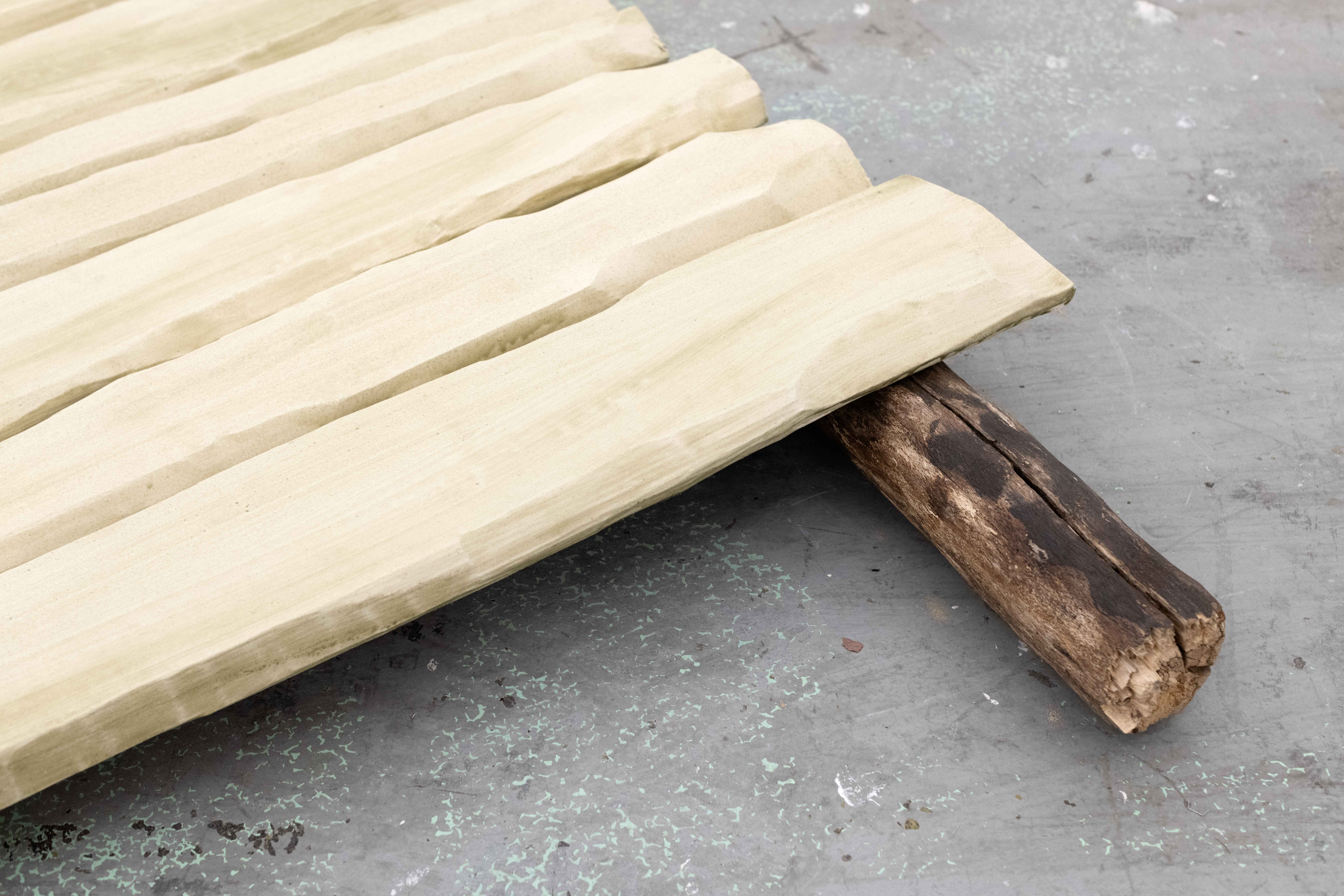
    Curated by Oz Oderbolz
    Text by Elsa Himmer

    ShowMustGoOn_MarianneMueller.pdf
    flyer_ShowMustGoOn_MarianneMueller.png

    Exhibition view, SHOW MUST GO ON

    Toxi space, Zürich, 2021

    Exhibition view, SHOW MUST GO ON

    Toxi space, Zürich, 2021

    Exhibition view, SHOW MUST GO ON

    Toxi space, Zürich, 2021

    Exhibition view, SHOW MUST GO ON

    Toxi space, Zürich, 2021

  •  21.05.2021DOWN THE RABBIT HOLE - Electric Art Collective
    EAC_Flyer-Mockup.jpg
  •  06.05.2021DEEP DECOR - Roman Gysin

    When queers use spaces,
    spaces might become queer.

    1Sara Ahmed


    Function gives birth to the sign,
    but this sign is reconverted into
    the spectacle of a function.

    2Roland Barthes


    Whether it‘s a gay sex club, a nail salon, or a pizzeria, the interior and décor define the space and determine its function. In the case of the three examples mentioned, this often happens in an almost stereotypical way: The use of certain materials, colors, motifs, furniture and other furnishings, aim at a context-bound recognition effect, appealing to the taste of the masses. Interior design designates and norms spaces for specific experiences, the consumption of goods and services, for the indulgence of a lifestyle. Beyond its function, the interior thus becomes a sign. The décor, a metaphor. In his exhibition Deep Decor, Roman Gysin negotiates the use and sign value of objects and their „depth dimension,“ which, according to Roland Barthes, results from the fact that the superficial forms of everyday objects stimulate a multifaceted imagination. Things are thus simultaneously charged with symbolic meanings that need not have anything to do with their primary function.3 In this context,the works presented in the exhibition appear as quasi-abstract ambiguous figures that on the one hand are declared as works of art, fundamentally deprived of a practical purpose, and on the other hand partly distinguish themselves in their form precisely by fulfilling a function.

    By means of the format of the exhibition as installation or the installation as exhibition, Gysin arranges elements of his characteristic formal language, such as disguising, scattering, veneering, sanding, hanging, and networking, in a constellation that occupies, furnishes, and structures the space in equal measure. This creates a scenographic dynamism that directs the viewer‘s lines of sight and movement into two diagonals running in opposite directions.Taking up the premises of Minimal Art, in which the work appears reduced to its pure objecthood and unfolds its effect primarily in relation to its placement in space and the perception of the viewer, Gysin‘s wall-works and sculptures also allow for an interpretation of content. While one side of Trennwand [Divider] gives the impression that its components are industrially manufactured, the other side ostentatiously displays the traces of its creation and the nature of the materials, wood and canvas, Gysin works with. Contrary to a renunciation of the artistic gesture celebrated by Minimal Art, Gysin rather makes his creative process the subject, as well as the meaning of art as a carrier of discourse and its use as functional decor: Trennwand [Divider] can thus be seen symbolically as a caesura or a conundrum. However, the sculpture functions equally as a barrier and a system of guiding people. Rampe [Ramp], in turn, epitomizes a device that serves to transform power in order to use it as expediently as possible. Gysin undermines the hierarchy between art and décor by emphasizing the symbolic content of both, or what Barthes calls „the spectacle of a function.“4 In the course of this, he creates, so to speak, a reordering of things that does not shy away from the grotesque in the sense of its original meaning according to Horace: the non-observance of orders or formal principles, the deviation from the norm.

    In this sense, his examination of use and sign value, of the depth dimension of material and objects, can also be considered a form of perversion of „queer use.“ According to Sara Ahmed, „queer use“ is about releasing potential that is already inherent in things and how they have taken shape: „Queer use could be what we are doing when we release that potential.“5 Gysin‘s works simultaneously embody and launch queer modes of use by testing out new fields of meaning in the metaphorics of the everyday, beyond categorical fixations and attributions.

    Sara Ahmed, What’s the Use? On the Uses of Use
    Durham/London, 2019, p. 200

    Roland Barthes, Semantics of the Object, in: ibid. The Semiotic Challenge
    New York, 1988, p.190

    Roland Barthes, The Imagination of the Sign, in: A Barthes Reader edit. by Susan Sontag
    New York, 1982 p.216

    Roland Barthes, Semantics of the Object, in: ibid. The Semiotic Challenge
    New York, 1988, p.190

    Sara Ahmed, What’s the Use? On the Uses of Use
    Durham/London, 2019, p. 200

    Curated by Oz Oderbolz
    Text by Daniel Berndt

    When queers use spaces,
    spaces might become queer.

    1Sara Ahmed


    Die Funktion bringt das Zeichen hervor,
    aber das Zeichen wird in das Schauspiel
    einer Funktion zurückverwandelt.

    2Roland Barthes


    Ob schwuler Sexclub, Nagelstudio oder Pizzeria, Interieur und Dekor zeichnen den Raum aus, bestimmen seine Funktion. Im Fall der drei genannten Beispiele geschieht dies oftmals auf nahezu stereotype Art und Weise: Die Verwendung von bestimmten Materialien, Farben, Motiven, Möbeln und anderen Ausstattungsgegenständen zielen kontextgebunden auf einen Wiedererkennungseffekt, appellieren an den Geschmack der Masse. Die Innenausstattung und gestalterische Konventionen designieren und normieren Räume für spezifische Erfahrungen, den Ausstauch von Dienstleistungen, dem Konsum von Waren, dem Frönen eines Lifestyles. Über seine Funktion hinaus wird das Interieur damit einhergehend zum Zeichen, das Dekor zur Metapher.

    In seiner Ausstellung Deep Decor verhandelt Roman Gysin Gebrauchs- und Zeichenwert von Objekten und deren «Tiefendimension», die sich nach Roland Barthes daraus ergibt, dass die vordergründigen Formen von Alltagsgegenständen zugleich eine vielgestaltige Imagination anregen. Dinge sind somit mit symbolischen Bedeutungen aufgeladen, die nicht in erster Linie etwas mit ihrer Funktion zu tun haben müssen.3 DieinderAusstellung präsentierten Arbeiten erscheinen in diesem Zusammenhang als quasi-abstrakte Kippfiguren, die einerseits als Kunstwerke deklariert, grundsätzlich einer praktischen Zweckbestimmung enthoben sind und sich andererseits teils in ihrer Form gerade durch die Erfüllung einer Funktion auszeichnen. Mittels des Formats der Ausstellung als Installation bzw. der Installation als Ausstellung arrangiert Gysin Elemente seiner charakteristischen Formensprache wie das Verstellen, Streuen, Verkleiden, Verblenden, Verschleifen, Behängen und Vernetzen in einer Konstellation, die den Raum gleichermassen besetzt, ausstaffiert und strukturiert. Es wird dadurch eine szenografische Dynamisierung erzeugt, welche die Blick- und Bewegungsrichtungen der Betrachter*innen in zwei entgegengesetzt verlaufende Diagonalen lenken.

    Prämissen der Minimal Art aufgreifend, in der das Werk auf seine reine Objekthaftigkeit reduziert erscheint und seine Wirkung primär in Relation zu seiner Platzierung im Raum und der Wahrnehmung der Betrachter*innen entfaltet, lassen Gysins Wandarbeiten und Skulpturen stets jedoch auch eine inhaltliche Deutung zu. Während eine Seite von Trennwand den Anschein erweckt, als wären ihre Bestandteile industriell gefertigt, stellt die andere Seite die Spuren ihrer Entstehung und die Beschaffenheit der von Gysin bearbeiteten Materialien Holz und Leinwand ostentativ zur Schau. Entgegen einer von der Minimal Art zelebrierten Abkehr von der künstlerischen Geste macht Gysin seinen Schaffensprozess vielmehr zum Thema, ebenso wie die Bedeutung von Kunst als Träger von Diskursen und ihrem Gebrauch als funktionales Dekor: Trennwand kann somit sinnbildlich als Zäsur oder als Vexierbild betrachtet werden. Die Skulptur fungiert jedoch gleichermassen als Barriere und Personenleitsystem. Rampe wiederrum steht als Inbegriff für eine Vorrichtung, die der Umwandlung von Kraft dient, um diese möglichst zweckmässig einzusetzen.

    Gysin unterminiert die Hierarchie zwischen Kunst und Dekor, indem er den symbolischen Gehalt von beiden bzw. das, was Barthes «das Schauspiel einer Funktion»4 nennt, herausstellt. Er schafft im Zuge dessen gewissermassen eine Neuordnung der Dinge, die auch nicht vor dem Grotesken im Sinne seiner ursprünglichen Bedeutung nach Horaz zurückscheut: dem Nichteinhalten von Ordnungen oder Gestaltungsprinzipien, der Abweichung von der Norm.

    Seine Auseinandersetzung mit Gebrauchs- und Zeichenwert, mit der Tiefendimension von Material und Objekten kann in diesem Sinne auch als eine Form der Pervertierung, des «queer use» erachtet werden. Bei diesen «queeren Verwendungsformen», geht es Sara Ahmed zufolge darum, Potential freizusetzen, das bereits in den Dingen und darin begründet liegt, wie sie Gestalt angenommen haben: «Queer use could be what we are doing when we release that potential.»5 Gysins Werke verkörpern und lancieren zugleich queere Verwendungsweisen, indem sie in der Metaphorik des Alltäglichen neue Bedeutungsfelder, jenseits kategorischer Fest- und Zuschreibungen austesten.

    Sara Ahmed, What’s the Use? On the Uses of Use
    Durham/London, 2019, S.200

    Roland Barthes, Semantik des Objekts, in: Ders. Das semiologische Abenteuer
    Frankfurt a.M. 1988, S.197

    Roland Barthes, Die Imagination des Zeichens, in Ders. Literatur oder Geschichte
    Frankfurt a.M. 1968, S.38

    Roland Barthes, Die Imagination des Zeichens, in Ders. Literatur oder Geschichte
    Frankfurt a.M. 1968, S.197

    Sara Ahmed, What’s the Use? On the Uses of Use
    Durham/London, 2019, p. 200

    Curated by Oz Oderbolz
    Text by Daniel Berndt

    RomanGysin-DeepDecor_Pressrelease.pdf
    RomanGysin-DeepDecor_flyer.jpg

    Roman Gysin

    Deep Decor I,

    2021

    wood, fabric, paint, cord, metal, dimensions variable

    Exhibition view, DEEP DECOR

    Toxi space, Zürich, 2021

    Roman Gysin

    Trennwand [Divider],

    2021

    detail, wood, fabric, glue, mineral soil, metal, 215 x 200 x 96 cm

    Roman Gysin

    Rampe [Ramp],

    2021

    detail, wood, fabric, glue, mineral soil, metal, dimensions variable

    Roman Gysin

    Wandstück II [Wall Piece II],

    2021

    wood, fabric, glue, mineral soil, metal, leather, cord, 80 x 95 x 7 cm

    Roman Gysin

    Wandstück II [Wall Piece II],

    2021

    detail, wood, fabric, glue, mineral soil, metal, leather, cord, 80 x 95 x 7 cm

    Roman Gysin

    Deep Decor I,

    2021

    detail, wood, fabric, paint, cord, metal, dimensions variable

    Roman Gysin

    Rampe [Ramp],

    2021

    detail, wood, fabric, glue, mineral soil, metal, dimensions variable

    Roman Gysin

    Rampe [Ramp],

    2021

    detail, wood, fabric, glue, mineral soil, metal, dimensions variable

    Roman Gysin

    Trennwand [Divider],

    2021

    detail, wood, fabric, glue, mineral soil, metal, 215 x 200 x 96 cm

    Roman Gysin

    Trennwand [Divider],

    2021

    wood, fabric, glue, mineral soil, metal, 215 x 200 x 96 cm

    Roman Gysin

    Handy,

    2021

    photography, frame, 38.5 x 33 cm

    Roman Gysin

    Deep Decor II,

    2021

    detail, wood, fabric, paint, cord, metal, 105 x 41 x 14 cm

  •  15.09.2020ZERO EGO SHOW - Luca Büchler, Nusser Glazova Nadia Hauri, Joakim Hyldebrandt, Hyeji Nam, Azuli Peeters, Anita Semadeni, Kim Schönauer
    SS_ZES_Facebook_Flyer_Final 2.jpeg
  •  03.09.2020TOXI ARTIST RESIDENCY FINISSAGE - Luca Harlacher, Daniela Eberle
    flyer_IMG_2313.JPG
    COMING SOON
    Info